Farmyard at Le Pouldu — History & Facts
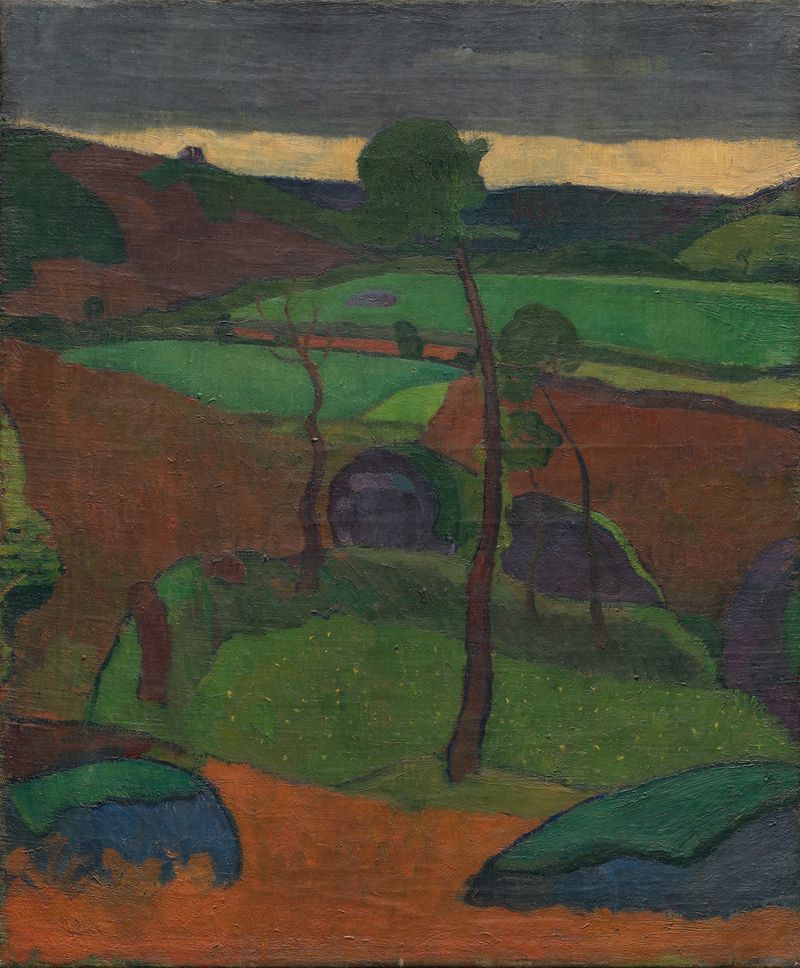
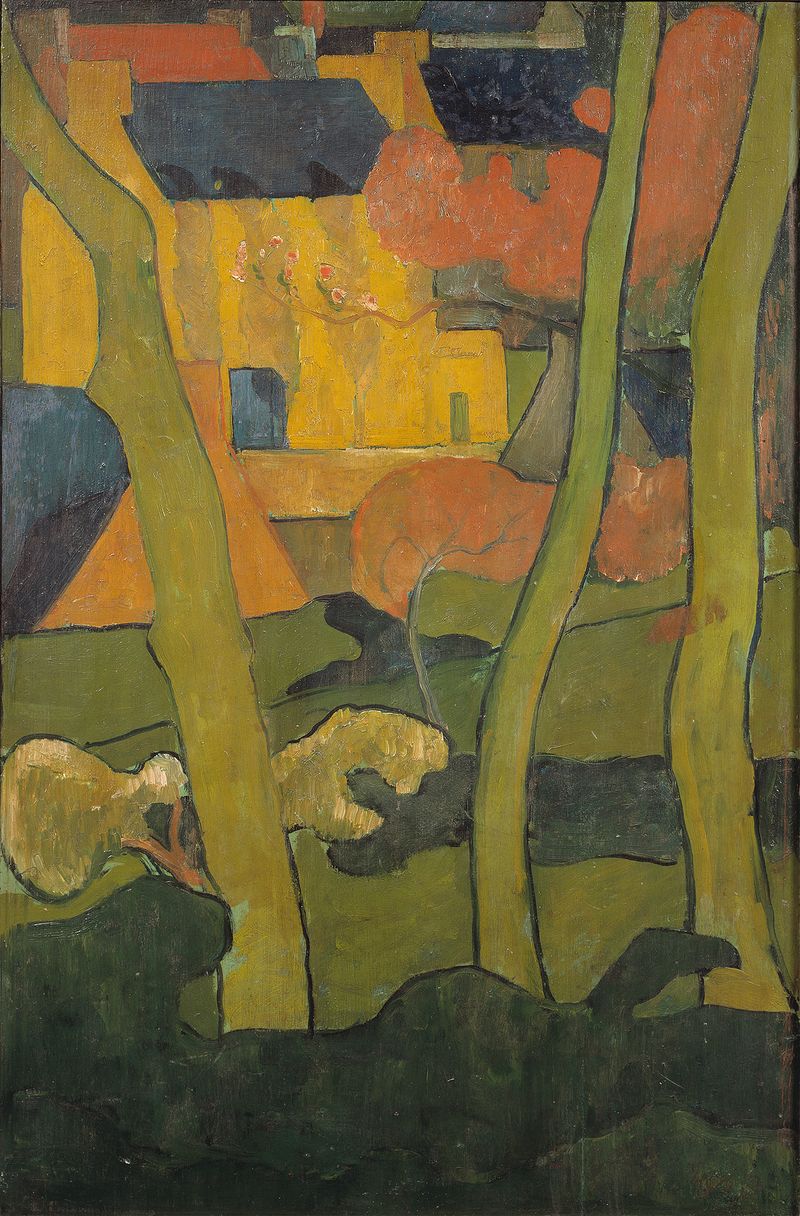
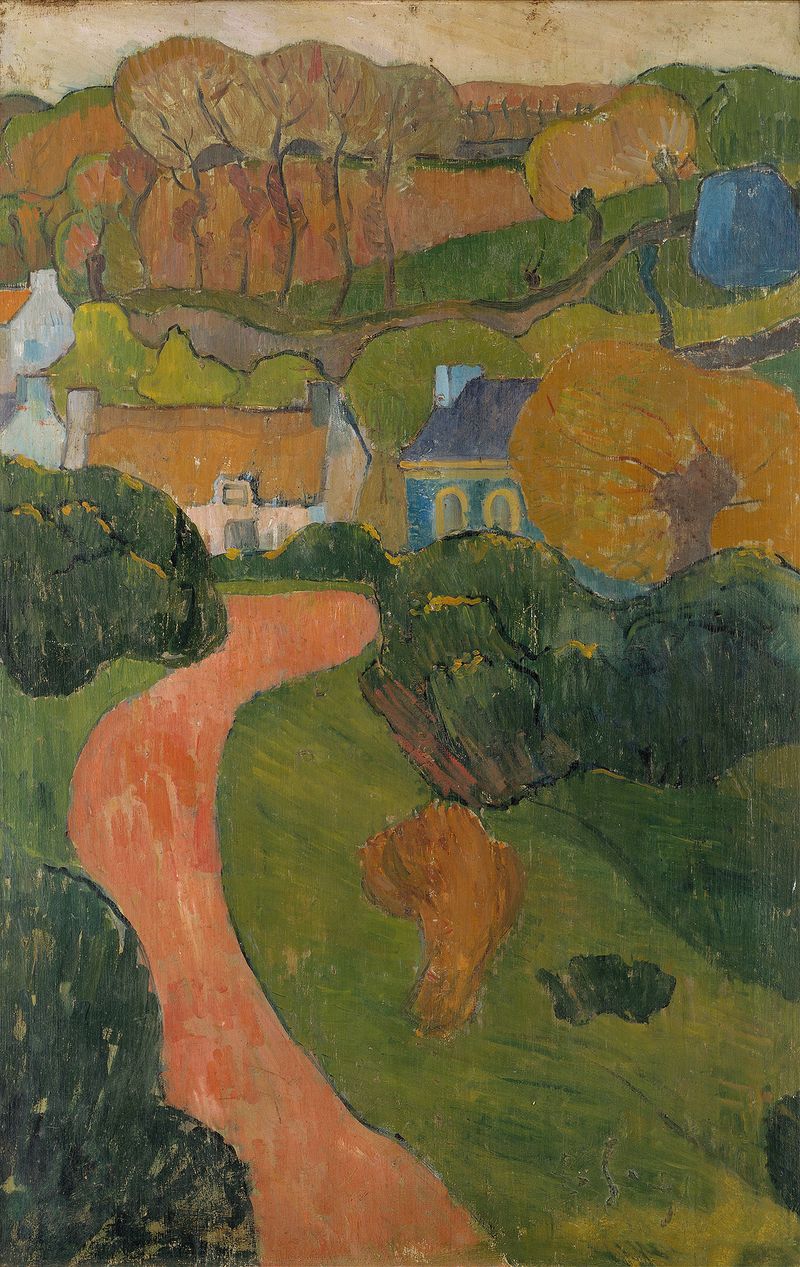
Can beauty exist without sorrow? In the delicate interplay of movement across the canvas, we find echoes of joy and the weight of melancholy intertwined. Look to the center of the composition, where the bustling figures of farmers engage in their daily tasks. The vibrant greens and earthy browns dominate the palette, inviting your eyes to dance along the strokes that capture both the warmth of the sunlit field and the cool shadows lurking beneath the trees. Notice how the brushwork conveys a sense of urgency, as if the scene is alive, with each figure caught in the rhythm of labor.
The juxtaposition of the soft, flowing lines against the sharper angles of tools speaks to the harmony between nature and human effort. Yet, within this seemingly idyllic scene lies a tension between labor and the fleeting nature of time. The figures, though engaged in their work, appear almost ghostly as they blend into the landscape, suggesting the transitory essence of life itself. The gentle curves of the landscape suggest a world in motion, while the muted tones hint at an underlying sorrow, a recognition that even in the vibrancy of rural life, the passage of time weighs heavily on the heart. In 1892, at a time marked by shifts in art and personal exploration, the artist painted this piece in Le Pouldu, France, where he sought solace and inspiration in its serene environment.
Amidst a burgeoning interest in post-impressionism, he was experimenting with color and form, striving to convey deeper emotions through the lens of everyday scenes. This work reflects both his dedication to capturing movement and the quiet introspection that characterized this period of his life.