
Femme et enfants au bord d’une rivière — History & Facts
Did the painter know this moment would outlive them? In Femme et enfants au bord d’une rivière, the fleeting essence of memory is captured—a snapshot of time forever preserved on canvas, a reminder of joy’s ephemeral nature. Focus your gaze on the luminous figures to the left, where the woman in a flowing white dress and children play beside the shimmering water. The soft pastels of the riverbank contrast gently with the vibrant greens of the surrounding foliage, inviting a sense of serenity. Notice how the dappled light dances across the scene, illuminating moments of innocence and connection.
The composition is balanced yet dynamic, drawing your eye towards the flowing water that serves as a metaphor for life itself. Hidden within the simplicity of this idyllic scene lies a deeper emotional undercurrent. The calmness of the landscape juxtaposes the inevitable passage of time, with the figures seemingly frozen in a moment that will fade. The gentle gestures between mother and child speak volumes, hinting at a longing for preservation amid life’s transience.
The intricate brushwork adds texture, evoking a sense of nostalgia and the bittersweet nature of memory. Painted between 1899 and 1900, this work emerged during a period of artistic experimentation for Roussel, who was active in the Symbolist movement. He sought to explore the intertwining of nature and emotion, reflecting broader societal shifts towards modernity. The artist, based in France, was influenced by his contemporaries, and this piece encapsulates the transition from the pastoral ideals of earlier times to the more complex realities of the 20th century.
More Artworks by Ker-Xavier Roussel
Browse all →
La Source
Ker-Xavier Roussel

Baigneuses
Ker-Xavier Roussel
Personnages au bord de la mer
Ker-Xavier Roussel

Faunes et nymphes dans un chemin forestier
Ker-Xavier Roussel
Baigneuses
Ker-Xavier Roussel
Femme en robe à rayures
Ker-Xavier Roussel
Pastorale
Ker-Xavier Roussel

Deux femmes assises dans un paysage de l’Ile de France
Ker-Xavier Roussel
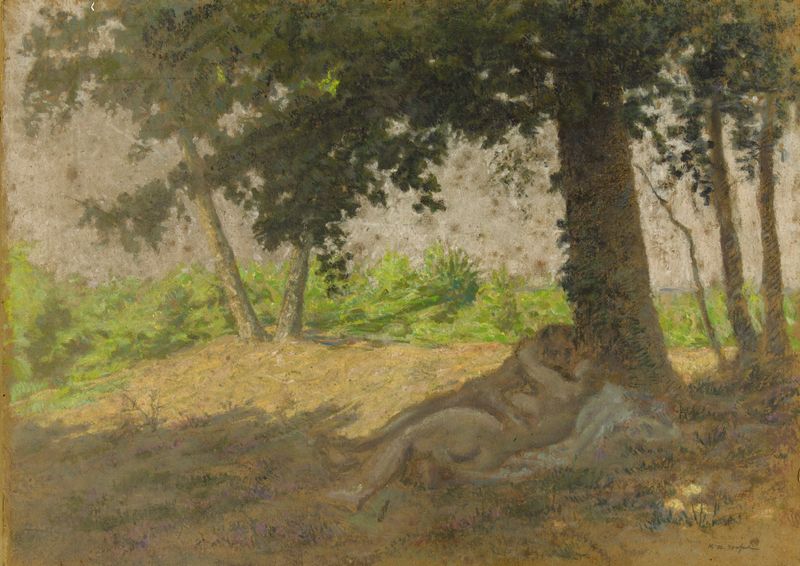
Couple enlacé couché dans un paysage
Ker-Xavier Roussel

Femme en rouge dans un paysage
Ker-Xavier Roussel





