Feuer Clown I (Fire Clown) — History & Facts
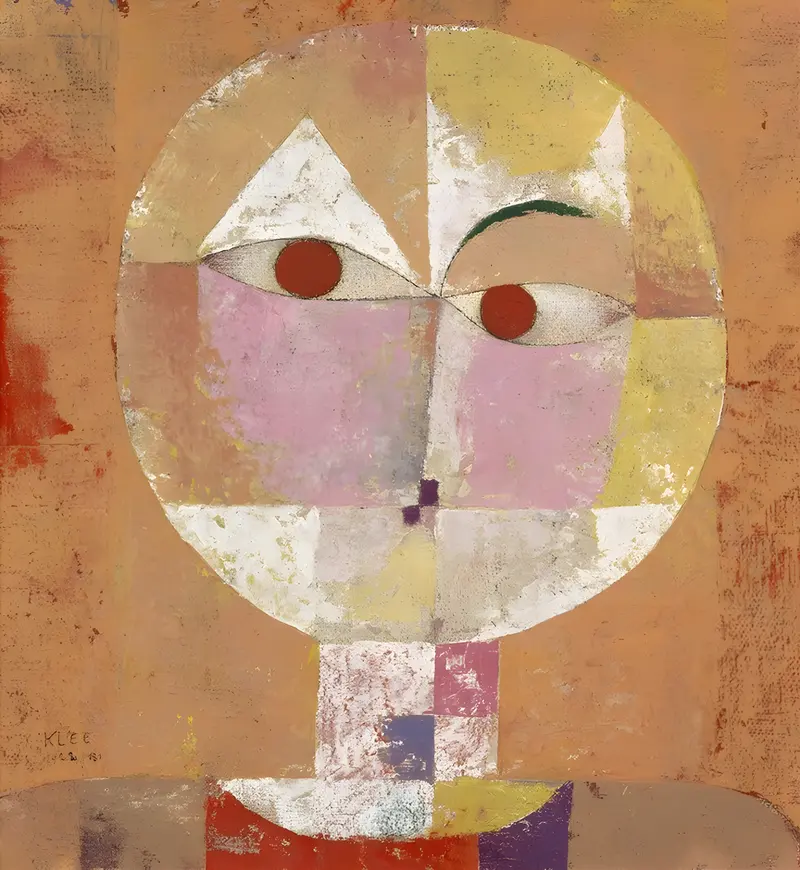
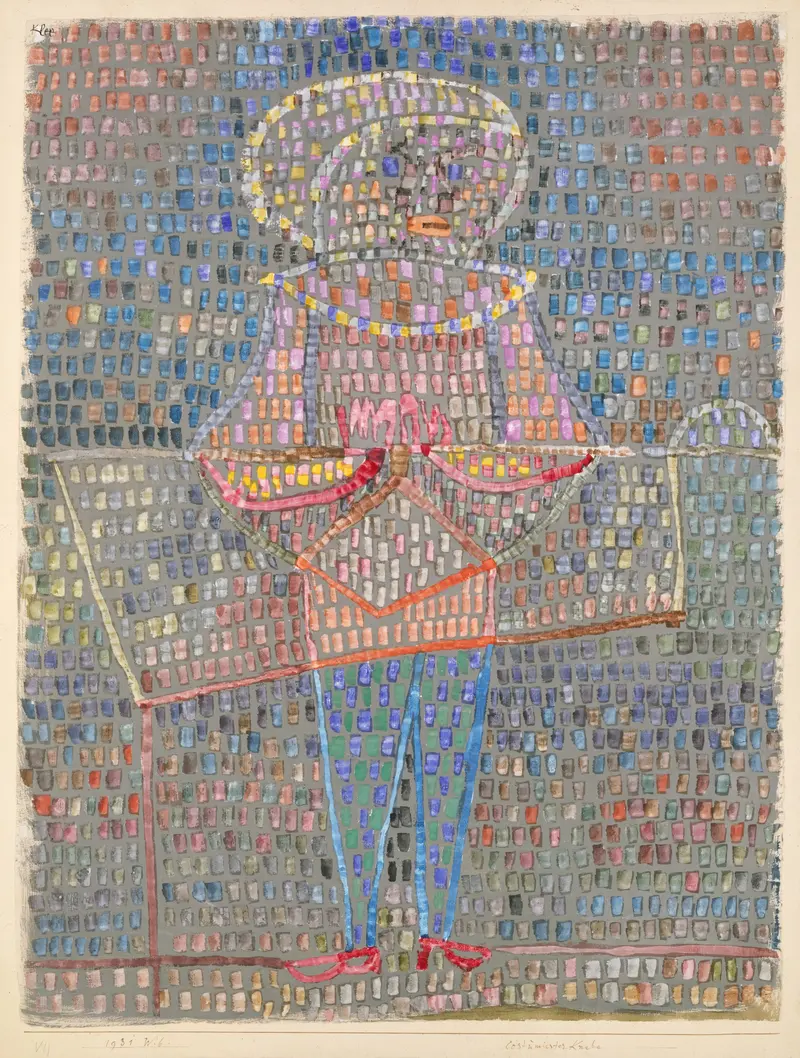
In Feuer Clown I, Paul Klee presents a vibrant clown figure, characterized by bold colors and abstract forms. The clown's face is expressive, with exaggerated features that convey a sense of whimsy. Surrounding the figure are dynamic shapes and a rich palette of reds, yellows, and blues, creating a lively atmosphere.
The background seems to pulsate with energy, enhancing the clown's playful demeanor. The painting is executed in oil on canvas, showcasing Klee's distinctive style that blends abstraction with figuration. The use of color is particularly striking, with contrasting hues that draw the viewer's eye. Klee employs a variety of brush techniques to create texture and depth, making the clown appear almost three-dimensional.
This work is a fine example of Klee's exploration of emotion through color and form. Feuer Clown I was created during a period when Klee was deeply influenced by the themes of theater and performance. The clown, often a symbol of joy and folly, reflects Klee's fascination with the duality of human nature. Interestingly, Klee often used clowns in his work to explore deeper psychological themes.
This painting is part of his broader exploration of the interplay between humor and melancholy.