Fir trees — History & Facts
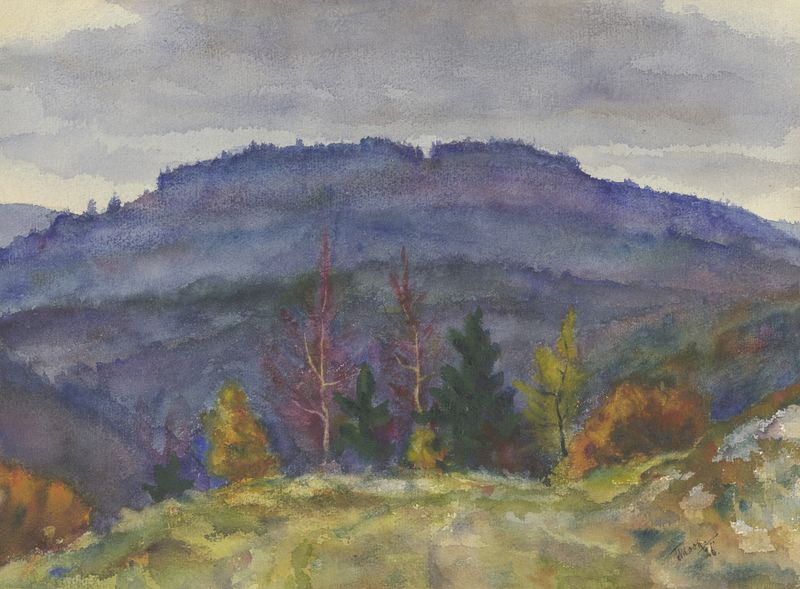
In the embrace of solitude, the intrinsic melancholy of existence unfurls, inviting contemplation in the face of nature’s quiet, relentless beauty. Look to the center of the canvas, where a cluster of fir trees rises like sentinels against the backdrop of an expansive, muted sky. The brushwork is both delicate and deliberate, allowing the textures of the bark and needles to emerge vividly, while the hues of deep greens and soft grays create a sense of harmony yet evoke a poignant stillness. Notice how the light filters through the branches, casting dappled shadows that dance upon the forest floor, suggesting a fleeting moment frozen in time. Delve deeper, and you’ll find an interplay between the robust solidity of the trees and the expansive void of the surrounding space.
This contrast speaks to the duality of existence—the strength of nature standing resilient against the looming whispers of solitude and loss. The faint wash of color in the distance hints at an unseen world, one beyond the trees but equally distant, enhancing the sense of isolation that pervades the piece. In 1912, Friedrich Mook painted this work during a period marked by introspection and the rise of modernism in art. Living in Germany, he grappled with the tumultuous changes of the time, as the old world began to yield to new ideas and societal shifts.
This piece reflects not only his personal journey but also the broader emotional landscape of an era caught between the familiar comforts of nature and the unsettling forces of modern life.