Landscape in late autumn — History & Facts
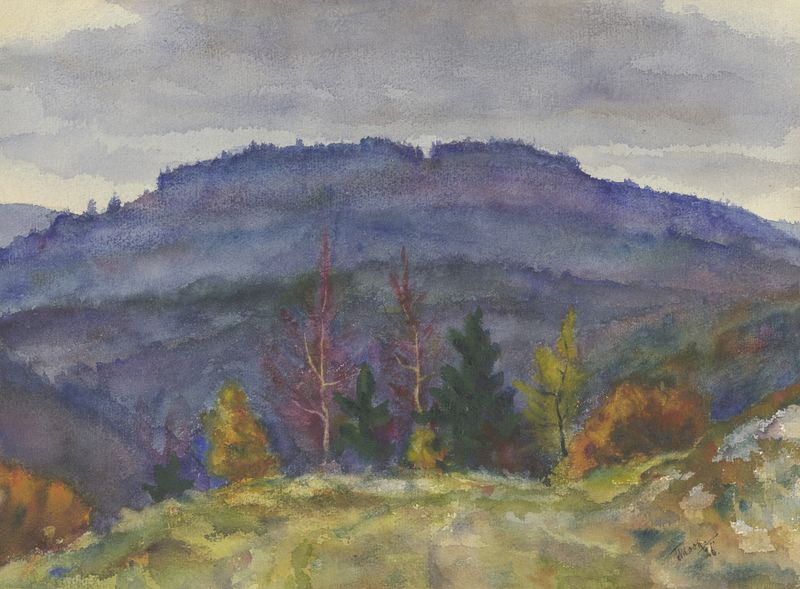
What if beauty was never meant to be finished? In Landscape in Late Autumn, Friedrich Mook captures a fleeting moment, a whisper of nature's desire, echoing the inevitable passage of time. Look to the left at the rich, earthy tones that embrace the foreground, where fallen leaves blanket the ground. Notice how the muted golds and browns seamlessly blend into the grayish sky, creating a palpable tension between decay and stillness. As your gaze travels through the composition, the stark trees punctuate the landscape with their skeletal forms, each branch reaching out like longing fingers, yearning for the vitality of spring. Beneath the surface, the painting reveals an interplay of contrasts: the vibrancy of life interwoven with the somberness of decline.
Each element—be it the gnarled trees or the fading light—whispers of an unfulfilled desire for rebirth, signifying not just an end, but a promise of renewal. The stillness is palpable, yet it thrives with the unresolved tension of what lies ahead, suggesting that beauty exists not in completion, but in yearning. In 1926, Mook created this work during a period marked by post-World War I introspection. The art world was evolving, grappling with modernism while longing for the pastoral tranquility of earlier times.
Living in Germany, Mook was deeply influenced by the emotional landscapes of his contemporaries, channeling his own reflections on loss and desire into his evocative depictions of nature, forever seeking the beauty just out of reach.