Wintery landscape — History & Facts
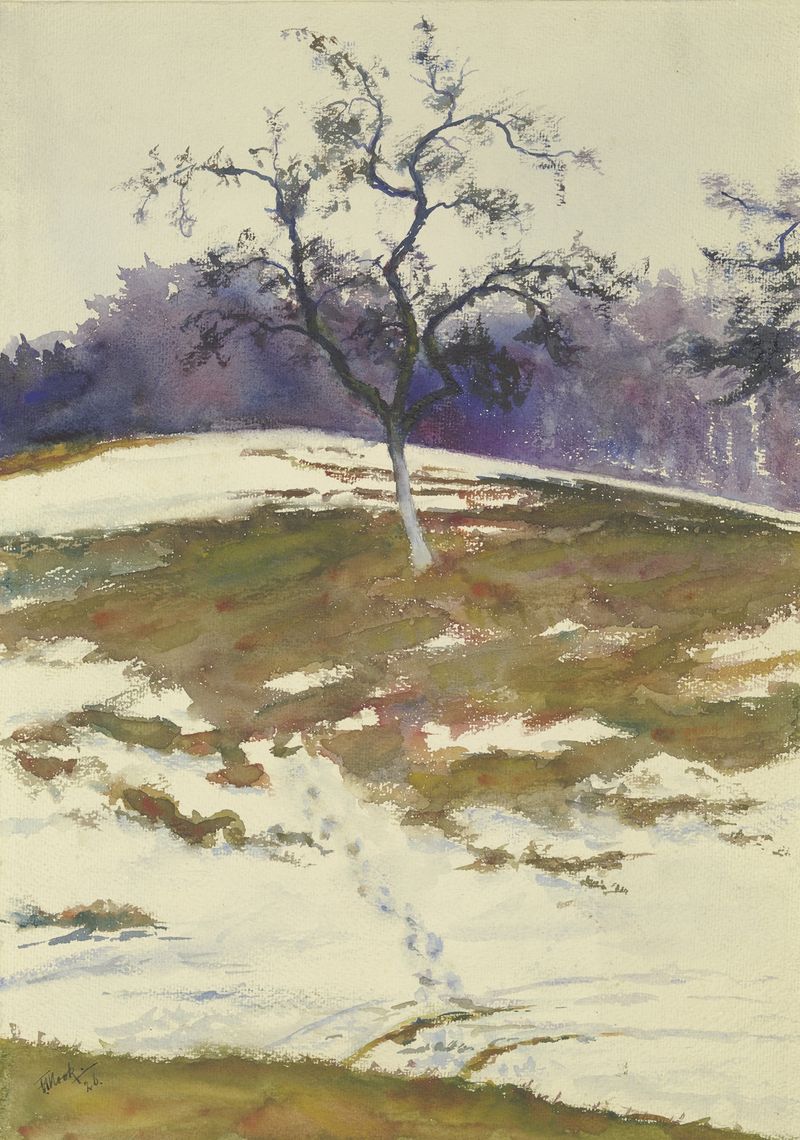
What if silence could speak through light? In Wintery landscape, the ethereal radiance of snow transforms the mundane into a realm of tranquility and introspection. Look to the foreground, where the delicate brushstrokes create a soft carpet of untouched snow, glistening as though it holds whispers of the world above. Notice how the pale blues and whites merge seamlessly, crafting a serene atmosphere that invites you to step deeper into the scene. The solitary tree rises majestically at the edge, its skeletal branches reaching out, stark against a gradually darkening sky, drawing the viewer’s eye upward towards the horizon where warmth and cold coexist. The contrast between the crisp clarity of the snow and the shadowed areas of the landscape evokes a sense of stillness intertwined with the anticipation of transformation.
This tension invites contemplation—where does the calm end, and the chaos of life begin? The absence of human presence amplifies the emotional weight of nature's silence, allowing you to feel the weight of winter’s embrace, a moment frozen in time that speaks to both isolation and reflection. In 1926, Friedrich Mook was capturing the essence of the world as he witnessed it, infusing his works with deep emotional resonance. Living in a post-World War I Europe, his art sought solace in the natural world, a counterpoint to the turmoil around him. This painting reflects a profound yearning for peace, illustrating a profound connection between humanity and the silent beauty of nature.