Mountain landscape — History & Facts
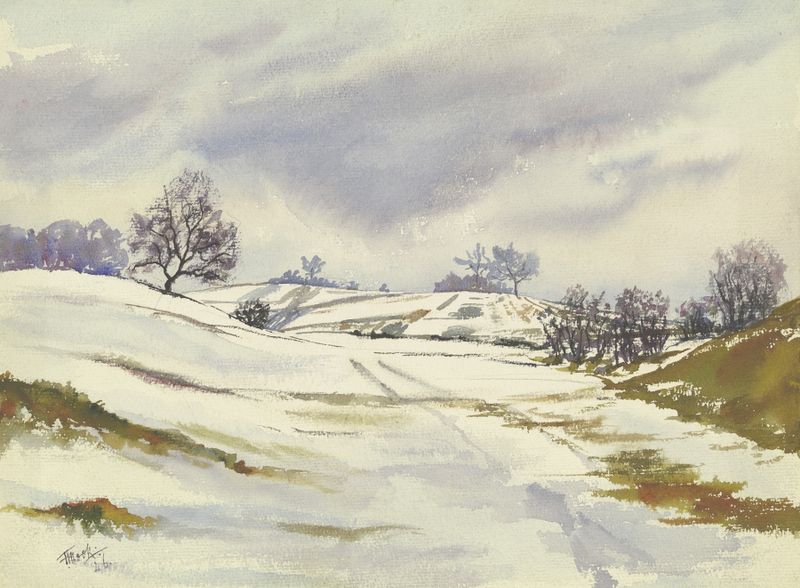
What if beauty was never meant to be finished? In Mountain Landscape, a world unfolds where nature’s majesty teeters on the edge of desolation, whispering secrets of betrayal within its grandeur. Look to the foreground, where jagged peaks rise defiantly against a tumultuous sky, each stroke of the brush reflecting an intensifying emotional depth. The cool blues and stark whites contrast sharply with the dark, brooding shadows that stretch across the rocky terrain, drawing your gaze toward the quiet valley below. Notice how the light dances across the surfaces, illuminating only parts of the scene — a metaphor for the transient nature of beauty and the haunting echoes of abandonment. Here, amidst the towering mountains, a duality prevails.
The grandeur of the landscape suggests an overwhelming sense of awe, yet the shadows lurking within signal an underlying tension, as if nature itself has turned its back on humanity. The stillness of the valley hints at lost opportunities, while the rugged peaks stand as monuments to betrayal — an uninvited reminder of beauty’s impermanence and the emotional scars it may leave behind. Friedrich Mook painted Mountain Landscape in 1926, a time when Europe was grappling with the aftermath of the Great War. An artist deeply influenced by the changing sentiments of his time, he sought to convey the raw emotionality of nature amid a world grappling with its identity.
Through this work, he captures not just a scene, but an era filled with contradictions, where beauty coexists with a profound sense of loss.