Five Bathing Women at a Lake — History & Facts
The first thing that draws the eye in Five Bathing Women at a Lake is the sense of ritual and camaraderie among the figures, their bodies outlined in bold, almost sculptural strokes. The women, grouped closely together, seem caught in a private moment—some adjusting their hair, one examining herself in a mirror, another draping a towel, their gestures both casual and deliberate. The palette is electric: flesh rendered in cool pinks and lavenders, set against a riot of yellow, green, and blue that flattens the landscape into a tapestry of color.
The forms are simplified, their contours thick and unblended, giving the scene an immediacy that feels both modern and ancient. The light is not naturalistic; instead, it serves to heighten the sense of the figures as icons, their presence more psychological than physical. Painted in 1911, this work belongs to the world of Ernst Ludwig Kirchner and the Brücke movement, a group that sought to break free from academic tradition and reconnect art with direct, lived experience. These artists, working in Germany in the years before the First World War, often turned to scenes of bathing and communal leisure as symbols of a return to nature and authenticity.
The Brücke Museum in Berlin, where this painting now resides, preserves many such experiments—works that pulse with the urgency of a new century and a new way of seeing. The history of this specific canvas is quiet, but its energy is not: it invites us to look again, to read the language of bodies and color, and to imagine the world that gave rise to such radical simplicity.
More Artworks by Ernst Ludwig Kirchner
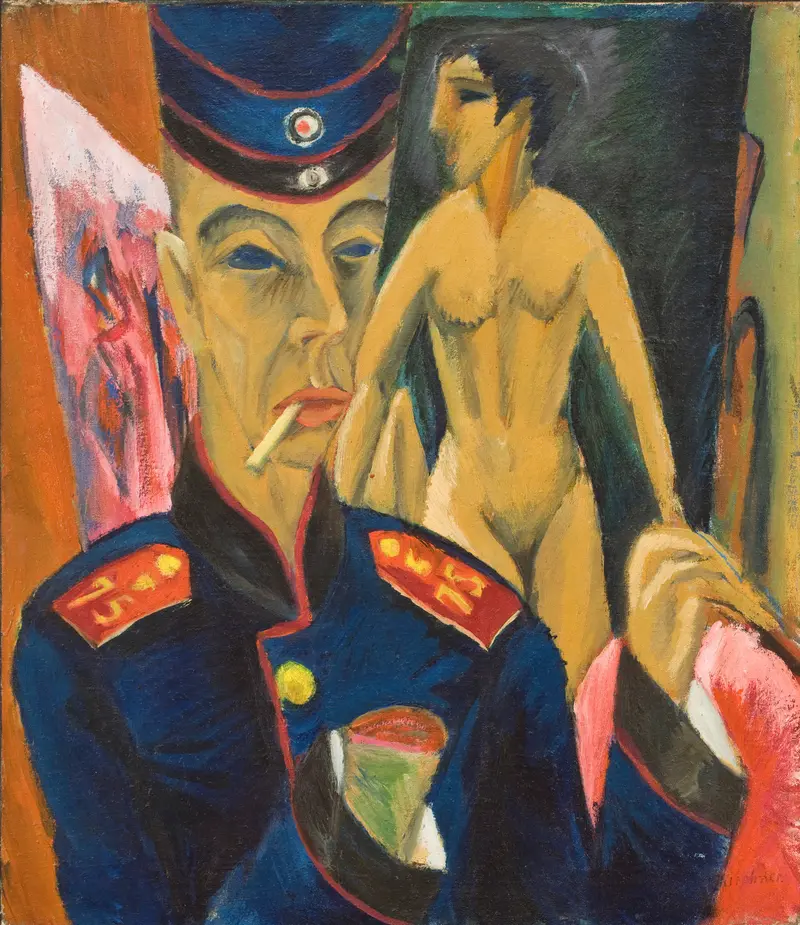
Self-Portrait as a Soldier
Ernst Ludwig Kirchner
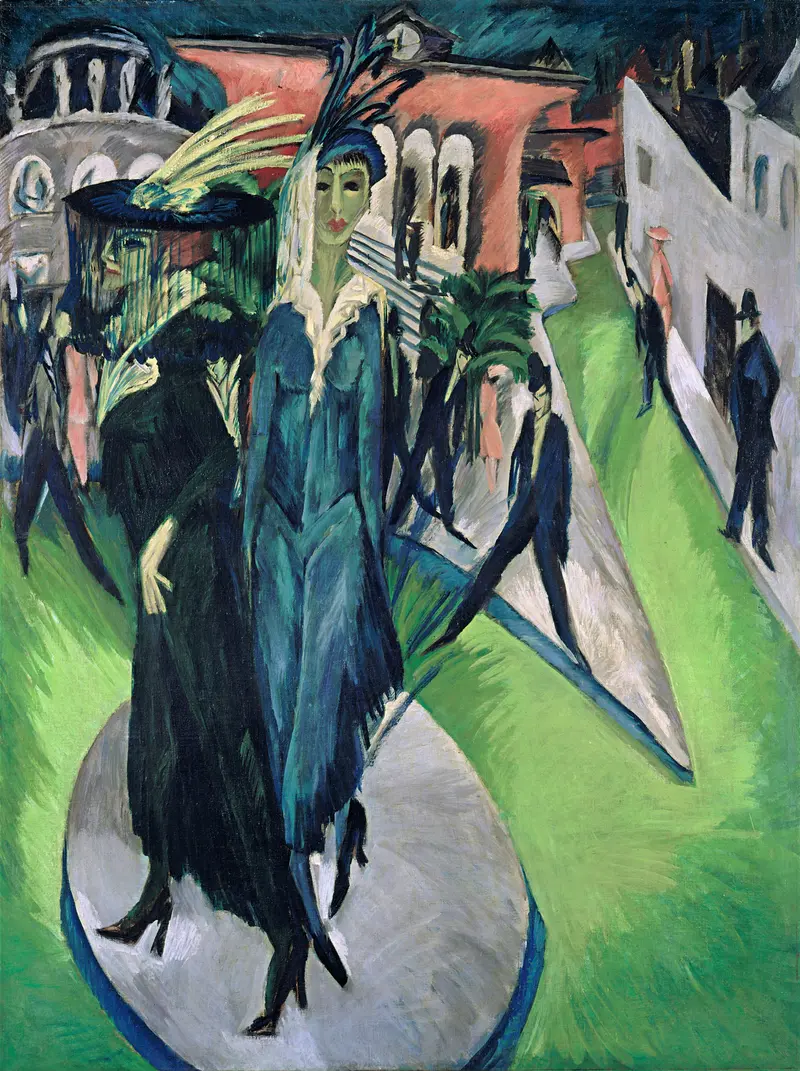
Potsdamer Platz
Ernst Ludwig Kirchner

Alphütten und Tinzenhorn
Ernst Ludwig Kirchner
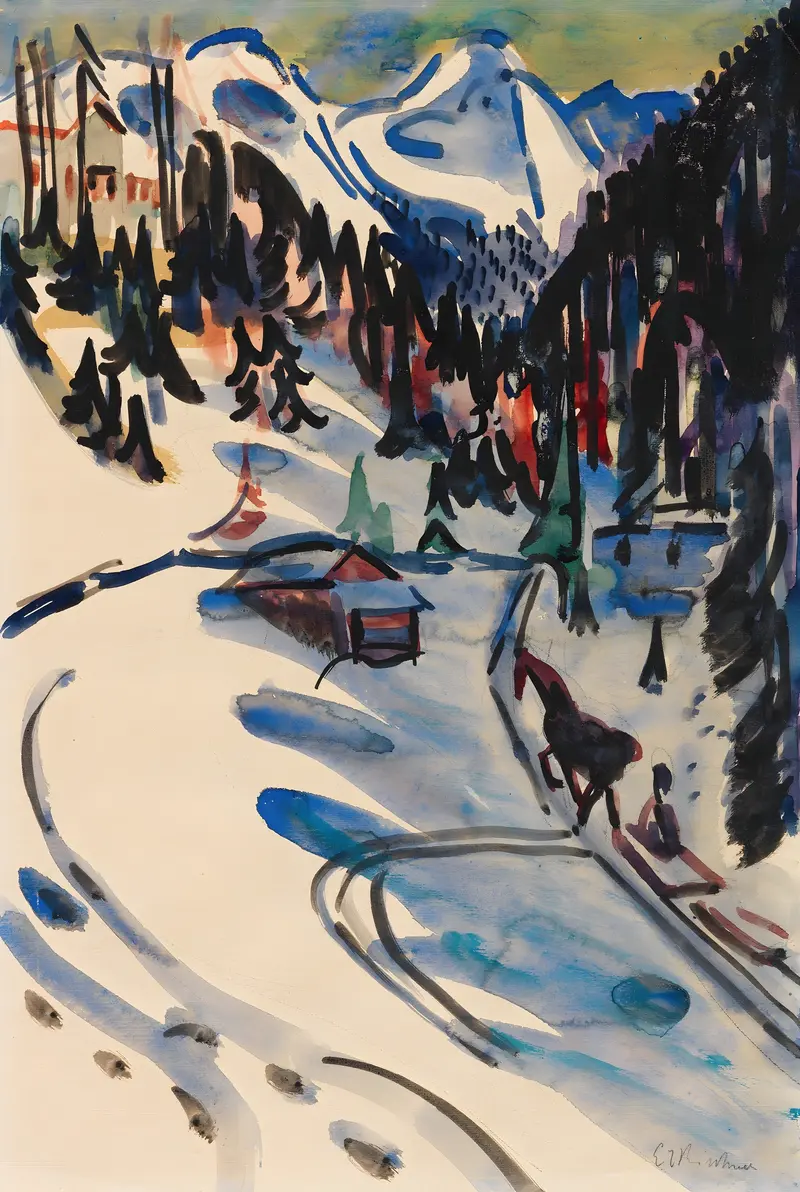
Sertigtal im Winter
Ernst Ludwig Kirchner
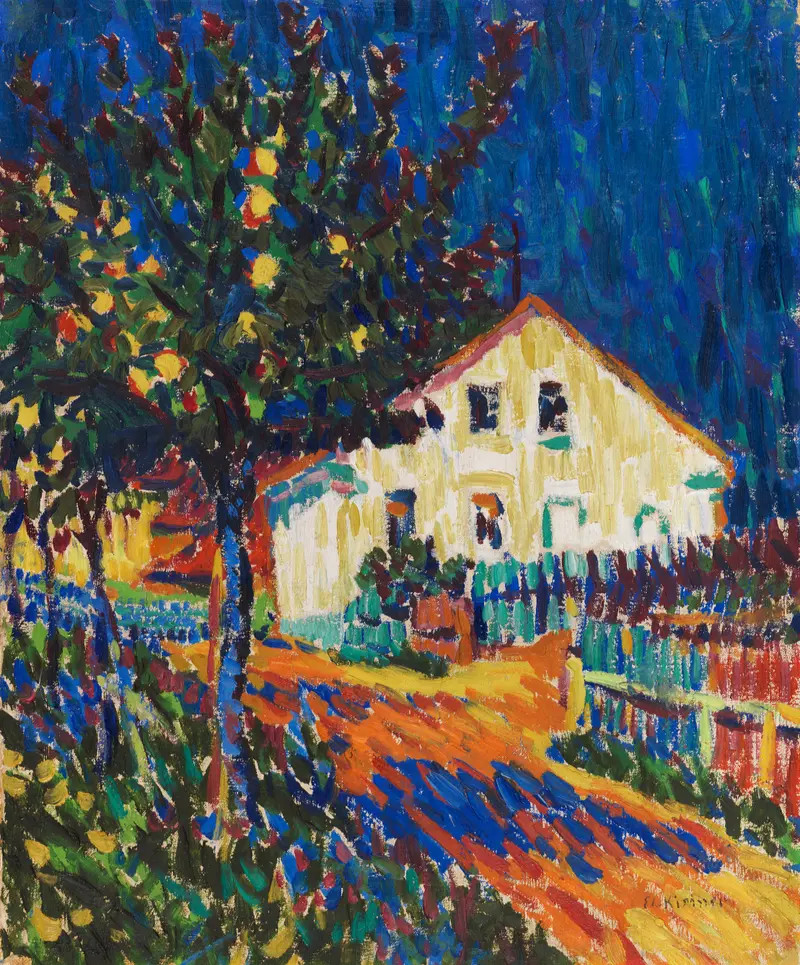
Dorfstraße mit Apfelbäumen
Ernst Ludwig Kirchner
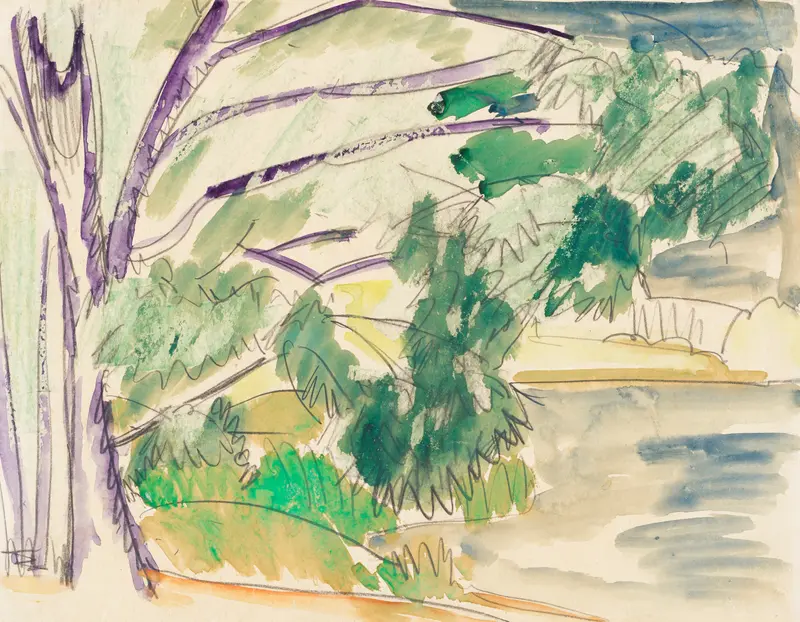
Unter Bäumen am See
Ernst Ludwig Kirchner
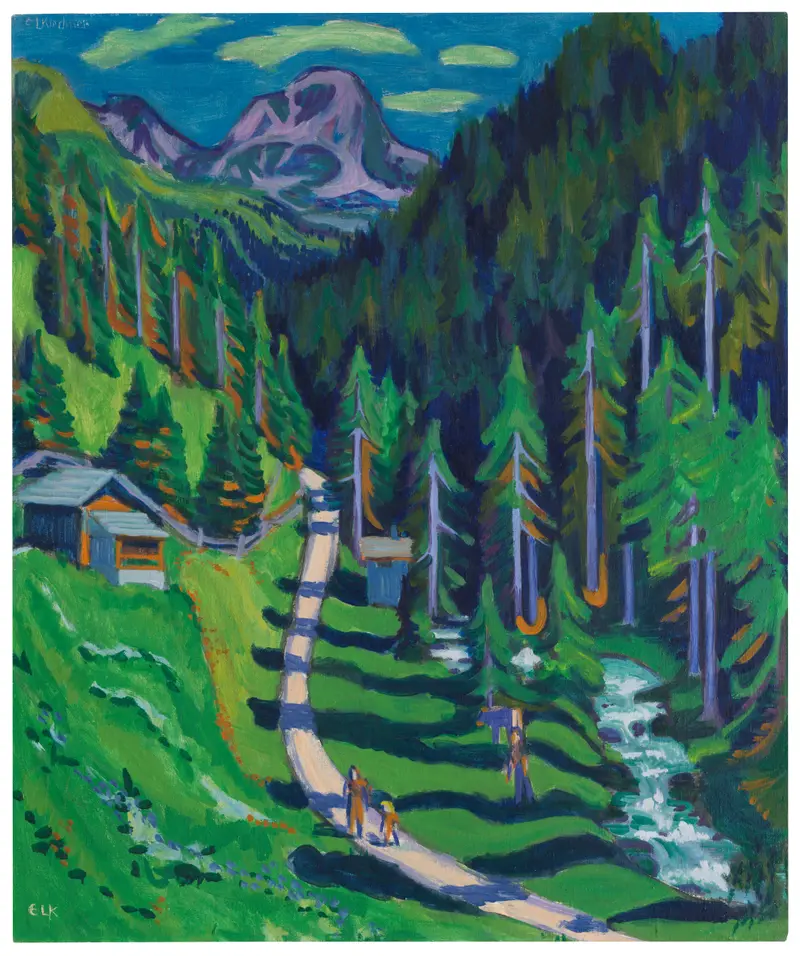
Sertigweg
Ernst Ludwig Kirchner
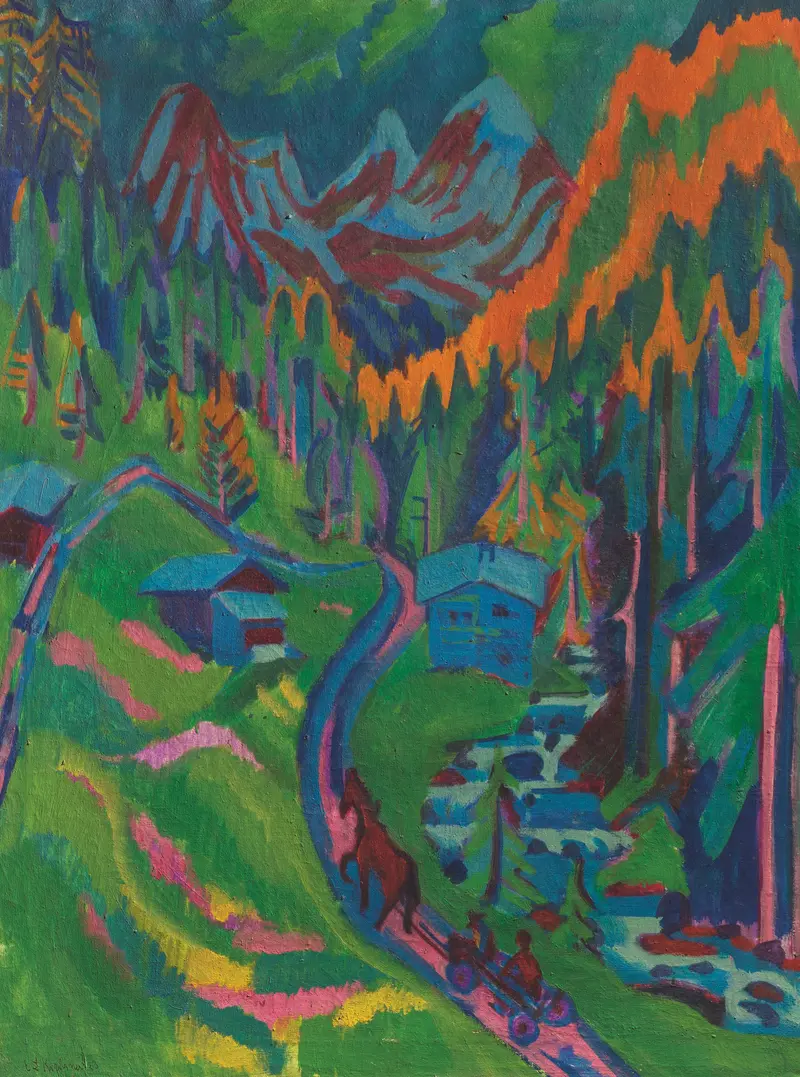
Sertigweg im Sommer
Ernst Ludwig Kirchner
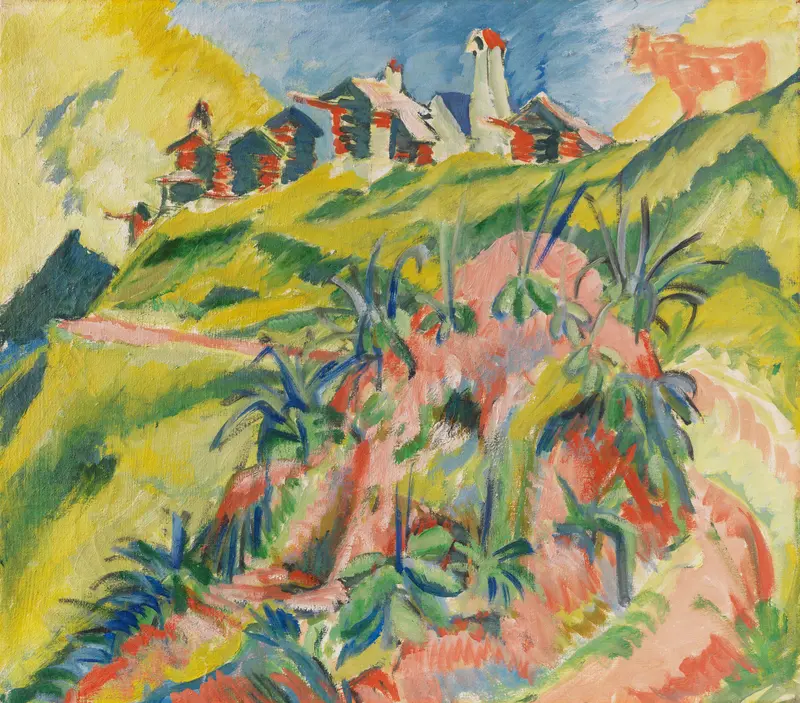
Bergdorf mit rosa Kuh
Ernst Ludwig Kirchner
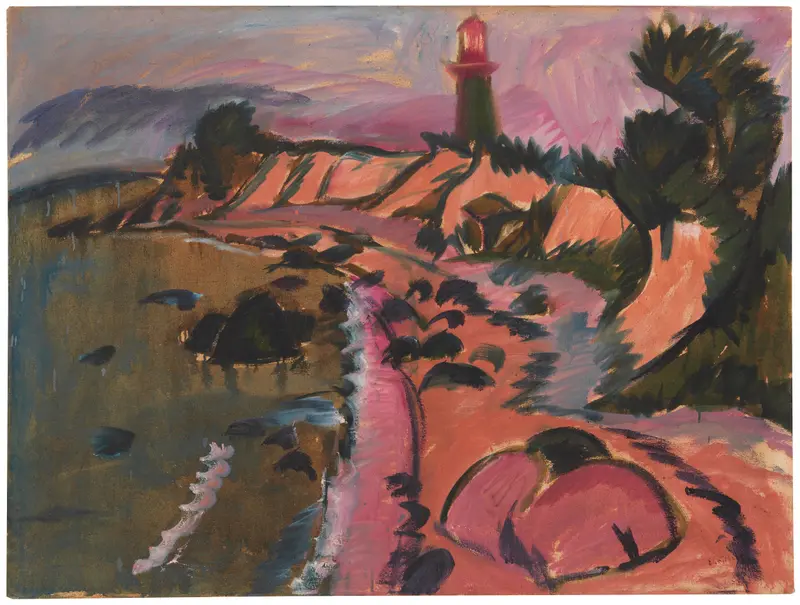
Fehmarnküste mit Leuchtturm
Ernst Ludwig Kirchner