Flowering Branch with Toad and Sea Snails — History & Facts
The eye is drawn first to the extraordinary toad, its back crowded with clusters that, on closer inspection, are living young—each detail rendered with the same care as the curling leaves above and the sea snails below. The branch stretches diagonally, anchoring the composition and leading the viewer’s gaze from the delicate pink blossoms down to the drama unfolding in the water. The toad’s powerful limbs and textured skin are set against the smooth, spiraled shells, a contrast that heightens the sense of studied observation.
Light falls evenly, flattening the scene just enough to remind us that this is a page from a scientific record, yet the arrangement feels anything but clinical. The palette is earthy and precise, the green of the plant and the red stripes of the shell echoing the natural world’s own harmonies. Works like this, created in the early eighteenth century, were at the frontier where art and science met. Maria Sibylla Merian’s meticulous studies, published in 1705 as part of her Metamorphosis insectorum surinamensium, documented the flora and fauna of Suriname with a directness that was new to European eyes.
These images were not just for curiosity’s sake—they were tools for understanding the cycles of life, intended for collectors, scientists, and the curious elite who funded such expeditions and publications. History has kept few traces of individual copies and commissions, but the survival of this work in a major collection speaks to the lasting fascination with Merian’s vision. Every detail invites the viewer to look again, not just at the art, but at the living world it so closely observes.
More Artworks by Maria Sibylla Merian
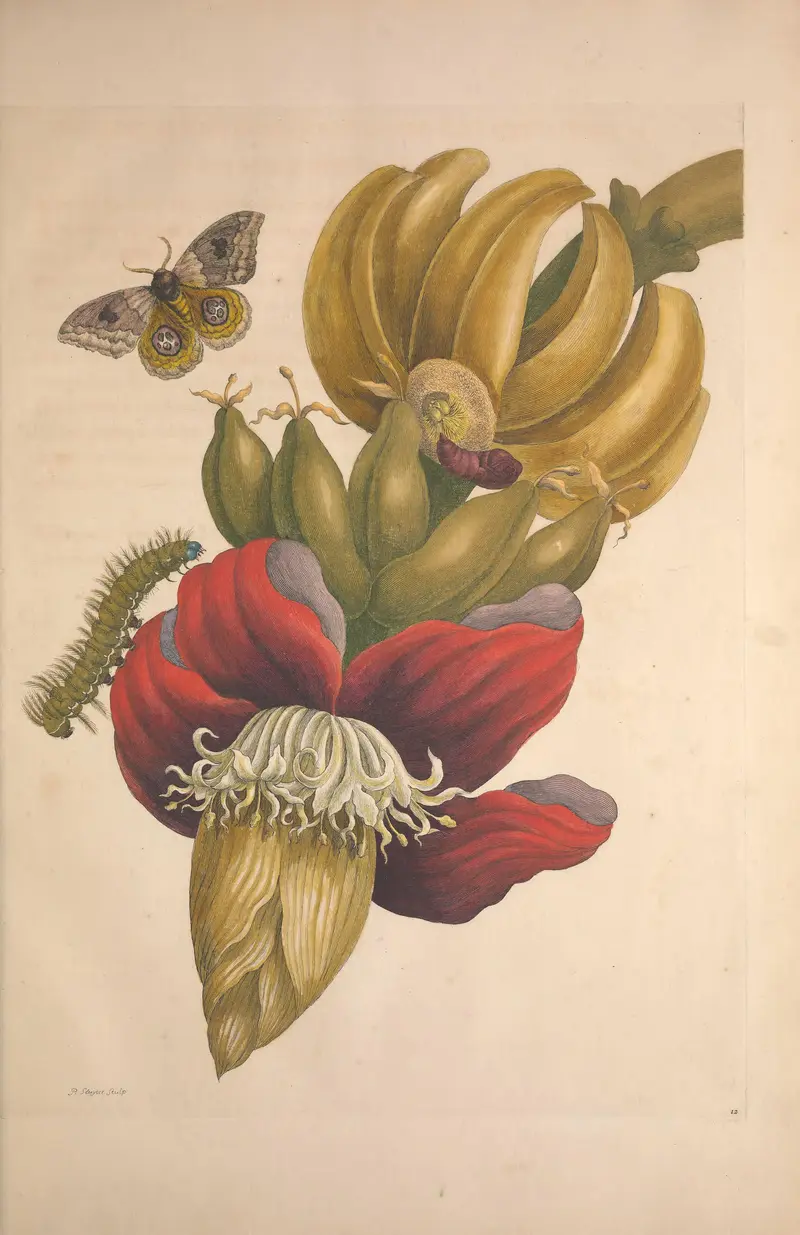
Banana with Bullseye Moth and Caterpillar
Maria Sibylla Merian
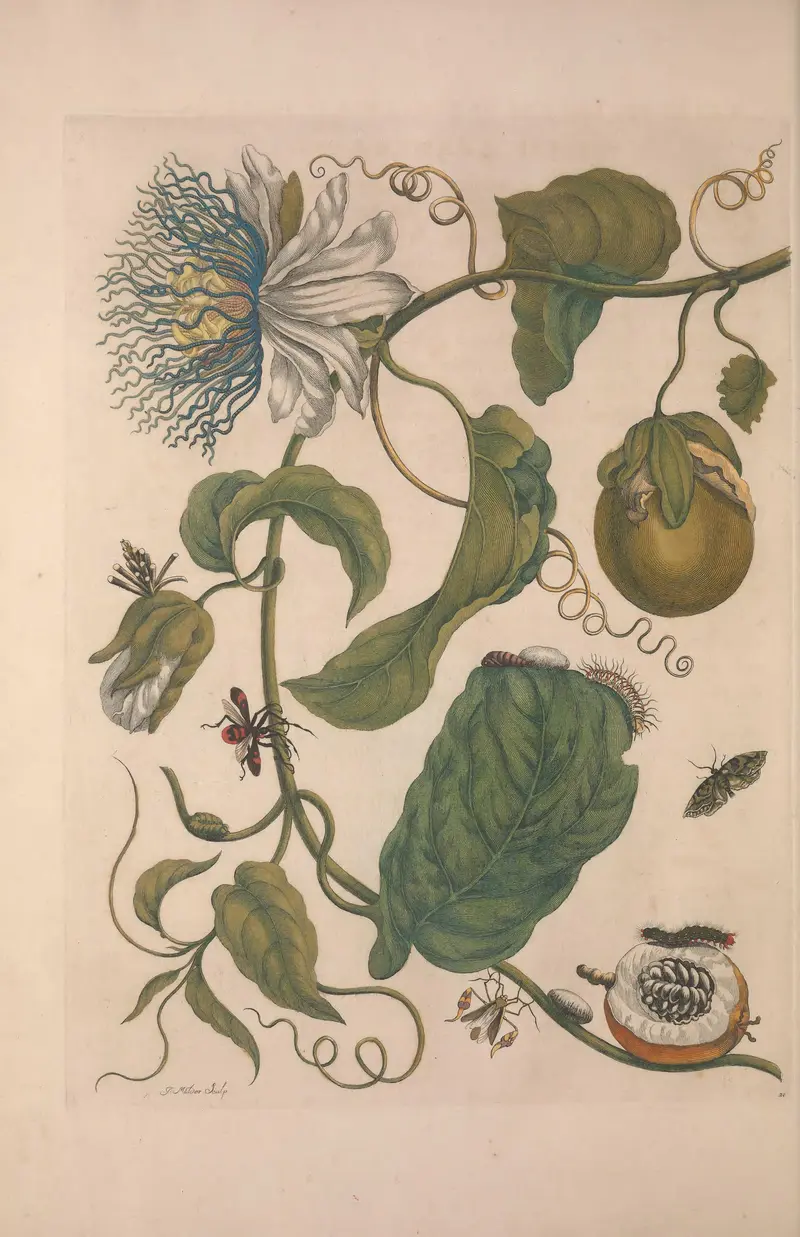
Passionflower with Caterpillars and Insects
Maria Sibylla Merian
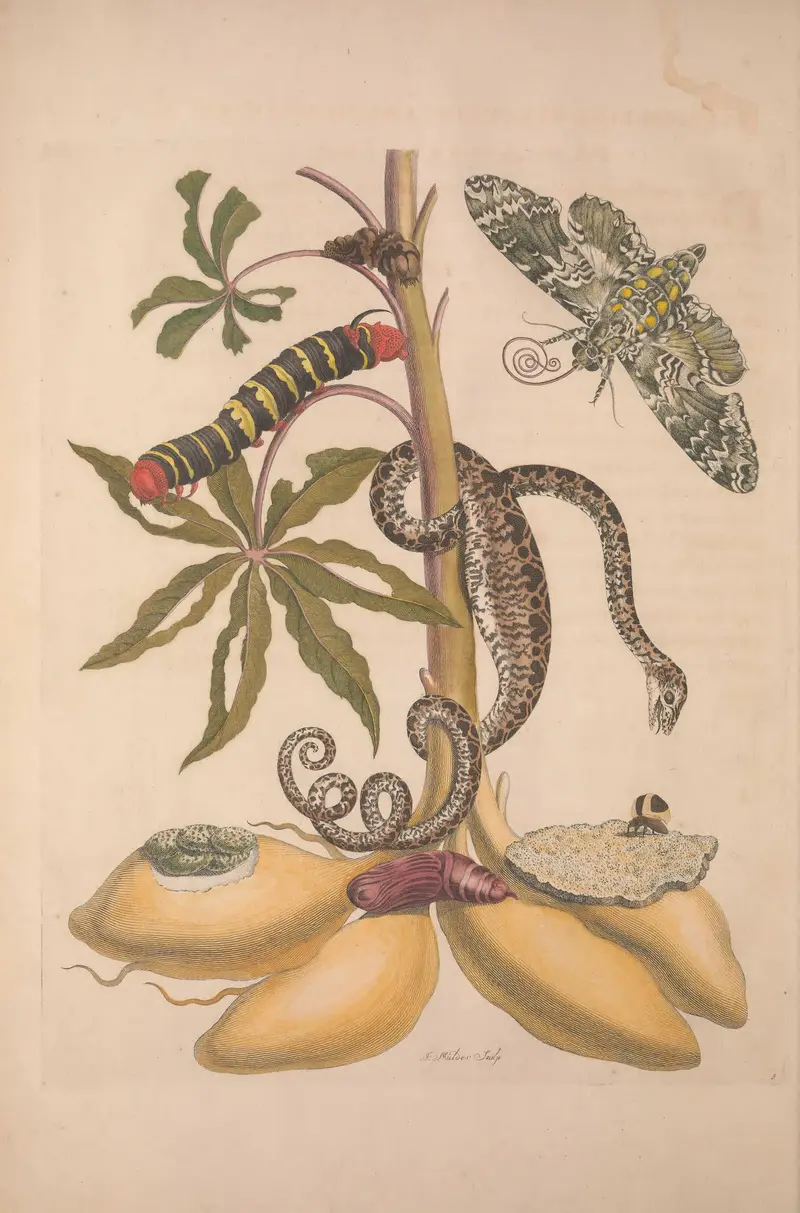
Cassava Root with Tree Boa and Sphinx Moth
Maria Sibylla Merian
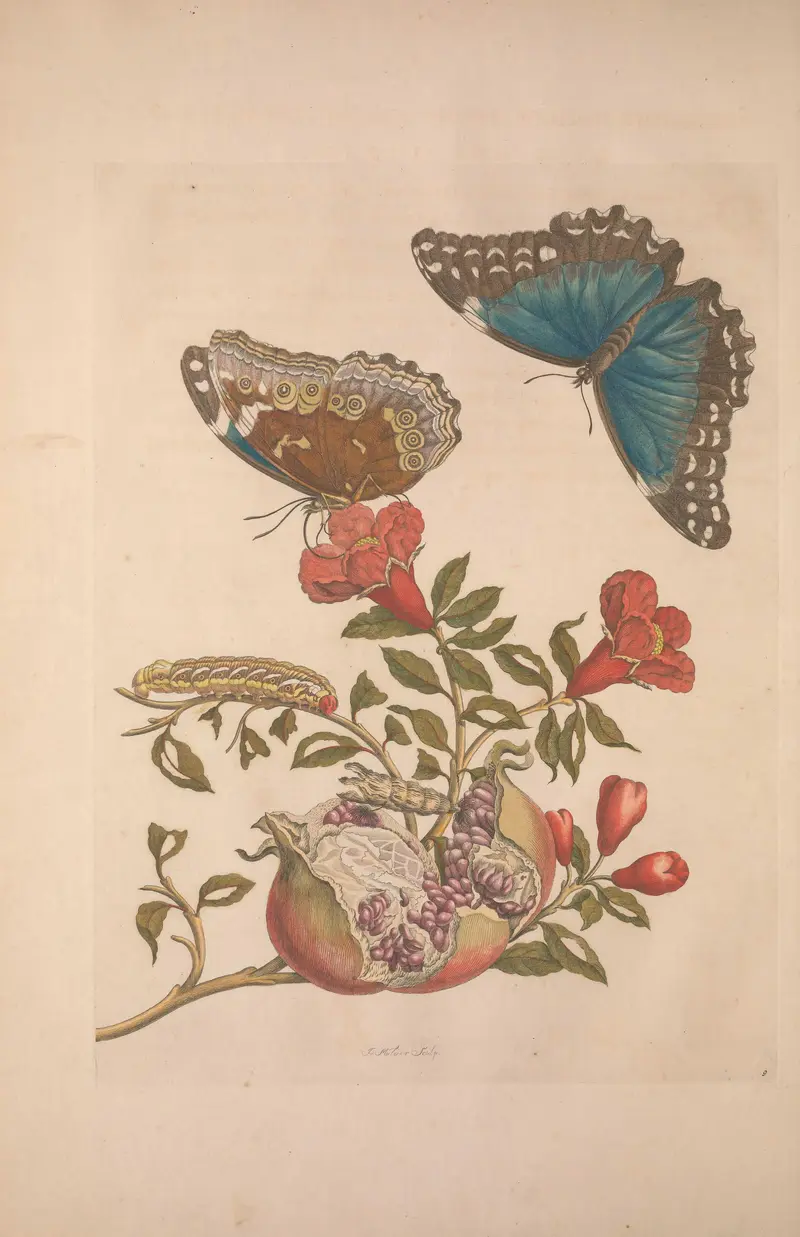
Pomegranate with Caterpillar, Pupa and Blue Butterfly
Maria Sibylla Merian
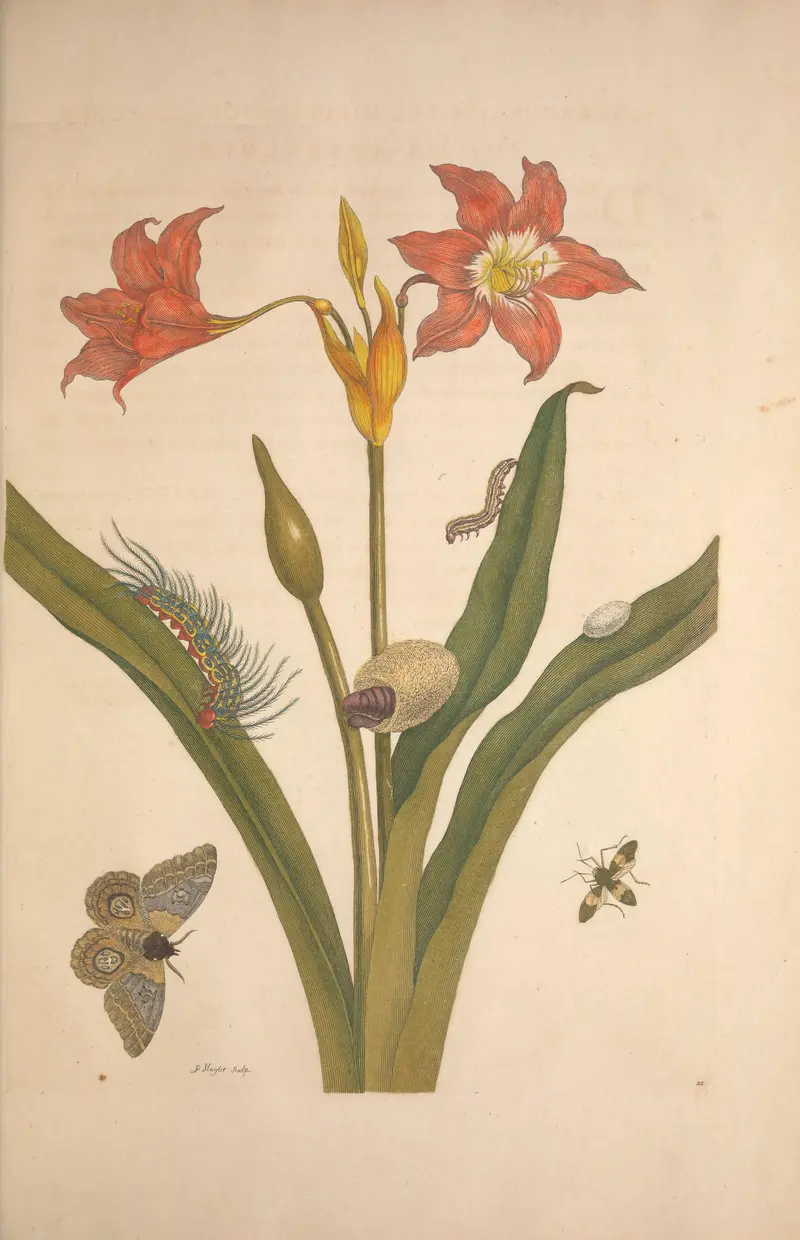
Red Amaryllis Lily with Moth and Caterpillars
Maria Sibylla Merian
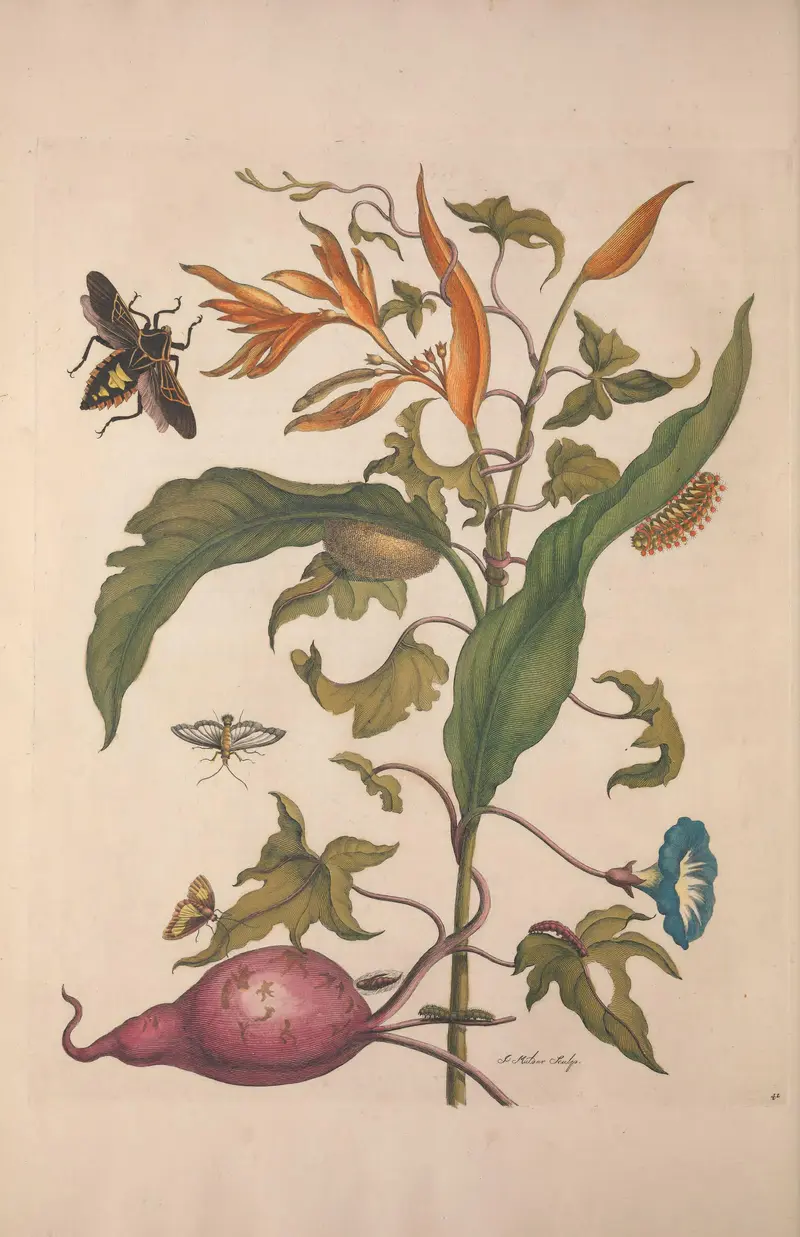
Sweet Potato with Beetle and Butterfly
Maria Sibylla Merian
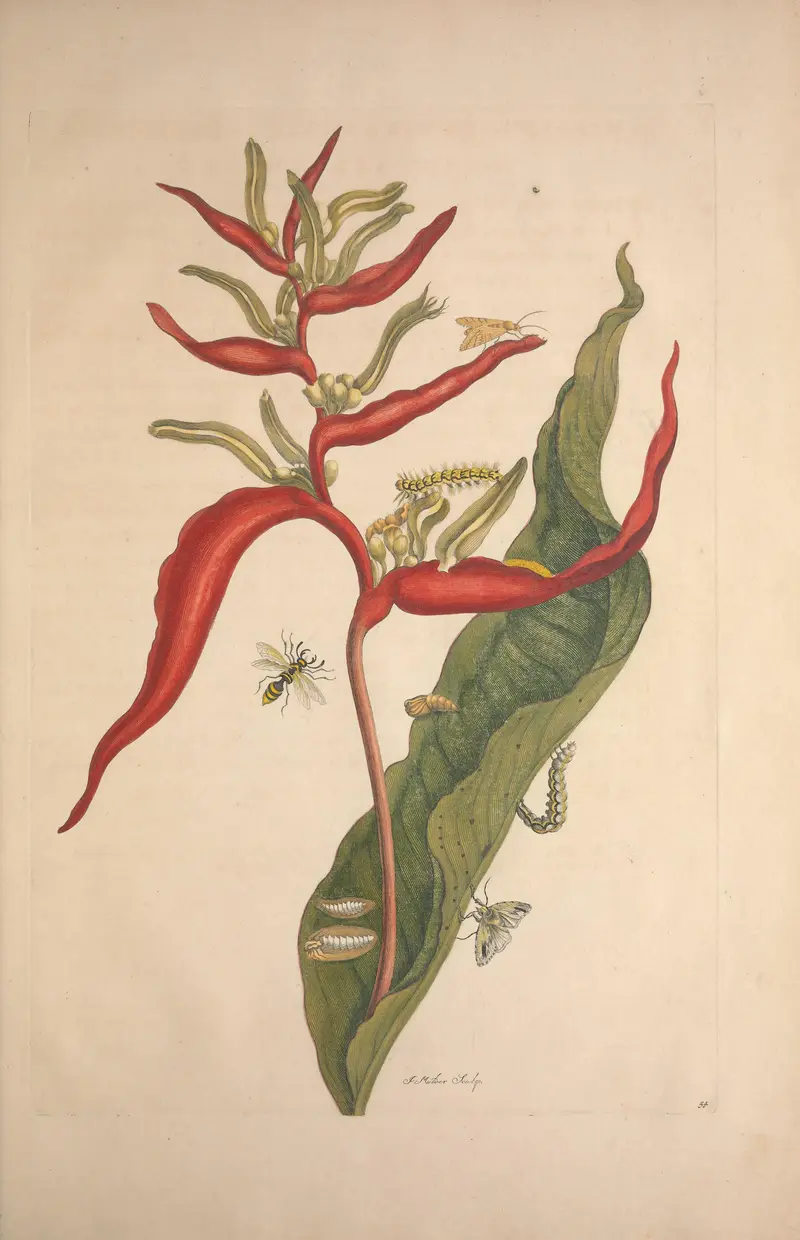
Heliconia with Moth
Maria Sibylla Merian
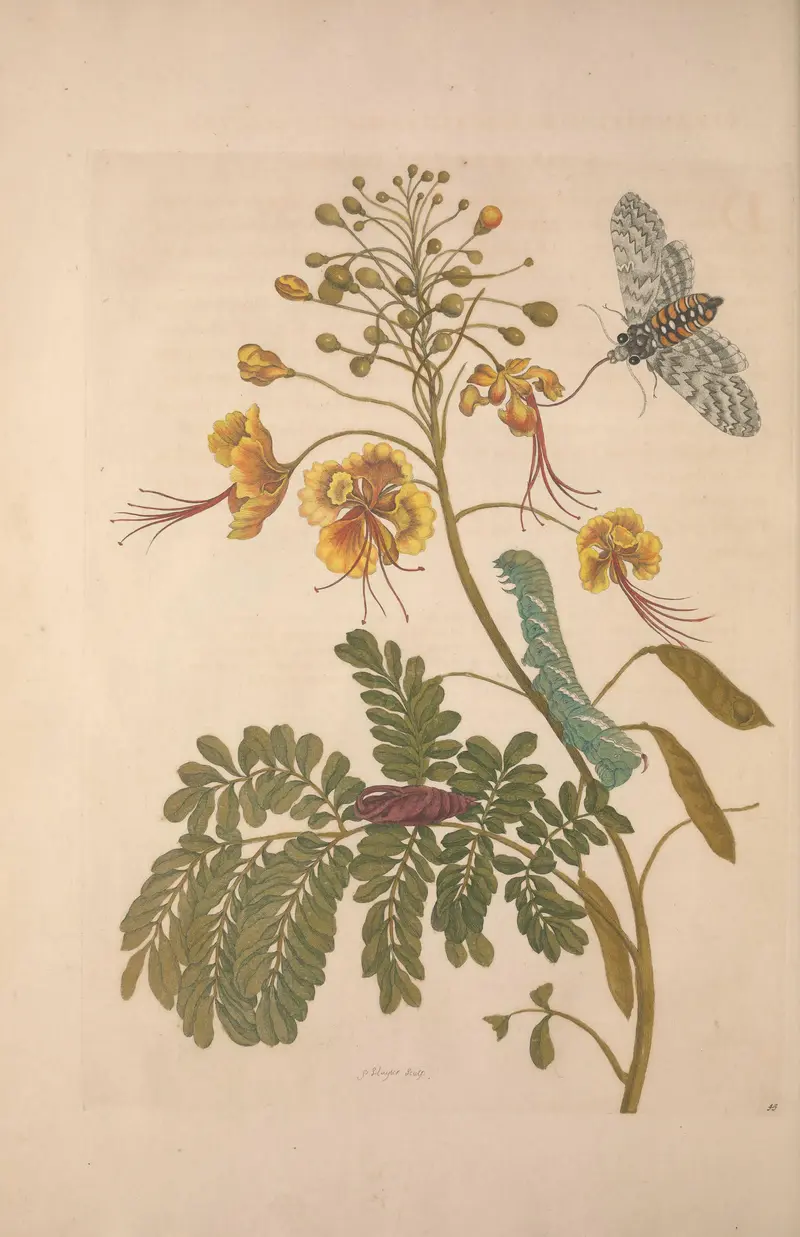
Mimosa with Moth and Caterpillar
Maria Sibylla Merian

Grapevine with Caterpillar and Moth
Maria Sibylla Merian
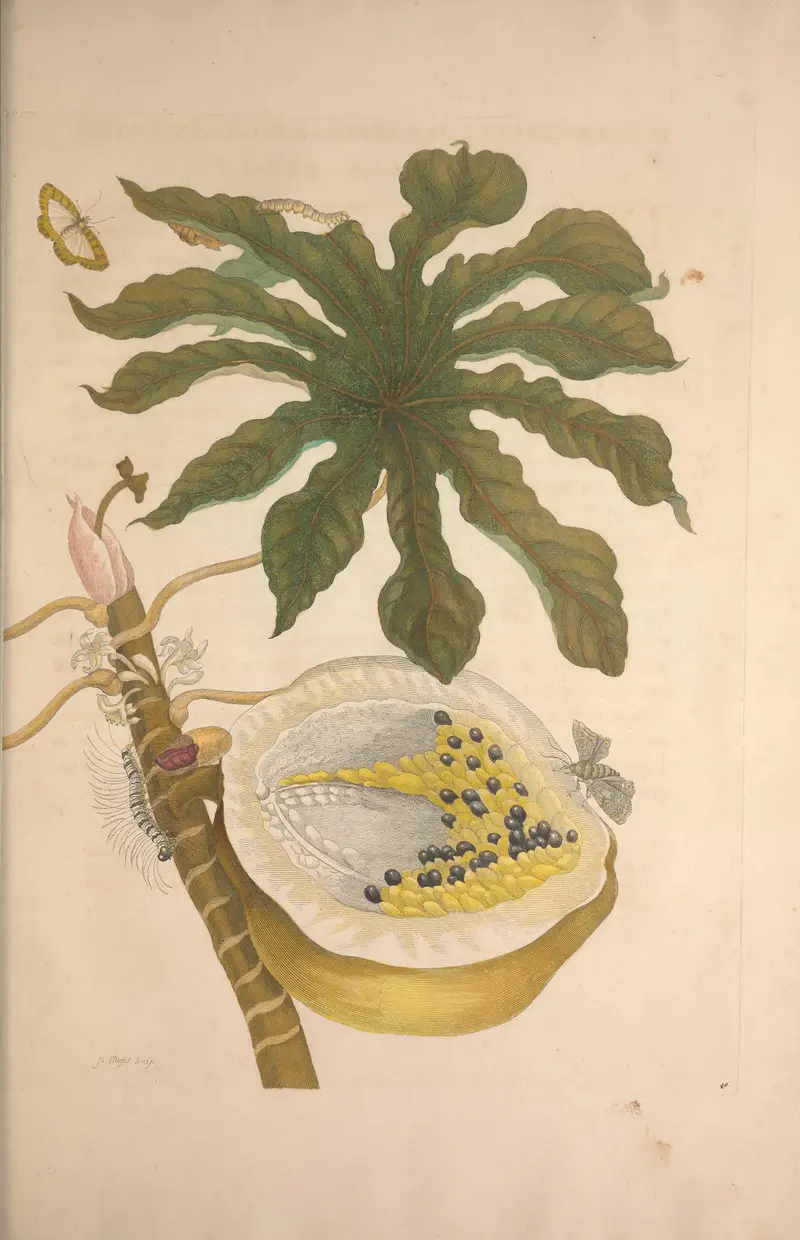
Papaya with Moth and Caterpillar
Maria Sibylla Merian