
Fluitspelende herder — History & Facts
Did the painter know this moment would outlive them? Each brushstroke of nostalgia and serenity captures an existence suspended in time, echoing the simple joys of pastoral life. Look closely at the young shepherd on the left, fingers deftly dancing over the flute, his expression a blend of concentration and delight. Notice how the soft light illuminates his face, casting gentle shadows that deepen the warmth of the scene. The surrounding landscape, with its undulating hills and lush trees, invites the viewer’s gaze to drift lazily, echoing a rhythm of tranquility that permeates the air.
Berchem’s masterful use of rich greens and soft browns harmonizes the figure with nature, creating a seamless connection between man and earth. There is a poignant contrast in this pastoral tableau: the serene act of music-making against the backdrop of an expansive, untamed landscape. The shepherd’s solitude hints at an emotional depth, a longing for connection amidst the vastness of nature. The distant sheep graze quietly, embodying the natural cycle of life, while the shepherd’s melody seems to transcend mere sound, inviting both joy and melancholy. During the years 1645 to 1650, Berchem painted this evocative piece while working in Italy, where the influence of the Roman landscape infused his art with vivid colors and rich textures.
This period was marked by the Baroque fascination with pastoral themes, as artists sought to capture the idyllic and the sublime in everyday life.
More Artworks by Nicolaes Pietersz Berchem
Browse all →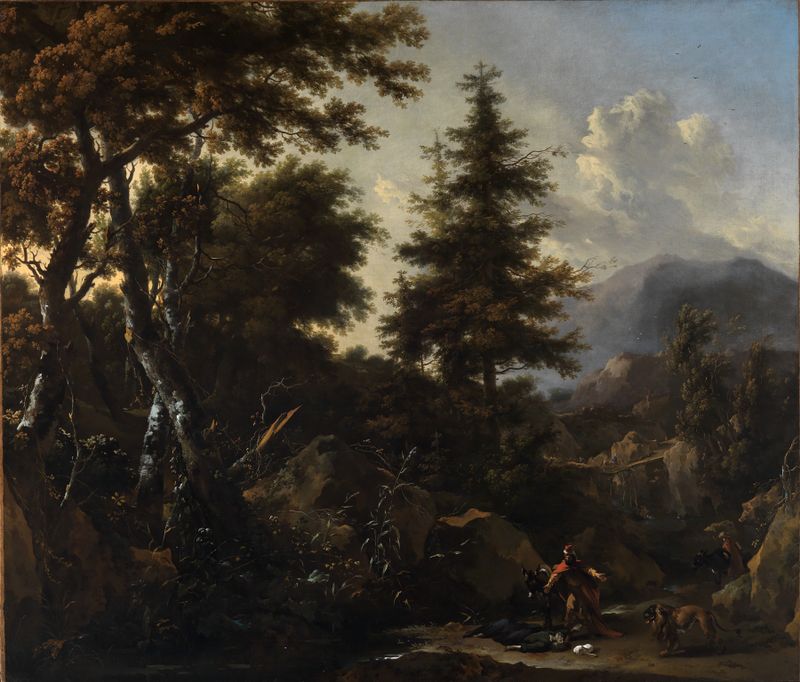
Schlucht im Bergwald mit alttestamentlicher Staffage
Nicolaes Pietersz Berchem
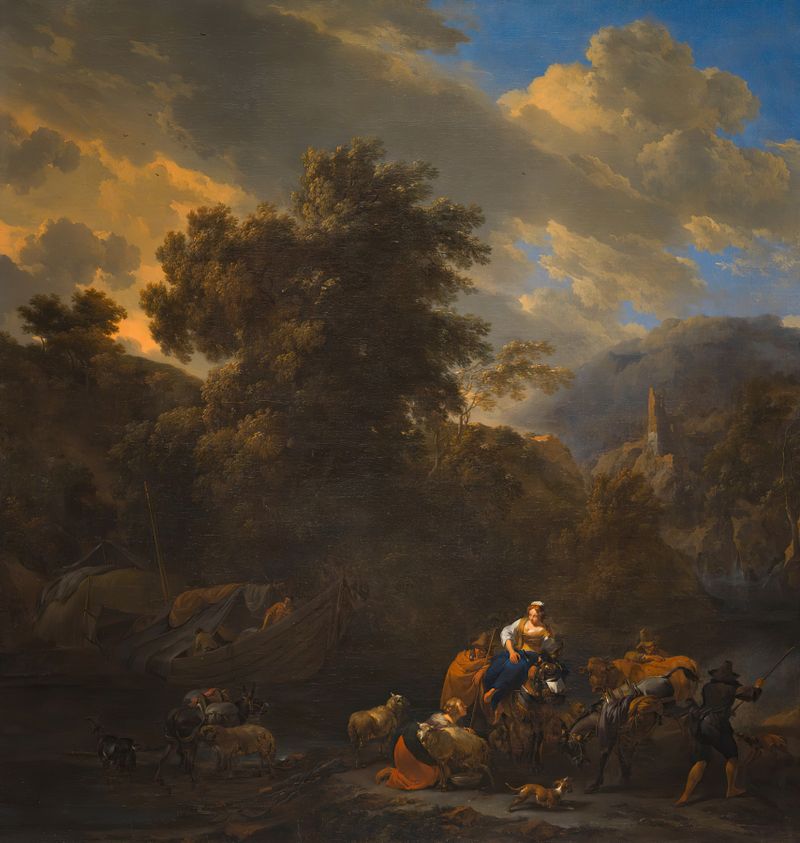
Italianate Landscape with Figures and Pack Animals on the Banks of a River
Nicolaes Pietersz Berchem
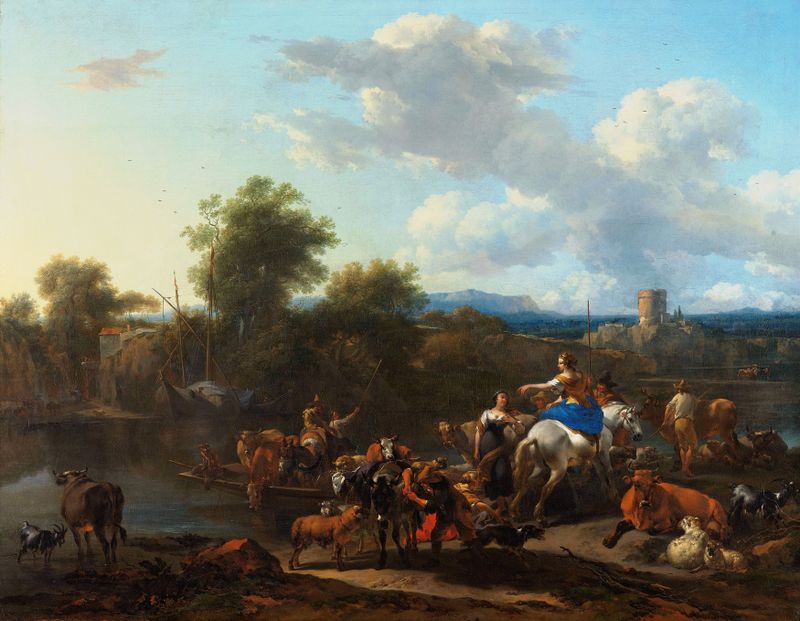
The Cattle Ferry
Nicolaes Pietersz Berchem
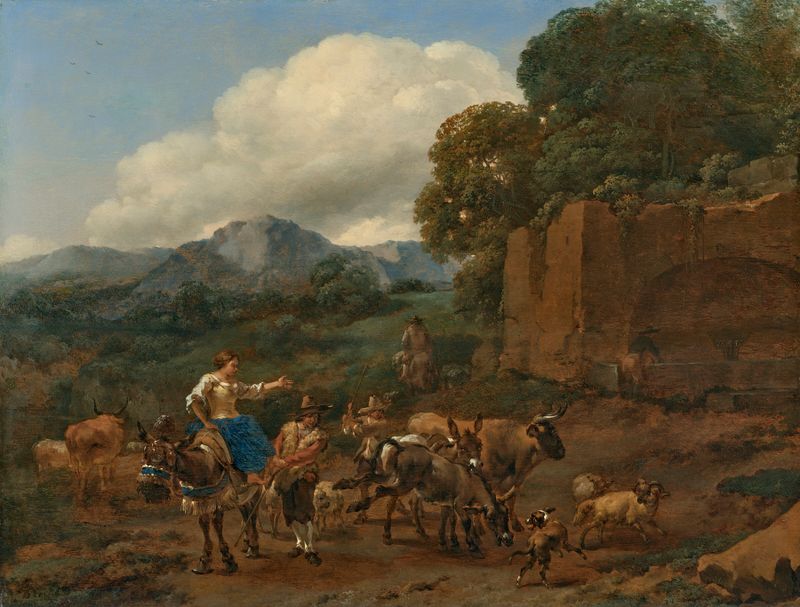
An Italianate landscape with a shepherdess on a mule and a shepherd, herding cattle, sheep, donkeys and dogs on a mountain track next to ruins
Nicolaes Pietersz Berchem
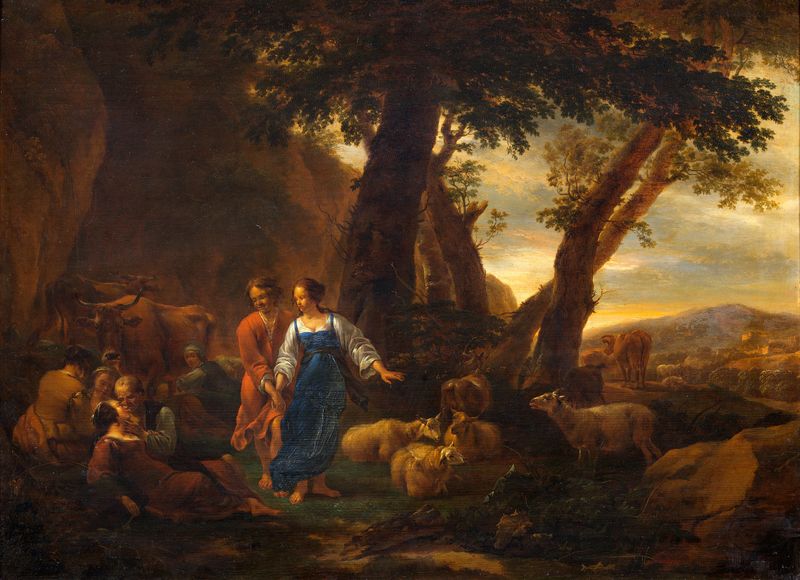
Landscape with Peasants and Cattle
Nicolaes Pietersz Berchem
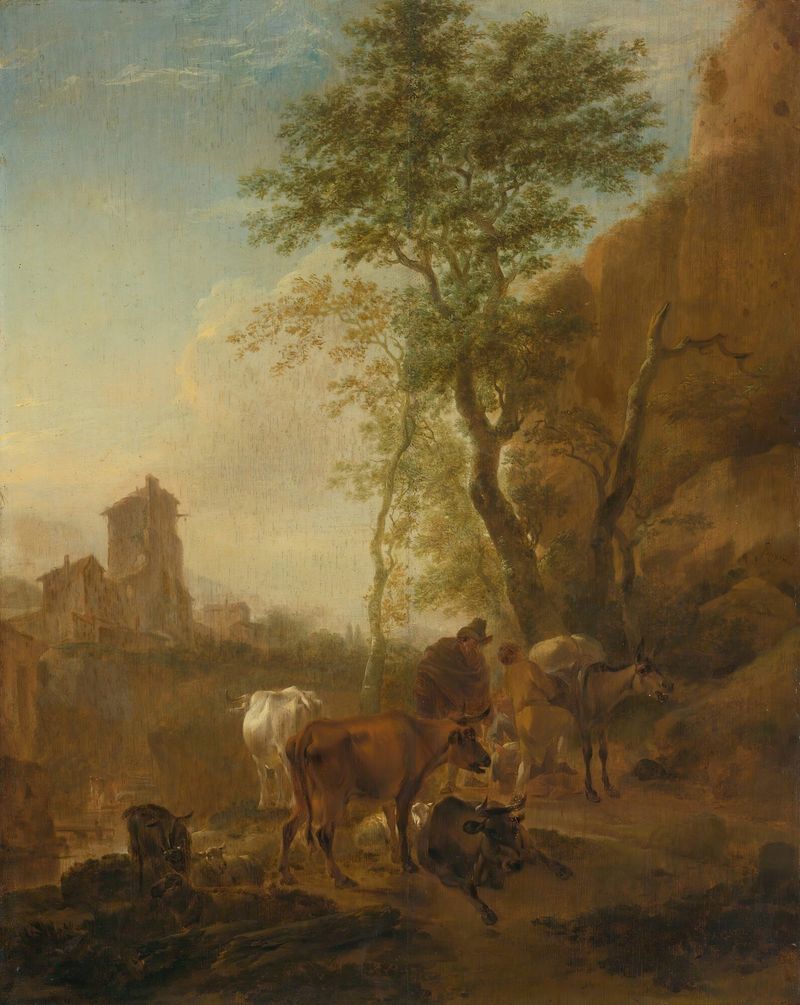
Italianate Landscape With Cows
Nicolaes Pietersz Berchem
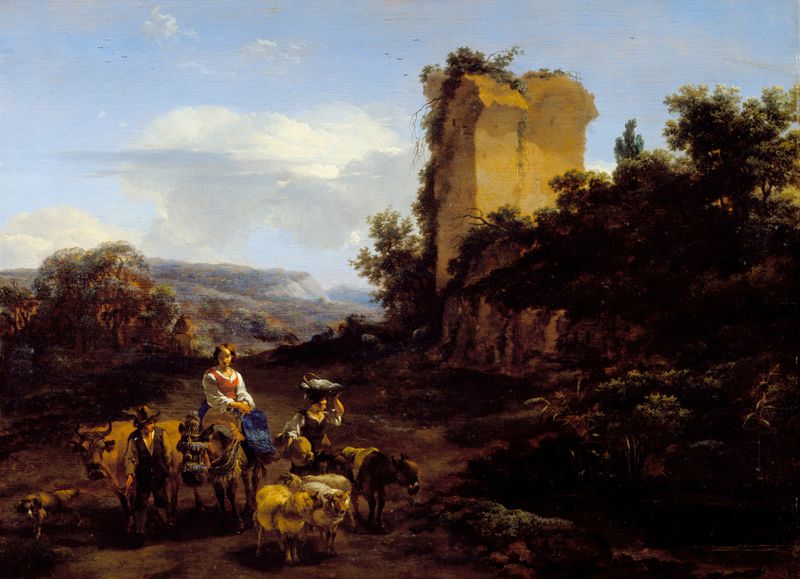
Landscape with Ruins and Travelers
Nicolaes Pietersz Berchem
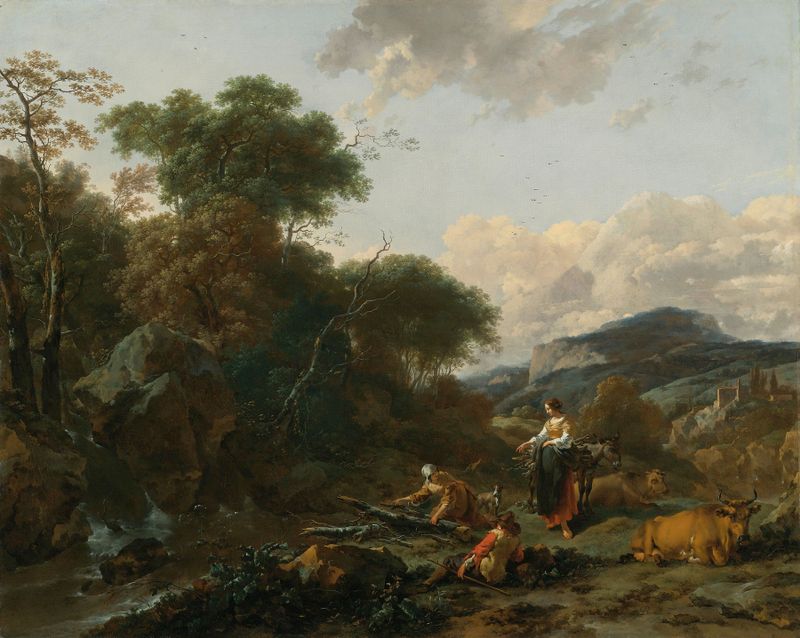
A Landscape With Figures
Nicolaes Pietersz Berchem
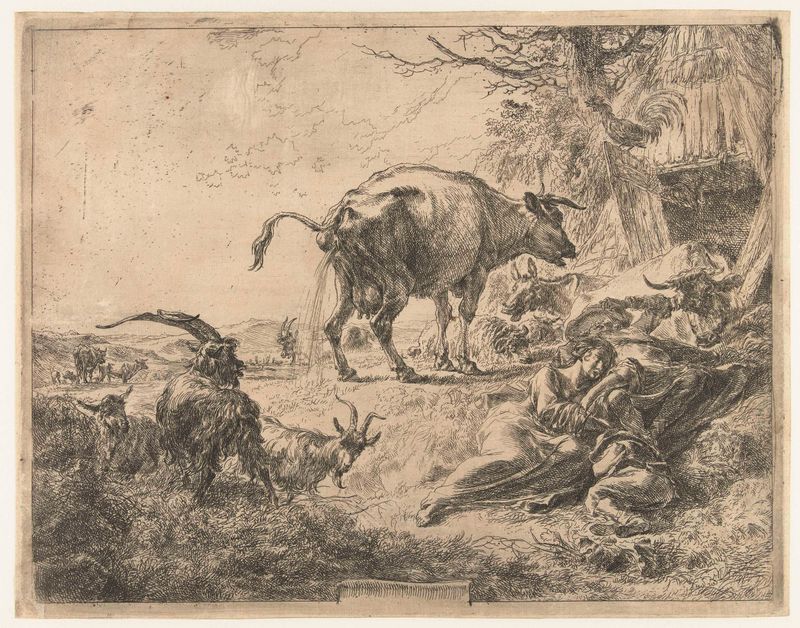
Slapende herdersfamilie en rustend vee
Nicolaes Pietersz Berchem
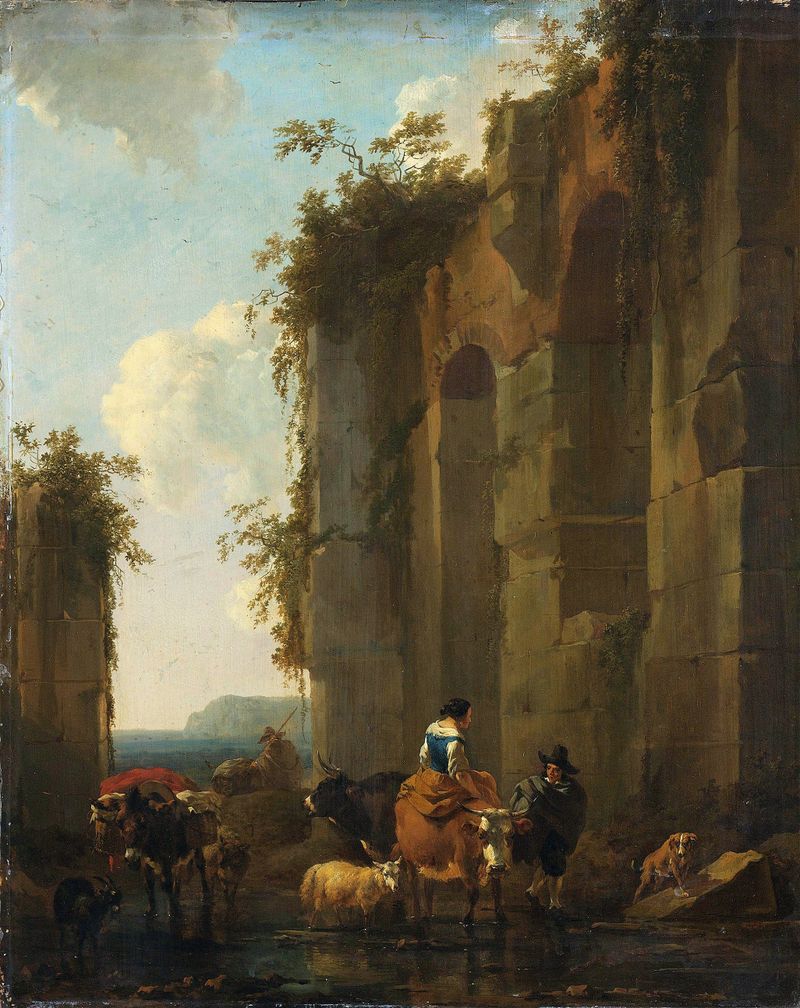
Ruins in Italy
Nicolaes Pietersz Berchem





