
Fluitspelende herder en spinster — History & Facts
What if silence could speak through light? In Nicolaes Pietersz Berchem's Fluitspelende herder en spinster, the stillness of an idyllic moment resonates deeply, conveying a sense of emptiness that invites reflection. Look to the left at the shepherd, his fingers poised delicately on the flute, his expression lost in a world of sound that we cannot hear. The soft golden light bathes the figures, enhancing the warmth of their surroundings while casting elongated shadows that hint at the passage of time. Notice how the lush greenery behind them contrasts with the pale, serene simplicity of the spinsters’ attire, drawing our eyes to the subtle connection between the two.
The composition feels balanced yet unhurried, as if time itself has paused in this tranquil scene. Delve deeper and you'll sense an underlying tension. The shepherd, engrossed in his music, seems unaware of the spinster’s gaze, hinting at unspoken emotions—perhaps longing or melancholy. The empty space surrounding them emphasizes their isolation; together yet apart, they exist in a world of their own—a commentary on human connection amid solitude.
The juxtaposition of the vibrant landscape with their introspective demeanor invites us to contemplate the nature of companionship, silence, and the echo of unfulfilled desires. In 1652, Berchem created this piece during a time of great artistic innovation in the Dutch Golden Age, where genre scenes were gaining popularity. Living in the artistic hub of Haarlem, he was influenced by the naturalism of his contemporaries. This painting reflects the serene beauty prevalent in his work, capturing not just a moment in time but also the profound emotional depths that can lie within stillness.
More Artworks by Nicolaes Pietersz Berchem
Browse all →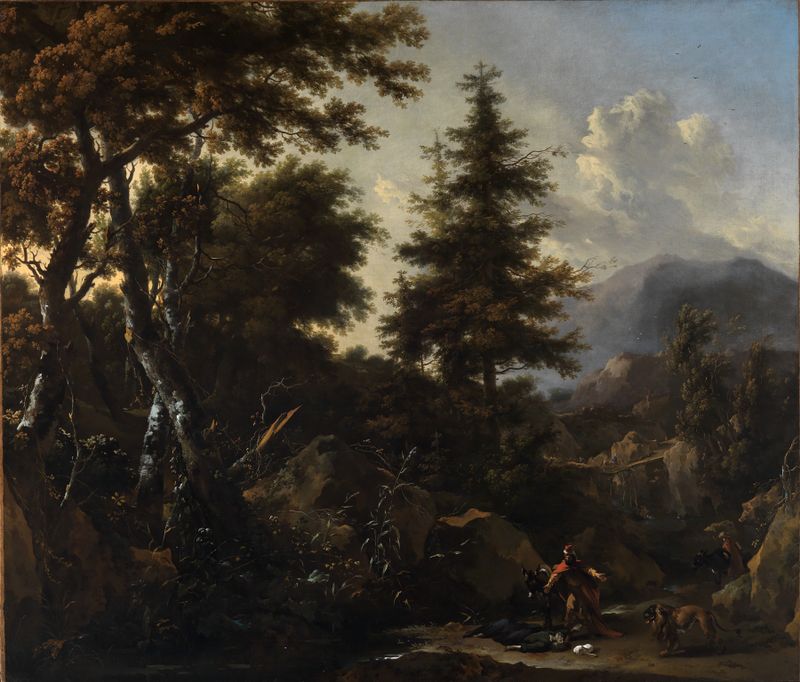
Schlucht im Bergwald mit alttestamentlicher Staffage
Nicolaes Pietersz Berchem
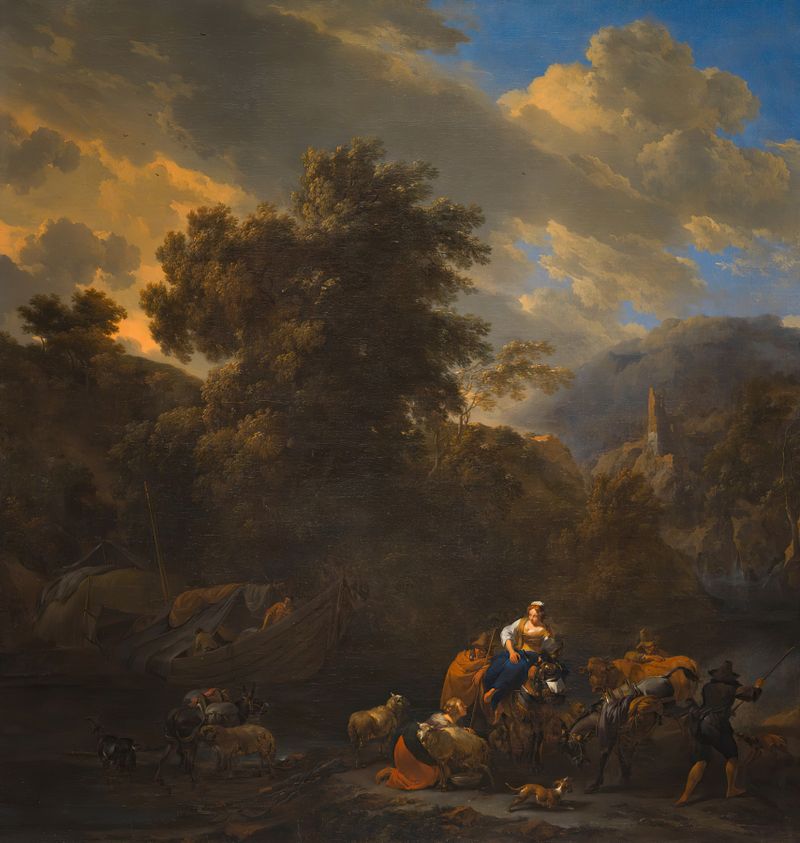
Italianate Landscape with Figures and Pack Animals on the Banks of a River
Nicolaes Pietersz Berchem
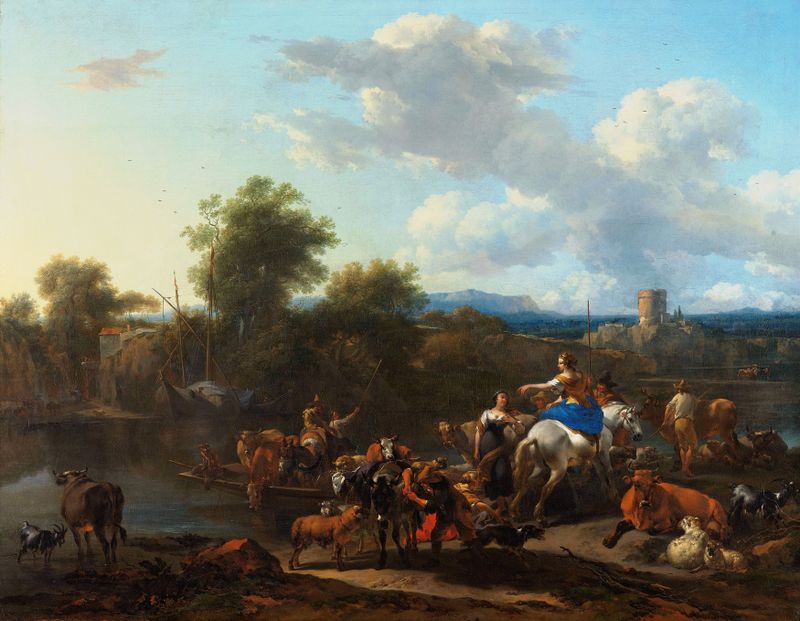
The Cattle Ferry
Nicolaes Pietersz Berchem
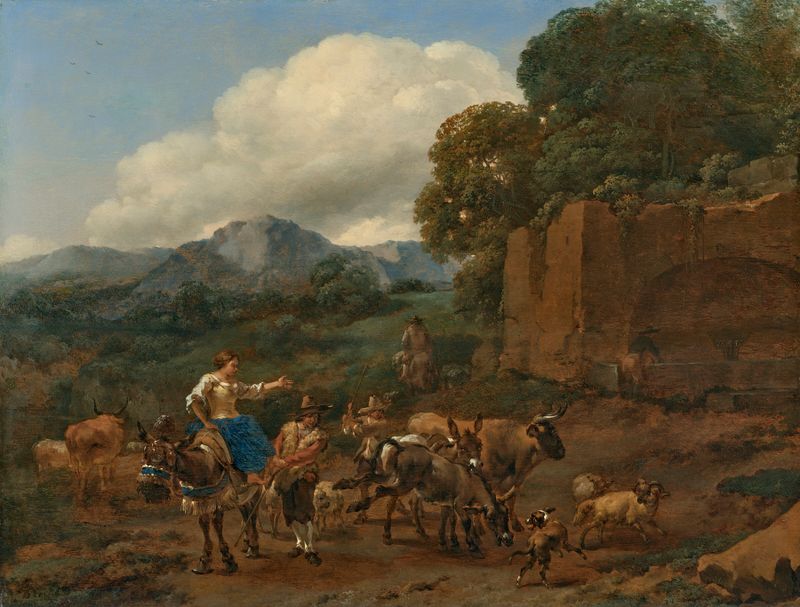
An Italianate landscape with a shepherdess on a mule and a shepherd, herding cattle, sheep, donkeys and dogs on a mountain track next to ruins
Nicolaes Pietersz Berchem
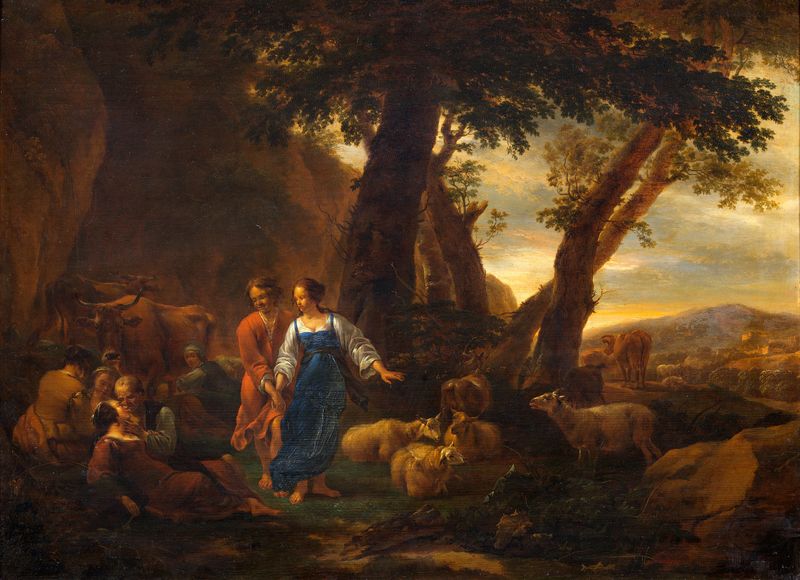
Landscape with Peasants and Cattle
Nicolaes Pietersz Berchem
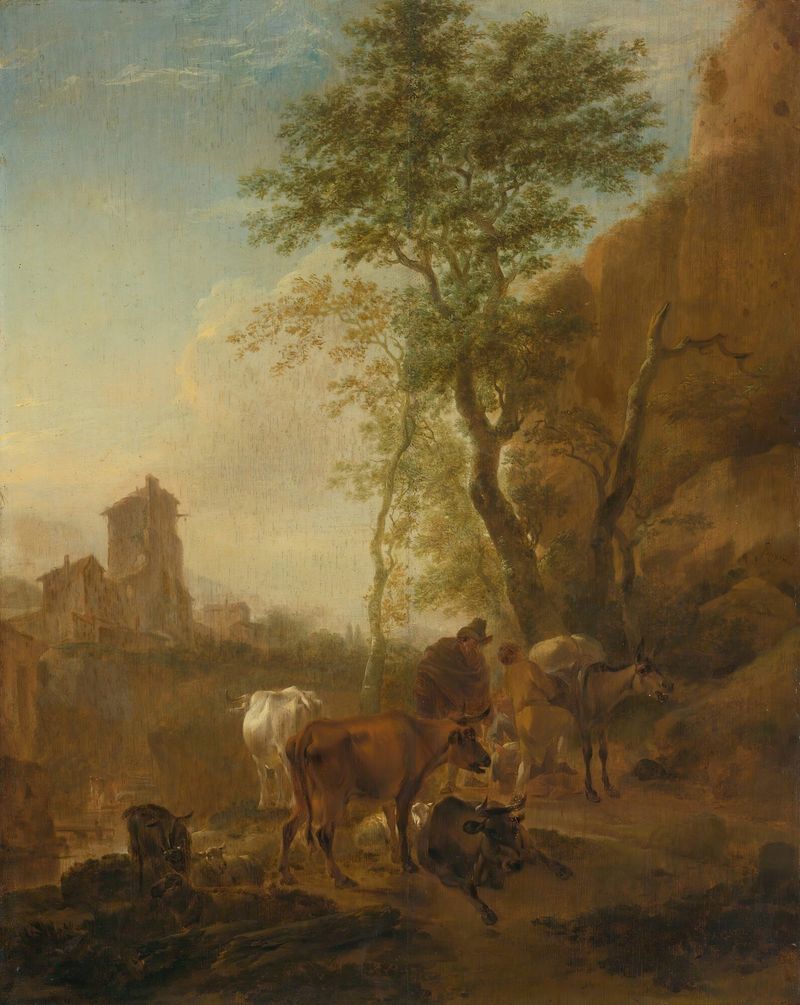
Italianate Landscape With Cows
Nicolaes Pietersz Berchem
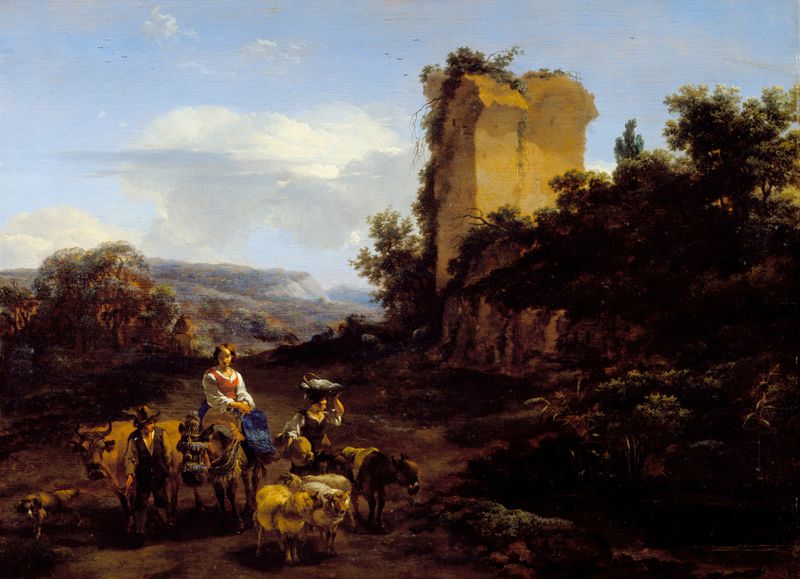
Landscape with Ruins and Travelers
Nicolaes Pietersz Berchem
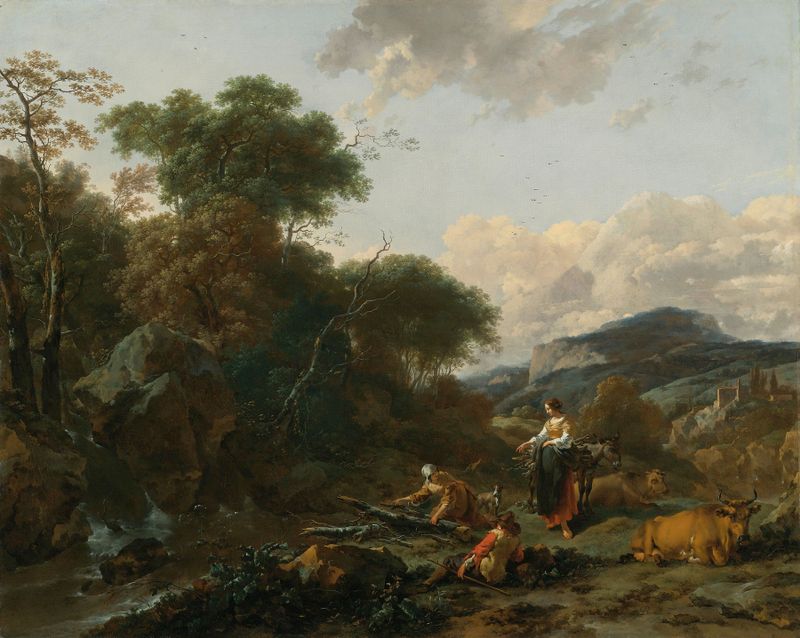
A Landscape With Figures
Nicolaes Pietersz Berchem
Slapende herdersfamilie en rustend vee
Nicolaes Pietersz Berchem
Ruins in Italy
Nicolaes Pietersz Berchem





