
Flusslandschaft — History & Facts
This notion of transformation embodies the delicate balance between innocence and experience in the natural world. It is within this serene landscape that one can find solace, evoking a sense of profound peace amidst the complexity of life. Look to the horizon where the soft, rolling hills meet the expansive sky, painted in hues of azure and gold. The gentle flow of the river, a silken thread weaving through the vibrant greenery, draws the eye across the composition.
Notice how the light dances upon the water’s surface, capturing fleeting moments of reflection that suggest both clarity and mystery. The delicate brushwork defines each element, allowing the viewer to feel the lushness of the foliage and the vibrancy of nature. This artwork is rich in contrasts, where tranquility meets the undercurrent of life's transitions. The juxtaposition of the calm river against the swelling clouds hints at the duality of peace and looming change.
The figures in the distance, though small and almost insignificant, symbolize the innocence of humanity's place within the vastness of nature. Here, Hackert masterfully encapsulates the vulnerability of life, lost yet cherished in the embrace of the earth. In 1801, Hackert painted this piece during a period marked by the neoclassical and romantic movements in art. He was residing in Italy, where he was inspired by the natural beauty surrounding him and the burgeoning interest in landscape painting.
Amidst political upheaval and the rise of industrialization, this work reflects both a nostalgia for a simpler existence and a celebration of nature’s eternal grace.
More Artworks by Jacob Philipp Hackert
Browse all →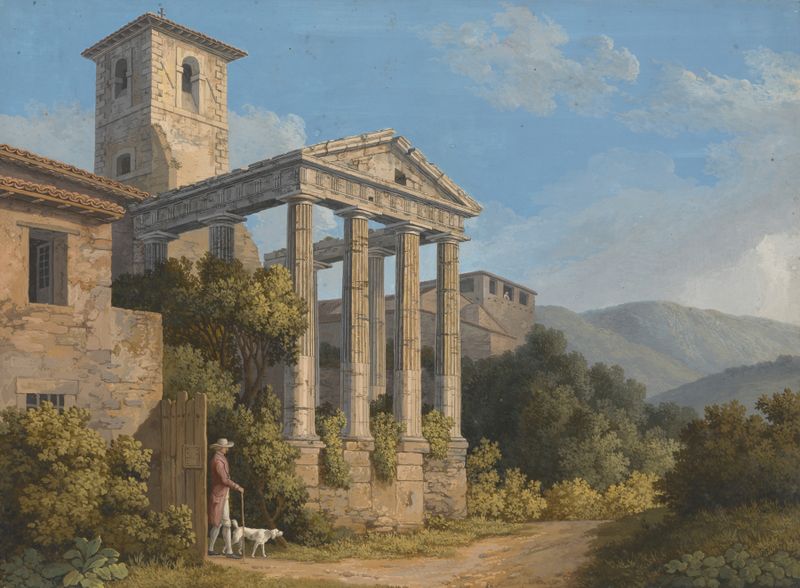
The Temple of Hercules in Cori near Velletri
Jacob Philipp Hackert
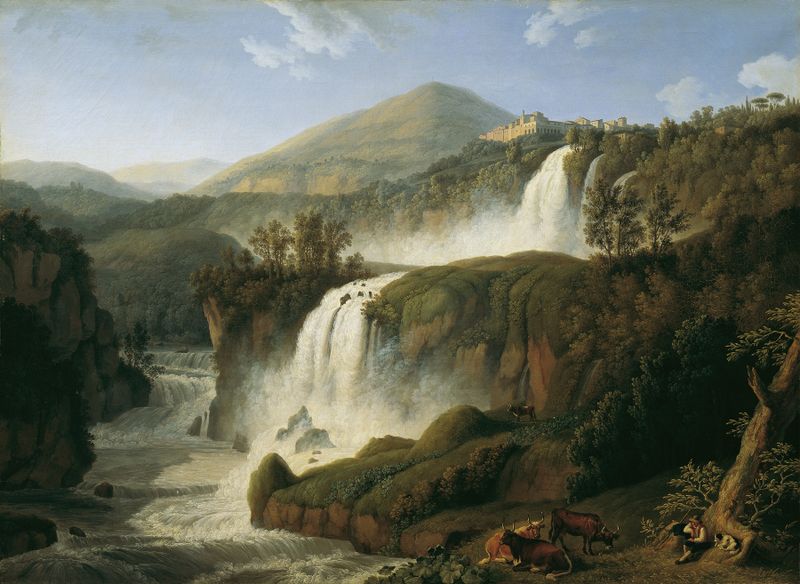
Der große Wasserfall von Tivoli bei Rom
Jacob Philipp Hackert
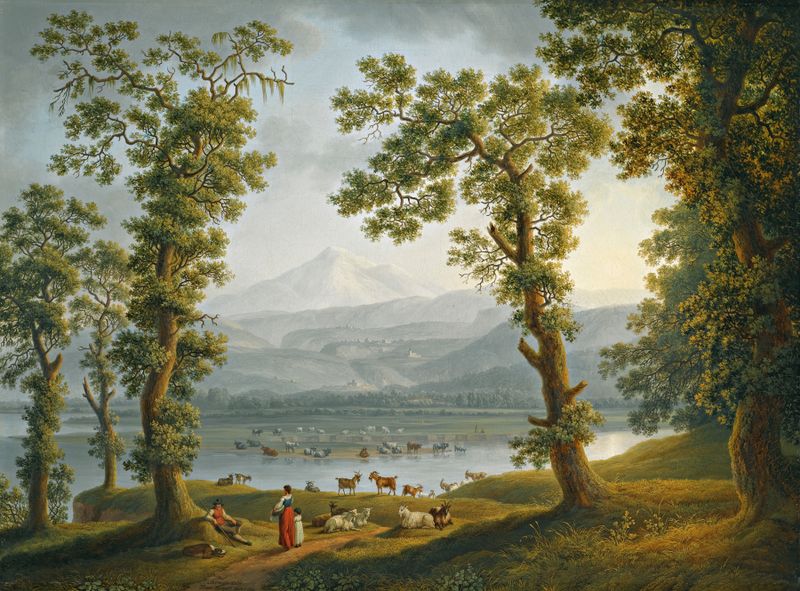
A View Across The Volturno River Towards Alife, Piedimonte Matese, And The Matese Mountains Rising Beyond
Jacob Philipp Hackert
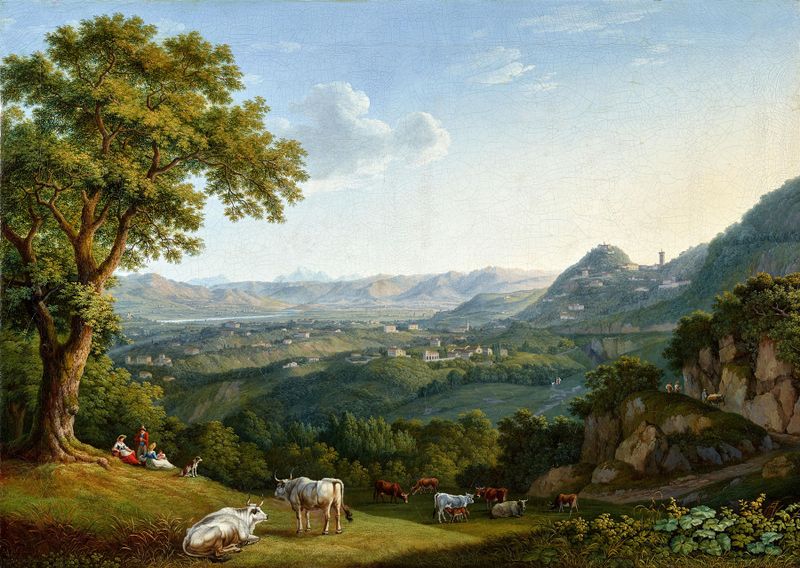
Blick auf das Arnotal und Fiesole
Jacob Philipp Hackert

A View Along The Valley Of The River Tiber Towards Poggio Mirteto, And Beyond The Sabine Mountains Lit Up By The Evening Sun
Jacob Philipp Hackert
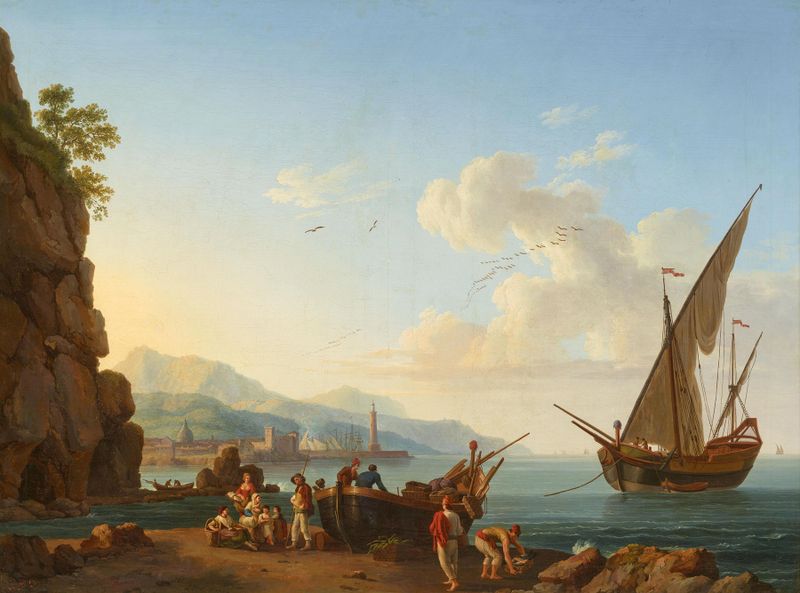
Fischer mit Boot am Strand
Jacob Philipp Hackert

Paysage
Jacob Philipp Hackert
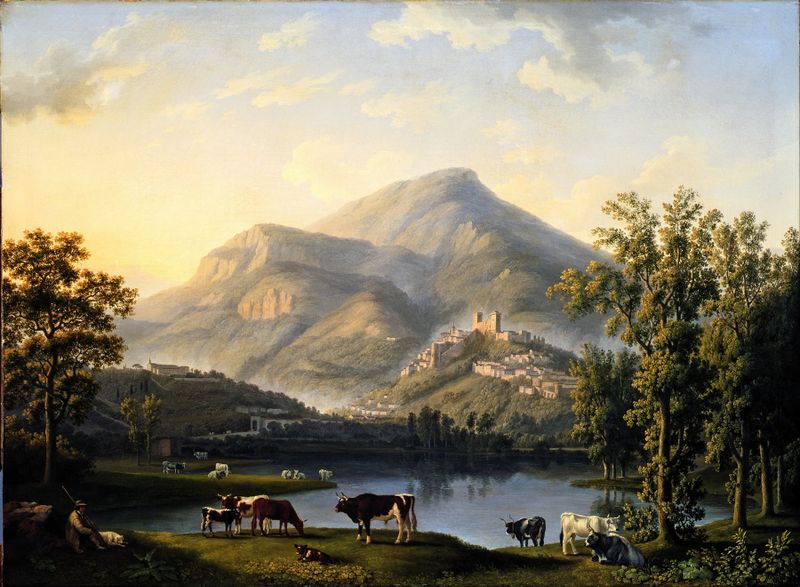
Veduta d’Itri (Landscape with a View of Itri)
Jacob Philipp Hackert
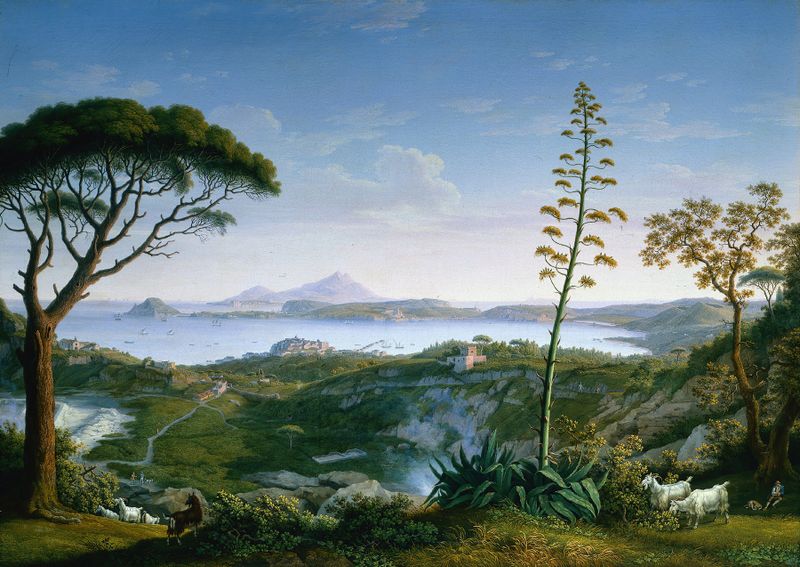
View of the Gulf of Pozzuoli from Solfatara
Jacob Philipp Hackert

View of Saint Peter’s in Rome
Jacob Philipp Hackert





