
Fort Dumpling, Narragansett Bay — History & Facts
In that stillness, reflections become windows to the soul, offering more than mere visual reality. Look to the right at the gentle ripples of Narragansett Bay, where the water transforms into a mirror, illuminating the surrounding landscape. The sun slices through the clouds, casting soft golden hues that dance across the surface, while the muted greens and browns of the land frame the scene in harmonious contrast. Notice how the artist’s deft brushwork captures the texture of the foliage and the solidity of Fort Dumpling, grounding the viewer in this serene moment where land and water meet. Beneath the surface beauty lies an emotional tension between permanence and transience.
The sturdy fort stands resolute against the shifting tides, symbolizing resilience, while the shimmering reflections hint at the fleeting nature of time. This duality invites contemplation on history, memory, and the passage of life itself. Each ripple on the water’s surface tells a story, echoing the impermanence of both nature and human endeavors. In 1885, the artist was deeply engaged with the American landscape movement, painting primarily in his studio in Pennsylvania while drawing inspiration from his coastal travels.
This period was marked by a growing appreciation for natural beauty and the evolving role of art in society. Richards’ work during this time reflects a keen observation of the environment, capturing not just the scenery but the emotions it evokes in the viewer.
More Artworks by William Trost Richards
Browse all →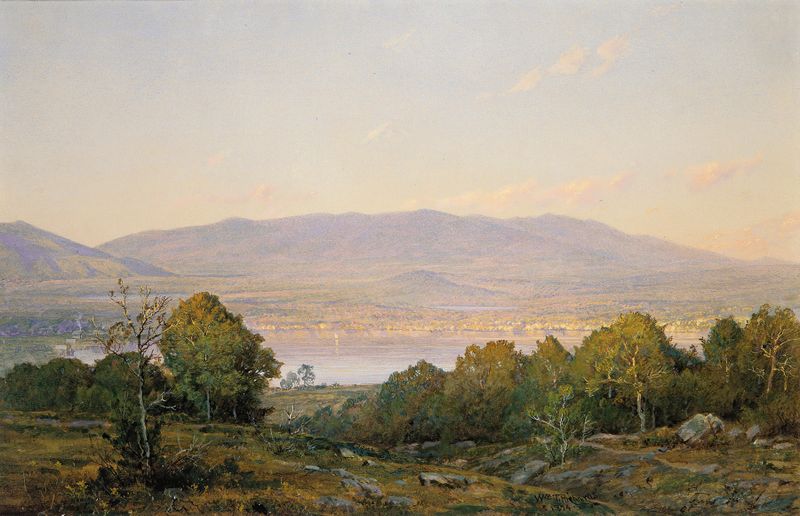
Sundown at Centre Harbor, New Hampshire
William Trost Richards

The Mount Washington Range, from Mount Kearsarge
William Trost Richards
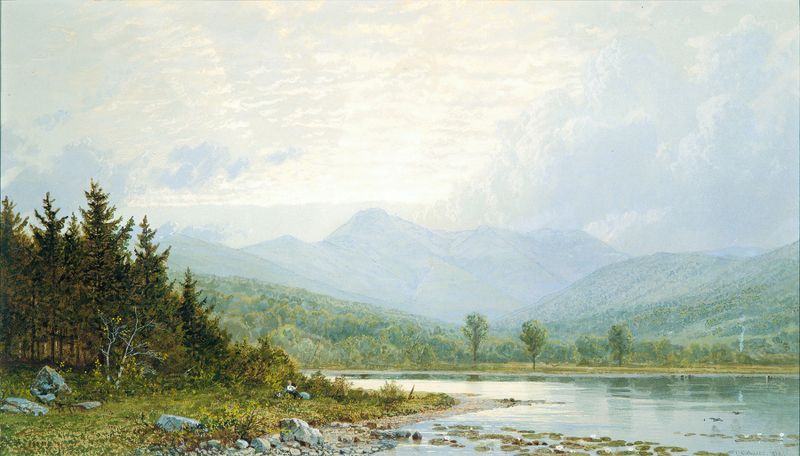
Sunset on Mount Chocorua, New Hampshire
William Trost Richards
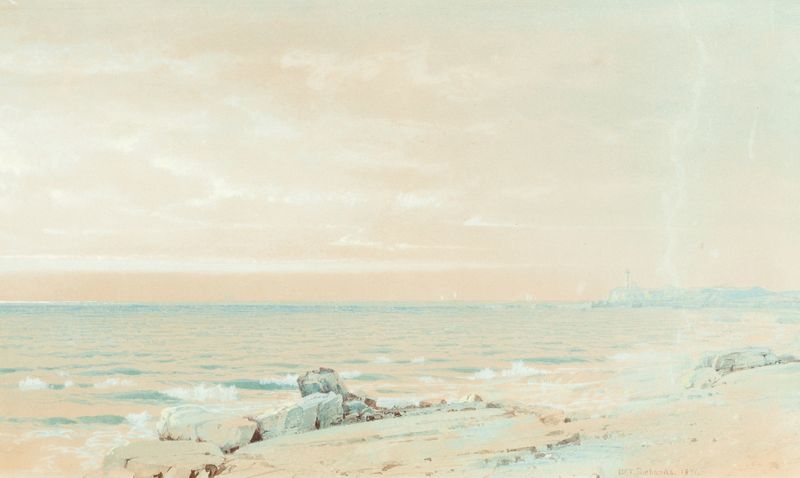
Point Judith
William Trost Richards

Moonlight on Mount Lafayette, New Hampshire
William Trost Richards

Point Judith
William Trost Richards

Dunes Near Atlantic City
William Trost Richards

Near Lands End, Cornwall
William Trost Richards

Coastal Scene
William Trost Richards

Crashing Waves
William Trost Richards





