
Francis of Assisi before the Sultan Al-Kamil Muhammad al-Malik — History & Facts
In 1219, at the height of the Fifth Crusade, Francis of Assisi crossed enemy lines to meet Sultan Al-Kamil Muhammad al-Malik in Egypt—a gesture so radical that even centuries later, it was retold as a marvel of courage and faith. Fra Angelico’s Francis of Assisi before the Sultan Al-Kamil Muhammad al-Malik, painted in 1429, captures this moment of dialogue and risk, when the Christian friar sought peace not through arms but through words. The episode, recorded by early Franciscan chroniclers, became a cornerstone of Franciscan identity and was retold in sermons and art across Europe.
The painting’s very existence testifies to the enduring fascination with this encounter, which challenged the boundaries between faiths and cultures in a time of war. At the heart of the composition, Fra Angelico chooses the instant when Francis, barefoot and humble, stands before the richly robed Sultan, his hand raised in a gesture of both greeting and blessing. The Sultan, seated on a throne, listens intently, his attendants watching with wary curiosity. The contrast between Francis’s plain habit and the Sultan’s opulent garments underscores the gulf between their worlds, while the delicate gold leaf—typical of early Renaissance religious works—signals the sacredness of the meeting.
The artist’s gentle handling of light bathes Francis in a soft glow, suggesting divine favor, much as Giotto did in his frescoes of Francis’s life at Assisi. Yet unlike Giotto’s more narrative approach, Fra Angelico distills the scene to its essence: a moment of encounter, mutual recognition, and fragile hope. Although the exact patron of this panel remains uncertain, it likely formed part of a larger altarpiece or predella dedicated to the life of Francis of Assisi, commissioned for a Franciscan church in Tuscany. Over the centuries, the painting’s whereabouts have been less well documented than some of Fra Angelico’s grander works, but its style and subject place it firmly within his early period, when he was synthesizing Gothic traditions with the new naturalism of the Renaissance.
Today, the work stands as a testament to the ideals of dialogue and humility, bridging not only the worlds of Christian and Muslim, but also the medieval and the modern.
More Artworks by Fra Angelico

Condemnation of St Lawrence by the Emperor Valerian
Fra Angelico
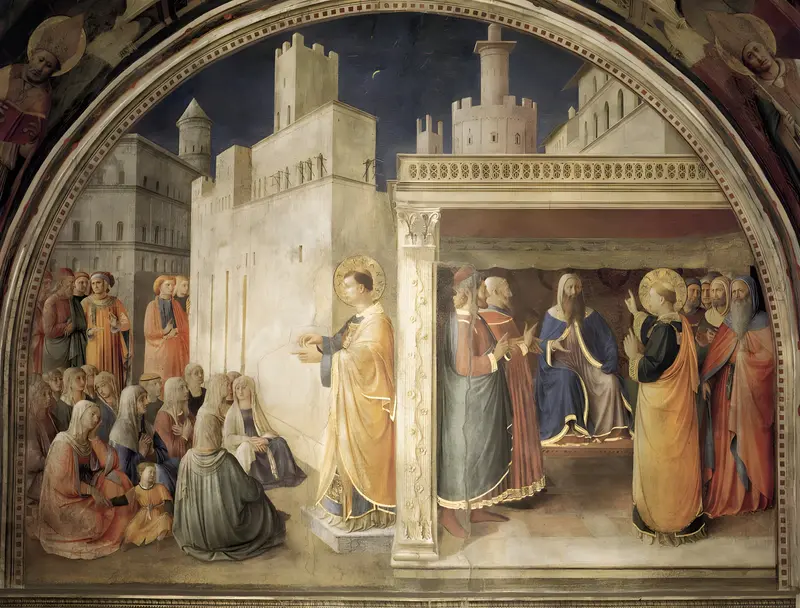
Lunette of the north wall
Fra Angelico
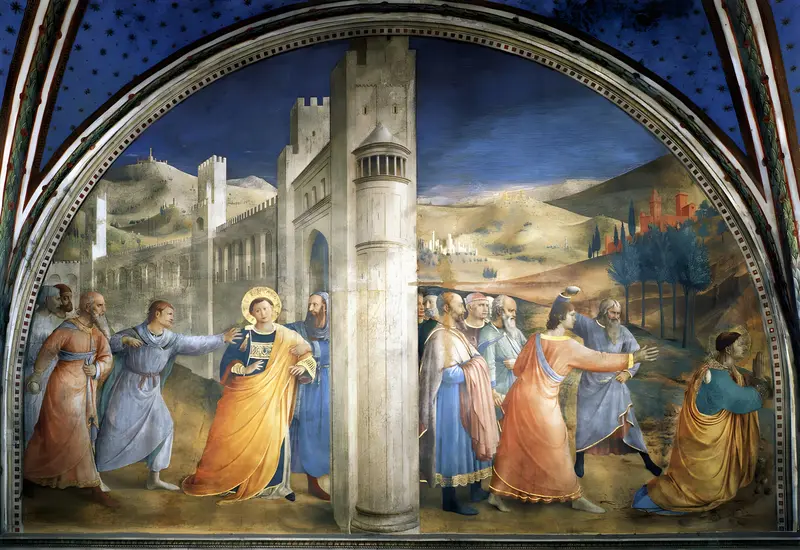
Lunette of the east wall in Niccoline Chapel
Fra Angelico
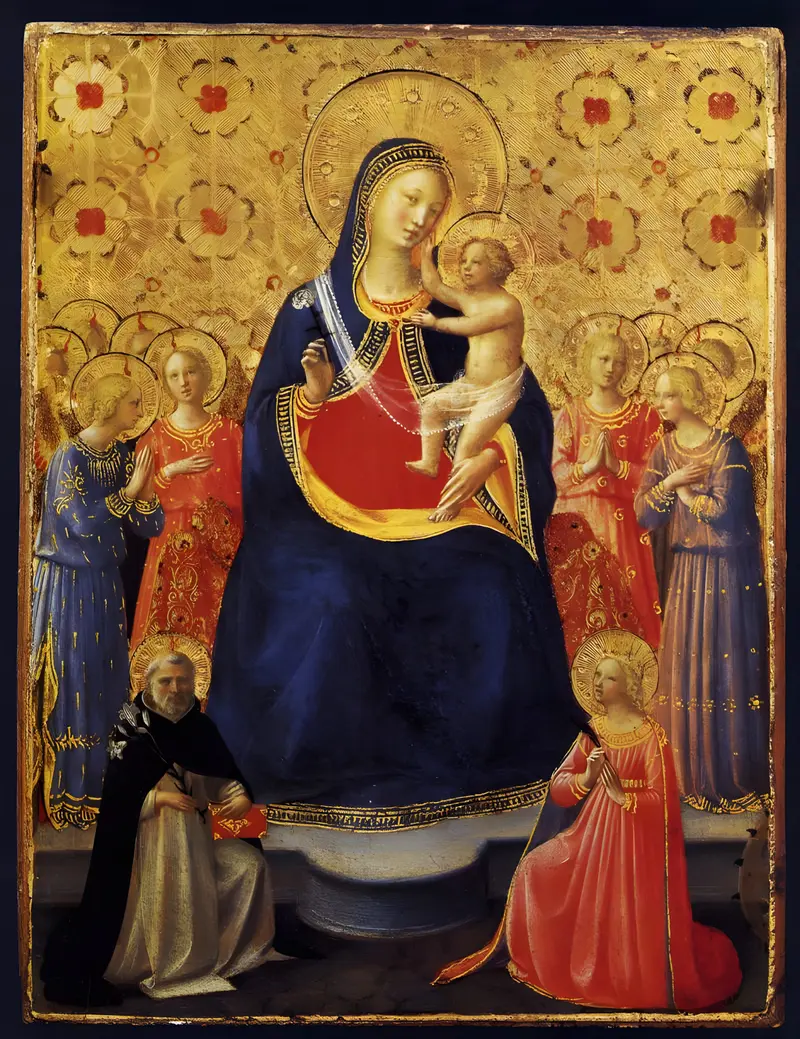
Madonna and Child Enthroned with Nine Angels and Saints Dominic and Catherine of Alexandria
Fra Angelico
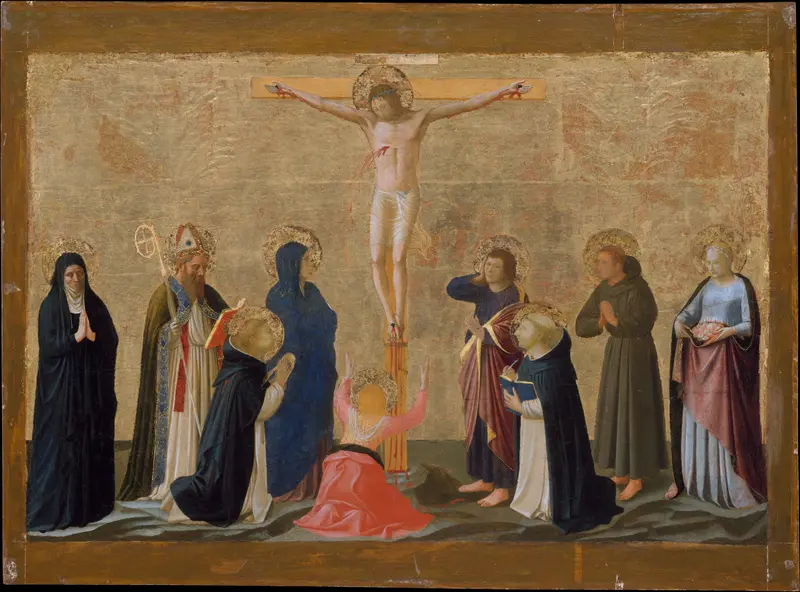
The Crucifixion
Fra Angelico
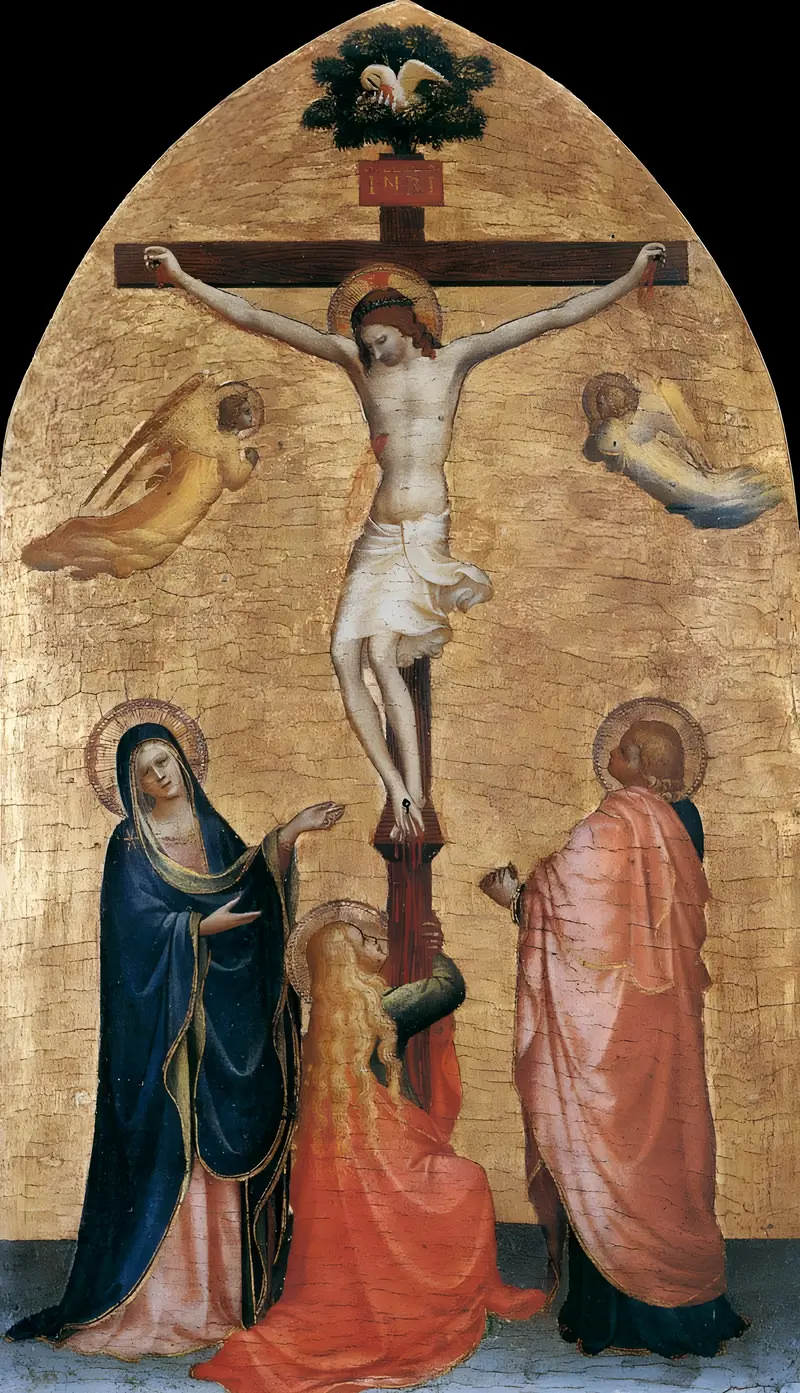
Crucifixion with the Virgin, John the Evangelist, and Mary Magdelene
Fra Angelico
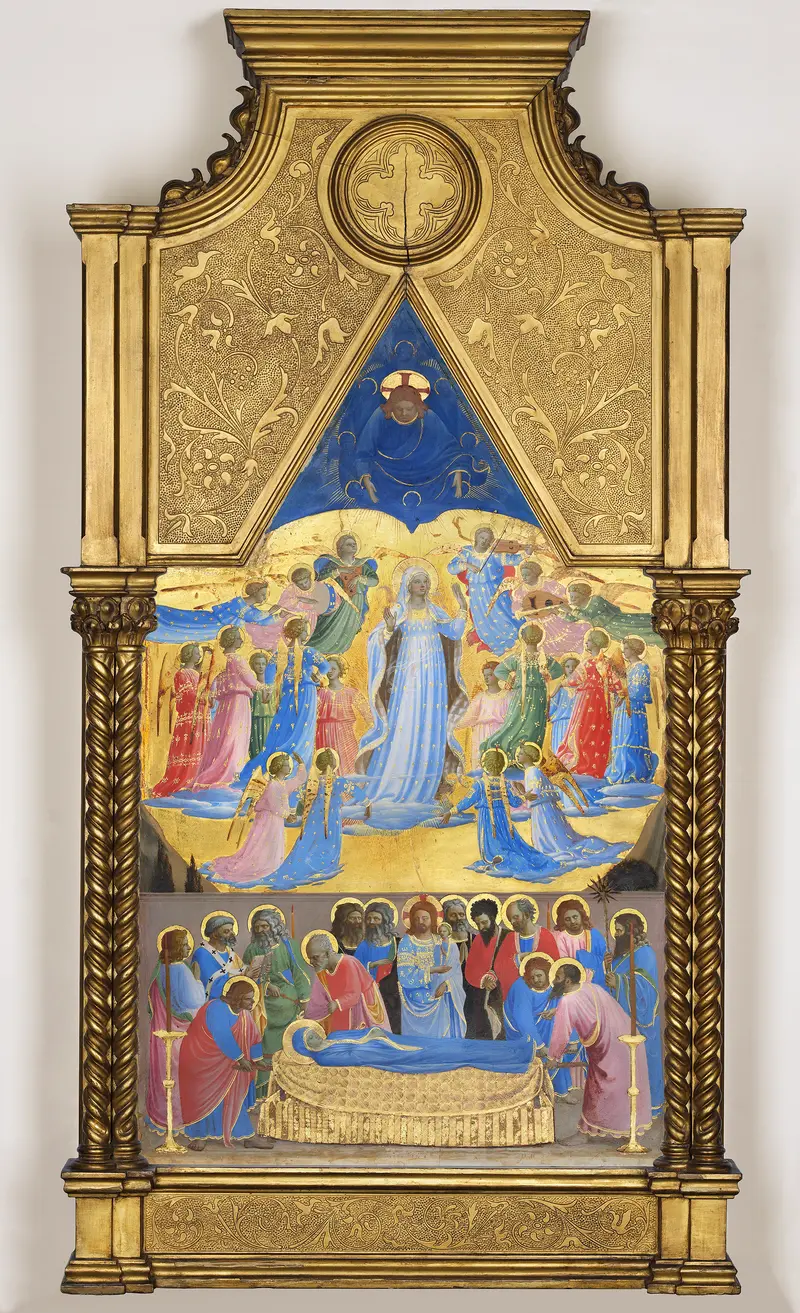
Dormition and Assumption of the Virgin
Fra Angelico
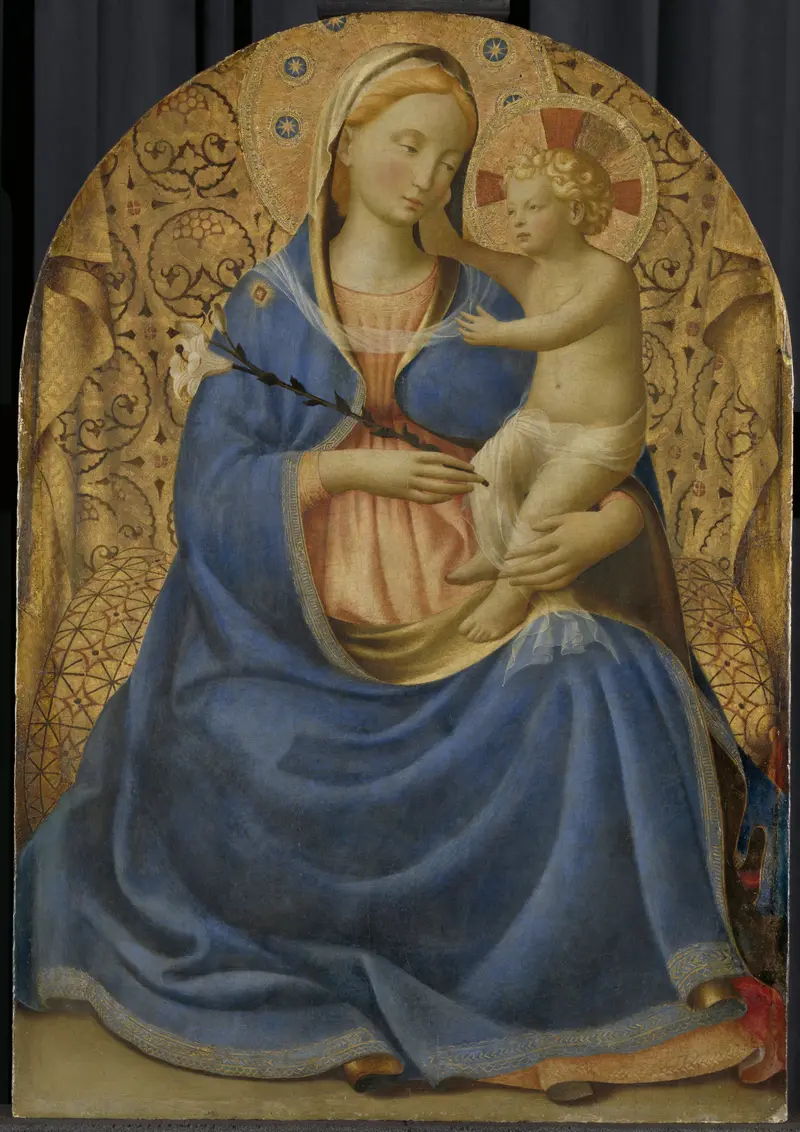
Madonna of Humility
Fra Angelico
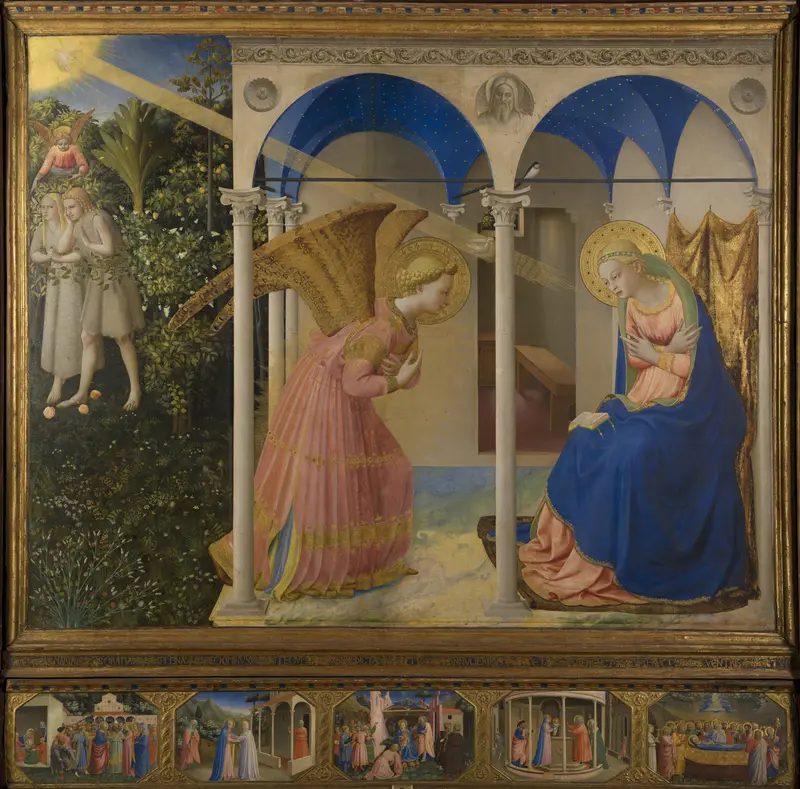
The Annunciation
Fra Angelico

Saint Anthony Abbot
Fra Angelico





