
Free West Indian Dominican — History & Facts
What first catches the eye is the confident stance of the three figures, each dressed in crisp, elegant attire that speaks of status and self-possession. The man, cane in hand and hat at his side, meets the gaze of the viewer with a subtle sense of pride, while the two women—one crowned with a dramatic, oversized hat, the other with a white turban—stand close, their gestures suggesting conversation or counsel. The palm tree behind them roots the scene unmistakably in the Caribbean, its fronds arching protectively over the group.
Light falls warmly across their garments, highlighting the careful folds of white fabric and the glint of jewelry at their throats and wrists, while the soft, powdery sky hints at both serenity and the possibility of change. Painted around 1770, Free West Indian Dominican by Agostino Brunias belongs to a genre that flourished in the colonial Caribbean, where artists—often European—were commissioned to record the diverse peoples and layered social hierarchies of plantation societies. These images, sometimes intended for European patrons curious about distant colonies, blend documentary detail with a staged elegance that both reveals and conceals the realities of colonial life. The figures’ fine clothing and composed bearing reflect the aspirations and achievements of free people of color in the West Indies, a group whose social position was both hard-won and precarious.
Little is recorded about the specific journey of this painting, now preserved at the Google Cultural Institute, but its survival invites us to look closely at the faces, fabrics, and gestures that once challenged—and still complicate—simple stories of empire.
More Artworks by Agostino Brunias
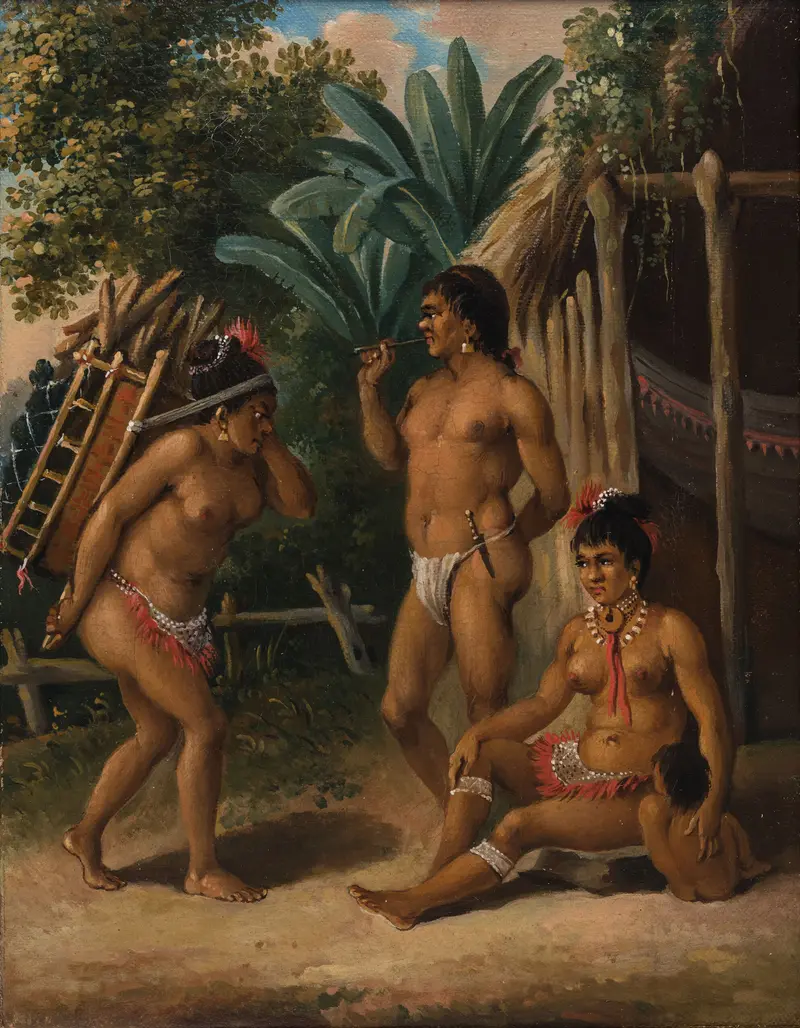
Indigenous Kalinago of St. Vincent [Aboriginal Caraibs of St. Vincents]
Agostino Brunias
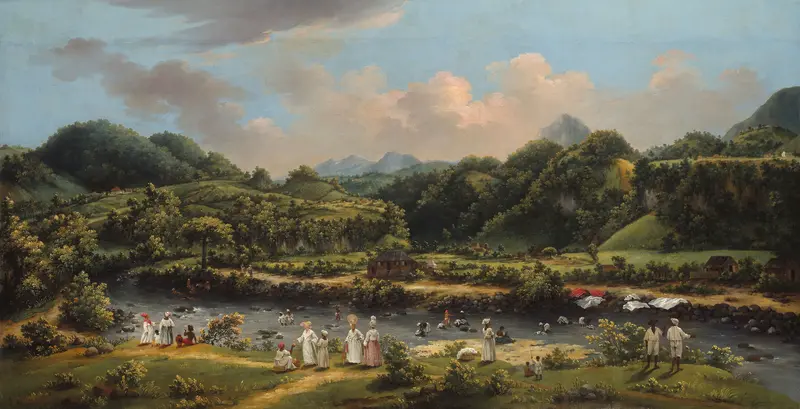
View on the River Roseau, Dominica
Agostino Brunias
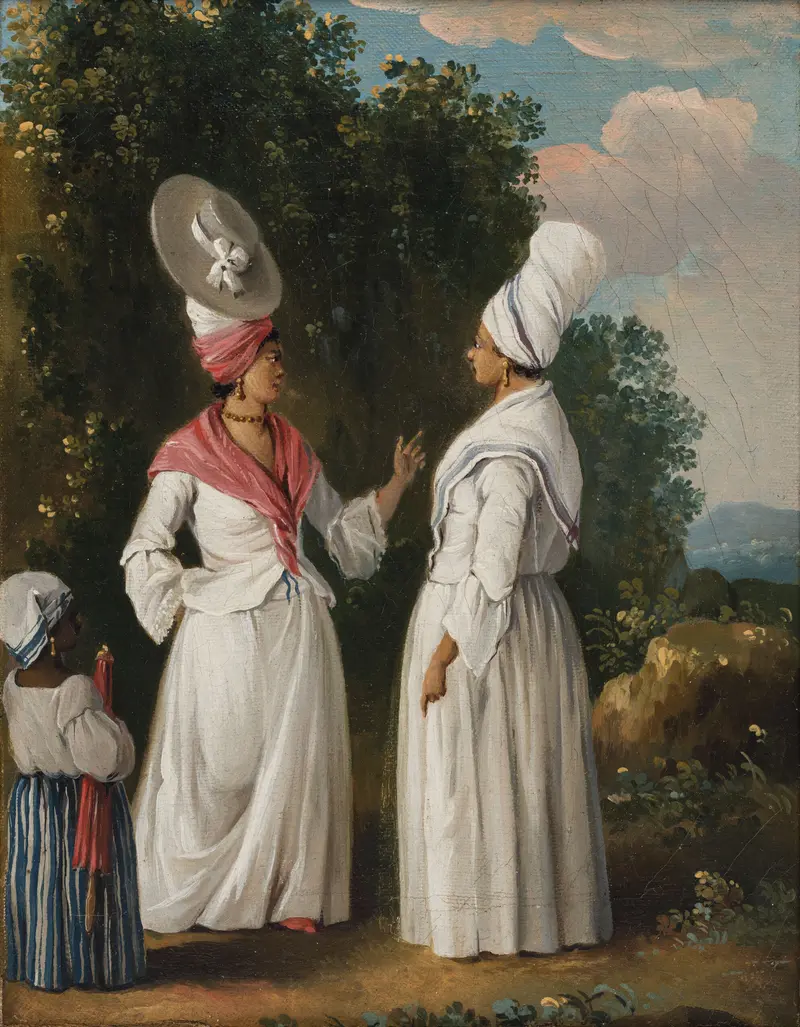
Francophone Women of Color and a Young Attendant, Dominica [French Mulatresses of Dominica in their Proper Dress]
Agostino Brunias
View on the River Roseau, Dominica
Agostino Brunias
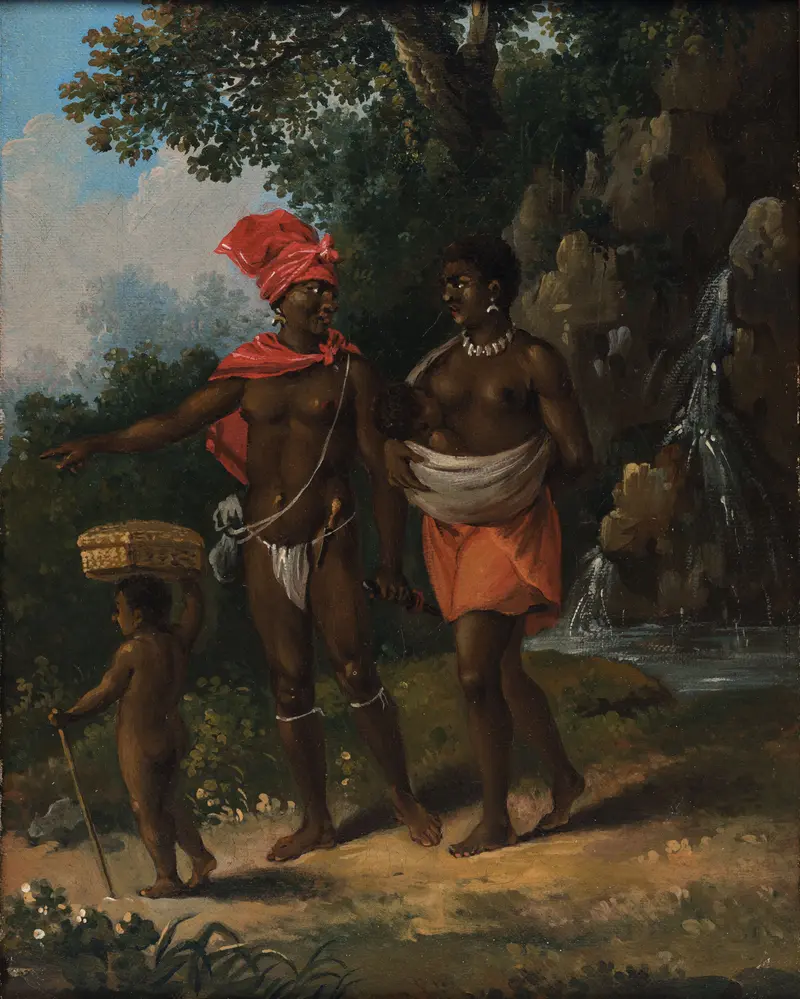
Garifuna Peoples of St. Vincent [Caraibs of St. Vincents]
Agostino Brunias
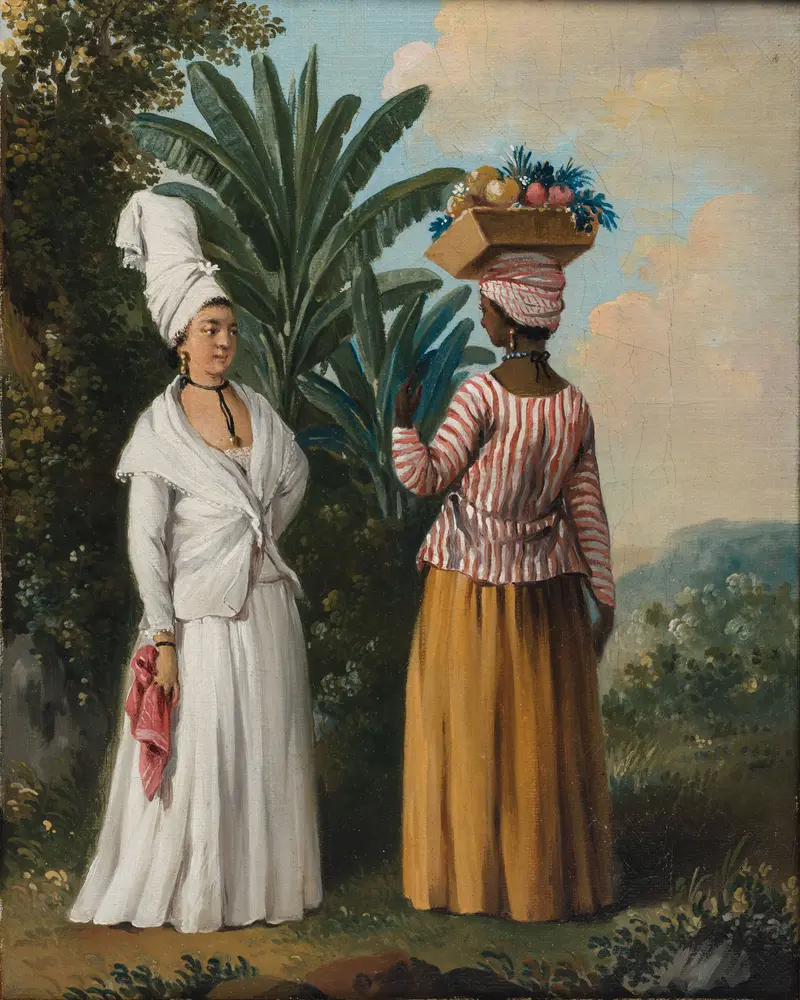
Two Women of Color, Dominica [French Mulatress of Dominica and a Negro Woman in their Proper Dress]
Agostino Brunias

Purchasing Fruit [A French Mulatress Purchasing Fruit from a Negro Wench]
Agostino Brunias

Women of Color Bathing and a Voyeur [Mulatresses and Negro Woman Bathing]
Agostino Brunias
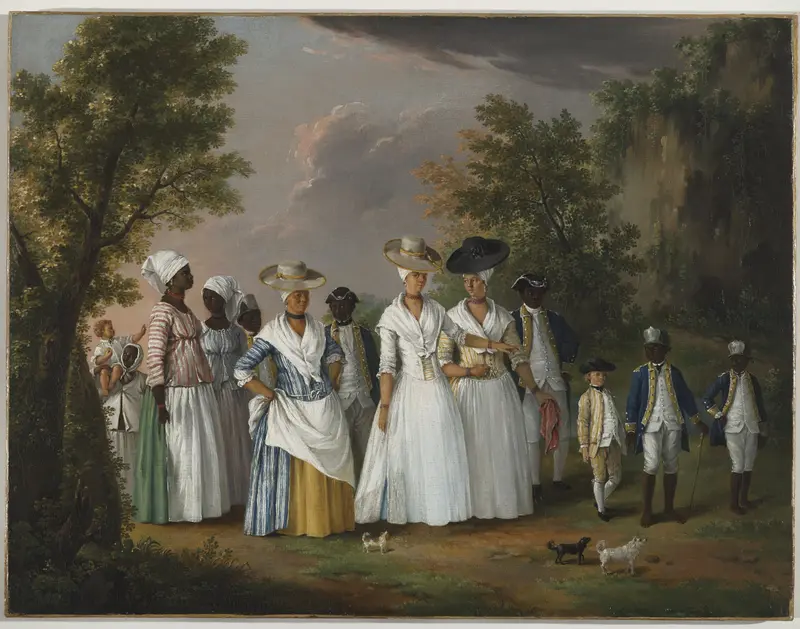
Free Women of Color with their Children and Servants in a Landscape
Agostino Brunias
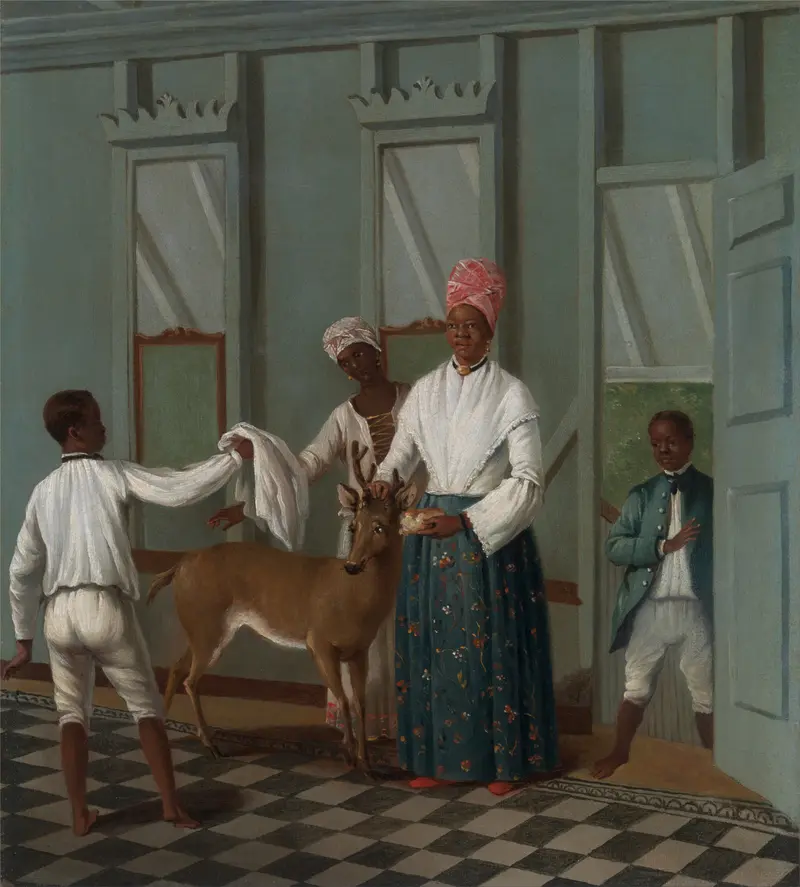
Servants Washing a Deer
Agostino Brunias
More Genre Scene Art

Banquet of the Officers of the St George Civic Guard
Frans Hals

Rembrandt and Saskia in the Scene of the Prodigal Son
Rembrandt van Rijn

Bal du moulin de la Galette
Pierre-Auguste Renoir

Quadrille at the Moulin Rouge
Henri de Toulouse-Lautrec

A Burial at Ornans
Gustave Courbet

When Will You Marry?
Paul Gauguin