Frogs and a Stag Beetle with Blue Flowers — History & Facts
The first thing to catch the eye is the improbable meeting of creatures at the base of a single, impossibly blue flower. The petals rise like a miniature forest, each one painted with a jeweler’s care, while below, a frog and a beetle seem to circle the clutch of eggs that anchors the scene. The frog’s mottled skin is rendered with a precision that suggests both admiration and scientific inquiry, while the stag beetle’s armored body glistens with the same sense of attentive observation.
Above, a moth hovers, its wings outstretched, as if drawn by the color and promise of the bloom. The light is even and clear, flattening the space so that every detail—each tadpole, each vein in the leaf—demands attention. This image belongs to the world of early 18th-century natural history, when artists like Maria Sibylla Merian traveled and studied living specimens to capture the marvels of the natural world. Produced in 1705 for Metamorphosis insectorum surinamensium, this work is part of a genre that combined art and science, intended both for collectors and for scholars eager to understand the life cycles of unfamiliar creatures.
Such images were not merely decorative; they were records of discovery, painted “na het leven” (from life) and at life size, as the source describes. In an age when the boundaries between art and science were porous, Merian’s work stands as a testament to curiosity and careful looking, inviting viewers to linger over every living detail.
More Artworks by Maria Sibylla Merian
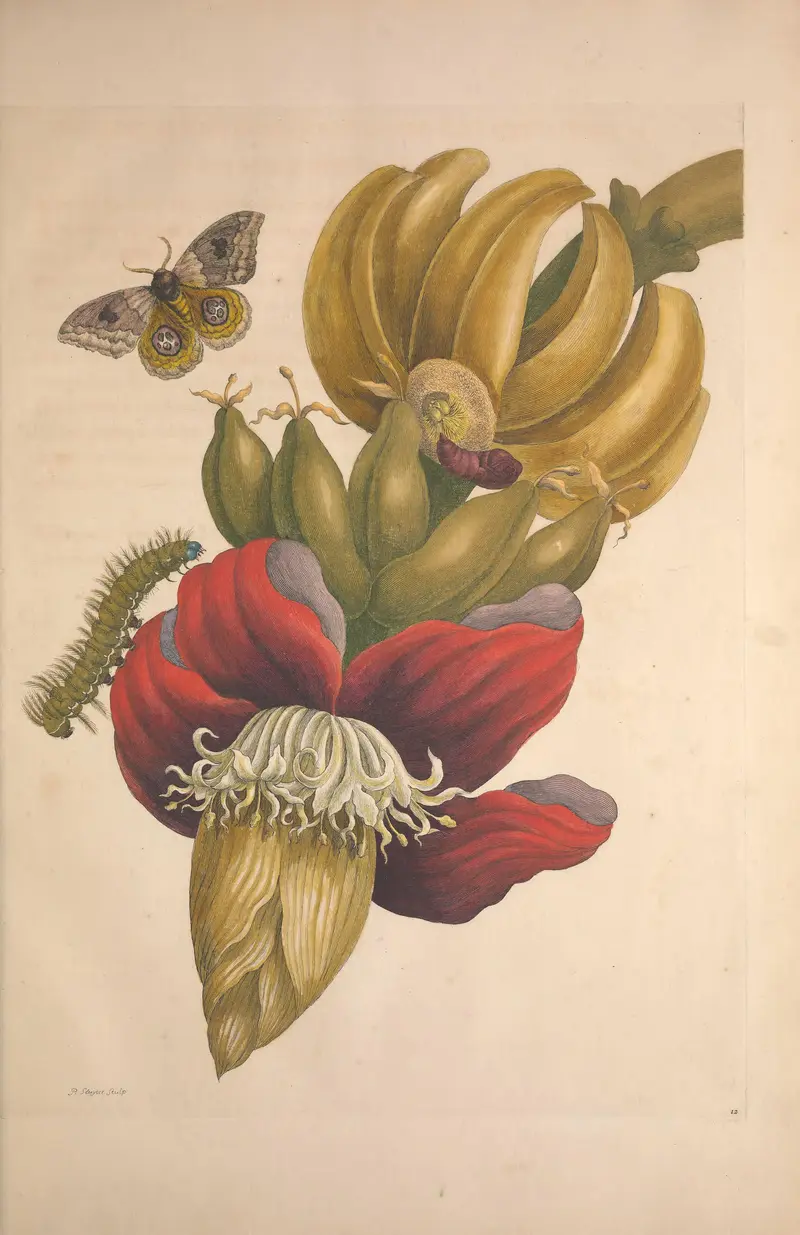
Banana with Bullseye Moth and Caterpillar
Maria Sibylla Merian
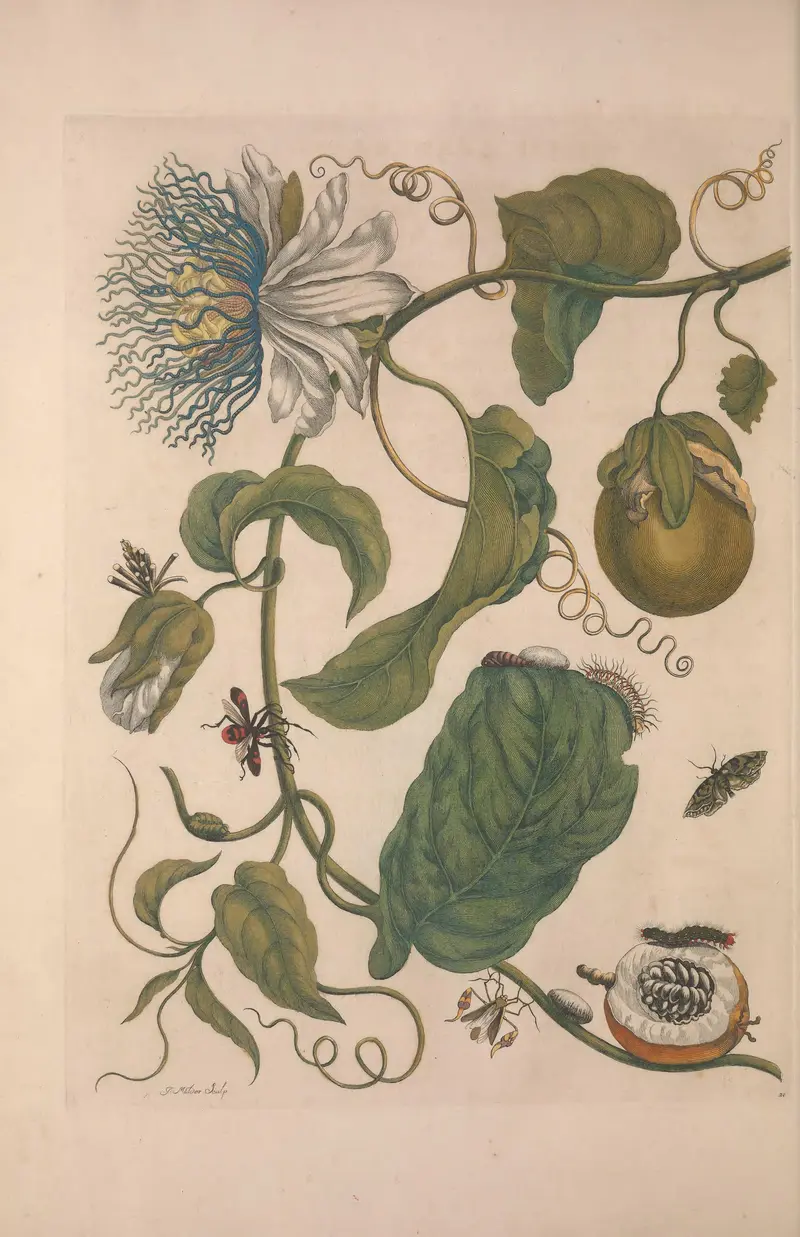
Passionflower with Caterpillars and Insects
Maria Sibylla Merian
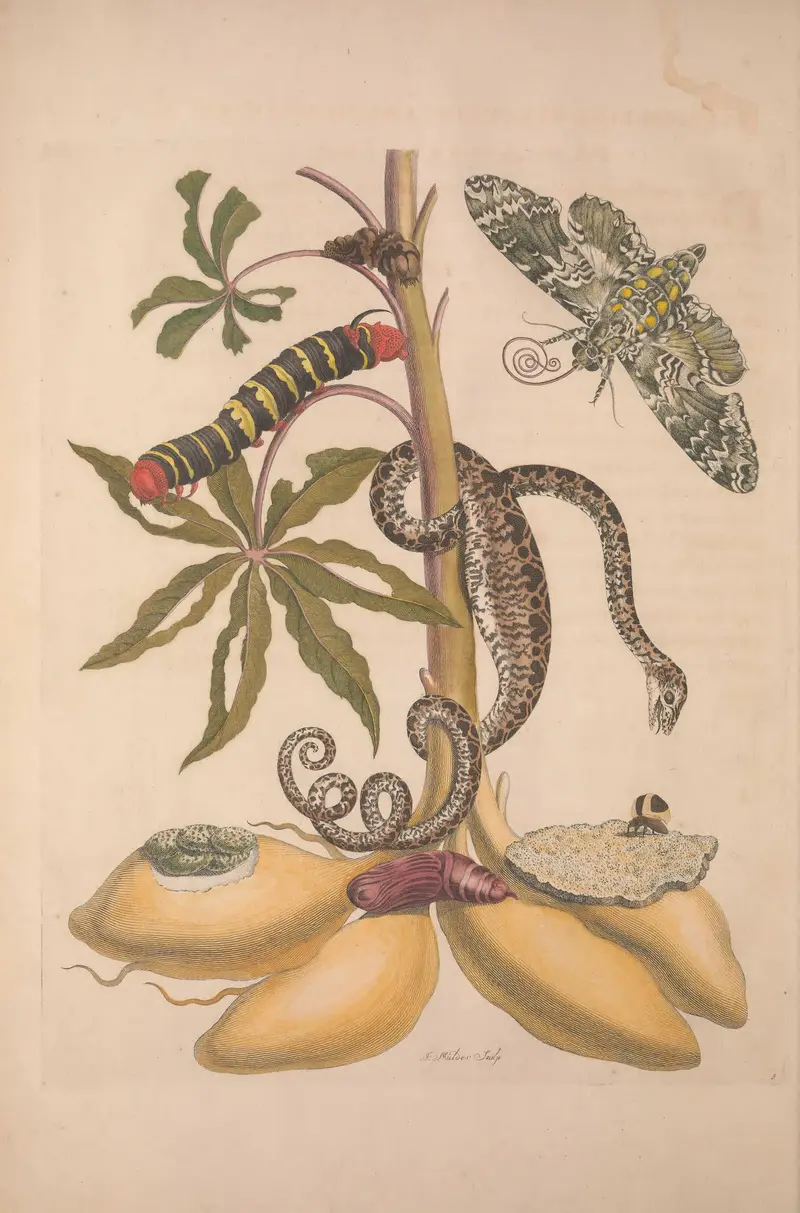
Cassava Root with Tree Boa and Sphinx Moth
Maria Sibylla Merian
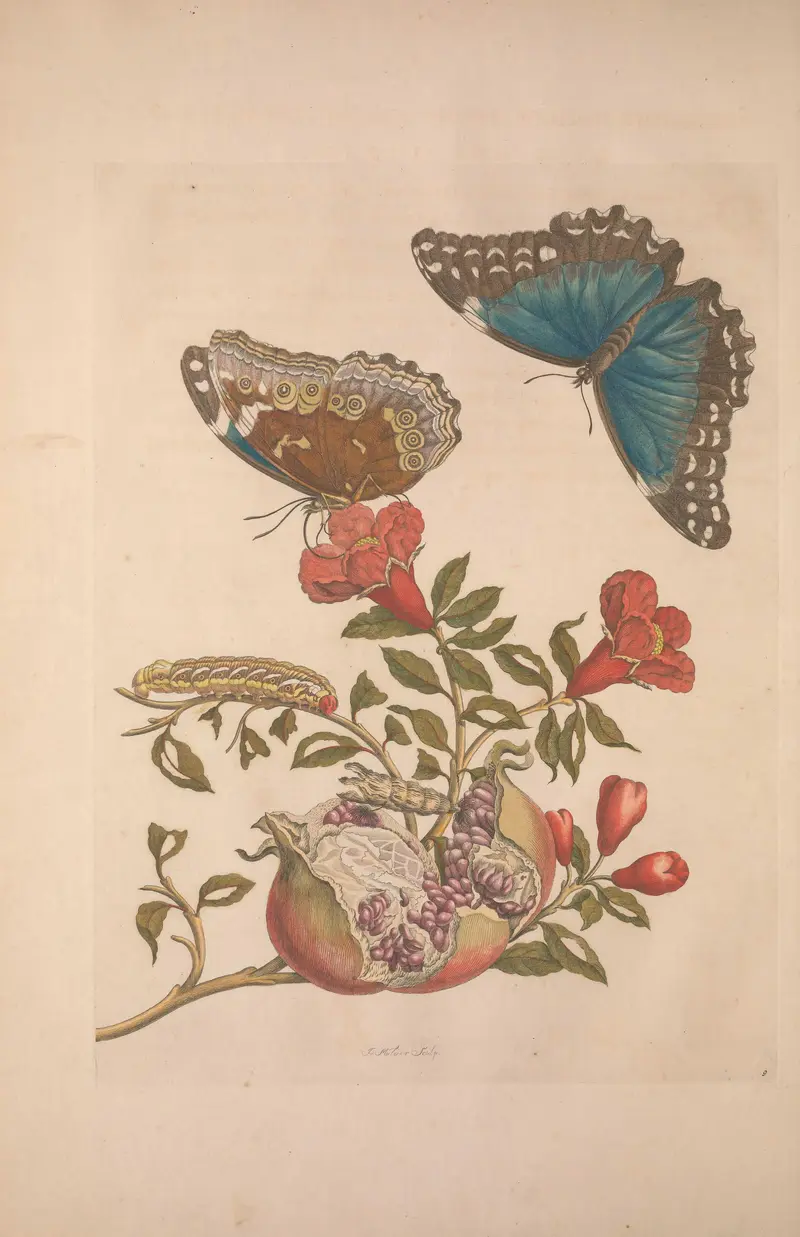
Pomegranate with Caterpillar, Pupa and Blue Butterfly
Maria Sibylla Merian
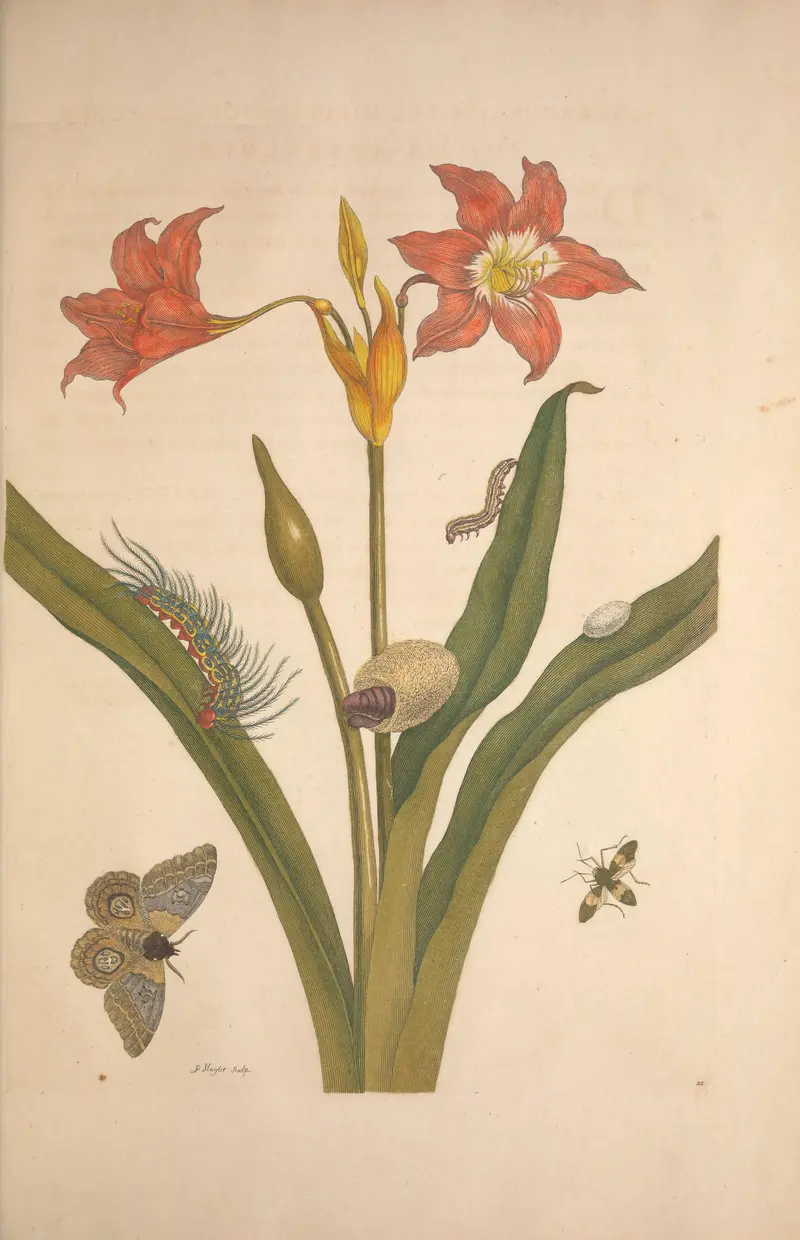
Red Amaryllis Lily with Moth and Caterpillars
Maria Sibylla Merian
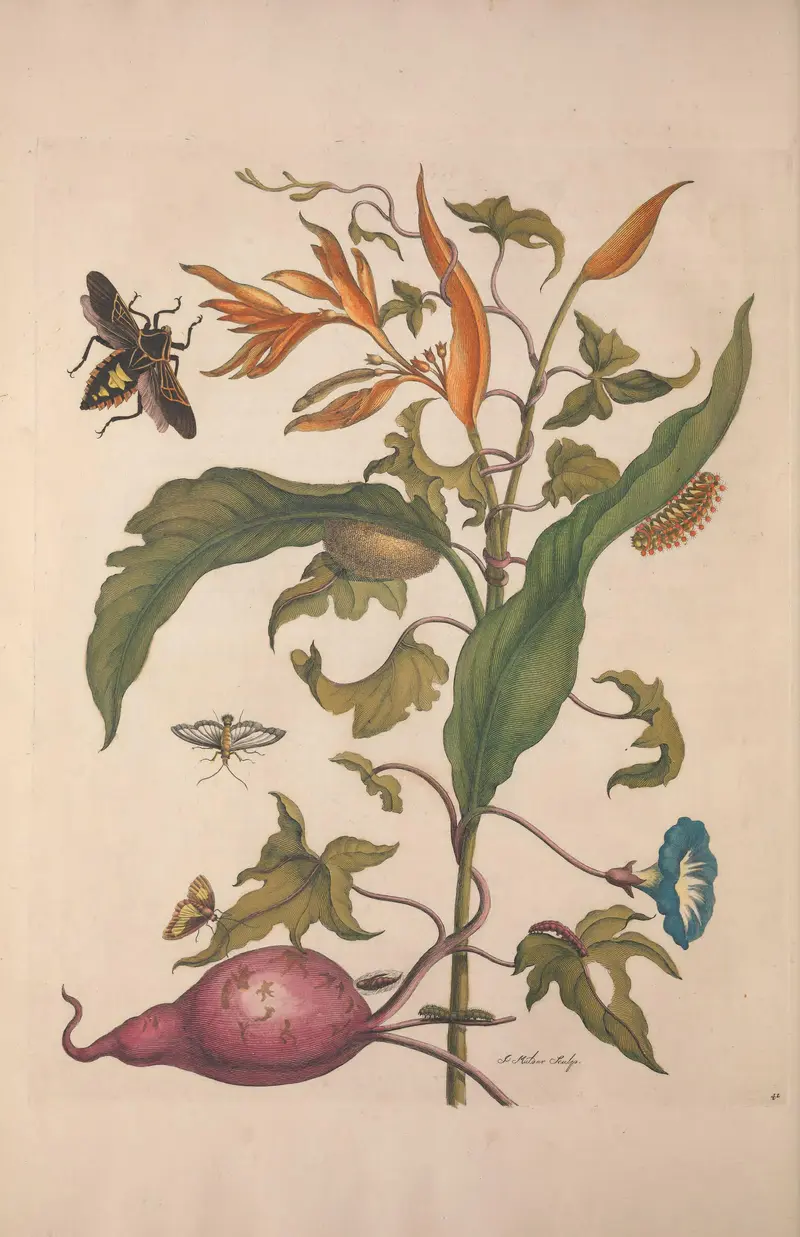
Sweet Potato with Beetle and Butterfly
Maria Sibylla Merian
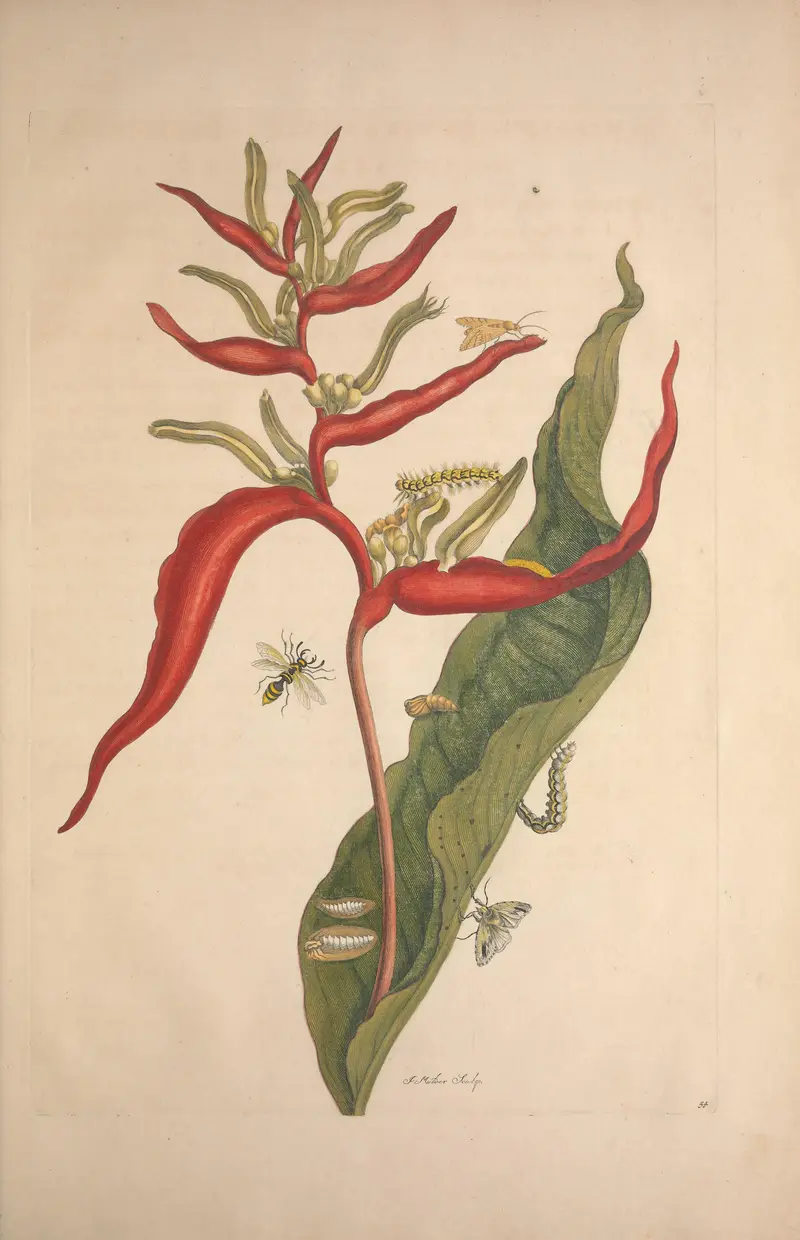
Heliconia with Moth
Maria Sibylla Merian
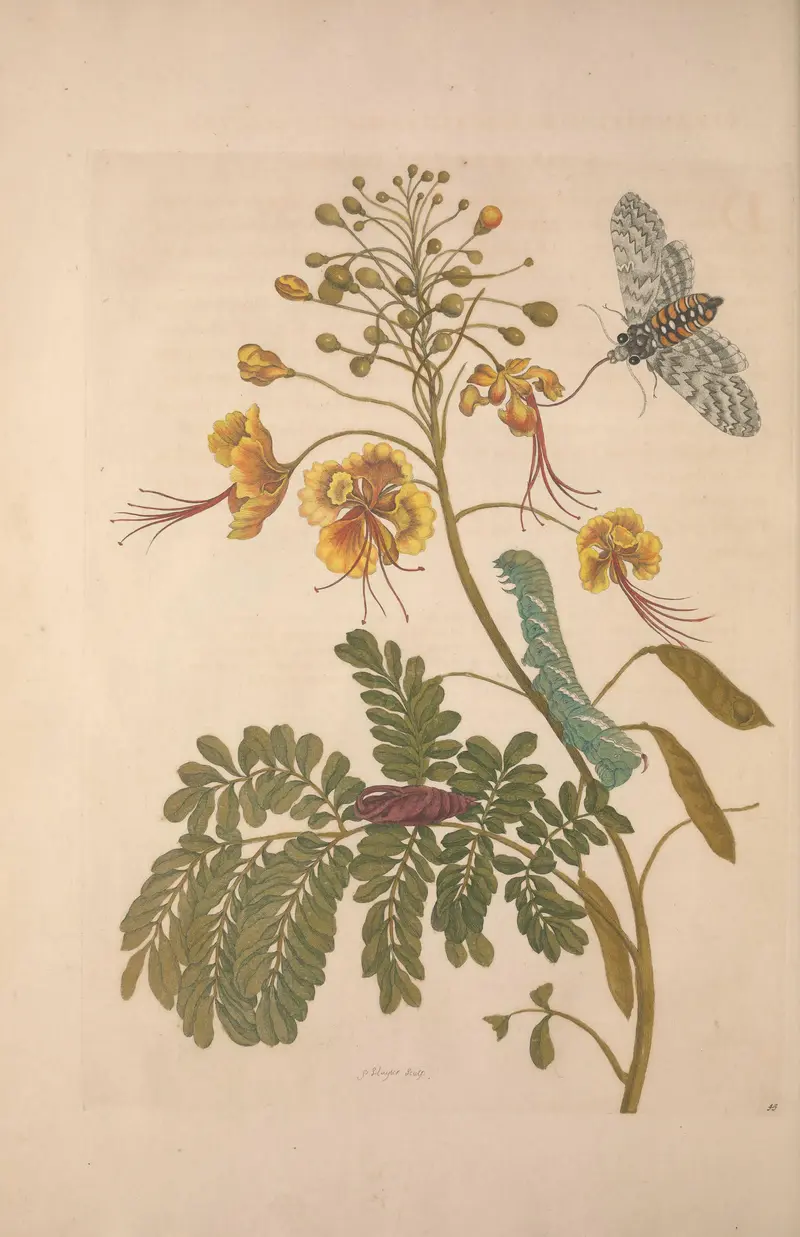
Mimosa with Moth and Caterpillar
Maria Sibylla Merian

Grapevine with Caterpillar and Moth
Maria Sibylla Merian
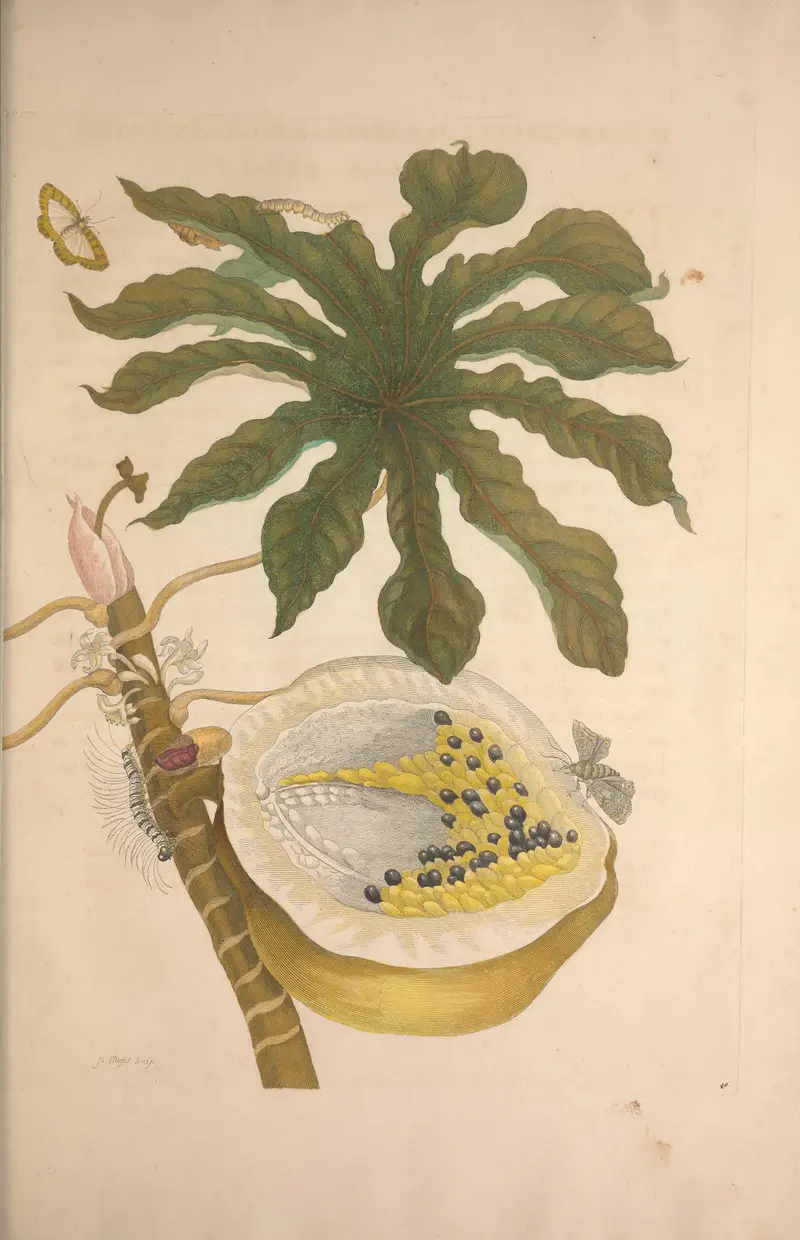
Papaya with Moth and Caterpillar
Maria Sibylla Merian