
Froschhausen bei Murnau — History & Facts
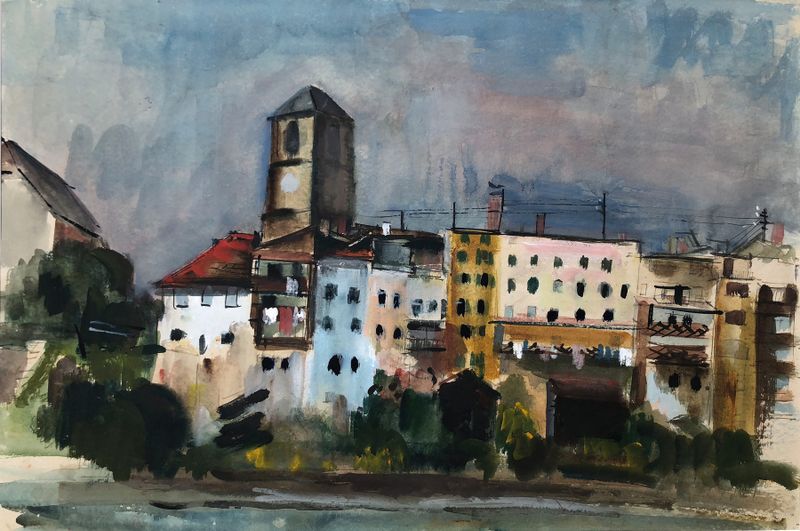
Yet, within this serene landscape lies an undercurrent of unease, where beauty and violence intertwine in a delicate dance. Look to the top left of the canvas, where the vibrant blue sky merges seamlessly with the soft, rolling hills of green. The painter’s careful application of color breathes life into the scene, with dappled sunlight casting ethereal shadows throughout the meadows. As your gaze travels downward, you’ll notice a striking contrast: the serene surroundings starkly juxtaposed by the jagged outlines of dark, encroaching forms at the edges, hinting at a disruption that lingers just beyond the horizon. These contrasting elements reveal a deeper narrative, suggesting an invasion of chaos into the tranquility of nature.
The lush, inviting landscape is punctured by hints of darker tones, whispering of past turmoils and the violence that lingers beneath the surface. Geigenberger captures not only the pastoral beauty of Froschhausen but also the tension that brews beneath this idyllic façade, inviting the viewer to reflect on the fragility of peace in tumultuous times. In 1942, while residing in Germany, Otto Geigenberger painted this work during a harrowing period marked by World War II. Art in this era faced both censorship and a struggle for identity, as many artists grappled with the violent realities unfolding around them.
Geigenberger's choice to highlight the dissonance between beauty and underlying violence reflects not only his personal experience but also the broader turmoil experienced in a world overshadowed by conflict.
More Artworks by Otto Geigenberger
Browse all →
Hohe Munde bei Seefeld in Tirol
Otto Geigenberger
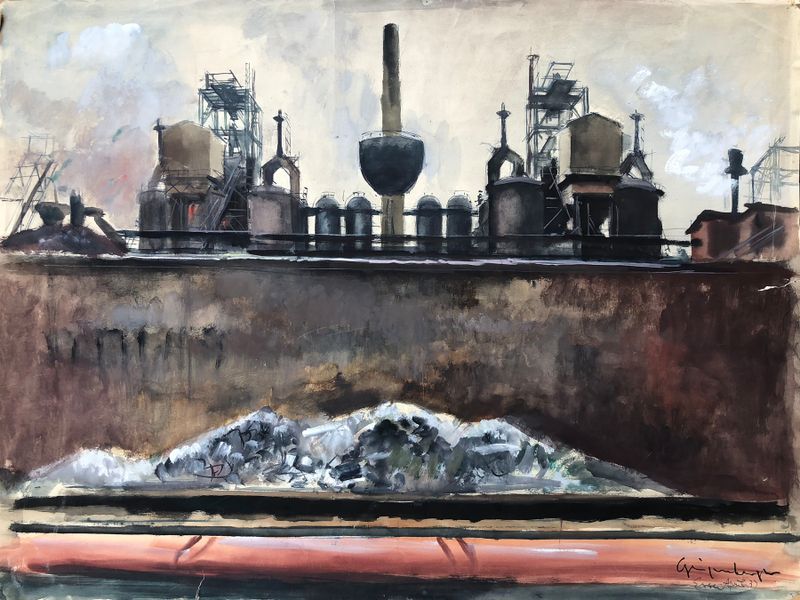
Stahlwerk Krupp in Essen
Otto Geigenberger

Landschaft mit Kirche
Otto Geigenberger

Passau am Inn 2
Otto Geigenberger
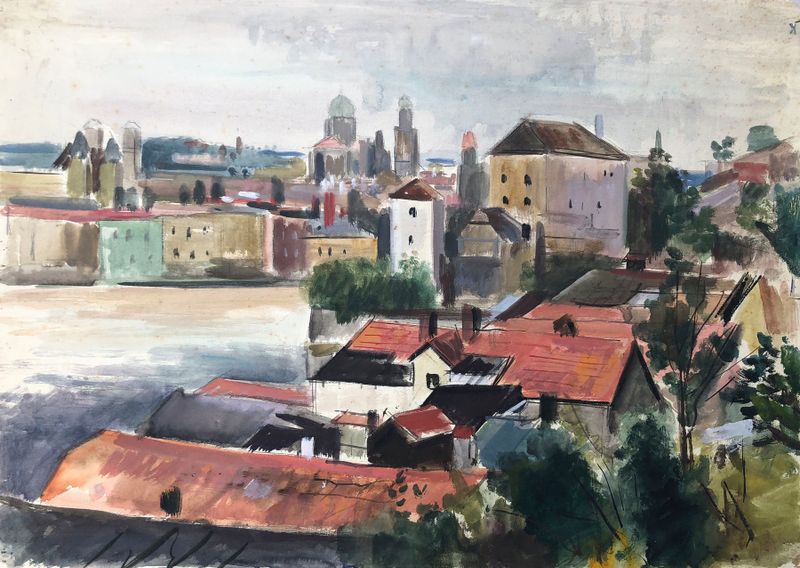
Passau am Inn
Otto Geigenberger
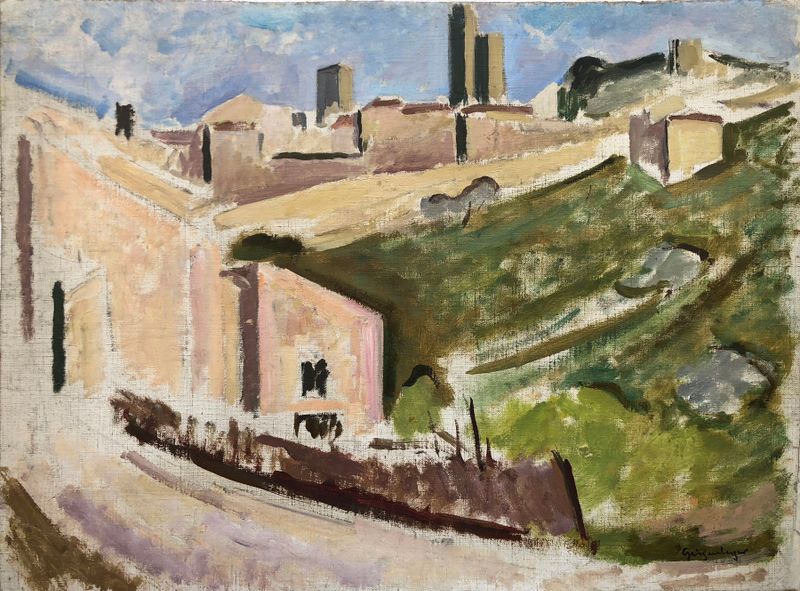
Südliche Stadt auf einem Hügel
Otto Geigenberger

Wasserburg am Inn – Häuserpartie am Inn
Otto Geigenberger

Wasserburg am Inn – Innfront
Otto Geigenberger
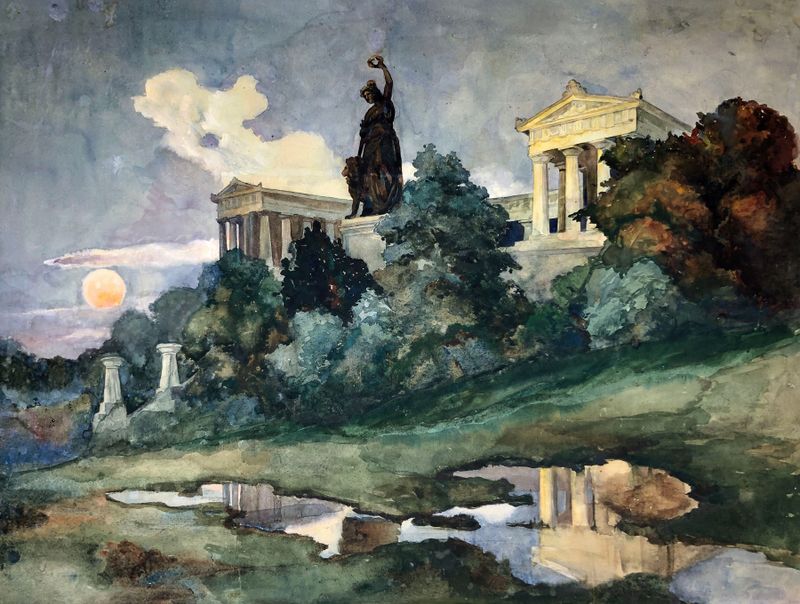
Sonnenuntergang an der Bavaria und Ruhmeshalle in München
Otto Geigenberger
Wasserburg am Inn – Innfront.
Otto Geigenberger





