
Frosty Morning in Louveciennes — History & Facts
What draws the eye first is the hush that seems to settle over the village, as if the world is holding its breath in the early light. The rooftops and bare trees are dusted with a cool blue, and the faintest touch of frost clings to the ground, suggesting the quiet of a winter morning. The painter leads you gently up a path lined with spindly trees, toward the heart of the village, where a steeple rises above the clustered houses.
The sky, broad and softly streaked, presses down with the weight of winter, yet the brushwork is lively—each stroke capturing the chill in the air and the warmth of sunlight just beginning to break through. The palette is restrained, but the subtle shifts from blue to ochre lend the scene a sense of awakening. Painted in 1873, Frosty Morning in Louveciennes belongs to the world of Impressionism, a movement that sought to capture fleeting moments and the shifting moods of light. In this period, artists like Alfred Sisley often painted outdoors, working quickly to seize the changing effects of weather and season.
Such scenes were rarely grand commissions; instead, they were personal explorations, often made for a growing middle-class market eager for glimpses of rural and suburban life. History has kept few traces of this particular painting’s journey, but its quiet presence speaks of a time when artists found poetry in the everyday and invited viewers to linger in the spaces between night and day. Let your gaze wander through the frosted branches and low morning sun, and imagine the world just beginning to stir.
More Artworks by Alfred Sisley
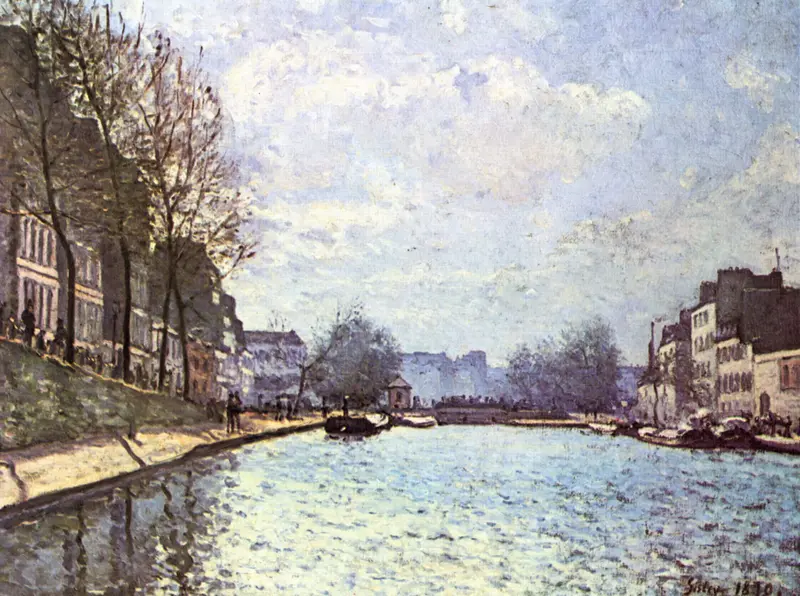
View of the Canal Saint-Martin
Alfred Sisley

Le Loing à Saint-Mammès
Alfred Sisley
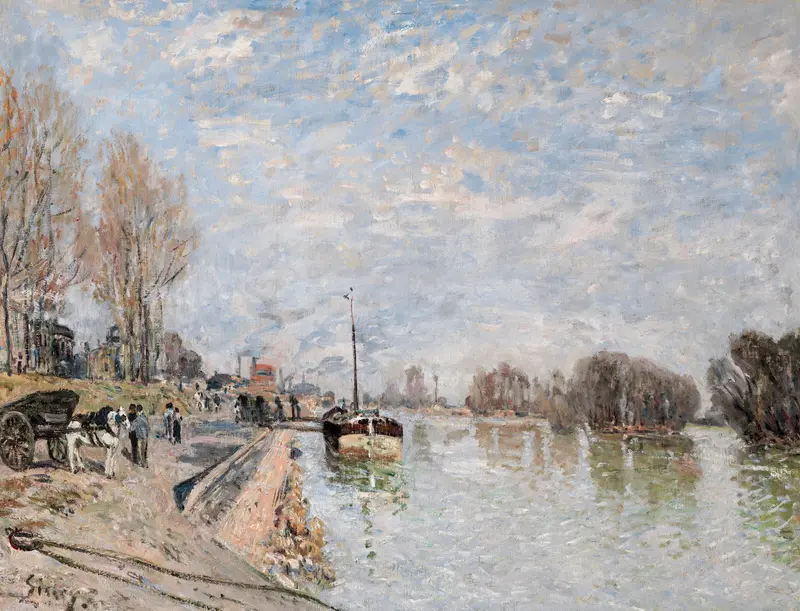
La Seine à Suresnes
Alfred Sisley
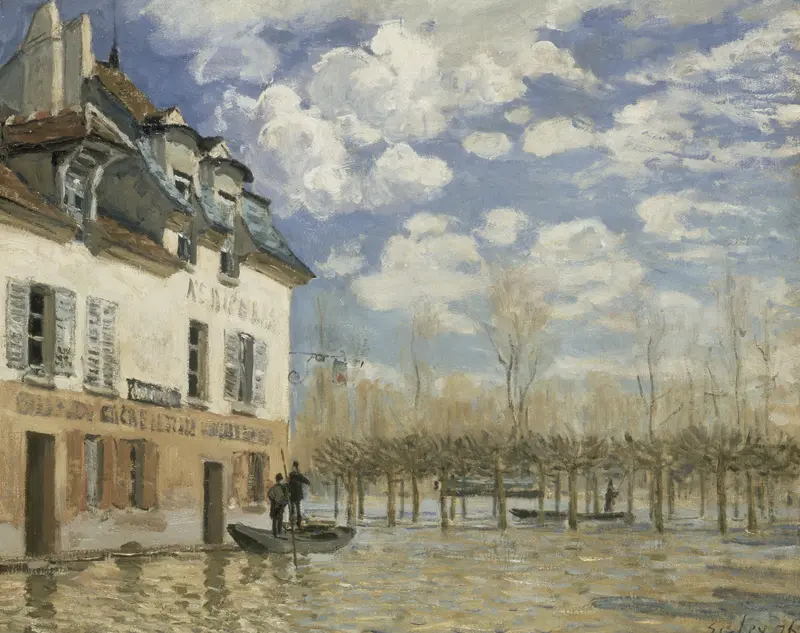
Boat in the Flood at Port Marly
Alfred Sisley
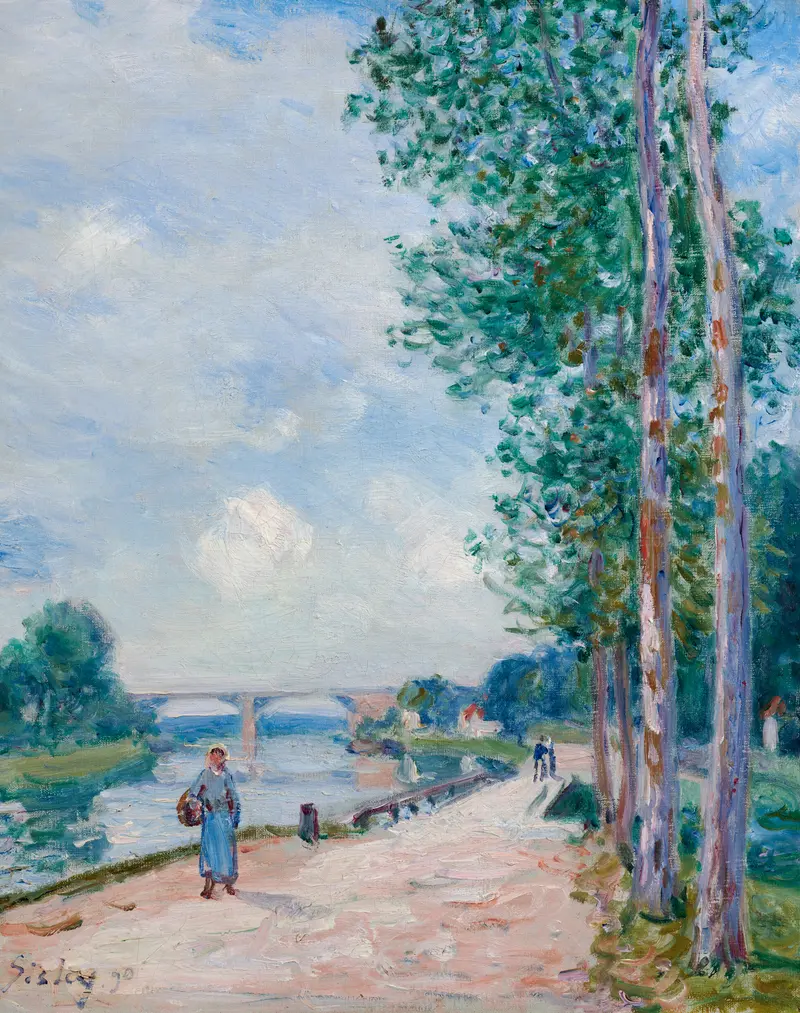
Les bords du Loing près de Moret
Alfred Sisley
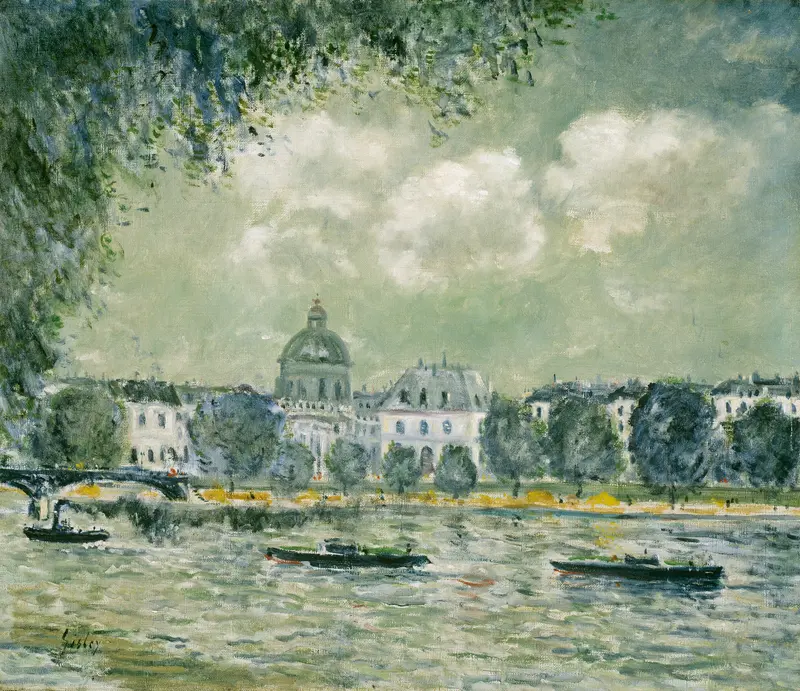
Landscape along the Seine with the Institut de France and the Pont des Arts
Alfred Sisley

Printemps au bord du Loing
Alfred Sisley
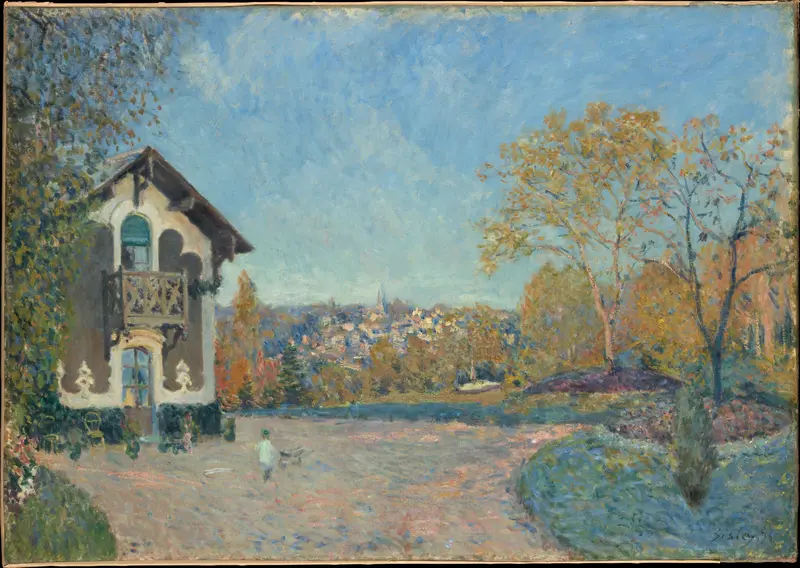
View of Marly-le-Roi from Coeur-Volant
Alfred Sisley
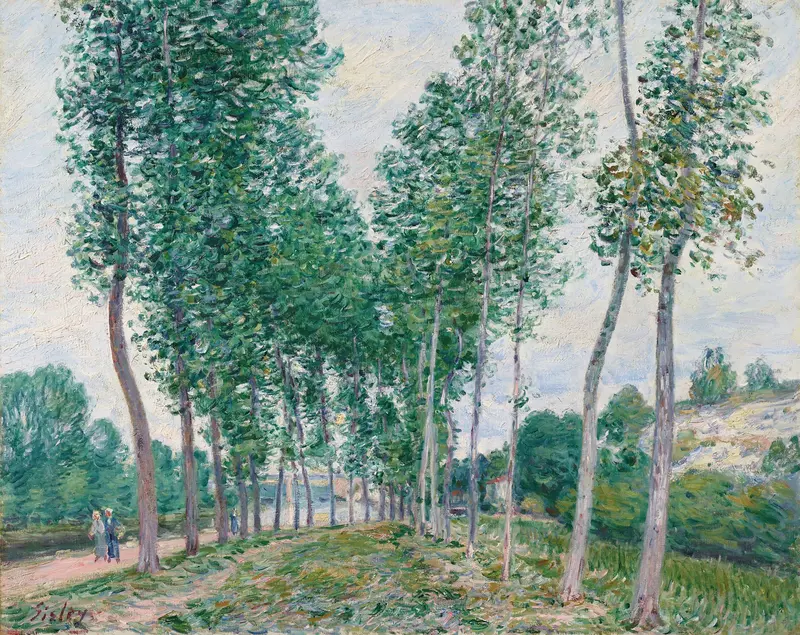
L’allée des peupliers au bord du Loing
Alfred Sisley
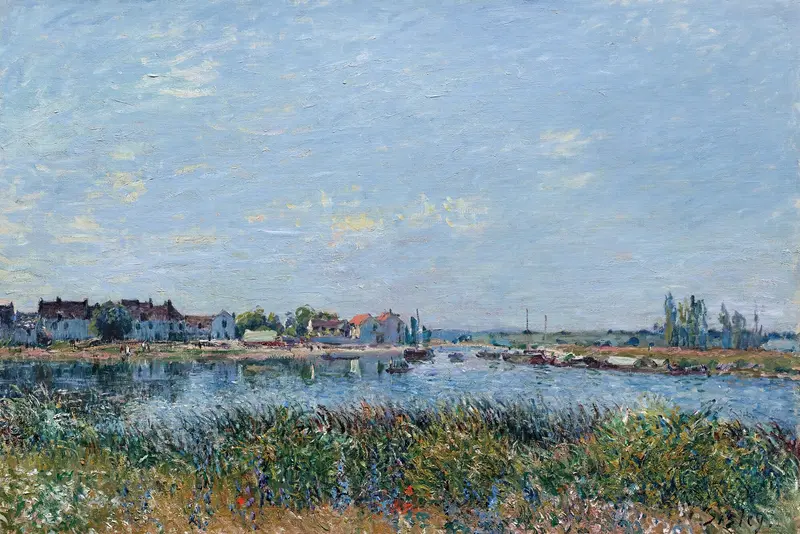
Saint-Mammès, Le Matin
Alfred Sisley
More Landscape Art

The Starry Night
Vincent van Gogh

View of Delft
Johannes Vermeer

Water Lilies
Claude Monet

The Grand Canal, Venice, looking north-west from the Ca' Corner to the Ca' Contarini degli Scrigni, with the campanile of Santa Maria della Carità
Canaletto

Windsor Castle
Canaletto

The Grand Canal looking North-East from the Palazzo Dolfin-Manin to the Rialto Bridge
Canaletto