
Frozen river at sunset — History & Facts
What draws the eye first is the hush of pink and gold that spills across the sky, a winter sunset caught just as the day releases its last warmth. The frozen river becomes a stage for everyday life: skaters glide and tumble, children push sleds, and dogs dart between the figures, their energy echoing the crispness in the air. The houses to the left send up plumes of smoke, a reminder of the warmth waiting indoors, while bare trees etch delicate lines against the glowing clouds.
Every gesture is purposeful—figures lean into the wind, a parent steadies a child, neighbors pause in conversation—each detail anchoring us in a specific, fleeting moment. The low horizon and vast sky give the scene a sense of openness, inviting the viewer to linger and wander deeper into the painted dusk. This is the world of the Dutch Golden Age, when artists like Aert van der Neer found poetry in the ordinary and the changing seasons. Painted in 1660, Frozen river at sunset belongs to a tradition of winter landscapes that celebrated both the resilience and pleasures of communal life in a cold climate.
Such works were prized by a prosperous urban middle class, who hung them in their homes as reminders of both nature’s beauty and the joys of leisure. While little is recorded about the specific journey of this painting—beyond its appearance at Sotheby’s in New York centuries later—its quiet charm is typical of the era’s taste for scenes that blend observation with gentle drama. Look again at the way the sunset reflects on the ice, and you’ll see how the painter captures not just a place, but a mood that lingers long after the river has thawed.
More Artworks by Aert van der Neer

A Moonlit River Landscape With Figures Standing By A Gate, A Village Beyond
Aert van der Neer
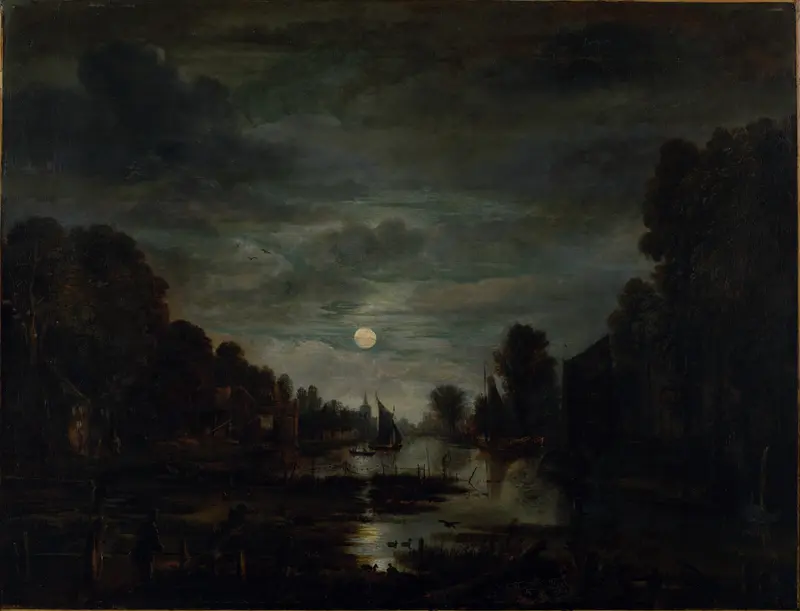
River Landscape in Moonlight
Aert van der Neer
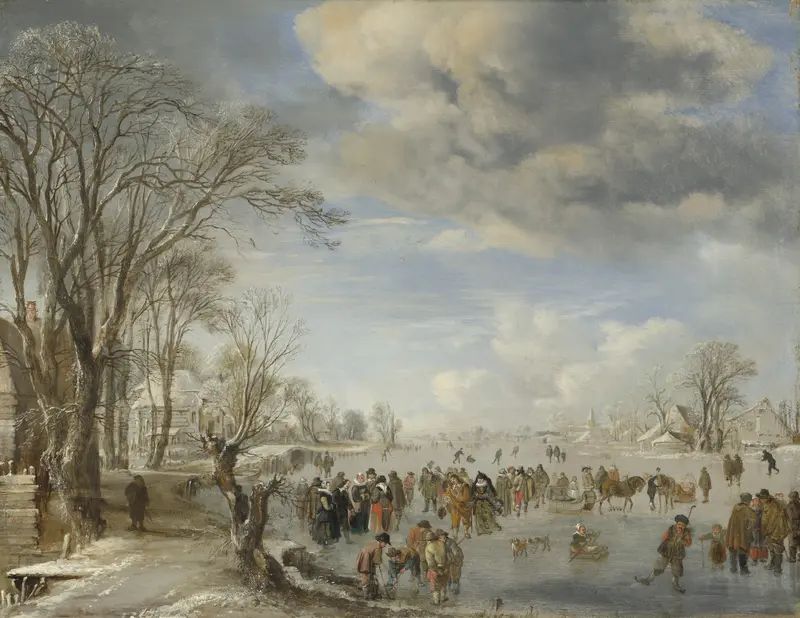
Winter in Holland – Skating Scene
Aert van der Neer

River Landscape
Aert van der Neer
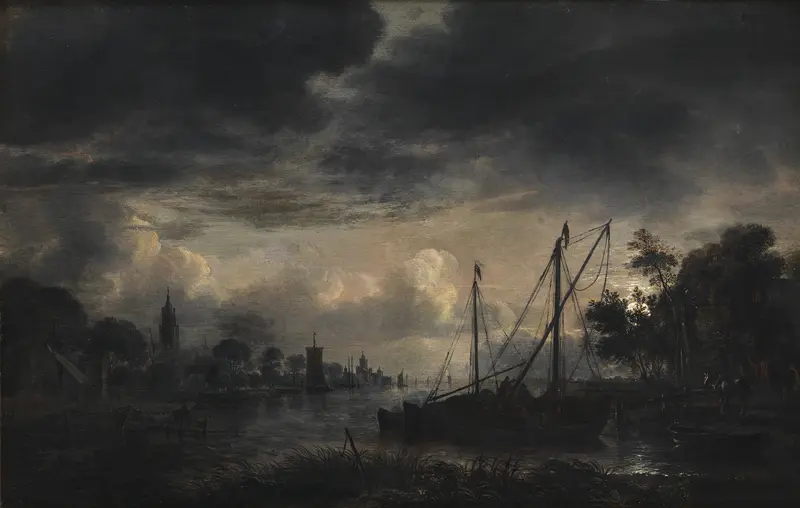
River Landscape in Moonlight
Aert van der Neer
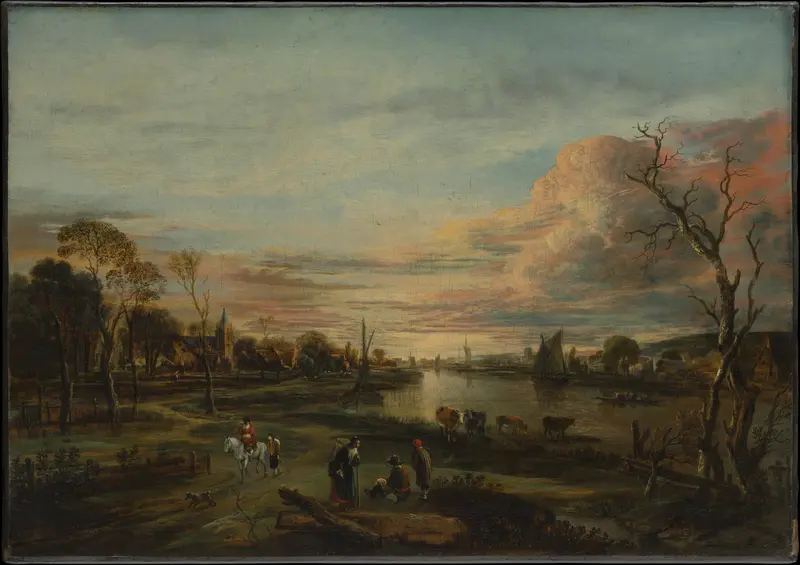
Landscape at Sunset
Aert van der Neer
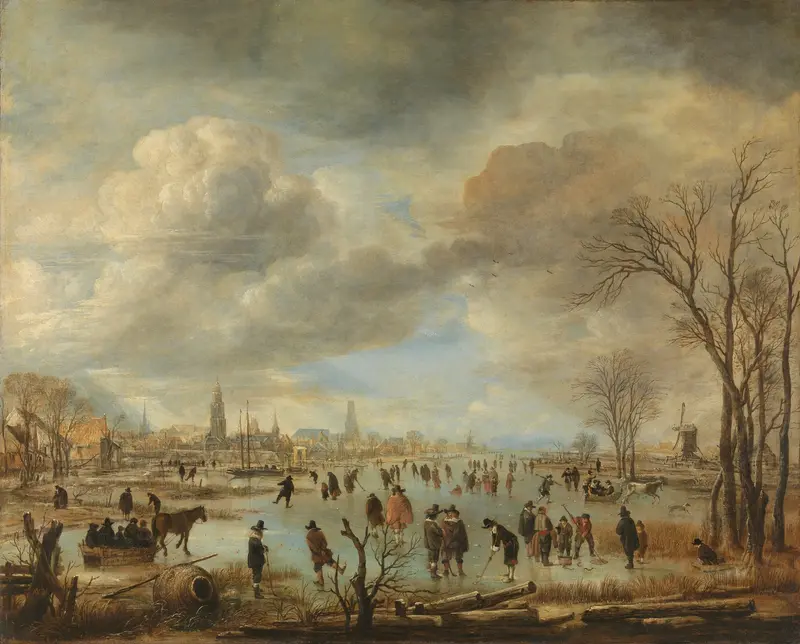
Winter Landscape near a Town with Kolf Players and Horse-Drawn Sleighs
Aert van der Neer

Winter Landscape with Skaters on a Frozen River
Aert van der Neer
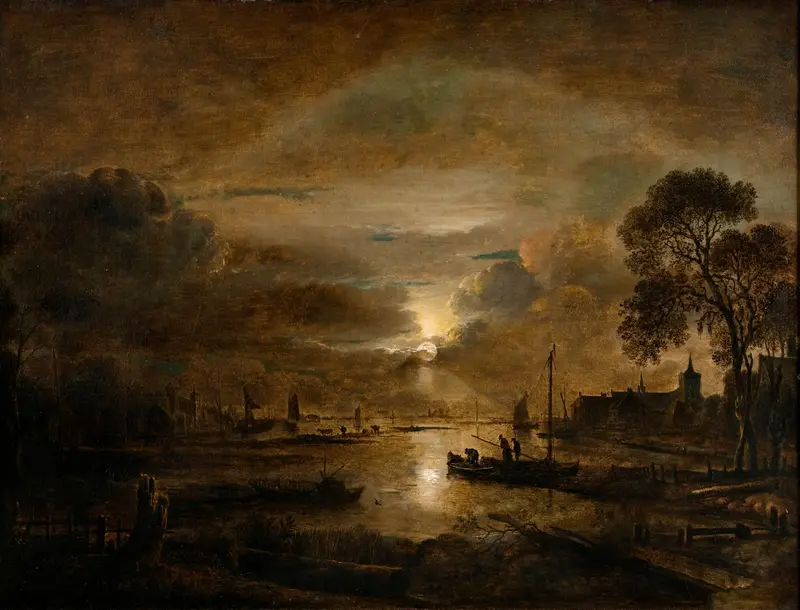
Moonlight at a Dutch River
Aert van der Neer
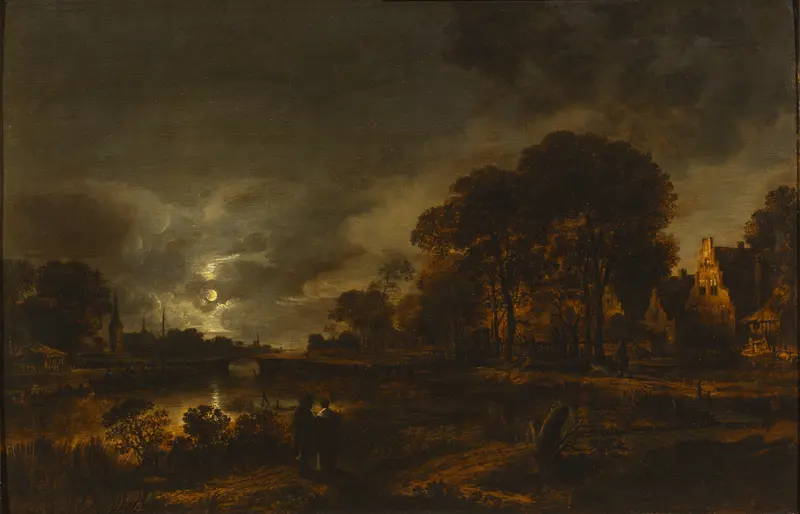
Moonlight Landscape
Aert van der Neer
More Landscape Art

The Starry Night
Vincent van Gogh

View of Delft
Johannes Vermeer

Water Lilies
Claude Monet

The Grand Canal, Venice, looking north-west from the Ca' Corner to the Ca' Contarini degli Scrigni, with the campanile of Santa Maria della Carità
Canaletto

Windsor Castle
Canaletto

The Grand Canal looking North-East from the Palazzo Dolfin-Manin to the Rialto Bridge
Canaletto