
Full Moon — History & Facts
In Full Moon, Tsukioka Yoshitoshi presents a striking scene dominated by a luminous full moon. The colors are rich, with deep blues and silvery whites creating a night sky that feels alive. Figures are often depicted in traditional Japanese attire, adding a cultural depth to the work.
The setting evokes a sense of calm and reflection, typical of Yoshitoshi's style. The artwork is a woodblock print, a medium that allows for intricate details and vibrant colors. Viewers can notice the fine lines and textures that characterize Ukiyo-e prints. The composition is balanced, drawing the eye to the moon while also showcasing the surrounding elements.
This technique highlights Yoshitoshi's skill in blending traditional themes with innovative techniques. Tsukioka Yoshitoshi was a prominent figure in the Ukiyo-e movement during the late Edo and early Meiji periods. He is known for his dramatic and sometimes macabre imagery, often drawing inspiration from folklore and history. Full Moon exemplifies his ability to capture the beauty of nature while intertwining it with human emotion.
Interestingly, this piece reflects Yoshitoshi's later style, where he began to focus more on the interplay of light and shadow.
More Artworks by Tsukioka Yoshitoshi

Frost fills the air and the autumn air is still/lines of returning geese cross the moon in the third hour-Kenshin, from the series Twelve Aspects of the Moon
Tsukioka Yoshitoshi
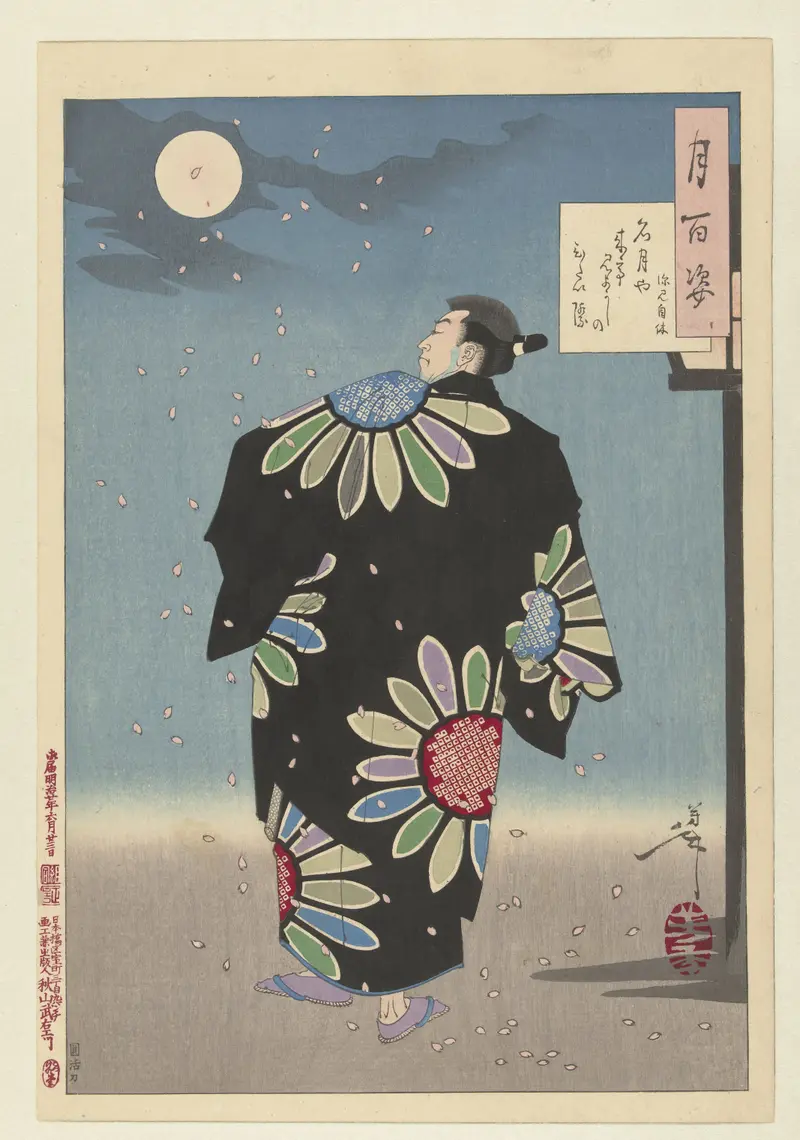
Fukami Jikyu in maanlicht
Tsukioka Yoshitoshi
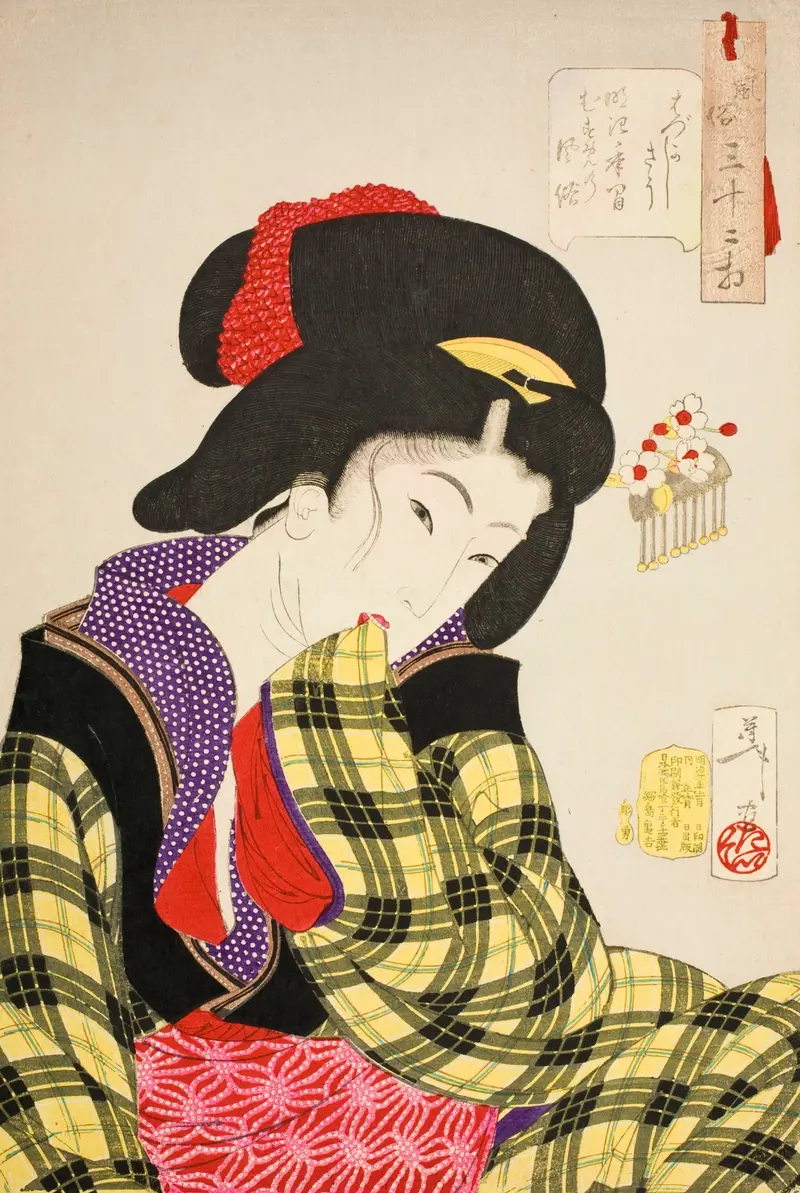
Looking Shy; The Manners of a Young Girl of the Meiji Era
Tsukioka Yoshitoshi
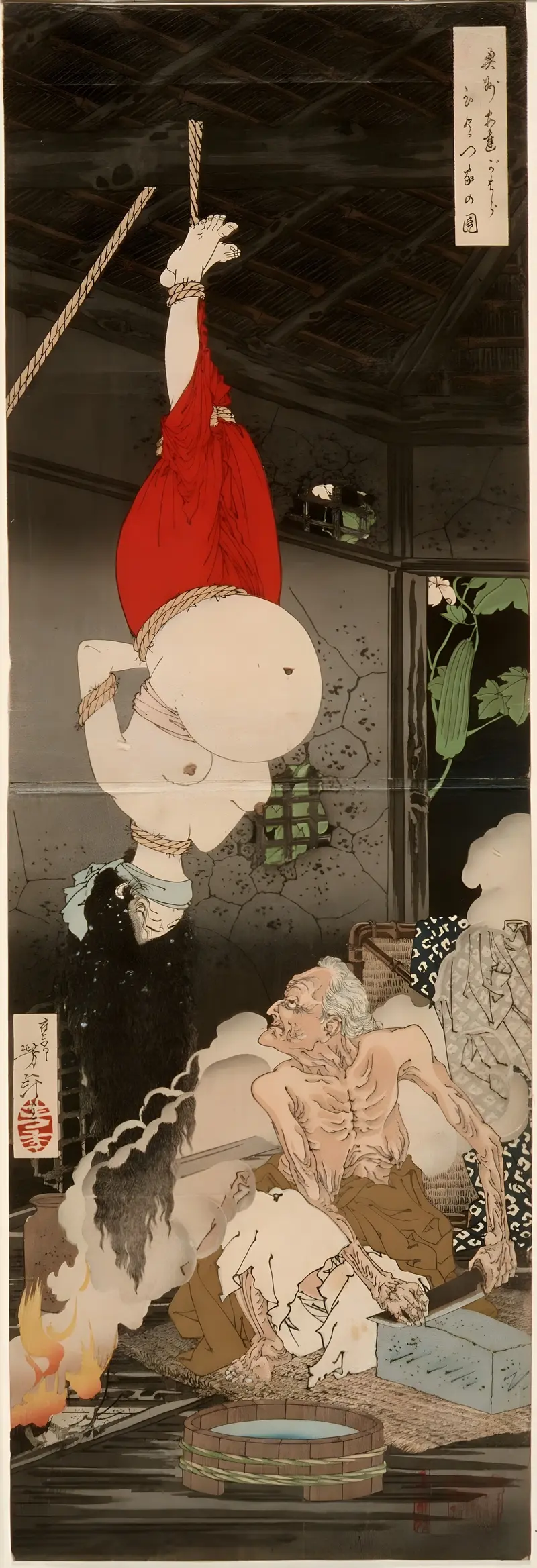
The Lonely House on Adachi Moor in Northern Japan
Tsukioka Yoshitoshi
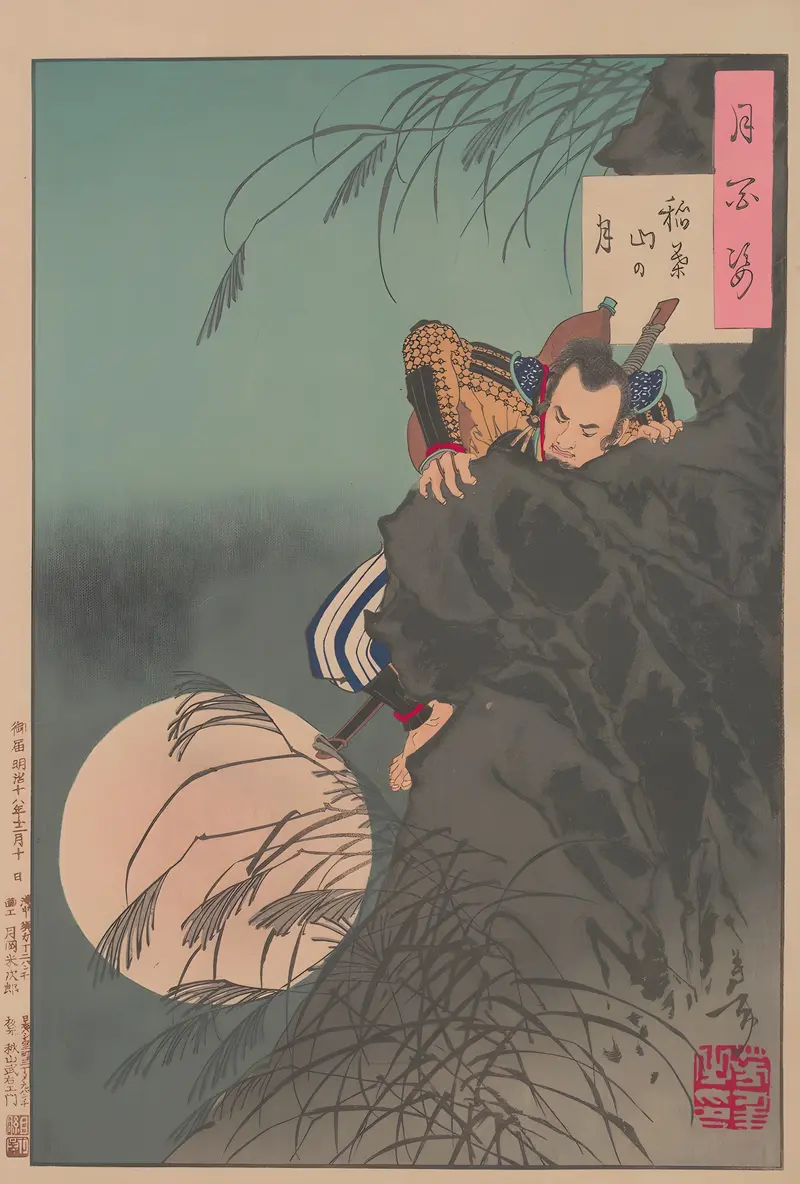
Inaba Mountain moon (Inabayama no tsuki)
Tsukioka Yoshitoshi
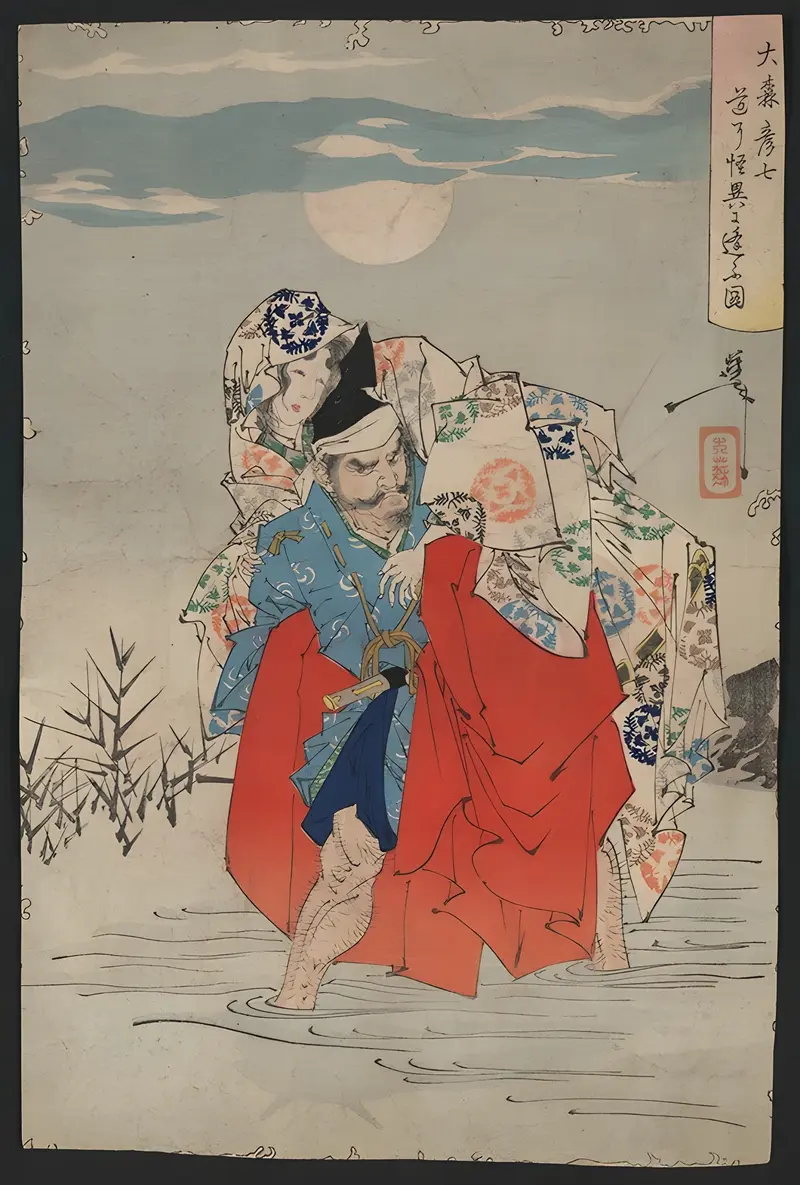
Omori Hikoshichi
Tsukioka Yoshitoshi
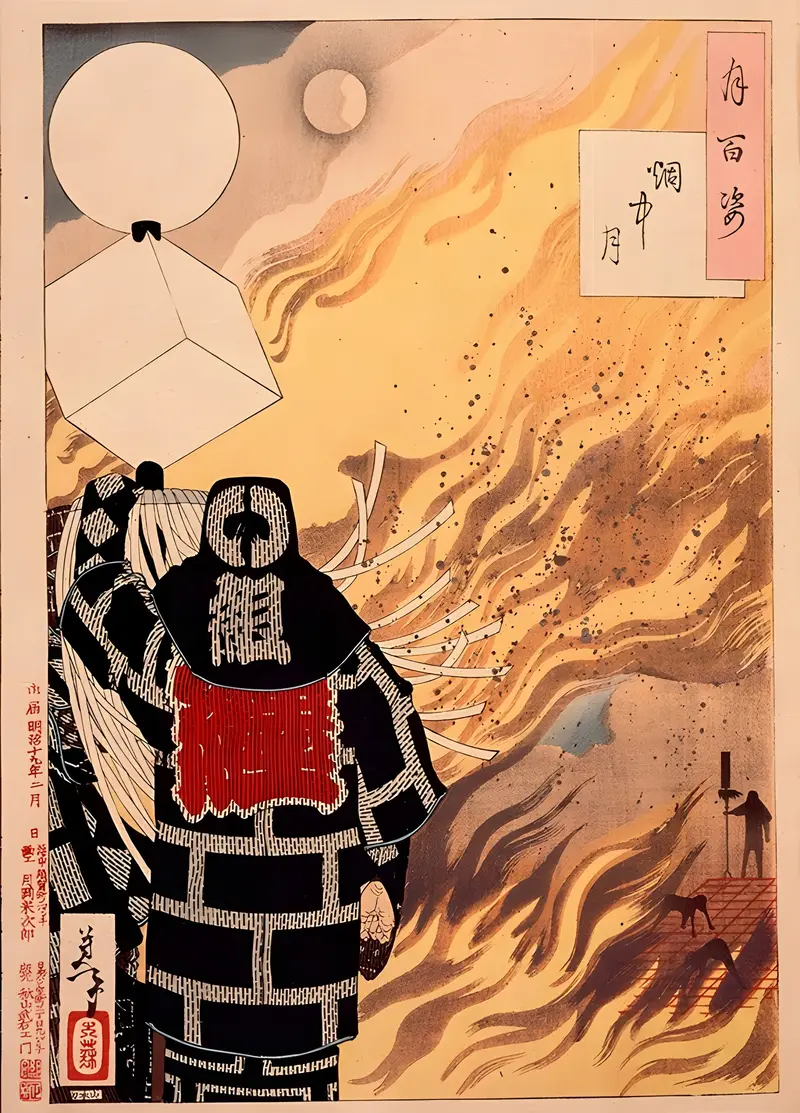
One Hundred Aspects of the Moon
Tsukioka Yoshitoshi
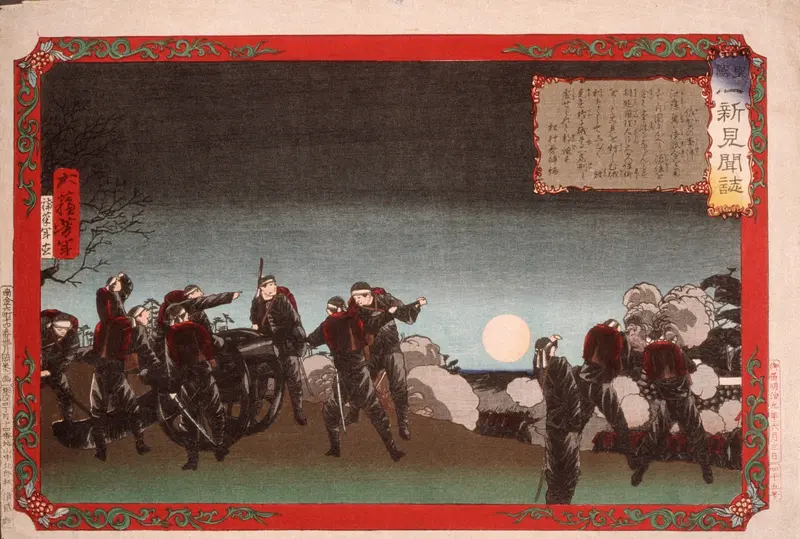
The Saga Incident
Tsukioka Yoshitoshi
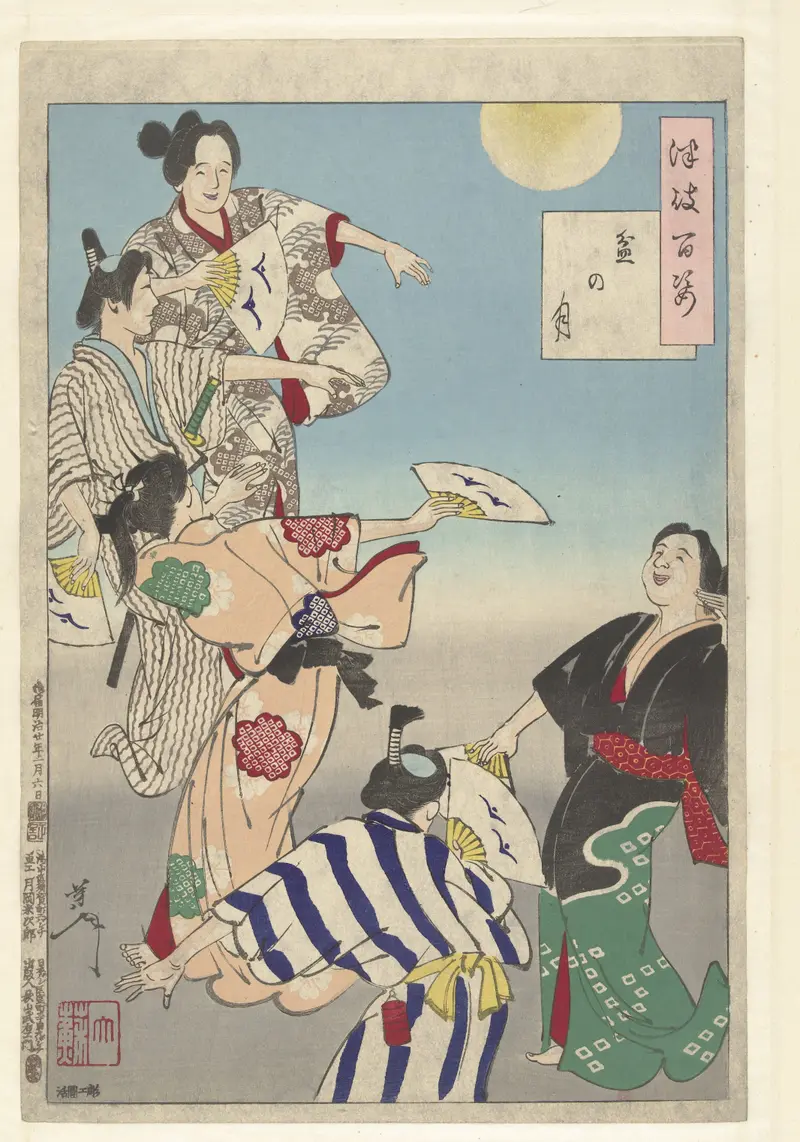
Bon Festival Moon (Bon no tsuki)
Tsukioka Yoshitoshi
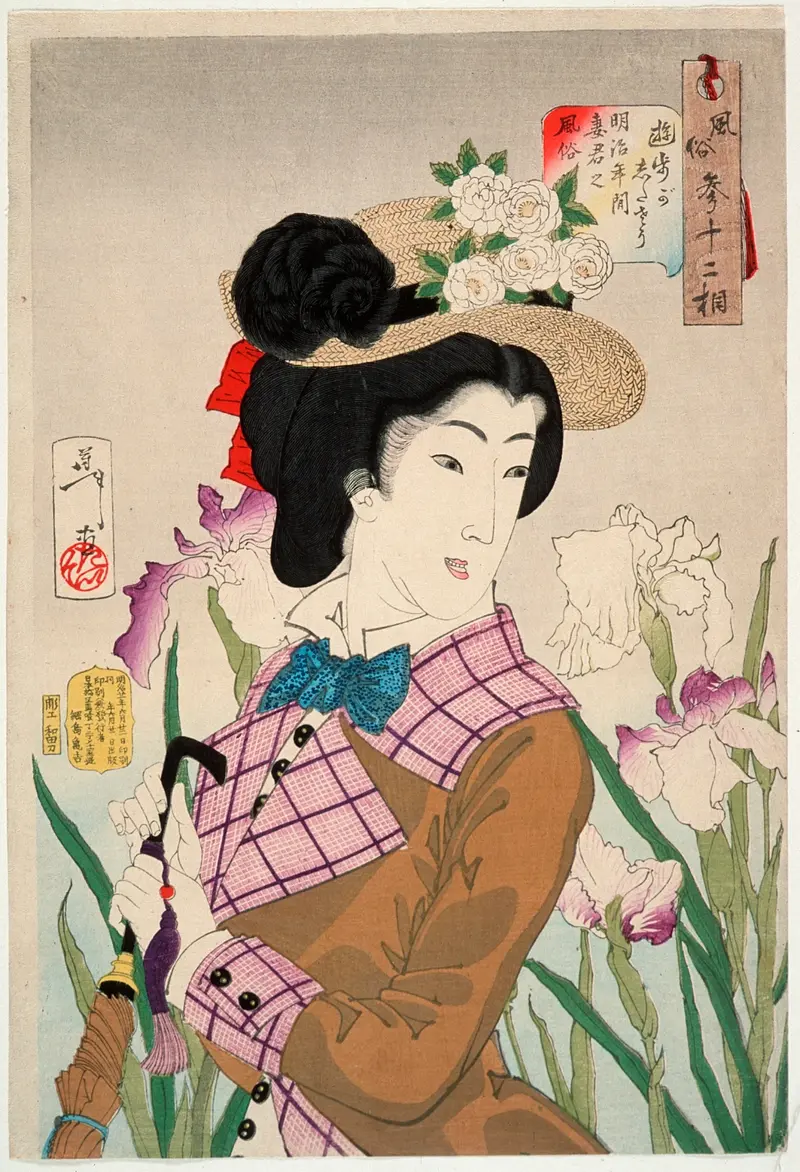
Preparing to Take a Stroll; The Wife of a Nobleman of the Meiji Period
Tsukioka Yoshitoshi





