
Gajowi z Podhala — History & Facts
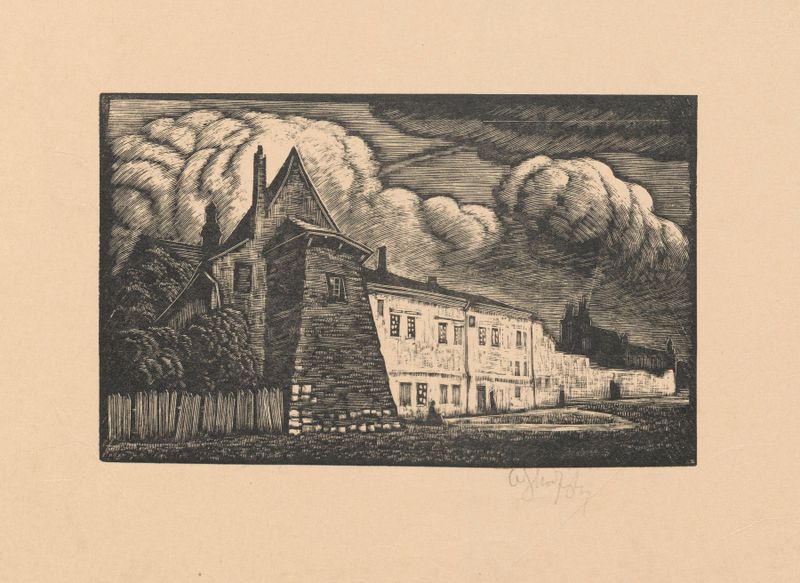
In a world saturated with noise, the quietude of this artwork offers a profound melancholy that resonates deeply within the heart. It invites us to reflect on the weight of unspoken words and the emotional landscapes they inhabit. Focus on the central figures, whose solemn expressions draw you in first. Notice how the artist employs muted earth tones, creating a somber atmosphere.
The rough texture of the canvas mirrors the ruggedness of the scene, hinting at the hardships faced by the subjects. The interplay of light and shadow serves to accentuate their features, revealing the depth of their experience and resilience. As you explore further, subtle details emerge: the worn clothing suggesting toil, the slightly bowed heads hinting at burden or loss. These elements contrast with the serene backdrop, evoking a sense of stillness amidst the turmoil of life.
The composition itself creates a dialogue between the figures, suggesting a shared history, a collective memory, and an unbreakable bond forged in silence. Władysław Skoczylas painted this piece in 1929, during a period when Poland was redefining its identity in the aftermath of World War I. Living in the midst of artistic experimentation and nationalistic fervor, Skoczylas sought to capture the essence of Polish culture through his work. This painting reflects not only personal insights but also the broader narrative of a nation grappling with its past and present.
More Artworks by Władysław Skoczylas
Browse all →
Motyw ze Starego Miasta
Władysław Skoczylas
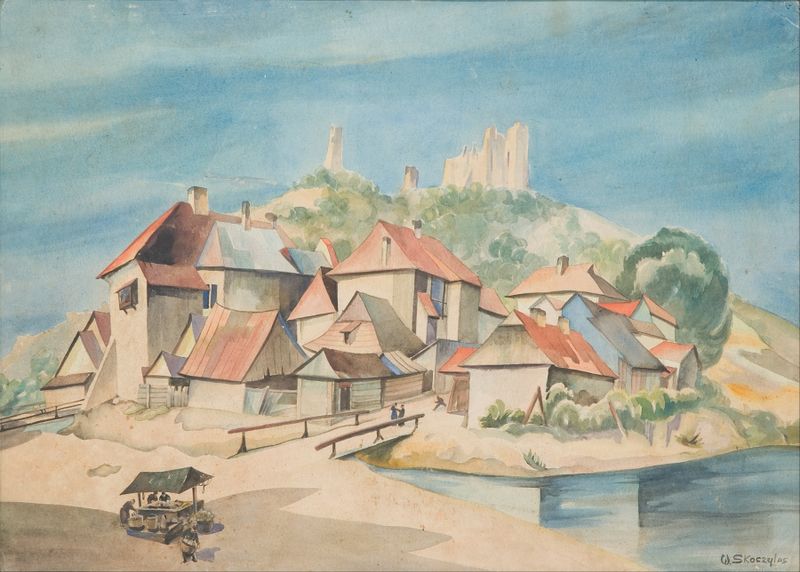
Widok Kazimierza nad Wisłą
Władysław Skoczylas
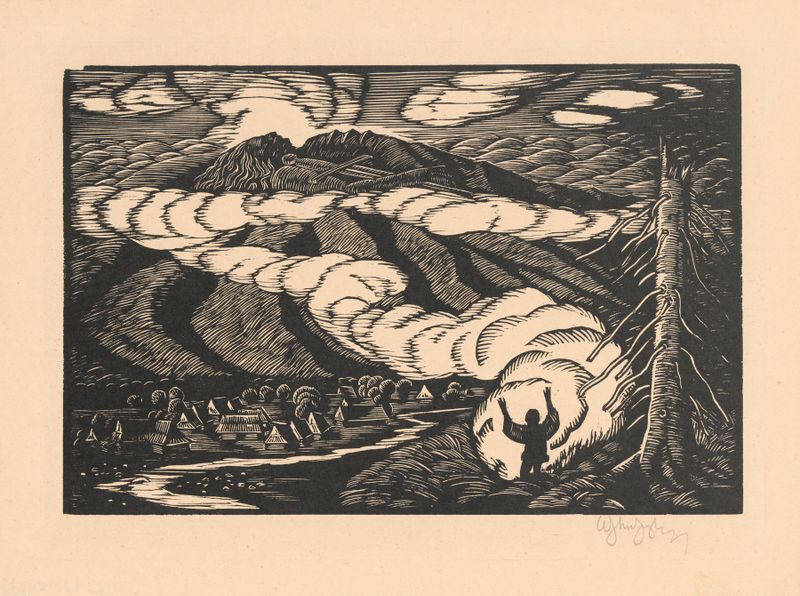
Giewont
Władysław Skoczylas
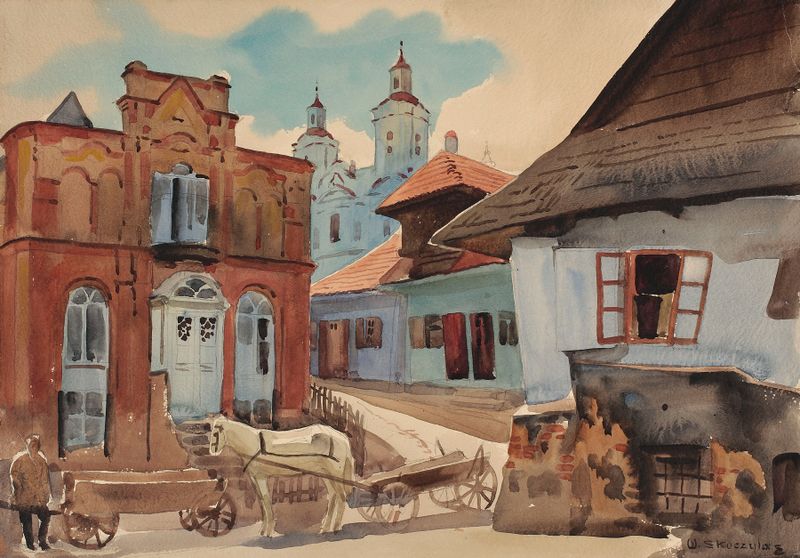
Fragment miasteczka
Władysław Skoczylas

Kościół w Dębnie
Władysław Skoczylas

Ulica w Kazimierzu
Władysław Skoczylas

Rynek w Kazimierzu nad Wisłą
Władysław Skoczylas
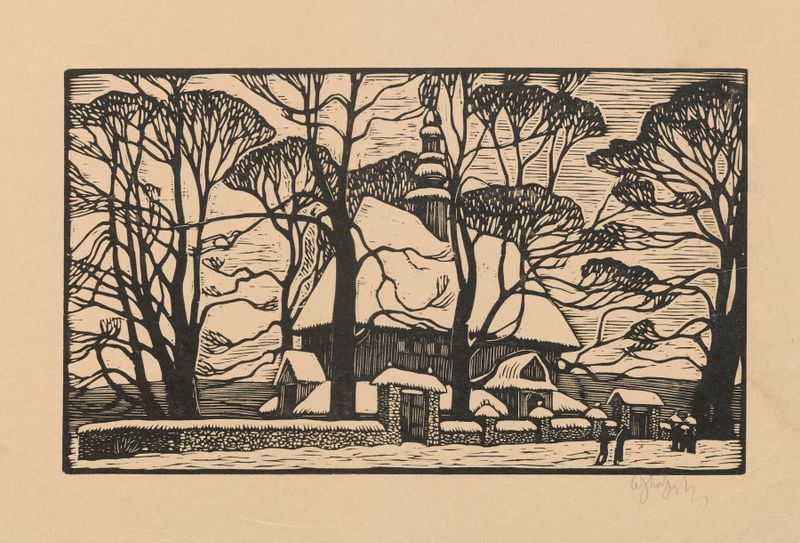
Kościółek w zimie
Władysław Skoczylas

Kolumna Zygmunta
Władysław Skoczylas
Motyw z Krakowa; Baszta Augustianów
Władysław Skoczylas





