
Garden Front of Stationer’s Hall — History & Facts
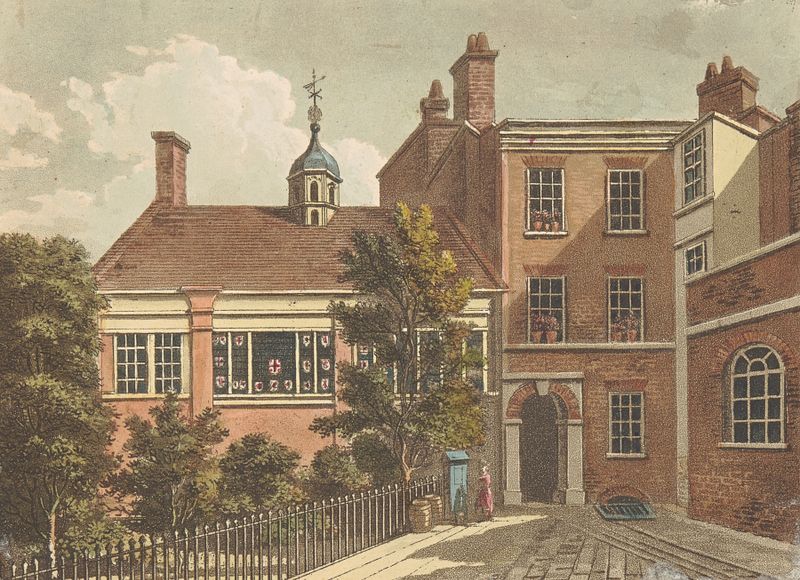
A gentle breeze whispers through the garden, carrying the sweet perfume of blooming flowers. Sunlight filters through the leaves, dappling the cobblestones as elegantly dressed figures stroll, their laughter punctuating the serene atmosphere. In this quiet moment, the world feels poised between the present and a future ripe with possibility. Look to the left at the meticulously arranged flowerbeds, bursting with vibrant colors that mirror the delicate brushwork of the artist.
Notice the stately facade of Stationer’s Hall, its classical architecture grounded in tradition yet adorned with nature’s beauty. The interplay of light and shadow invites your gaze upward, revealing the intricate details of the building's stonework, as if the very structure breathes in tune with the garden. Within this scene lies a tension between human endeavor and the unfurling of nature. The figures, seemingly carefree, contrast with the stoic permanence of the hall, hinting at the transient nature of life and the weight of legacy.
The vibrant flowers symbolize destiny, flourishing yet impermanent, while the cool shadows create a sense of contemplation, urging viewers to consider their own path amidst the divine choreography of time. Created between 1794 and 1800, this work emerged during a time of transformation in England, as society grappled with the repercussions of the Industrial Revolution. Samuel Ireland, an artist devoted to capturing the beauty of everyday life, painted this piece as a tribute to the harmony between nature and manmade structures, reflecting his desire to document the fleeting moments that encapsulate the essence of existence.
More Artworks by Samuel Ireland
Browse all →
Westminster Hall
Samuel Ireland

Southwest View of Middle Temple
Samuel Ireland
Stone Buildings, Lincoln’s Inn
Samuel Ireland
Barnard’s Inn
Samuel Ireland

Lincoln’s Inn Hall and Chapel
Samuel Ireland

Lion’s Inn
Samuel Ireland
Middle Temple Gate
Samuel Ireland
Barnard’s Inn
Samuel Ireland

Westminster Hall
Samuel Ireland
Lincoln’s Inn Gate
Samuel Ireland





