
Middle Temple Gate — History & Facts
Could beauty survive in a century of chaos? In Middle Temple Gate, timeless grace meets the robust certainty of architecture, urging us to pause and reflect on the resilience of aesthetic splendor in tumultuous times. Look to the center of the painting where the grand archway stands as a majestic focal point. Its intricate details beckon the viewer’s eye, while soft shades of brown and beige illuminate the textured stone. Notice how the artist employs light to create a play between shadow and brilliance, giving life to the structure.
The delicate interplay of warm and cool tones envelops the scene, inviting a sense of calm, even as the world around it churns. Upon closer inspection, one can detect deeper layers of meaning. The gate symbolizes a threshold—a passage between chaos and tranquility. The surrounding trees, though lush, appear somewhat melancholic, suggesting the weight of history and the proximity of change.
Furthermore, the calm sky looms above, a reminder that amidst turmoil, nature continues its cycle, echoing the eternal relationship between humanity and its environment. Samuel Ireland painted this work in 1800 during a period marked by political upheaval. The late 18th century brought forth the upheavals of the French Revolution and the Napoleonic Wars, influencing artists across Europe. In this context, Ireland captured the enduring beauty of London’s architectural heritage, asserting that even amid uncertainty, creativity and artistry flourish.
More Artworks by Samuel Ireland
Browse all →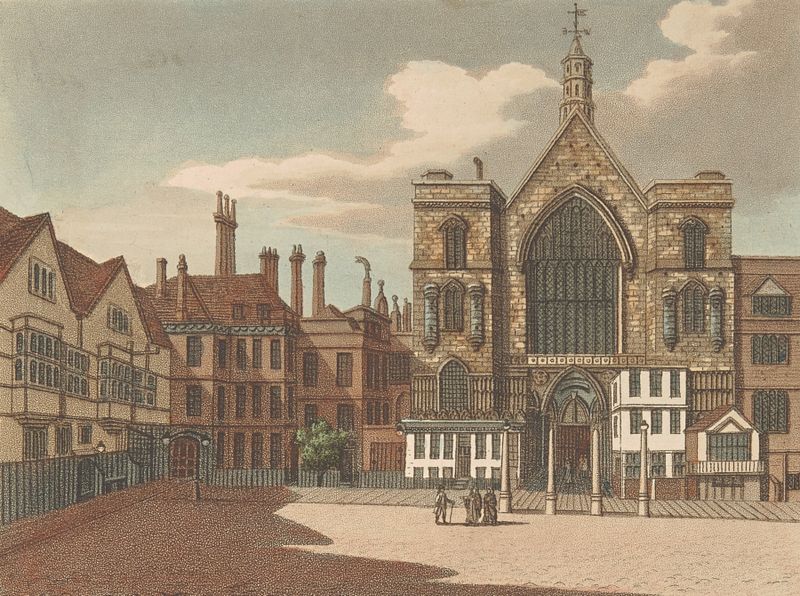
Westminster Hall
Samuel Ireland

Southwest View of Middle Temple
Samuel Ireland
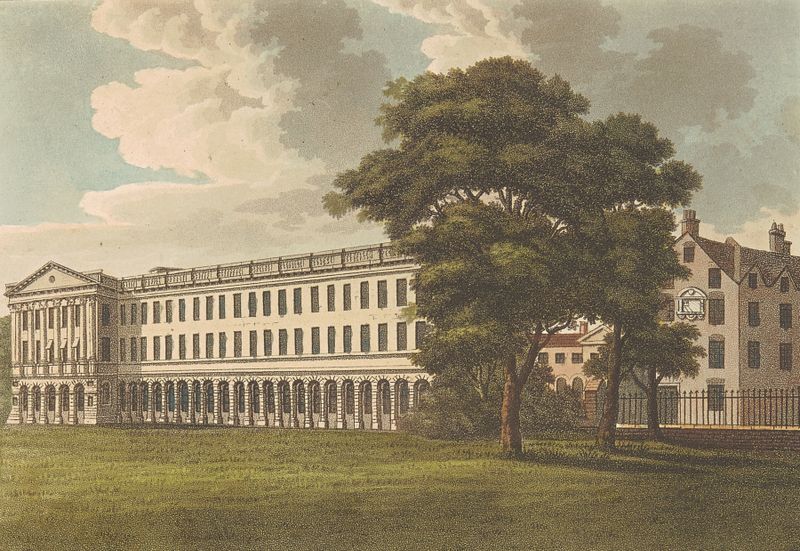
Stone Buildings, Lincoln’s Inn
Samuel Ireland
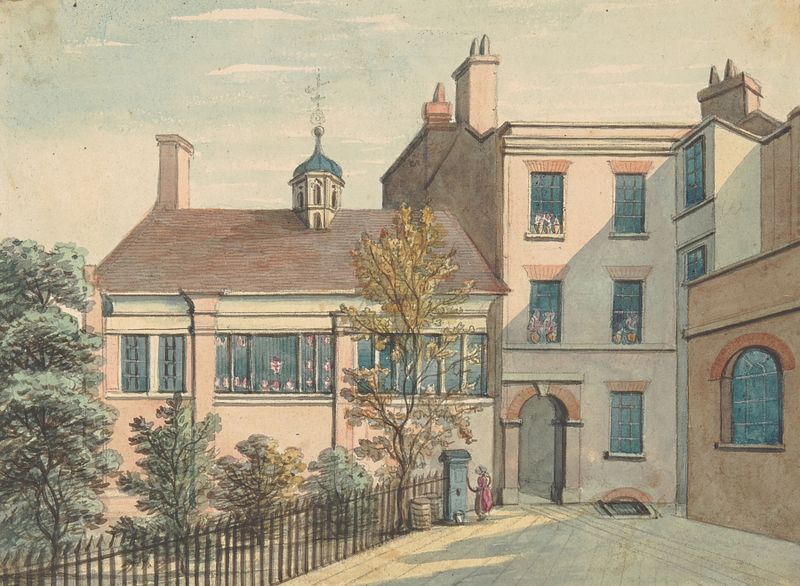
Barnard’s Inn
Samuel Ireland

Lincoln’s Inn Hall and Chapel
Samuel Ireland

Lion’s Inn
Samuel Ireland
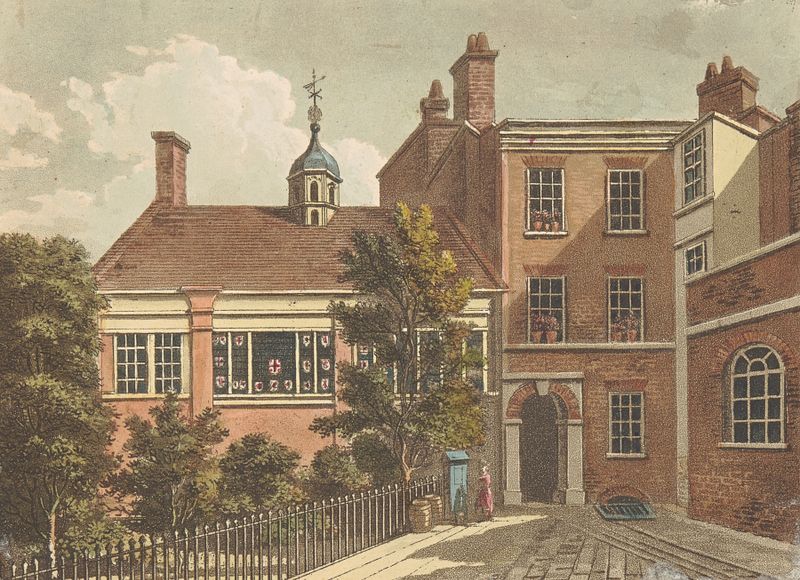
Barnard’s Inn
Samuel Ireland

Westminster Hall
Samuel Ireland
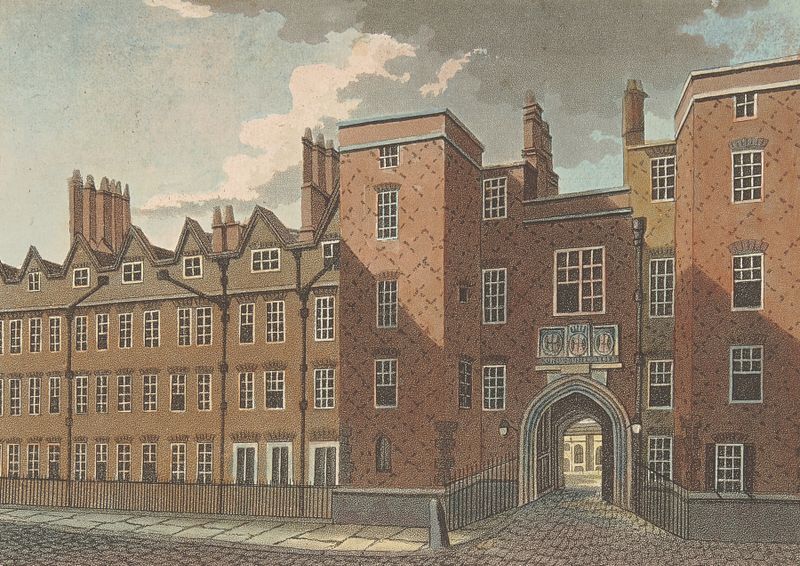
Lincoln’s Inn Gate
Samuel Ireland
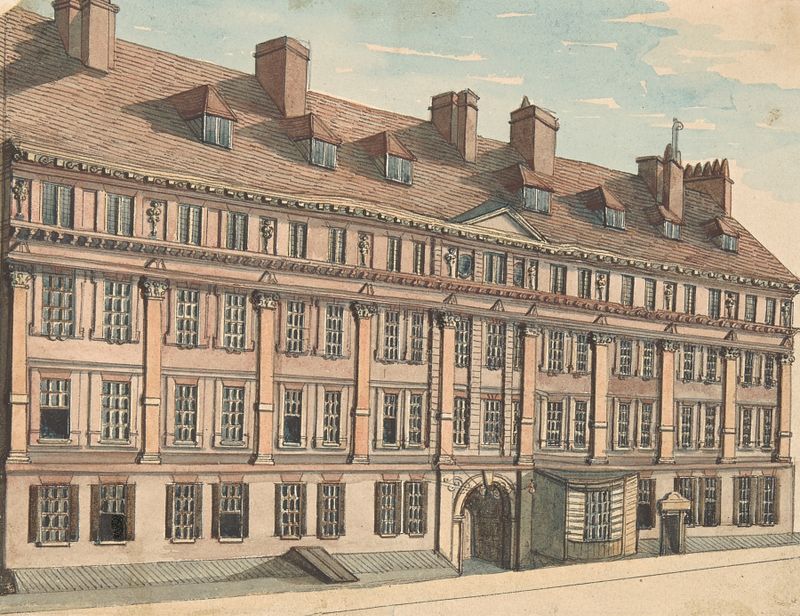
Furnival’s Inn
Samuel Ireland
More Architecture Art
Browse all →
The statue of Liberty
Frédéric Auguste Bartholdi

View of Houses in Delft, Known as ‘The Little Street’
Johannes Vermeer

View of Houses in Delft, Known as ‘The Little Street’
Johannes Vermeer

The Cathedral in Rouen. The portal, Grey Weather
Claude Monet

The yellow house
Vincent van Gogh

The Church in Auvers-sur-Oise, View from the Chevet
Vincent van Gogh