
Garden in the public square. — History & Facts
In the heart of the city, a public square comes alive with a riot of blooming colors. Sunlight spills softly onto the cobblestones, illuminating a garden where townsfolk gather, their laughter mingling with the rustling of leaves. A woman, her fingers delicately tracing the petals of a vibrant flower, captures the essence of obsession — both for beauty and for the fleeting moments that life offers. Look to the left where an array of flowers bursts forth with hues of crimson and golden yellow, drawing your eye into the vibrancy of the scene.
Notice how the artist employs dappled light, creating a play of shadows that enhances the lush greenery surrounding the garden. Each brushstroke is filled with meticulous detail, from the tightly curled tendrils of ivy to the soft petals of the daisies, all crafted to invite the viewer to revel in nature’s abundance. The contrast between the manicured garden and the bustling square echoes a deeper tension: the struggle between nature and urban life. The flowers symbolize a yearning for the simplicity of the natural world, while the figures around them, caught in their own conversations, reflect a collective obsession with social interaction.
The small details — a butterfly alighting on a flower, a child reaching out to touch the petals — speak to the ephemeral joy found in fleeting moments of connection. C. Castro created Garden in the Public Square in 1869 while living in France during a time when artists were increasingly exploring themes of everyday life and nature amidst rapid industrialization. This period saw a blossoming interest in capturing the ordinary, a response to the changing urban landscape, making the painting both a reflection of the artist's surroundings and a commentary on the era's connection to nature.
More Artworks by C. Castro
Browse all →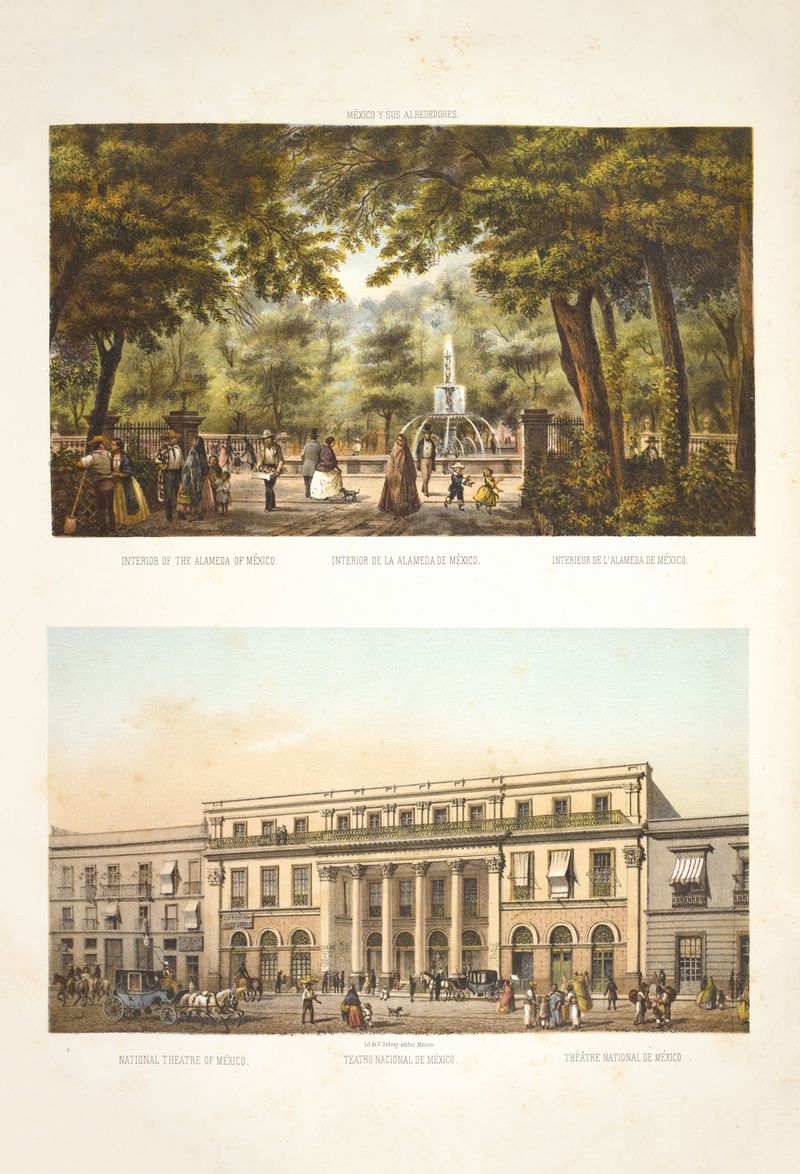
Interior of the Alameda of Mexico ; National Theatre of Mexico.
C. Castro
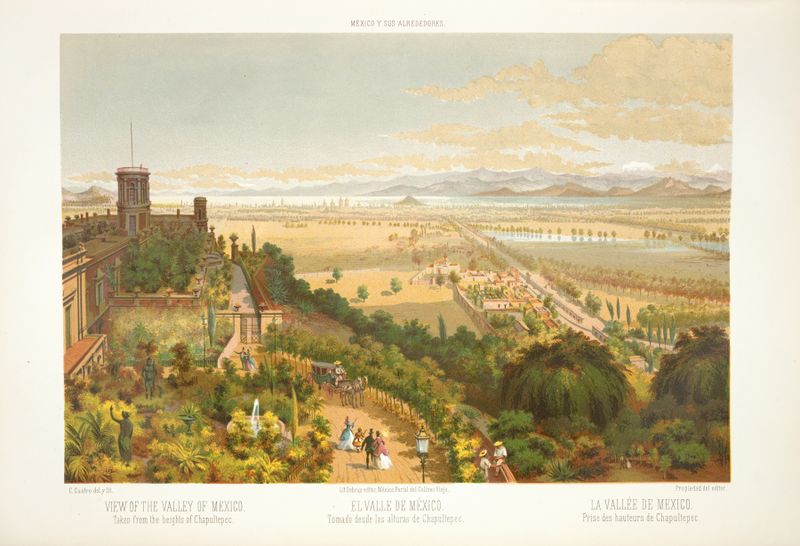
View of the Valley of Mexico, taken from the heights of Chapultepec.
C. Castro
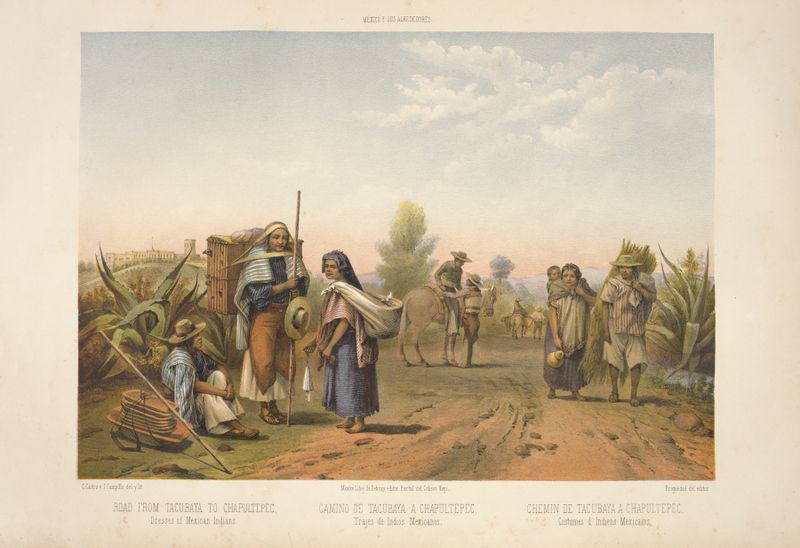
Road from Tacubaya to Chapultepec, dresses of Mexican Indians.
C. Castro
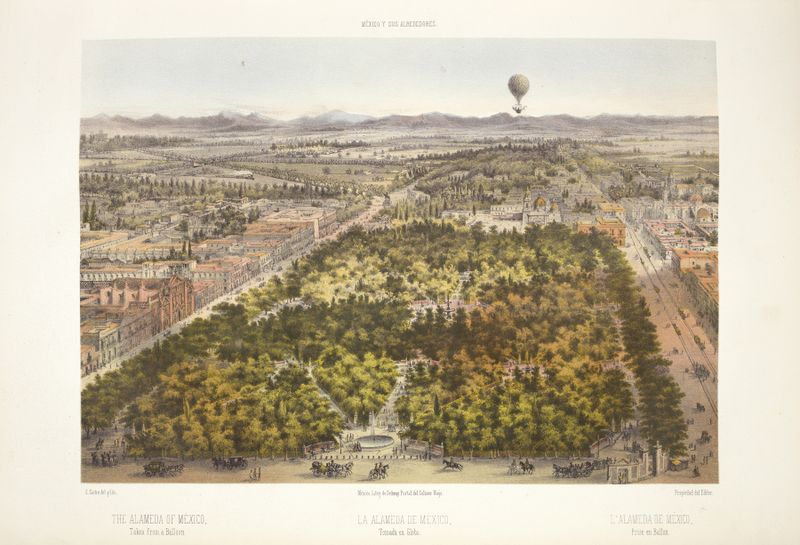
The Alameda of Mexico, taken from a balloon.
C. Castro
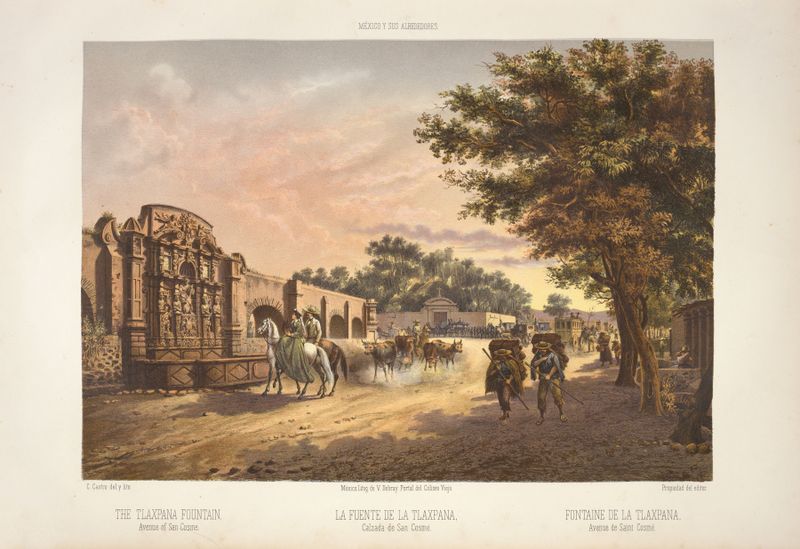
The Tlaxpana fountain, Avenue of San Cosme.
C. Castro
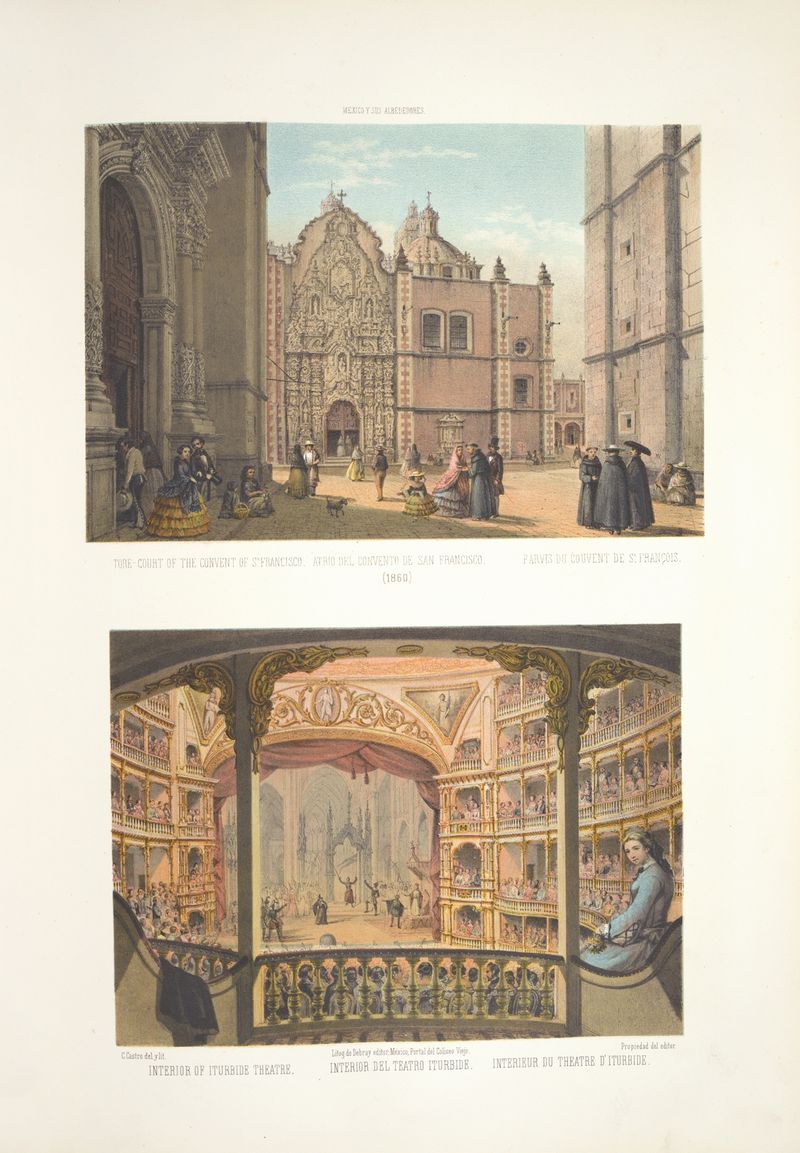
Tore-court of the convent of St. Francisco ; Interior del Teatro Iturbide
C. Castro
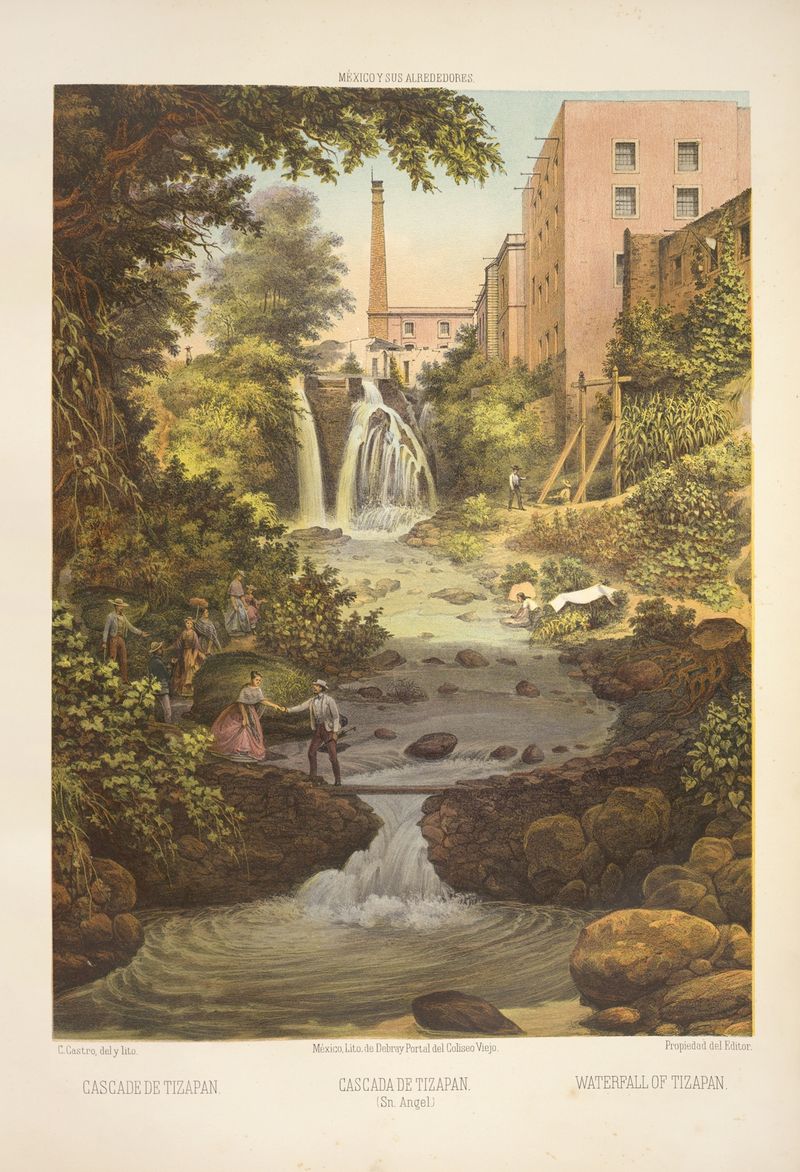
Waterfall of Tizapan
C. Castro
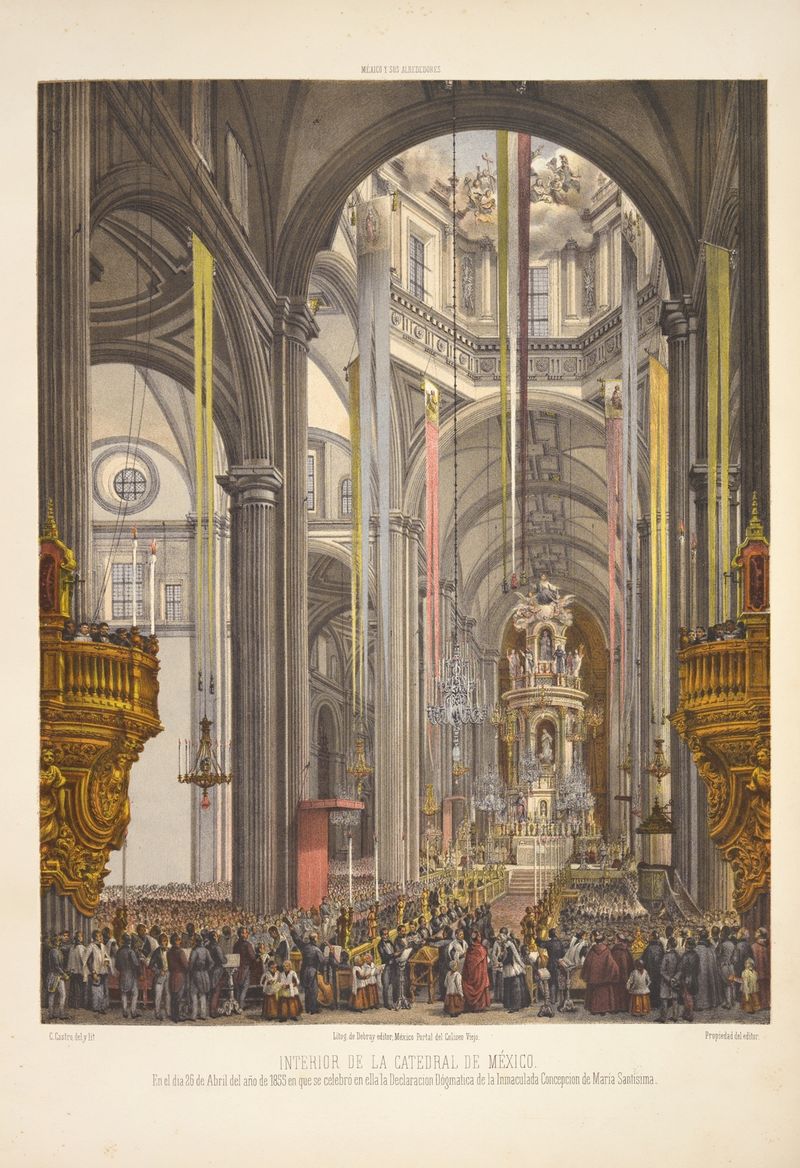
Interior de la Catedral de México. En el dia 26 de Abril del año de 1855 en que se celebró en ella la Declaracion Dógmatica de la Inmaculada Concepcion de María Santisima.
C. Castro
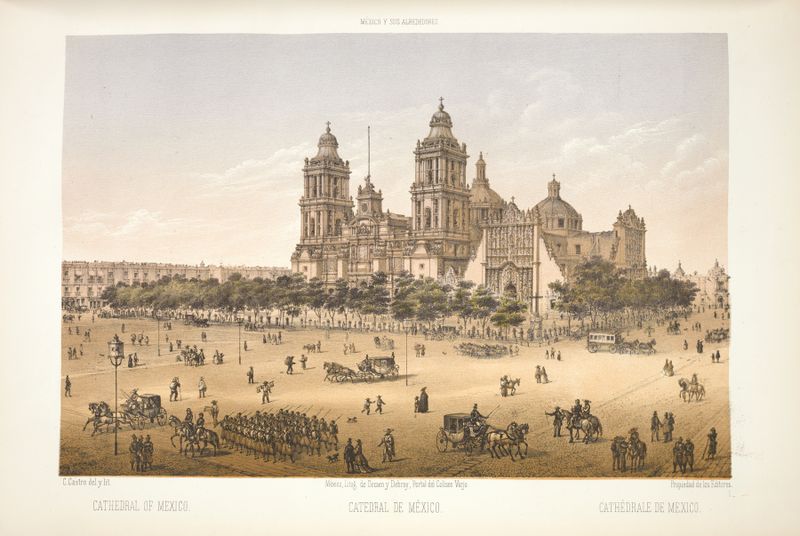
Cathedral of Mexico.
C. Castro
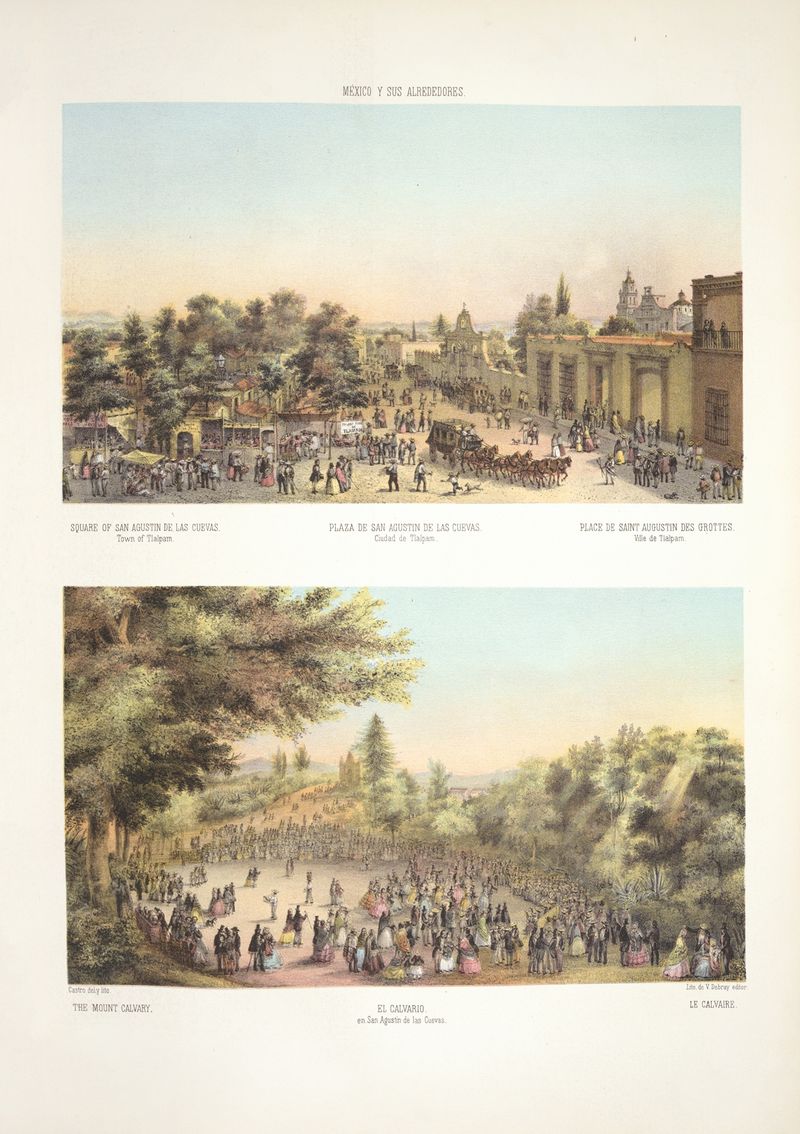
Square of San Agustin de las Cuevas, town of Tlalpam ; The Mount Calvary.
C. Castro





