Garden With Red House — History & Facts
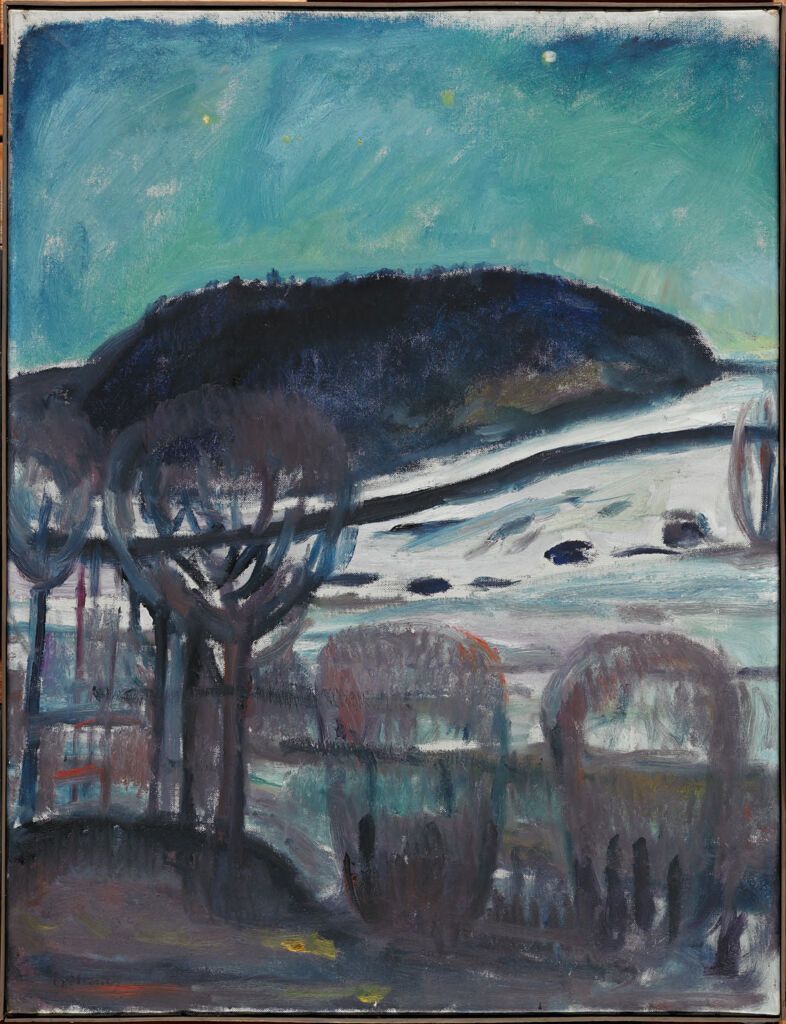
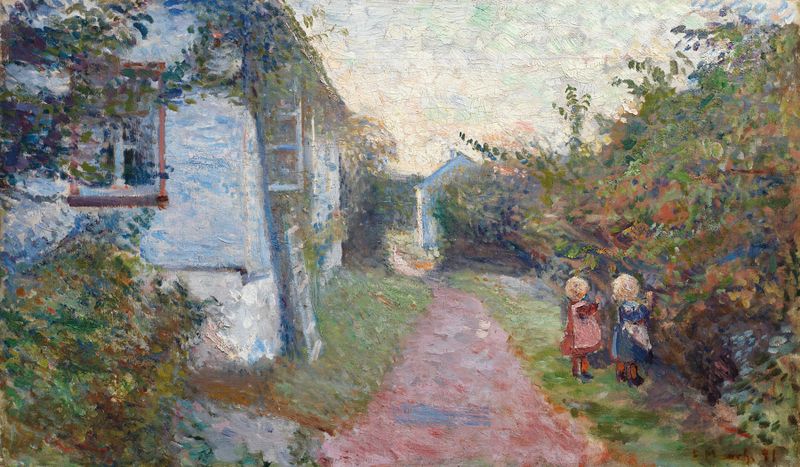
In the heart of a vibrant garden, lush foliage dances in the whispers of a breezy afternoon. A striking red house stands proudly in the background, its color pulsating against the soft greens and earthy browns surrounding it. Sunlight filters through the leaves overhead, casting dappled shadows that play upon the scene's surface, while the air is thick with the scent of blooming flowers, a promise of warmth and life. Look to the left at the vivid strokes of green that convey the garden's exuberance, each brushmark filled with a sense of motion and vitality.
Notice how the bold red of the house demands attention, contrasting sharply with the more subdued, earthy tones of the garden. Munch’s technique creates a feeling of intimacy, inviting the viewer to explore the path winding through dense vegetation, hinting at a journey that awaits beyond the canvas. Within this seemingly idyllic setting lies a tension between the vibrancy of nature and the stark, unyielding presence of the house. The red structure, while captivating, symbolizes both shelter and isolation, suggesting an underlying narrative of longing or retreat.
The vivid colors ignite emotions, evoking the joy of life, yet hinting at the artist’s own struggles with personal melancholy and existential questions. Painted in 1882 in Norway, this work emerged during a time when Munch was navigating the complexities of his own psyche and artistic identity. As he experimented with color and form, he found himself at the forefront of the Symbolist movement, striving to convey deeper emotional truths through his art. This piece reflects not only his development as an artist but also a broader shift in the artistic landscape, where color began to signify more than mere representation.