
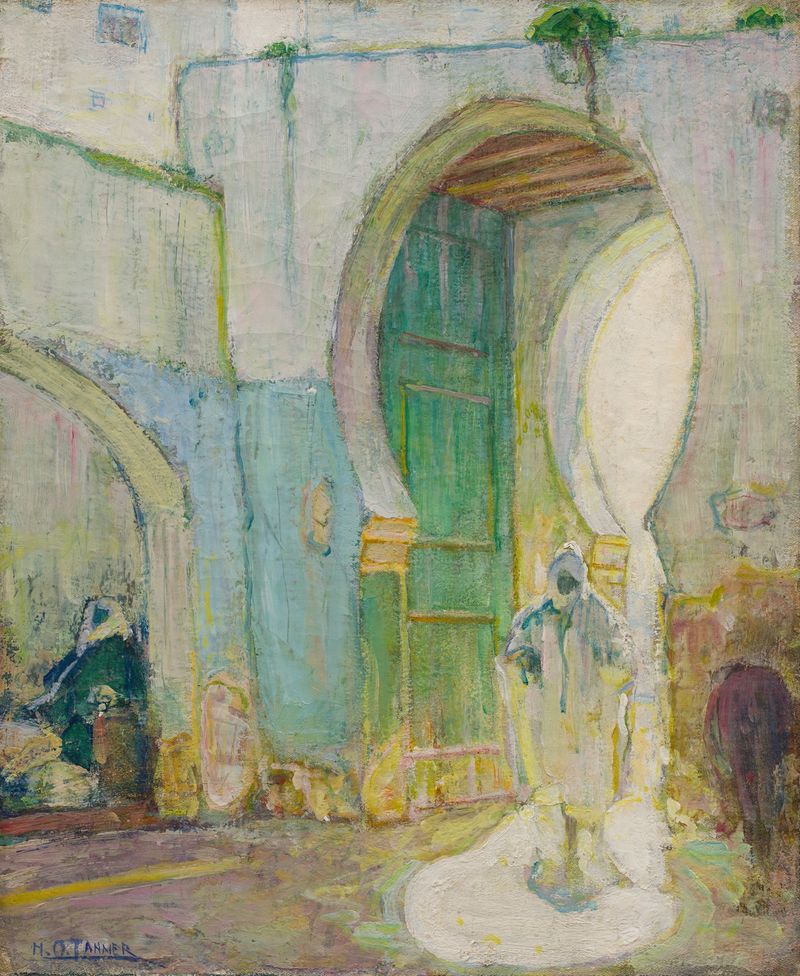
Gate in Tangier. — History & Facts
What if beauty was never meant to be finished? In each stroke of this artwork, the tension between the sublime and the violent reveals an unspoken truth about the world. Focus on the sweeping arch of the gate, where deep blues and earthy tones converge. The colors create a soft yet mysterious atmosphere, inviting the viewer into a realm where the ordinary intersects with the extraordinary. Notice how the light delicately dances across the surface, highlighting the intricate details and textures of the stone, while shadow lurks in the recesses, hinting at untold stories that lie beyond the threshold. This interplay between light and shadow suggests a duality—hope and despair, beauty and violence.
The gate serves as a powerful symbol of transition, evoking the tension of crossing from one state of being to another, perhaps reflecting Tanner's exploration of identity and belonging. The surrounding elements, subtle yet significant, hint at the social realities of his time, where beauty often coexists with struggle, allowing viewers to engage with deeper themes of conflict and resolution. Henry Ossawa Tanner painted this work during a period marked by his fascination with the landscapes and cultures of North Africa, particularly while living in Paris in the late 19th century. As an African American artist, he sought to transcend the limitations imposed by society, capturing the essence of his subjects with authenticity and depth.
His innovative approach to light and form positioned him as a pioneering figure in American art, navigating the complexities of identity in a changing world.
More Artworks by Henry Ossawa Tanner
Browse all →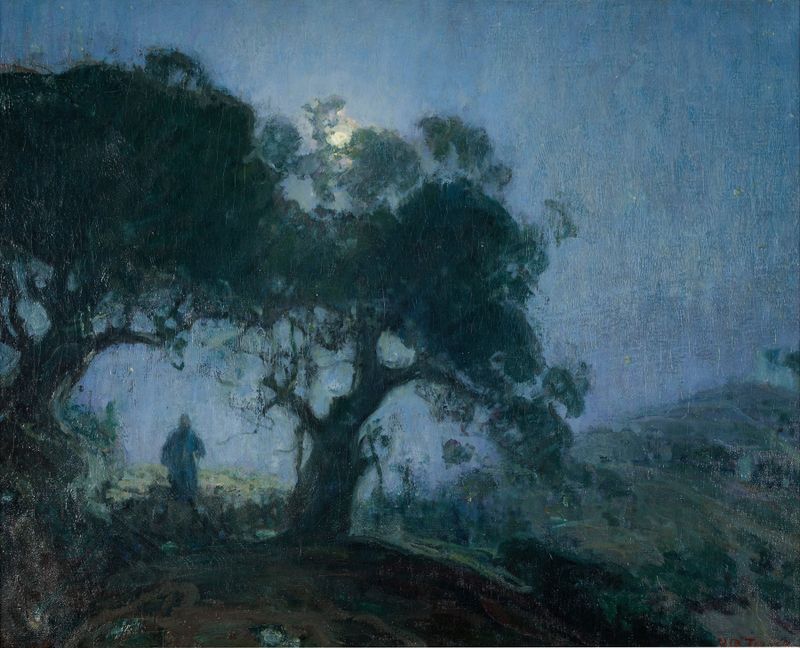
The Good Shepherd
Henry Ossawa Tanner
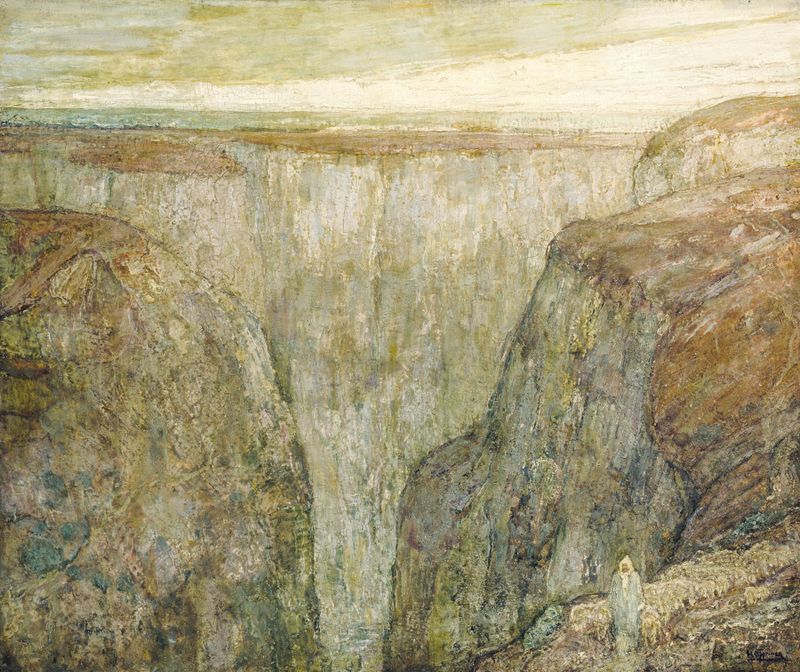
The Good Shepherd (Atlas Mountains, Morocco)
Henry Ossawa Tanner
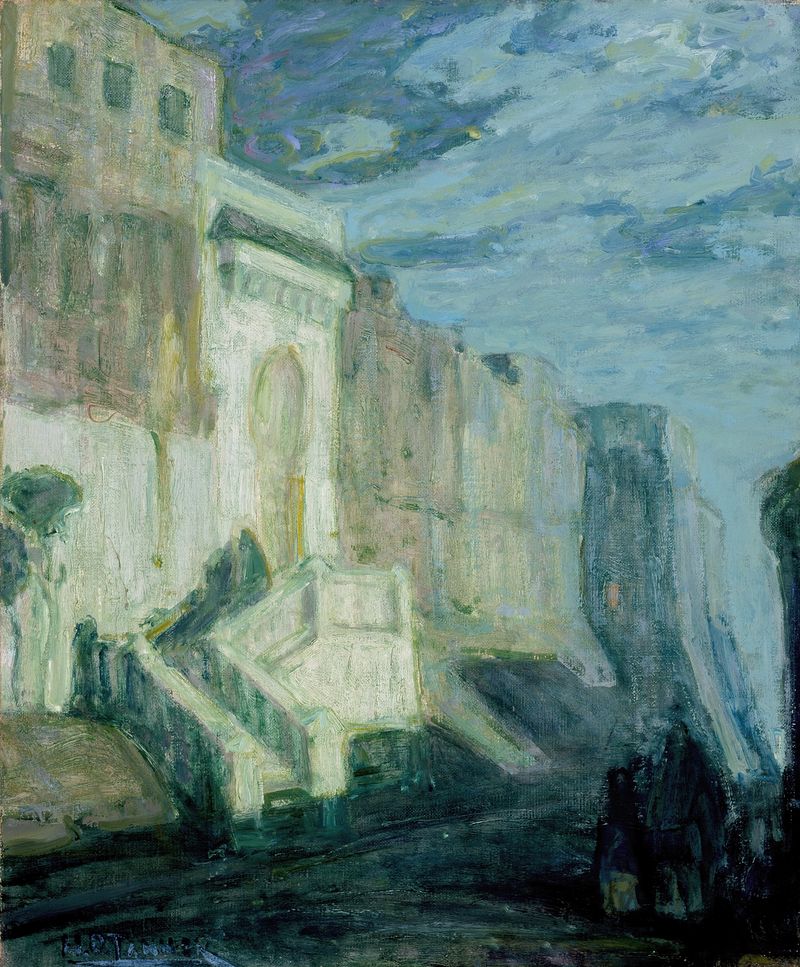
Moonlight; Walls of Tangiers
Henry Ossawa Tanner
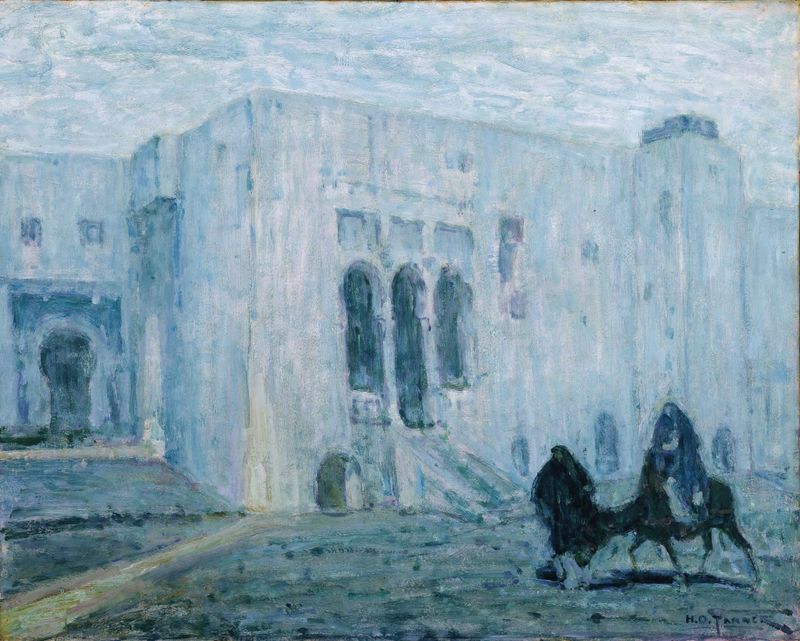
Palace of Justice, Tangier
Henry Ossawa Tanner
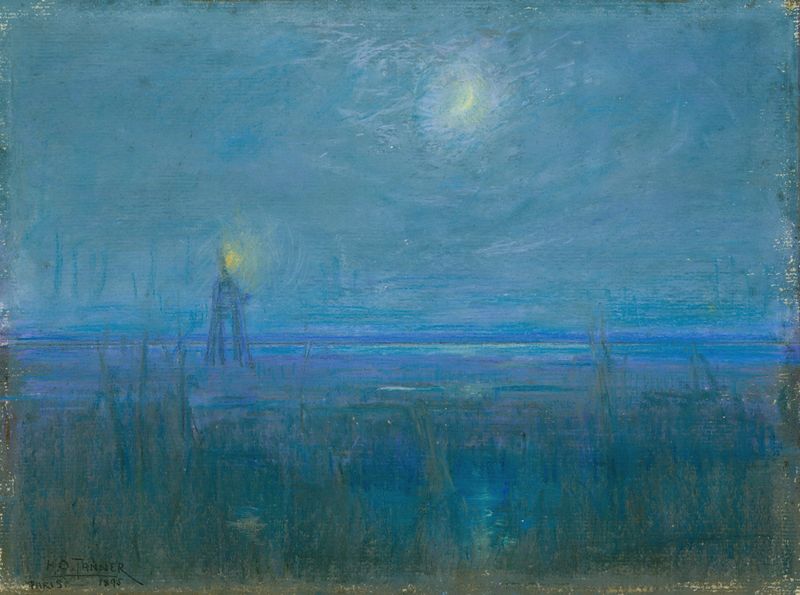
Marshes In New Jersey
Henry Ossawa Tanner
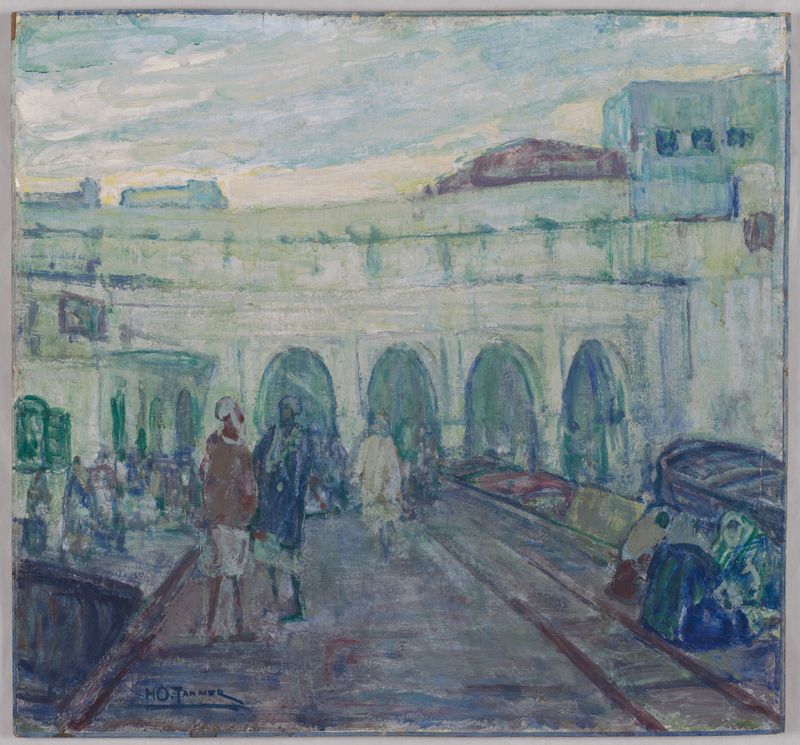
Port of Tangiers (Entrance to the Customs House)
Henry Ossawa Tanner
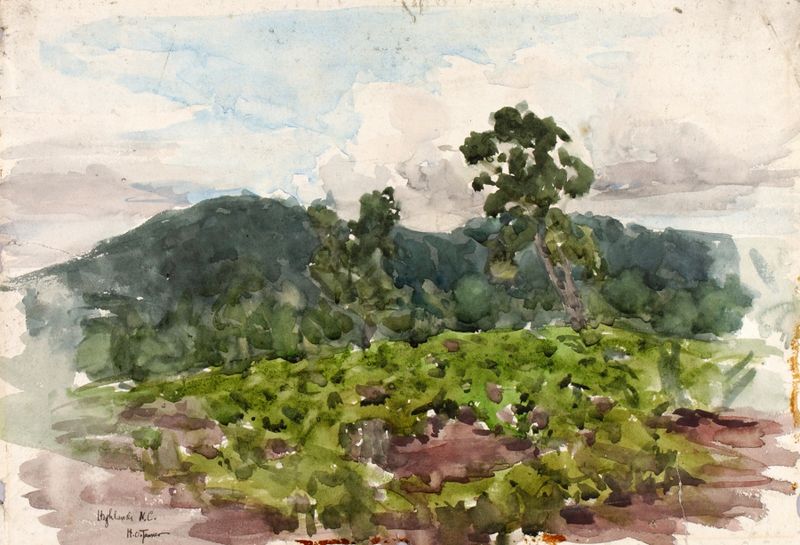
Highlands, N.C.
Henry Ossawa Tanner
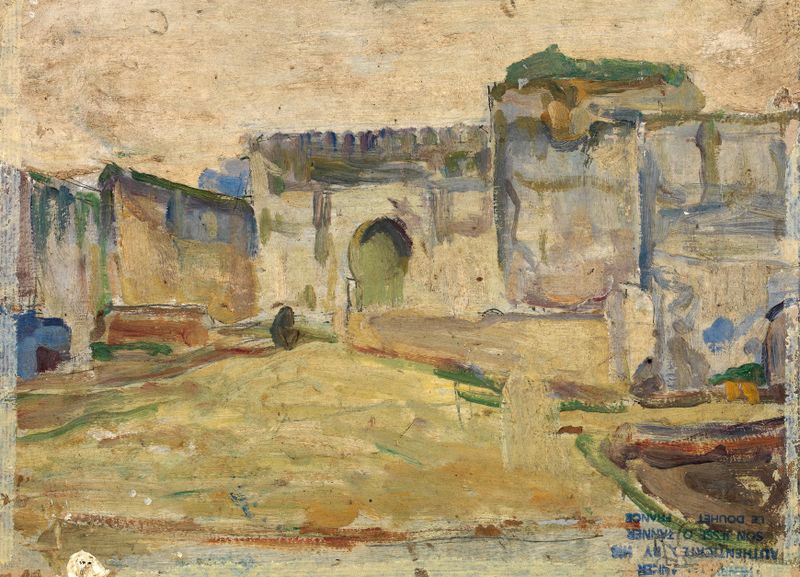
Street Scene, Tangier (Crenelated Architecture)
Henry Ossawa Tanner
Gateway, Tangier
Henry Ossawa Tanner
Kansas City, Kansas
Henry Ossawa Tanner
More Architecture Art
Browse all →
The statue of Liberty
Frédéric Auguste Bartholdi

View of Houses in Delft, Known as ‘The Little Street’
Johannes Vermeer

View of Houses in Delft, Known as ‘The Little Street’
Johannes Vermeer

The Cathedral in Rouen. The portal, Grey Weather
Claude Monet

The yellow house
Vincent van Gogh

The Church in Auvers-sur-Oise, View from the Chevet
Vincent van Gogh