
Gezicht op Civita Castellana — History & Facts
What if beauty was never meant to be finished? In Gezicht op Civita Castellana, the viewer is invited to ponder the eternal nature of faith and the landscapes that cradle it. Look to the left, where the crumbling silhouettes of ancient structures rise against a twilight sky, their forms bathed in a soft, golden light. The artist’s brushwork provides a gentle texture to the distant hills, while the foreground teems with verdant life, inviting the eye to explore the juxtaposition of decay and renewal. The color palette is warm and inviting, capturing the delicate interplay between dusk and dawn, as if to suggest that every moment holds its own unique beauty, even in transience. Beneath the surface, the painting resonates with deeper themes of impermanence and hope.
The ancient architecture stands as a testament to faith, yet shows signs of wear, whispering stories of a time long past. The lush greenery encroaches upon these remnants, symbolizing nature's relentless grip on what remains, creating a contrast between human endeavor and the enduring force of the earth. Together, these elements evoke a sense of longing, a reminder that beauty often lies in the unfinished and the transient. Created in 1844, this work emerged during a period of significant artistic transition in France.
Dubourcq, influenced by the Romantic movement, sought to capture the sublime essence of landscapes rather than merely replicate them. At this time, artists were increasingly exploring themes of nature, memory, and the emotional resonance of place, reflecting the turbulent social changes and ideas of the era.
More Artworks by Pierre Louis Dubourcq
Browse all →
Een wijngaard bij Olevano
Pierre Louis Dubourcq
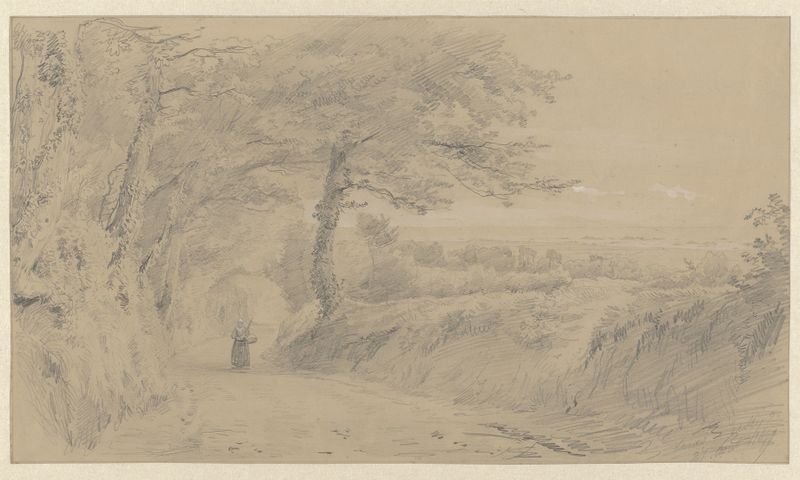
Landschap op Jersey
Pierre Louis Dubourcq

De tempel van Neptunus, Paestum
Pierre Louis Dubourcq
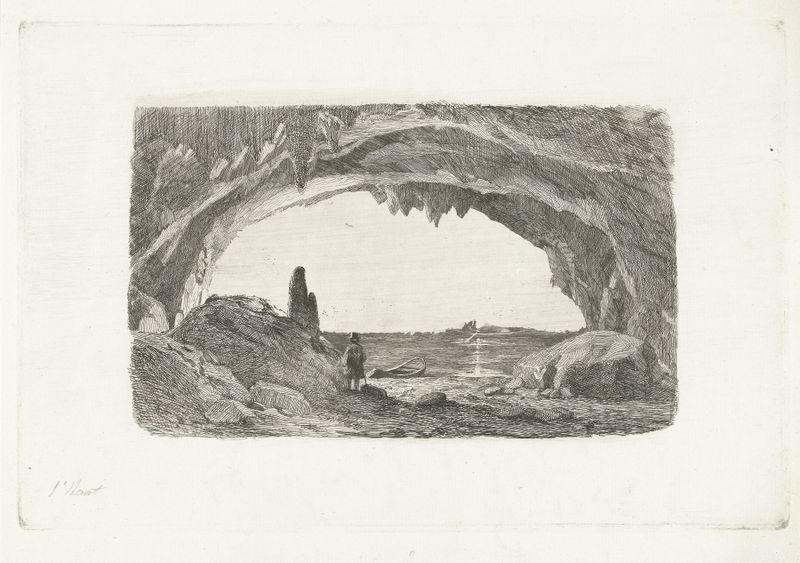
Man met roeiboot in de grotten van Han
Pierre Louis Dubourcq

Paard en wagen op een weg
Pierre Louis Dubourcq
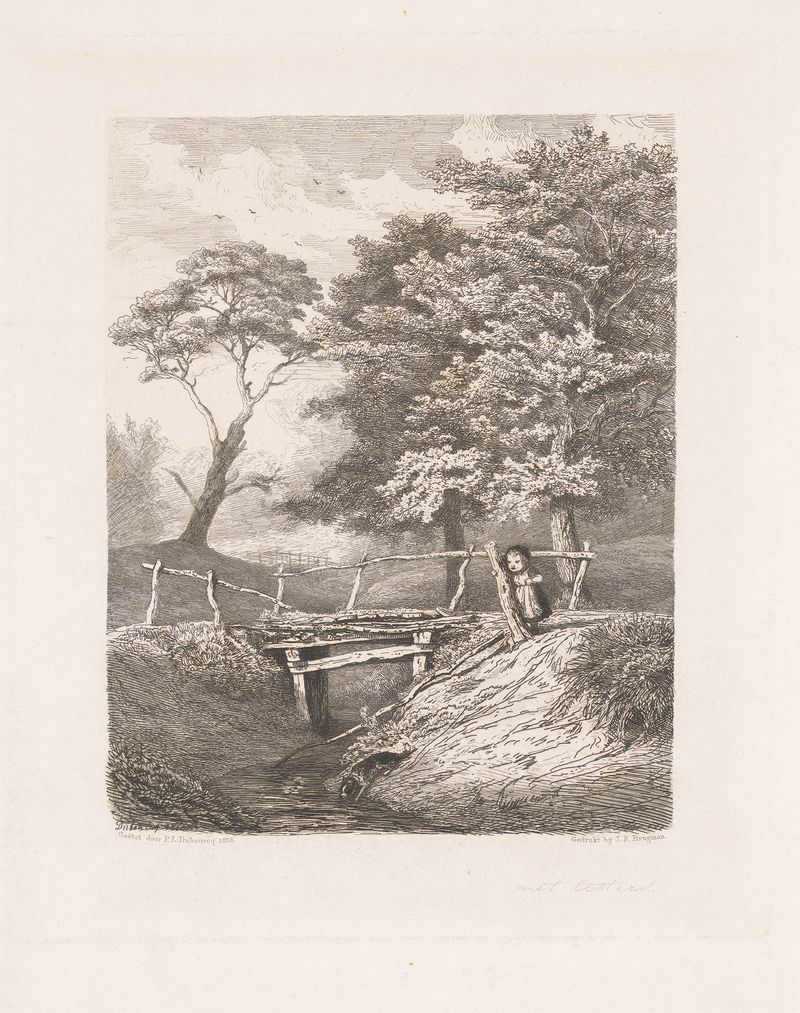
Meisje met hond bij houten brug
Pierre Louis Dubourcq

Kustlandschap te Granville
Pierre Louis Dubourcq

View of Castle Gerone on the island Ischia
Pierre Louis Dubourcq

De rivier de Nera bij Narni
Pierre Louis Dubourcq
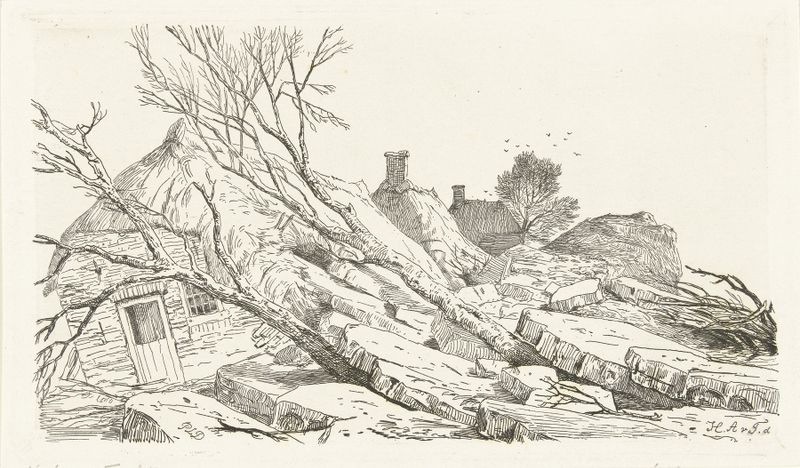
Gezicht op de dijk tussen Maren en Alem met kruiend ijs
Pierre Louis Dubourcq





