
Gezicht te Santpoort met weiland aan de Hoofdstraat, ziende naar het Zuiden. — History & Facts
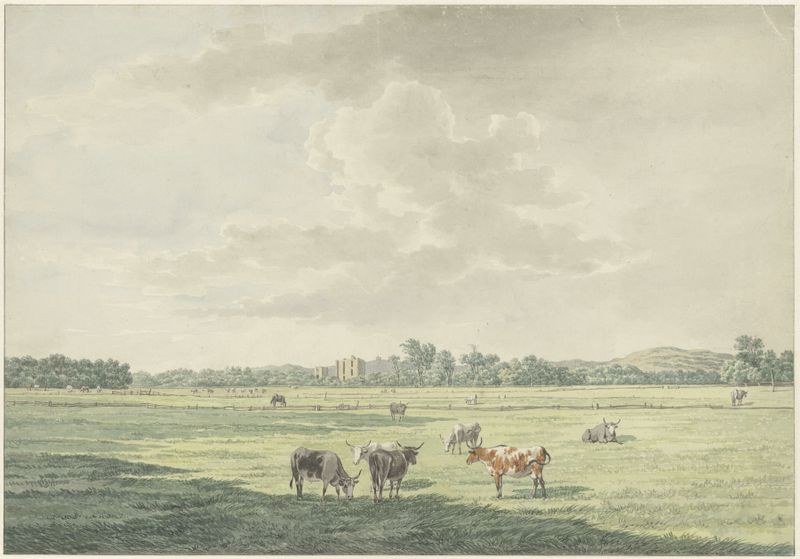
Who listens when art speaks of silence? In Gezicht te Santpoort met weiland aan de Hoofdstraat, ziende naar het Zuiden, the quiet hum of a rural landscape invites contemplation and connection. Look first at the lush expanse of green in the foreground, where meticulously painted grasses sway gently as if beckoning the viewer closer. The soft, earthy browns of the path guide our eyes toward the horizon, where a delicate interplay of light and shadow reveals subtle nuances in the sky. The palette is nature’s own, infused with tranquil blues and verdant greens that impart a sense of serenity, while the gentle brushstrokes create a harmonious rhythm that mirrors the simplicity of rural life. Beneath this peaceful scene lies a tension between stillness and the passage of time.
The meandering path suggests a journey not just through the landscape, but through memory—a reminder of moments painstakingly captured and now lingering in silence. The soft clouds hovering above seem to reflect the gentle whispers of forgotten tales, inviting the viewer to ponder the stories that may have unfolded in this idyllic setting. There's also a juxtaposition of the natural world against the human touch, as the structures in the distance hint at civilization’s encroachment, awakening a sense of nostalgia for what once was. Wybrand Hendriks painted this work between 1798 and 1802, during a period when the Dutch Romantic movement was beginning to shape national identity through landscape art.
Living in a time marked by socio-political changes, Hendriks sought solace in the pastoral beauty of his surroundings, capturing the essence of a vanishing world with a deep commitment to the natural environment. This painting emerged as the artist navigated his artistic voice, firmly rooted in his surroundings and reflecting the changing tides of his era.
More Artworks by Wybrand Hendriks
Browse all →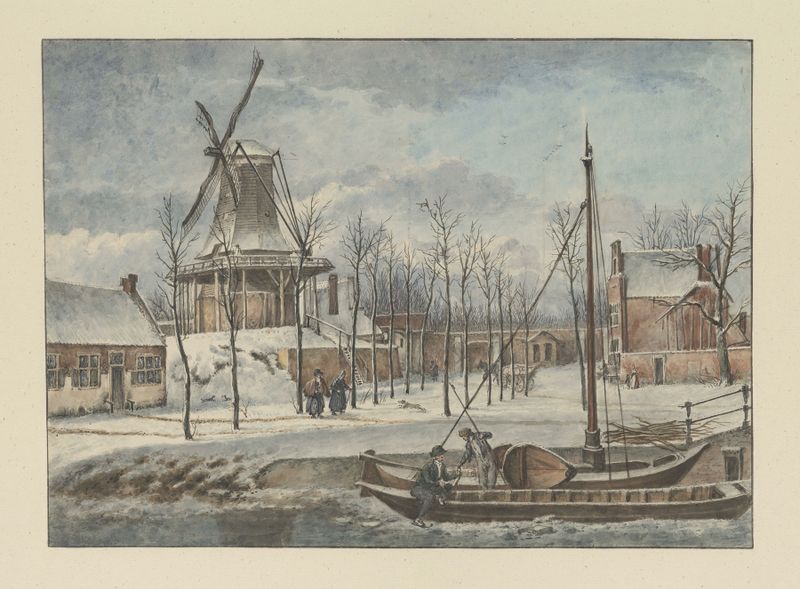
De Doelmolen, de Raampoort, de Stadswal en de huizen aan de Korte Geusestraat (nu; Wilsonsplein) vanaf de Raamgracht in de sneeuw.
Wybrand Hendriks
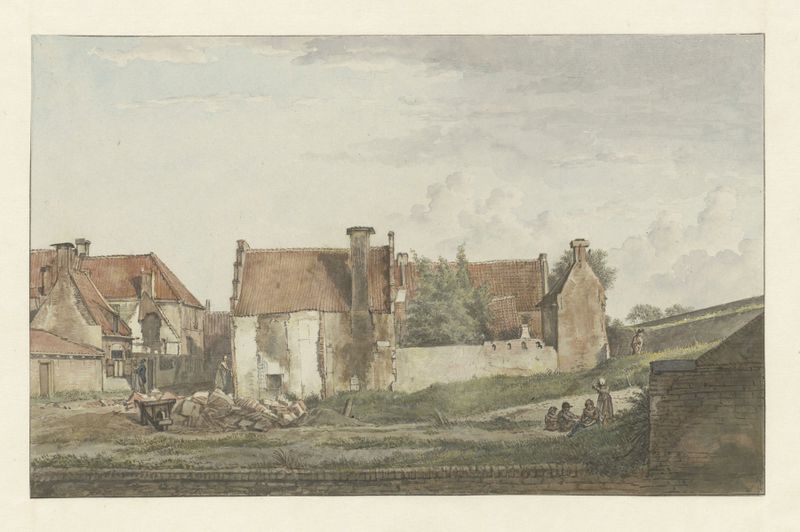
Gezicht op de Raamgragt op de Lange Geusestraat na ‘t wegbreeke van eenige huisen in 1809
Wybrand Hendriks
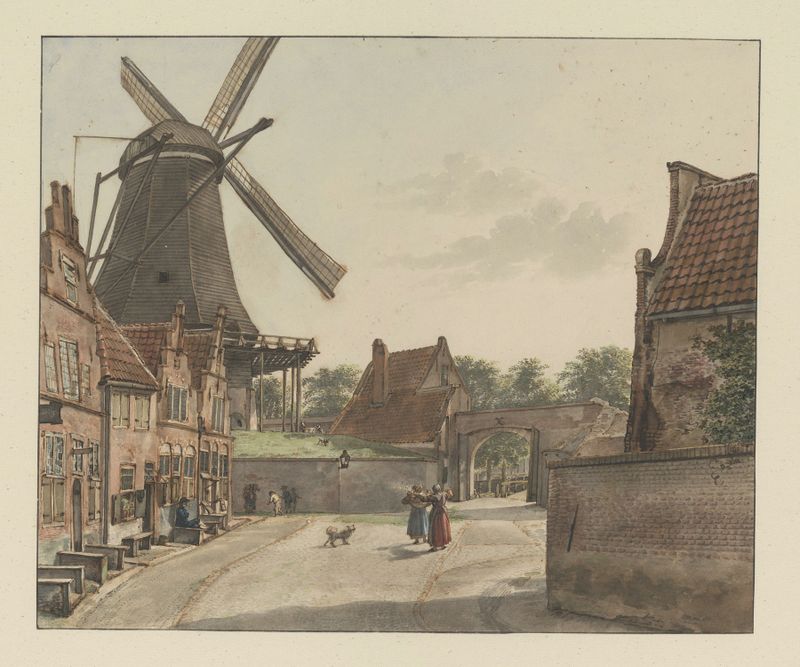
Gezicht vanuit de Bereiderstraat, tegenwoordig Sophiastraat, op de oostzijde van de Raampoort en de Doelmolen
Wybrand Hendriks
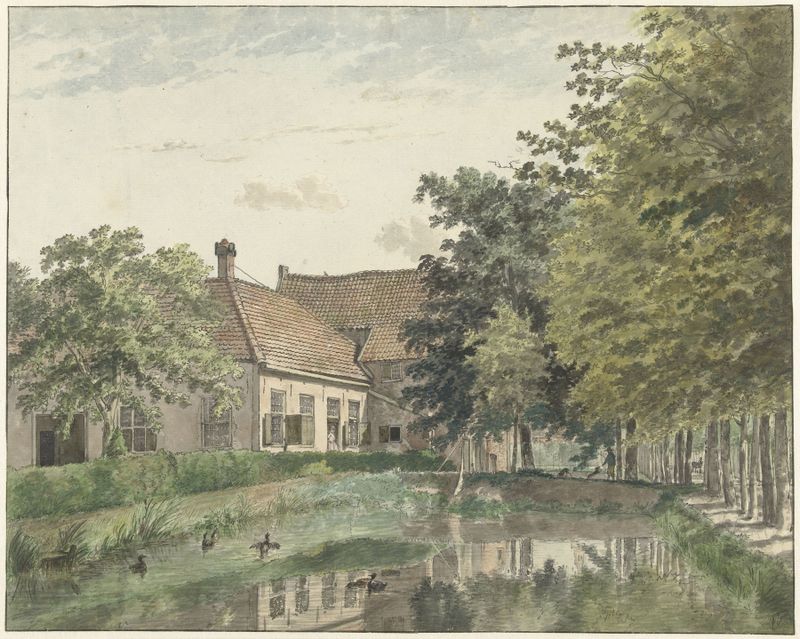
Gezicht op de buitenplaats Watergoor bij Nijkerk
Wybrand Hendriks
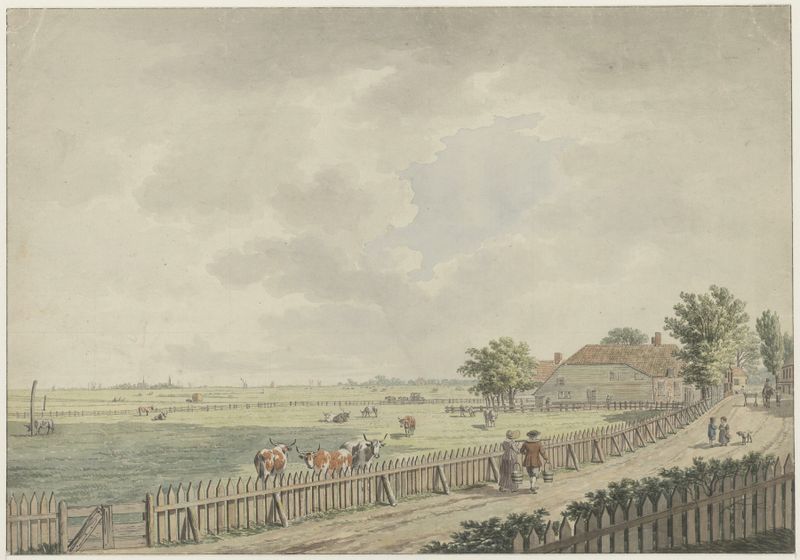
Gezicht in de Hoofdstraat, de weg naar Haarlem, in Santpoort, ziende naar het Zuiden.
Wybrand Hendriks
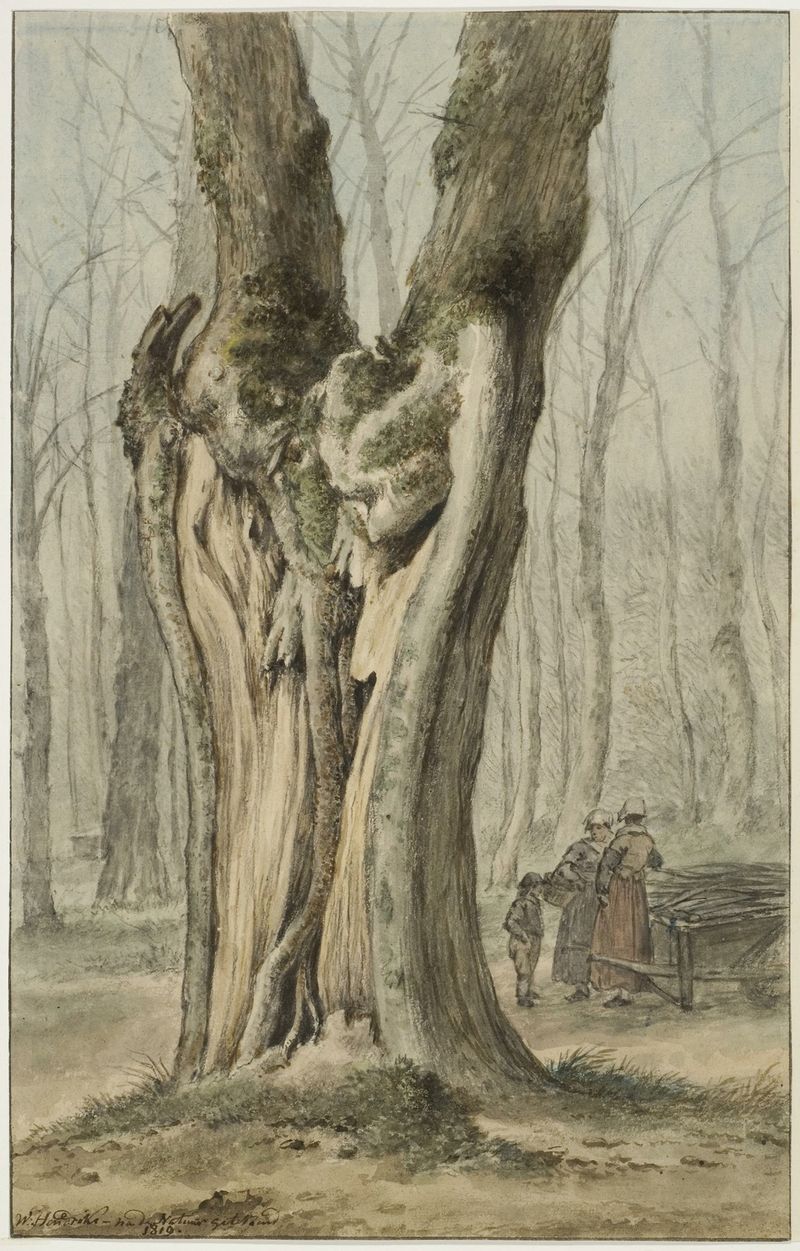
De wonderboom in de Spanjaardslaan in de Haarlemmerhout te Haarlem
Wybrand Hendriks
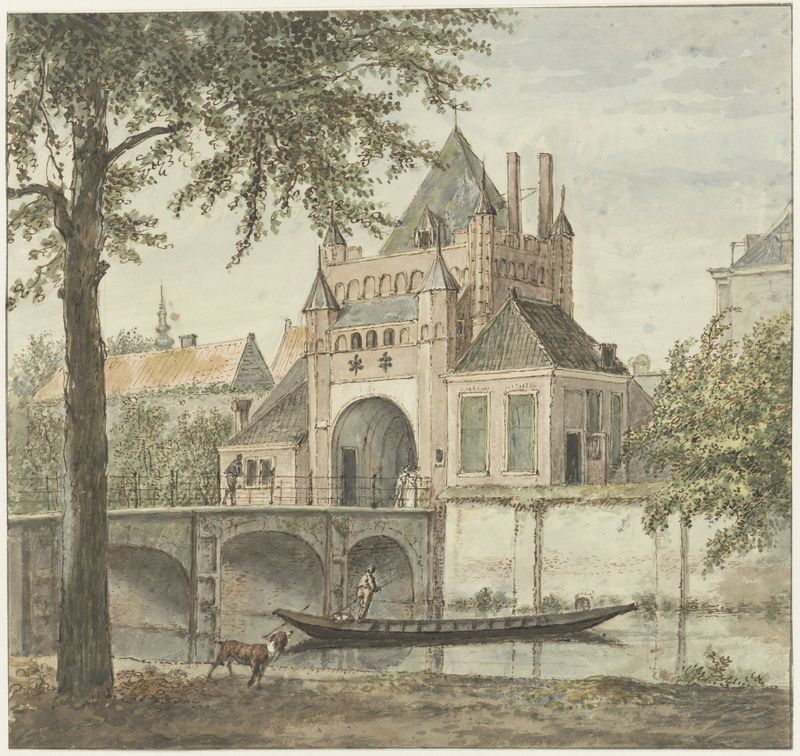
Grote Houtpoort van de zuidoostzijde
Wybrand Hendriks
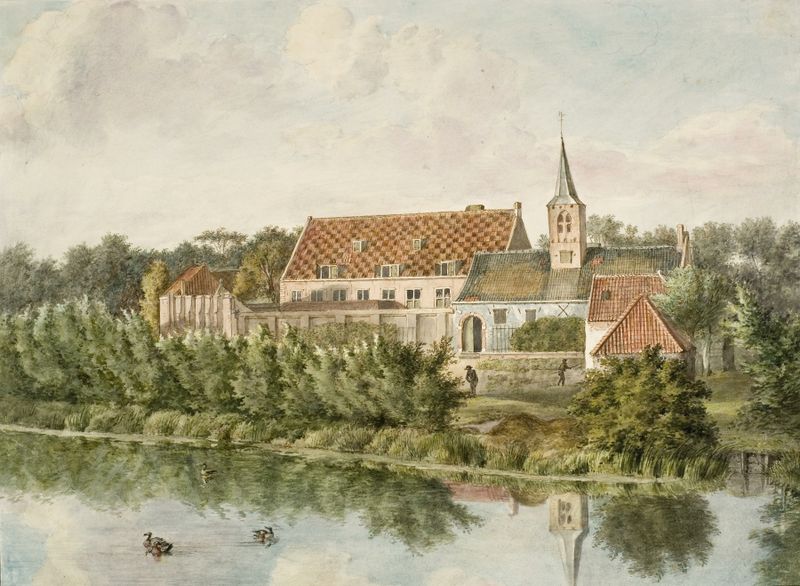
t Buyten Proveniershuis te Haarlem; van de hoogte van de wal te zien
Wybrand Hendriks
Landschap met weiland en koeien op de voorgrond en in de verte de ruIne van Brederode
Wybrand Hendriks
Gezicht in het Nieuw Heiligland door poort aan het Klein Heiligland
Wybrand Hendriks





