
God spreekt Job toe vanuit een storm — History & Facts
Could beauty survive in a century of chaos? In the swirling tempest of Hans Holbein's God spreekt Job toe vanuit een storm, the answer unfolds like a dark but compelling revelation. Look closely at the stormy sky that dominates the canvas, where tumultuous clouds twist and coil, their deep grays contrasting sharply with the brilliant white light that emerges from the center. Focus on the figure of Job, who stands precariously at the edge of the frame, his body language a mix of despair and reverence. The play of light encapsulates the divine voice breaking through the storm, illuminating Job's face with a stern yet compassionate glow, symbolizing the intersection of human suffering and divine authority. The painting invites viewers to explore the tension between chaos and clarity.
Job’s posture—half-crouched, half-defiant—reveals an inner conflict, torn between questioning the divine and seeking understanding. Additionally, the vivid strokes of the storm evoke a sense of uncontrollable natural power and serve as a metaphor for the trials of life. Holbein captures an obsessive quest for answers in a world rife with suffering, urging the viewer to confront their own beliefs and doubts amidst turbulence. Created in 1538, Holbein was deeply entrenched in the political and religious turmoil of the Reformation.
Working in the context of a Europe grappling with ideological upheaval, he sought to express profound spiritual themes through his art. This piece reflects not only a personal exploration of faith but also resonates with the collective anxiety of an era marked by conflict and uncertainty.
More Artworks by Hans Holbein (II)
Browse all →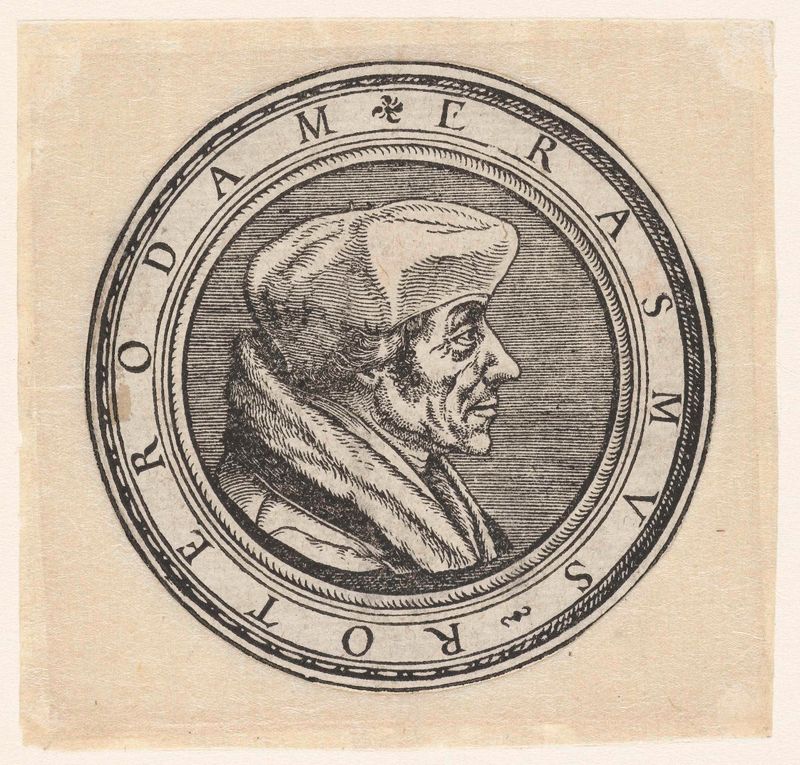
Portret van Erasmus
Hans Holbein (II)
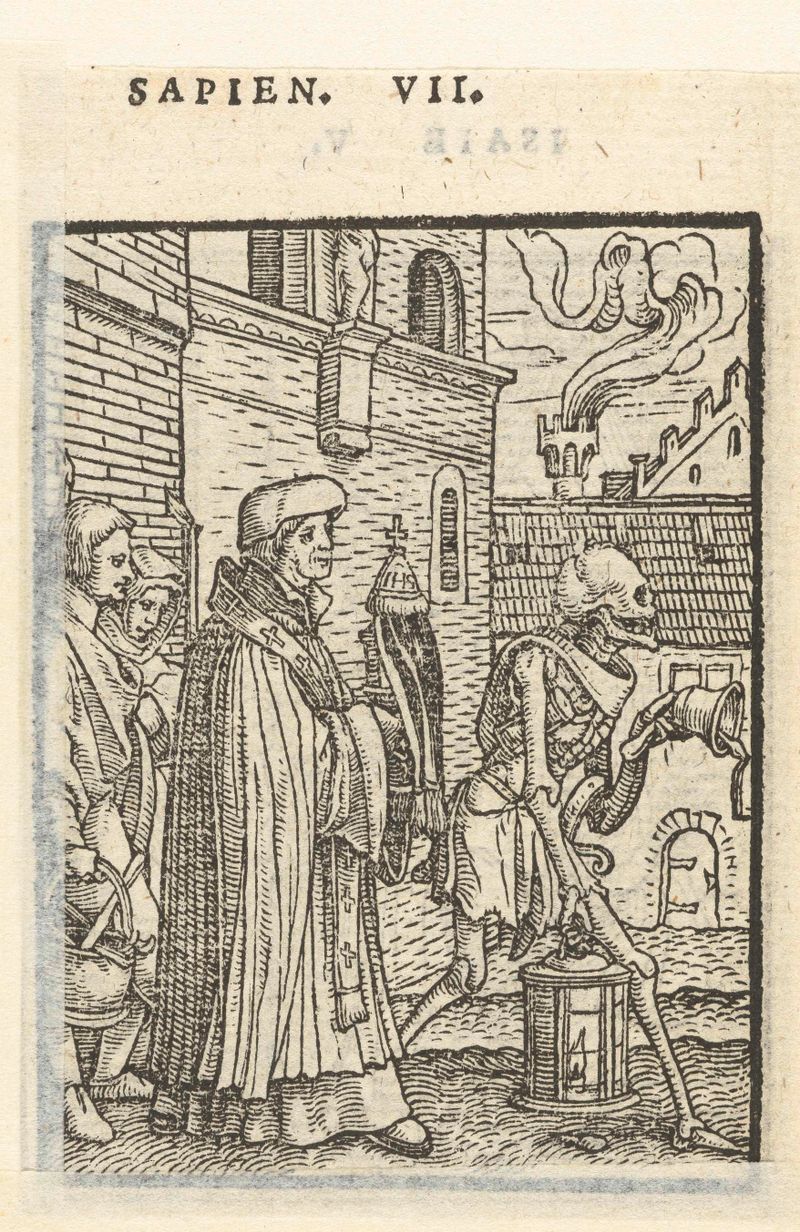
Priester en de Dood
Hans Holbein (II)
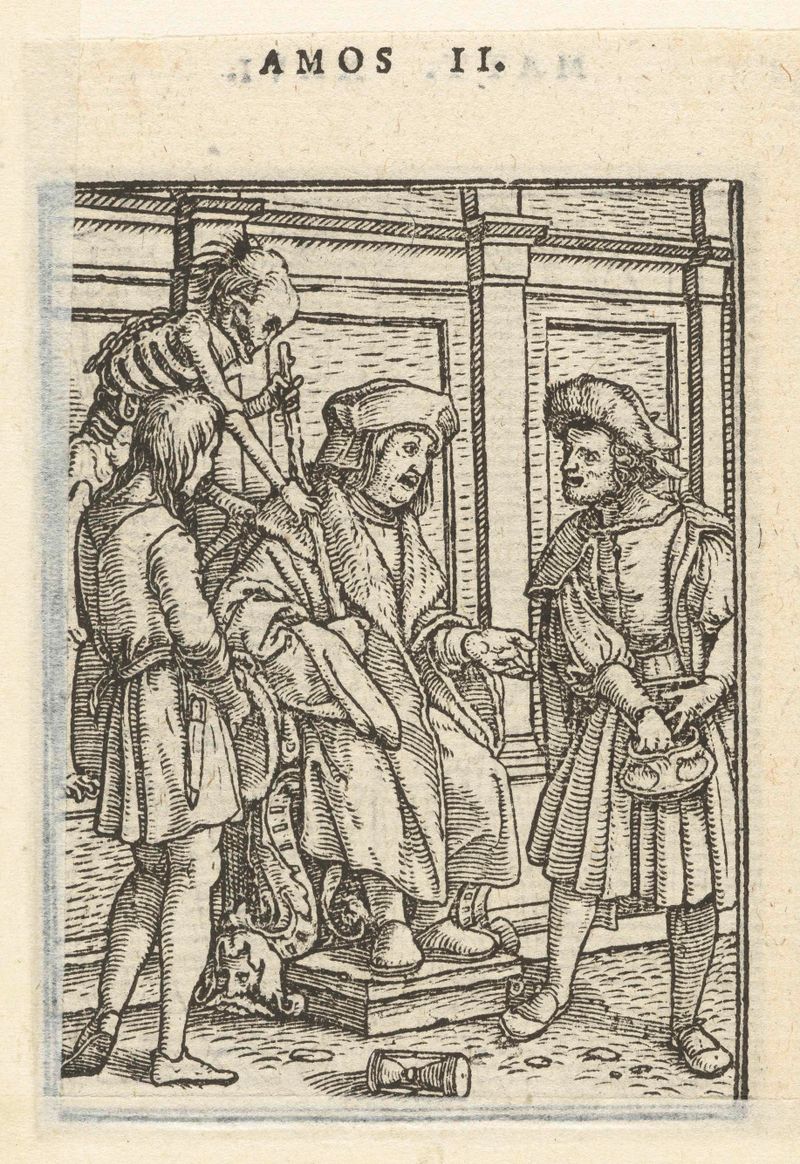
Rechter en de Dood
Hans Holbein (II)
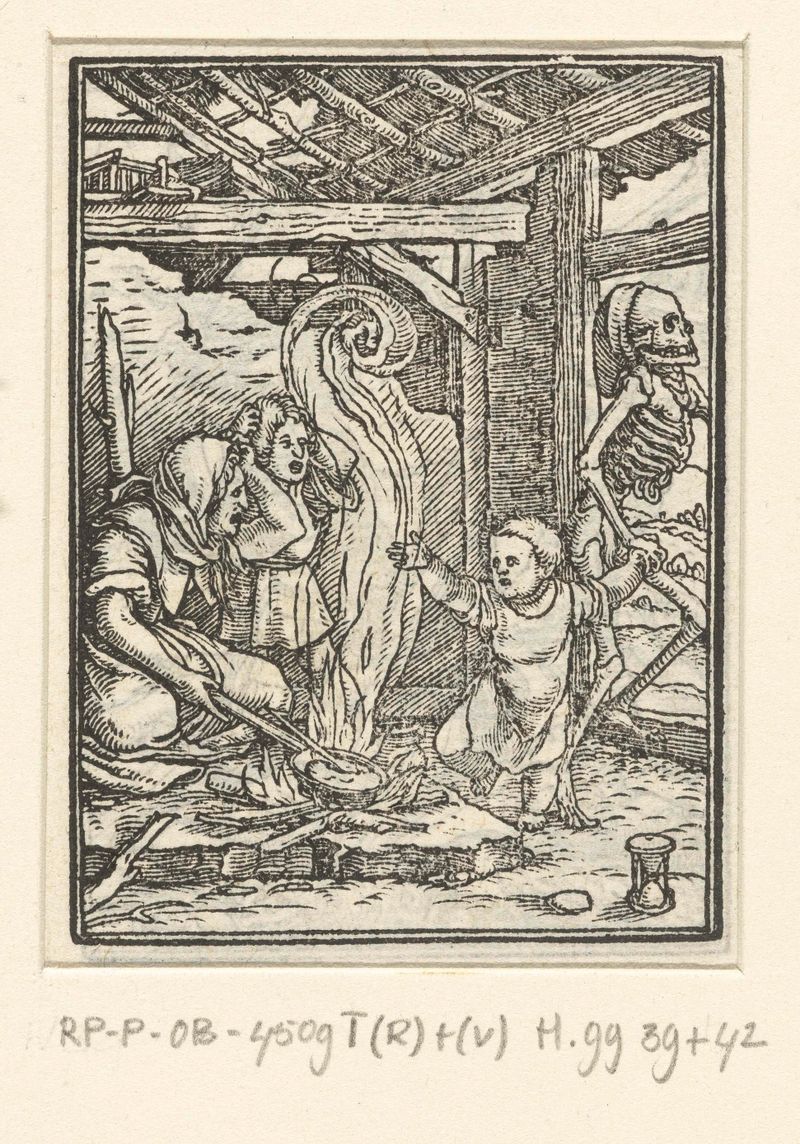
Kind en de Dood
Hans Holbein (II)
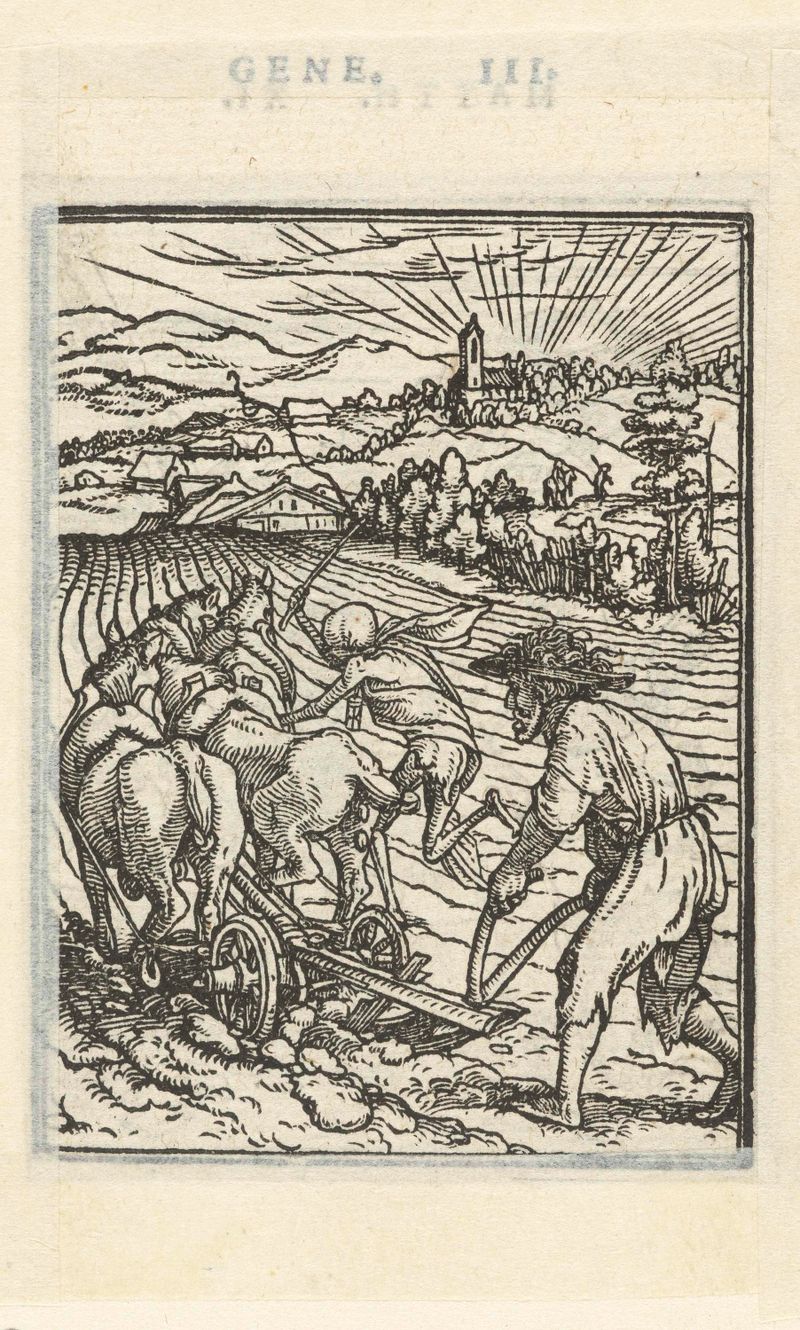
Boer en de Dood
Hans Holbein (II)
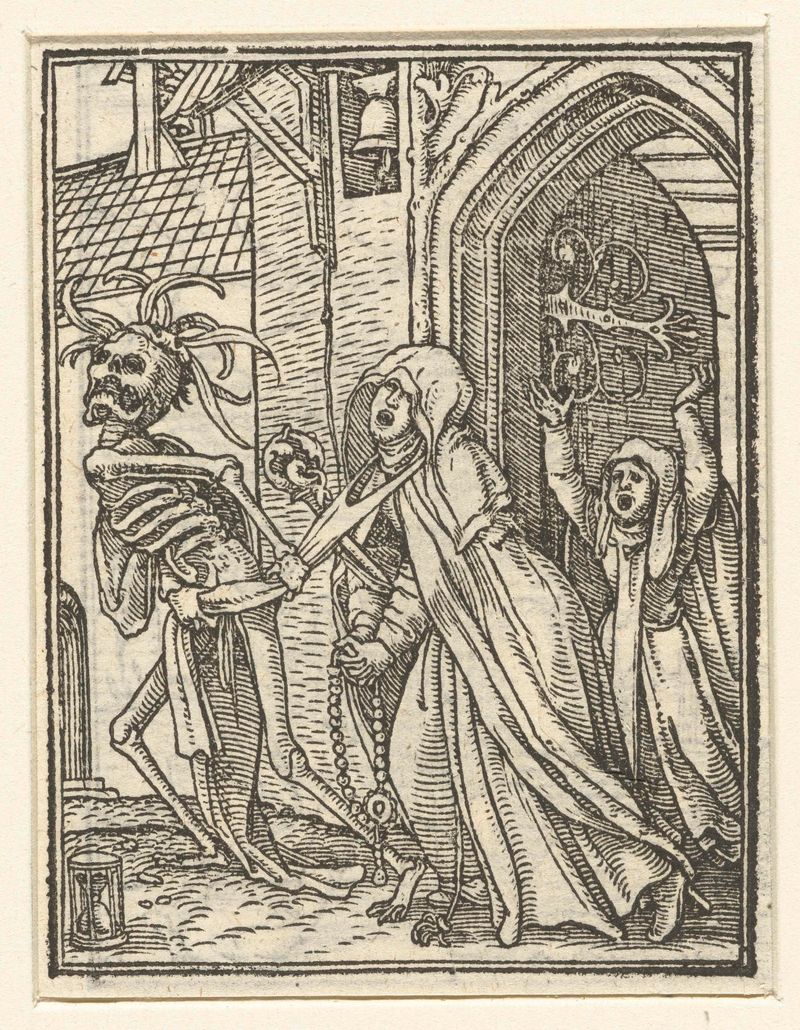
Abdis en de Dood
Hans Holbein (II)
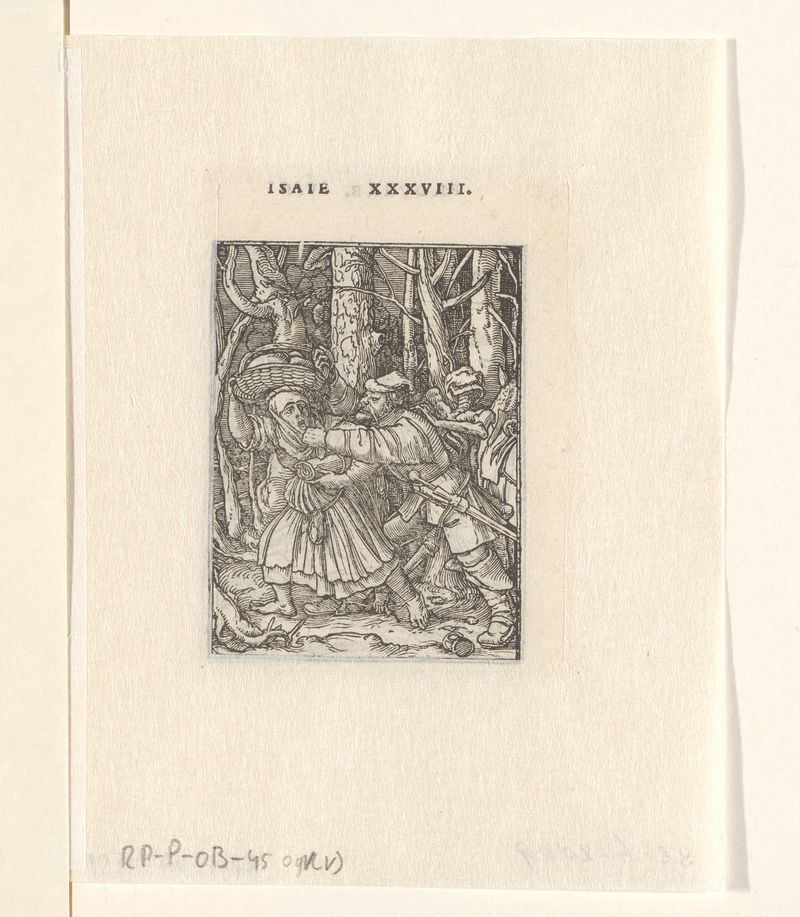
Dief en de Dood
Hans Holbein (II)
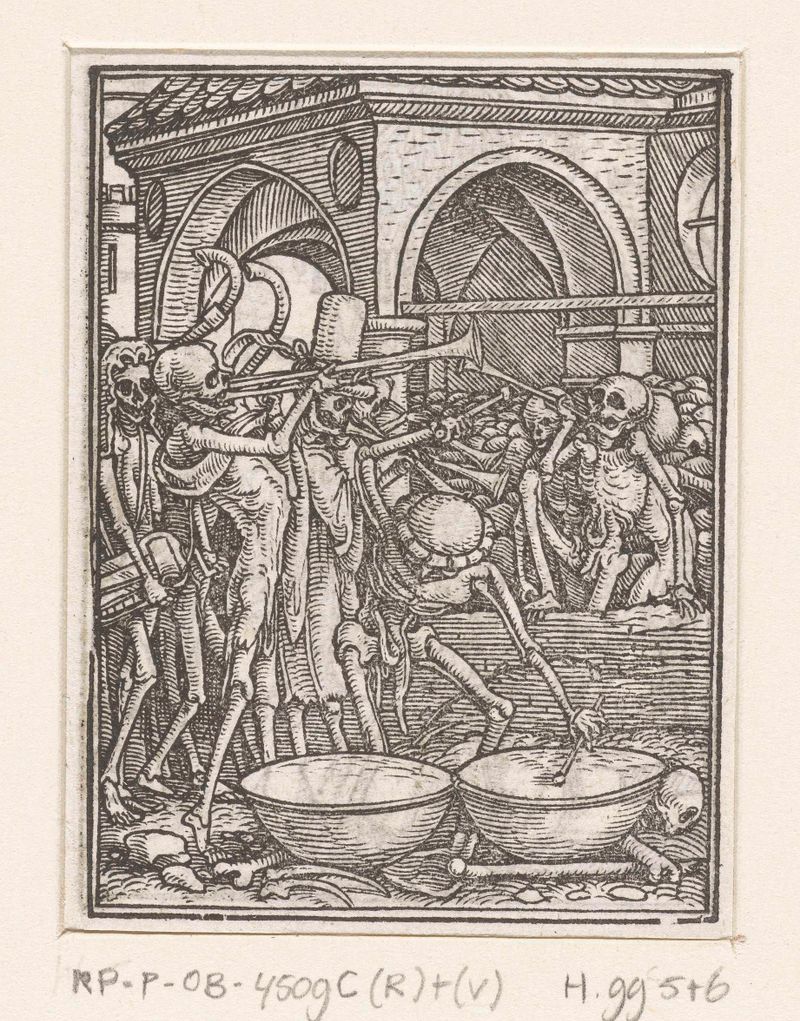
Skeletons Making Music from Dance of the Dead
Hans Holbein (II)
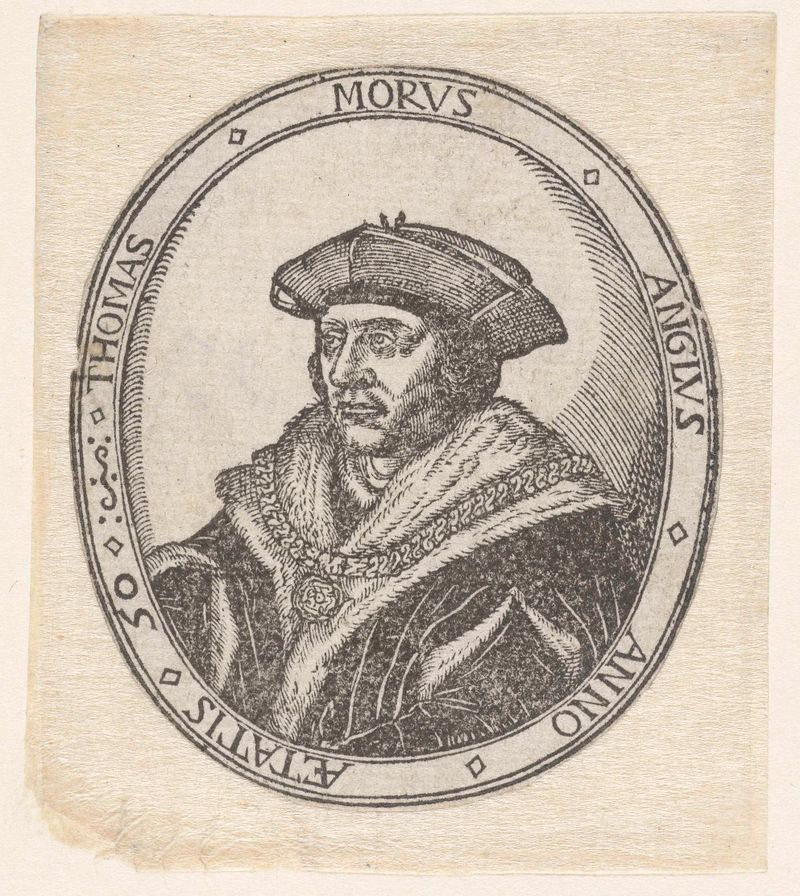
Portret van Thomas More
Hans Holbein (II)
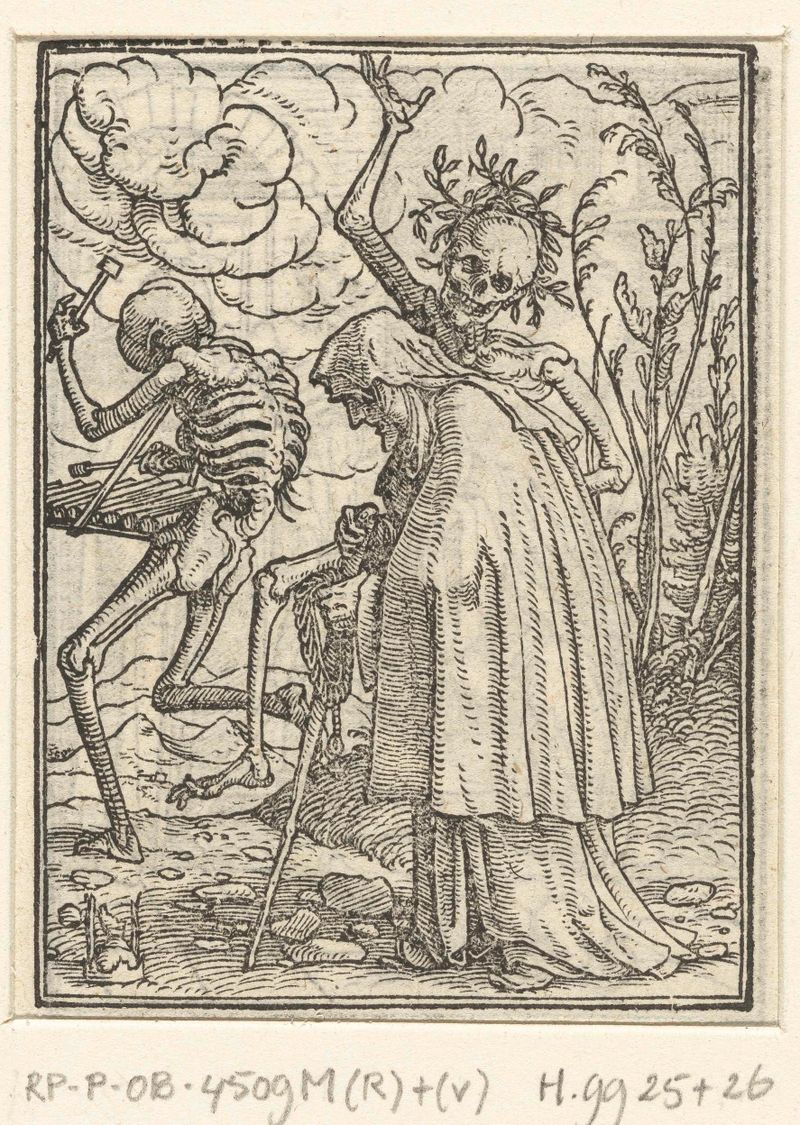
Oude vrouw en de Dood
Hans Holbein (II)
More Religious Art
Browse all →
The Return of the Prodigal Son
Rembrandt van Rijn

The Garden of Earthly Delights
El Bosco

Count Orgaz’ funeral
El Greco

The Hundred Guilder Print: the central piece with Christ preaching, the plate arched
Rembrandt van Rijn

The Descent from the Cross
Rogier van der Weyden

The return of the prodigal son
Rembrandt van Rijn