Going hunting — History & Facts
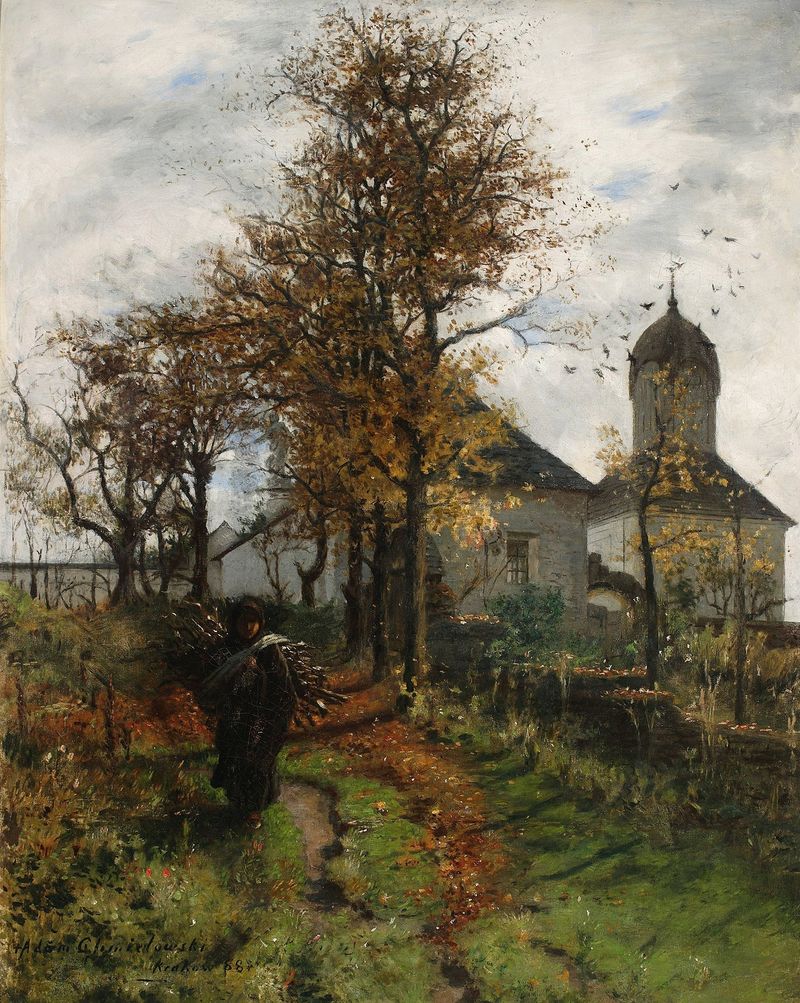
Did the painter know this moment would outlive them? In Going Hunting, a solitary figure stands poised at the brink of the wilderness, exuding an air of quiet determination. The tension lies not in the hunt itself but in the intention behind it—the pursuit of truth amid nature's vast embrace. Look to the foreground, where the figure is sharply defined against a muted landscape, the brushstrokes swirling gently around him, as if the very air was charged with anticipation. The earthy palette of greens and browns evokes a sense of realism and grounding, inviting the viewer to feel the weight of both the man and his purpose.
Notice how the light caresses the hunter's face, illuminating a thoughtful expression that suggests a deep introspection—he is not merely a participant in the hunt but a seeker of deeper understanding. Within this moment lies a paradox: the act of hunting, typically associated with violence and conquest, is rendered here as a quest for enlightenment. The subtle juxtaposition of the figure against the serene backdrop hints at the internal conflict between man's primal instincts and the yearning for truth. Each brushstroke seems to ask us to consider our own pursuits—what do we hunt for in our lives? Is it mere survival or a more profound connection to existence? Created during a period of personal transformation, the artist captured this piece in a time when he was grappling with his own spirituality amid the natural world.
Chmielowski, known for his deep reflections on faith and the human condition, painted this work as he sought solace in the wilderness, representing a moment where artistry became entwined with his search for meaning amid the chaos of life.