Italian Cemetery at Dusk — History & Facts
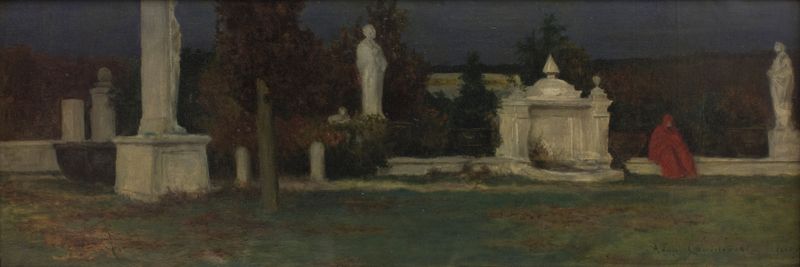
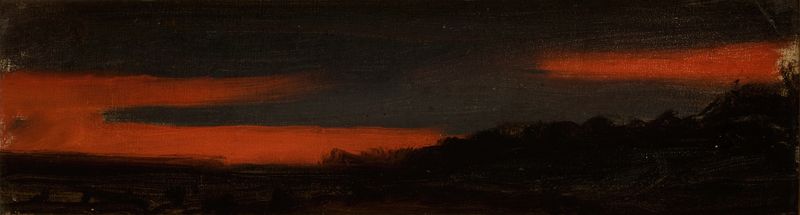
In the dimming light of dusk, as day slips into the arms of night, the haunting beauty of an Italian cemetery draws us into its depths. It speaks not only of loss but also of the madness that lingers in the shadows, waiting for the light to unveil its mysteries. Look to the center of the canvas, where tombstones rise like silent sentinels against the fading sky. The colors blend seamlessly—from deep blues to muted purples—creating an atmosphere steeped in melancholy.
Notice how the light struggles to penetrate the interstices of stone and earth, illuminating faint inscriptions that allude to forgotten lives. The brushwork is both delicate and urgent, encapsulating the tension between remembrance and oblivion that defines this poignant piece. The juxtaposition of nature and mortality is striking; gnarled trees loom over the graves, their twisted forms mimicking the chaos of human emotion. A whisper of wind seems to breathe life into the scene, suggesting that even in death, stories persist.
The serene yet sinister interplay between shadow and light invites contemplation—a reminder that madness often finds refuge in the neglected corners of our memories. In 1880, Chmielowski painted this work during a period of personal turmoil, grappling with mental illness while seeking solace in the realms of art. At the time, he was transitioning from a career as a painter to a life dedicated to the religious and the spiritual, reflecting both his inner struggles and the tumultuous currents of the art world around him. This painting captures not only a moment but also the profound depths of human experience, resonating with those who dare to confront the chaos within.