Golgotha — History & Facts
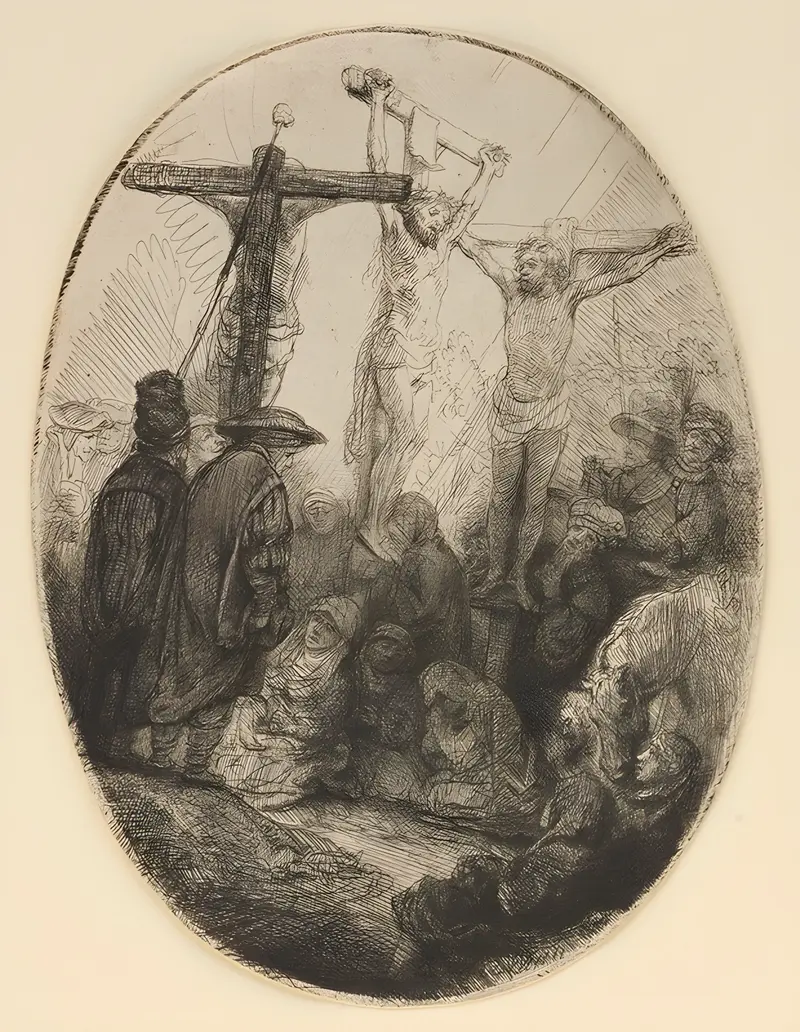
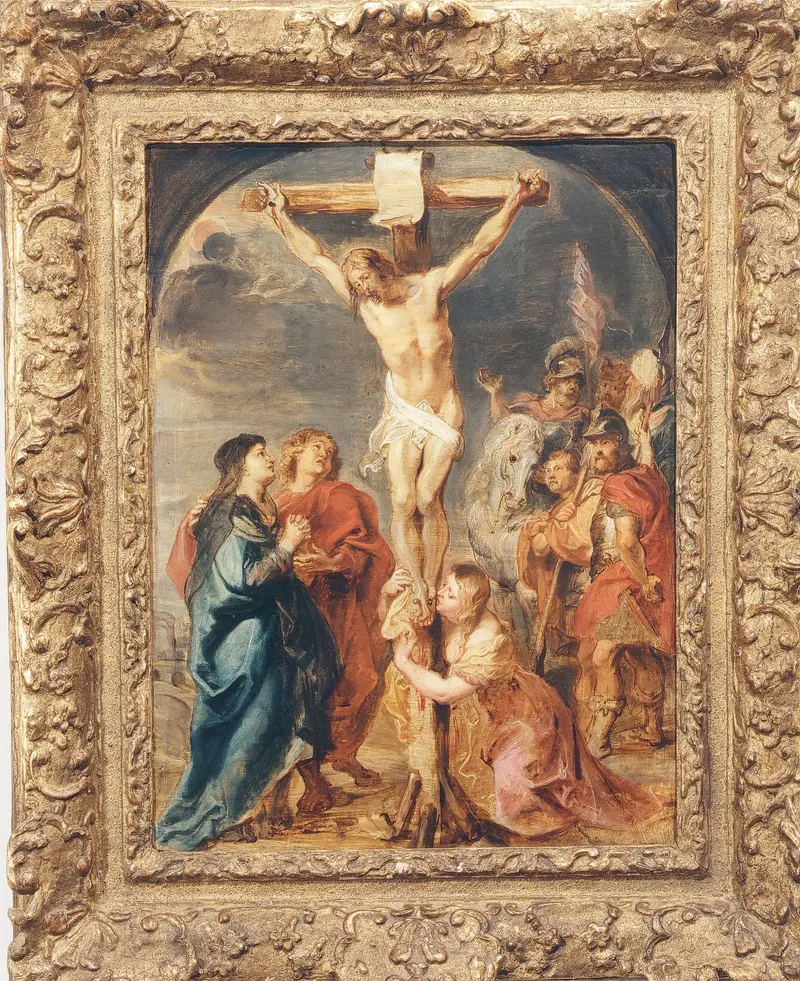
In Golgotha, Edvard Munch uses dark, muted colors to depict a somber scene. The central figure is a crucified Christ, surrounded by mournful figures that convey a sense of despair. The background features a tumultuous sky, adding to the emotional weight of the painting.
This work captures the essence of suffering and sacrifice through its stark imagery. The painting is created using oil on canvas, a medium that allows for rich textures and deep colors. Munch's brushwork is expressive, with visible strokes that enhance the emotional intensity of the scene. The dimensions are approximately 100 x 80 cm, making it a substantial piece that commands attention.
The composition is carefully arranged to draw the viewer's eye towards the central figure. Edvard Munch was a key figure in the Symbolist movement, known for exploring themes of existential angst and human emotion. Golgotha reflects his interest in religious subjects and the human condition. An interesting fact about this work is that it was created during a period when Munch was grappling with his own beliefs and the nature of suffering.
This personal connection adds depth to the painting's impact.