
Hietzinger Hauptstrasse — History & Facts
Is this a mirror — or a memory? In Hietzinger Hauptstrasse, the delicate interplay of light and shadow evokes a sense of fragility that lingers long after the viewer has turned away. The artwork invites contemplation, challenging our perceptions of reality and reminiscence, leaving us to question the boundaries of what we see. Look to the left at the soft brushstrokes that form the trees lining the street, their limbs reaching out like weary hands. The muted palette of greens and browns creates a serene yet melancholic atmosphere, while subtle hints of warmth break through the cool tones, suggesting a fleeting moment of clarity.
Notice how the light falls upon the cobblestones, reflecting a sense of history and the passage of time, drawing our gaze deeper into the scene. In the foreground, the faint outlines of figures blur together, embodying the transient nature of existence. Their indistinct forms speak to the ephemeral connections we forge, evoking a sense of longing and loss. The tension between the vibrant life of the street and the quiet solitude of the figures reveals an emotional spectrum that resonates within us, capturing both the vibrancy of daily life and the quiet introspection that often accompanies it. Richard Moser painted Hietzinger Hauptstrasse during a time of artistic exploration in the early 20th century, when the world was undergoing profound changes.
Living in Vienna, he was influenced by the emergence of modernist ideas, blending them with his own unique style. This period of his life was marked by a search for identity and meaning in an increasingly complex world, reflected in the delicate nuances of this work.
More Artworks by Richard Moser
Browse all →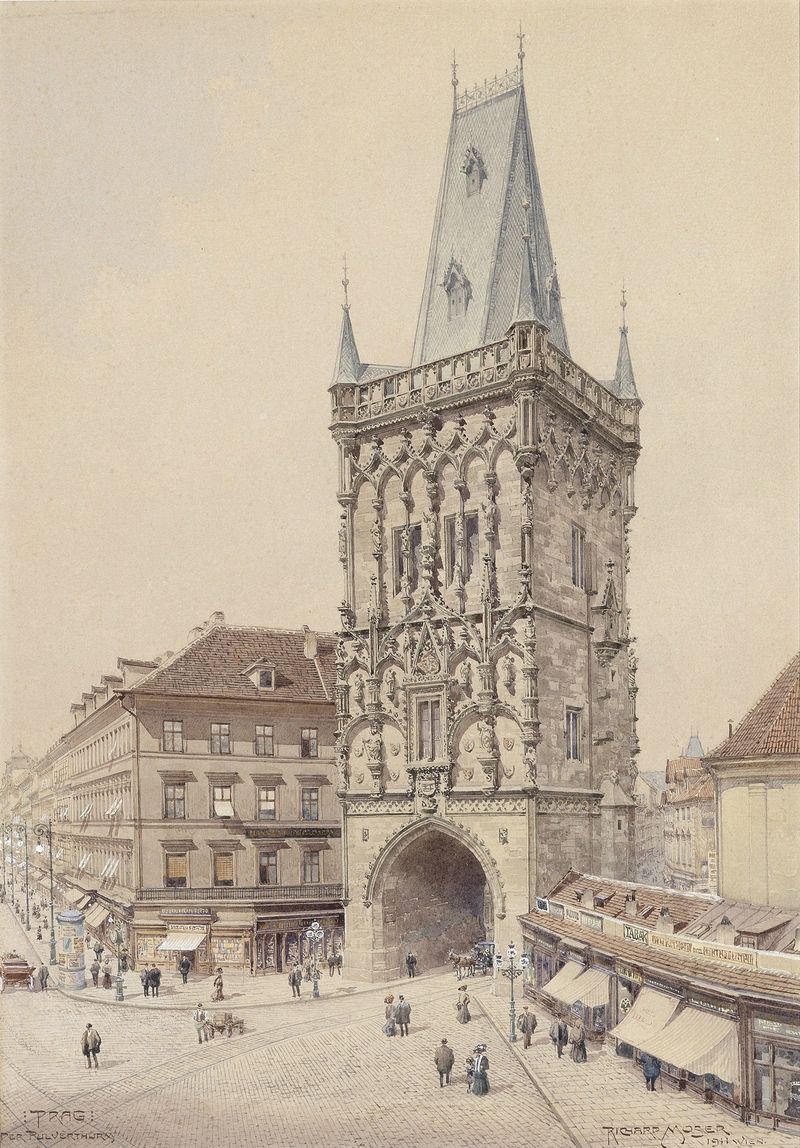
Prag Pulverturm
Richard Moser
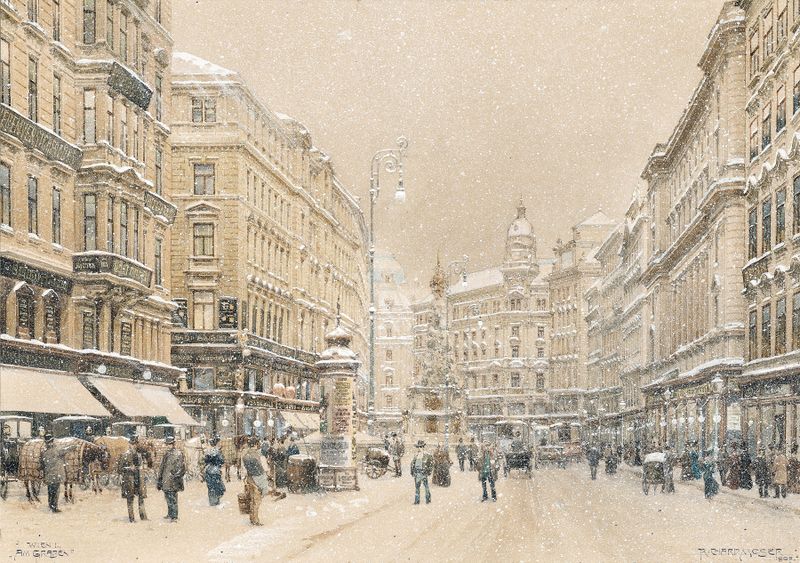
Graben in Vienna at snow flurry
Richard Moser

Wien Am Hof
Richard Moser

Stephansdom Pilgramkanzel
Richard Moser

A view of the church and monastery of the Visitation of the Virgin (church of the Salesian sisters) a gardener in the foreground
Richard Moser

Die Jubiläumsausstellung in Wien 1898; Pavillion der Stadt Wien
Richard Moser
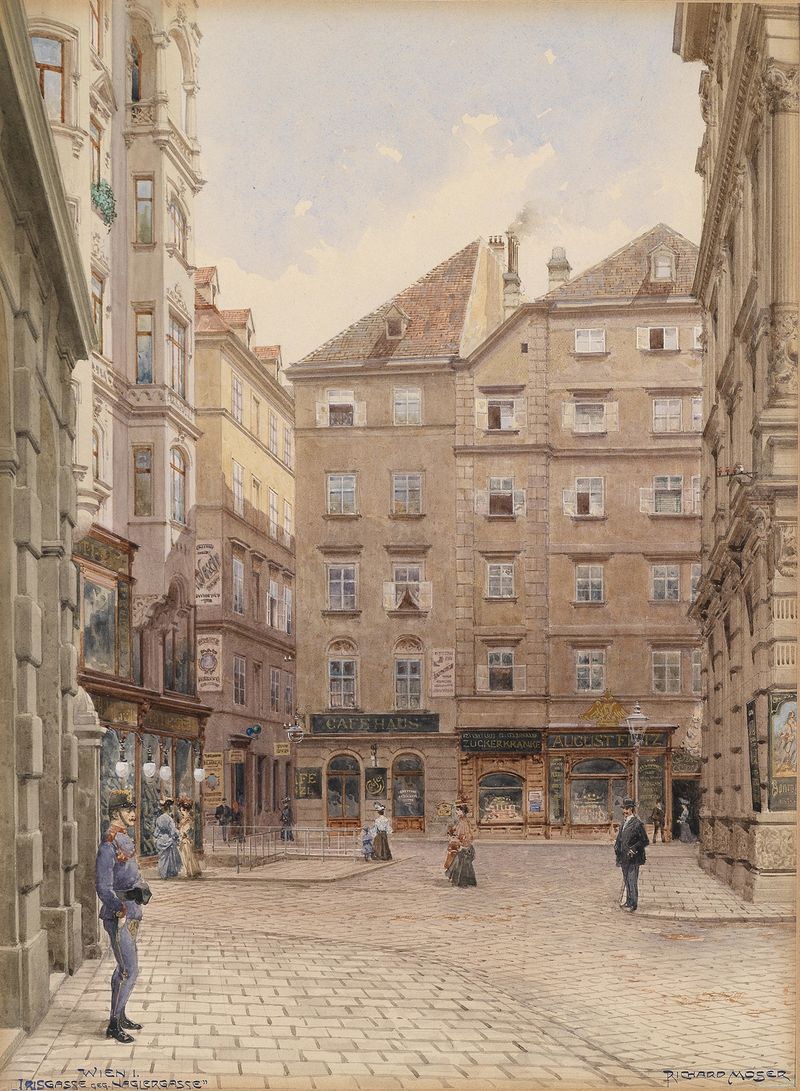
Wien Irisgasse gegen Naglergasse
Richard Moser
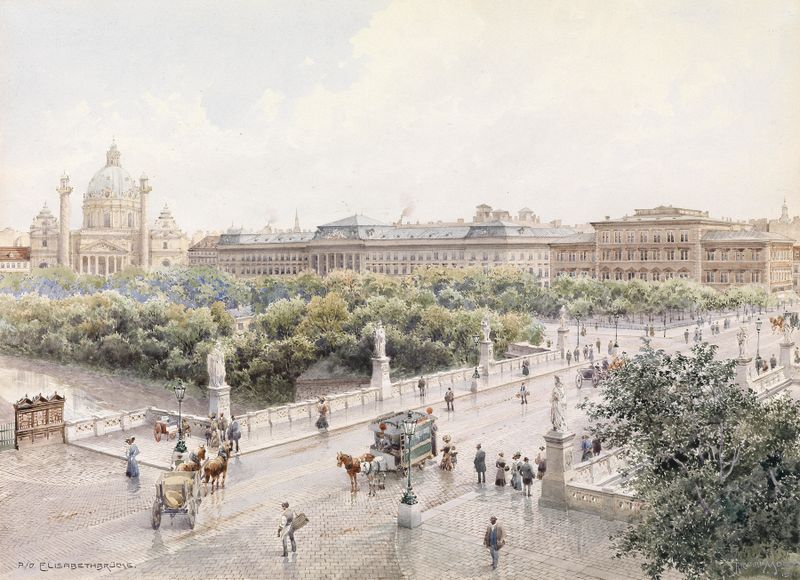
Wien Elisabethbrücke
Richard Moser
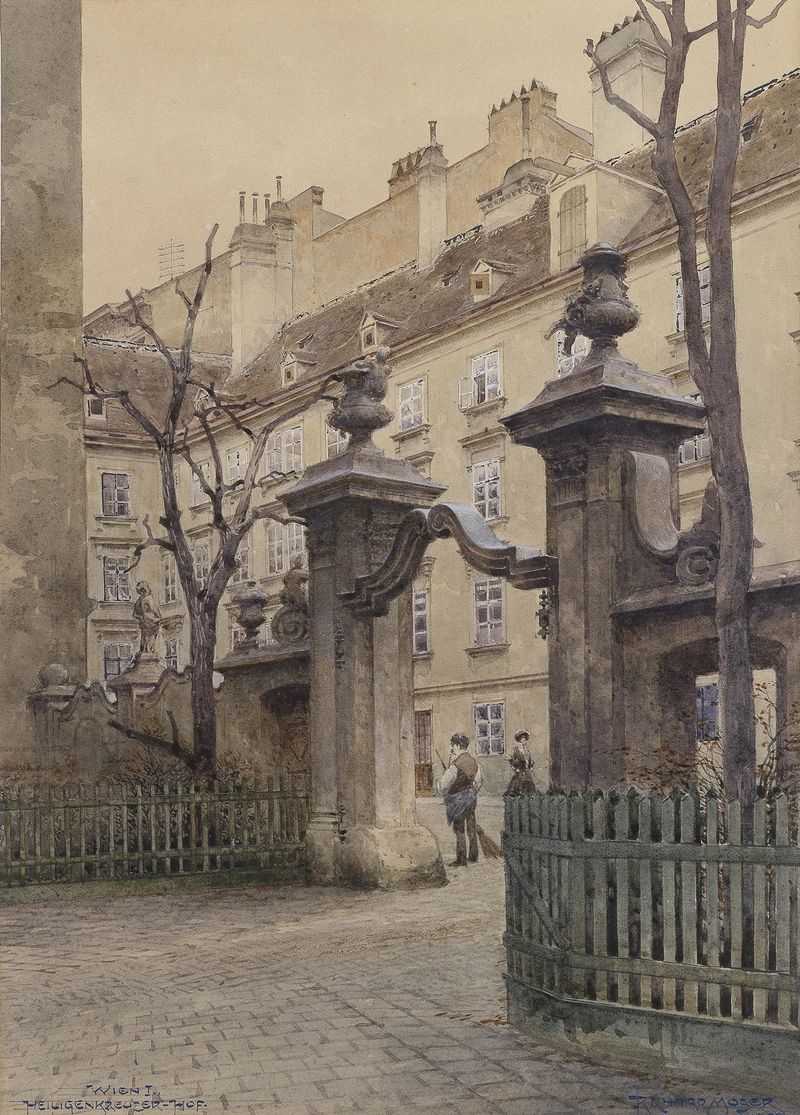
Heiligenkreuzerhof in Wien
Richard Moser
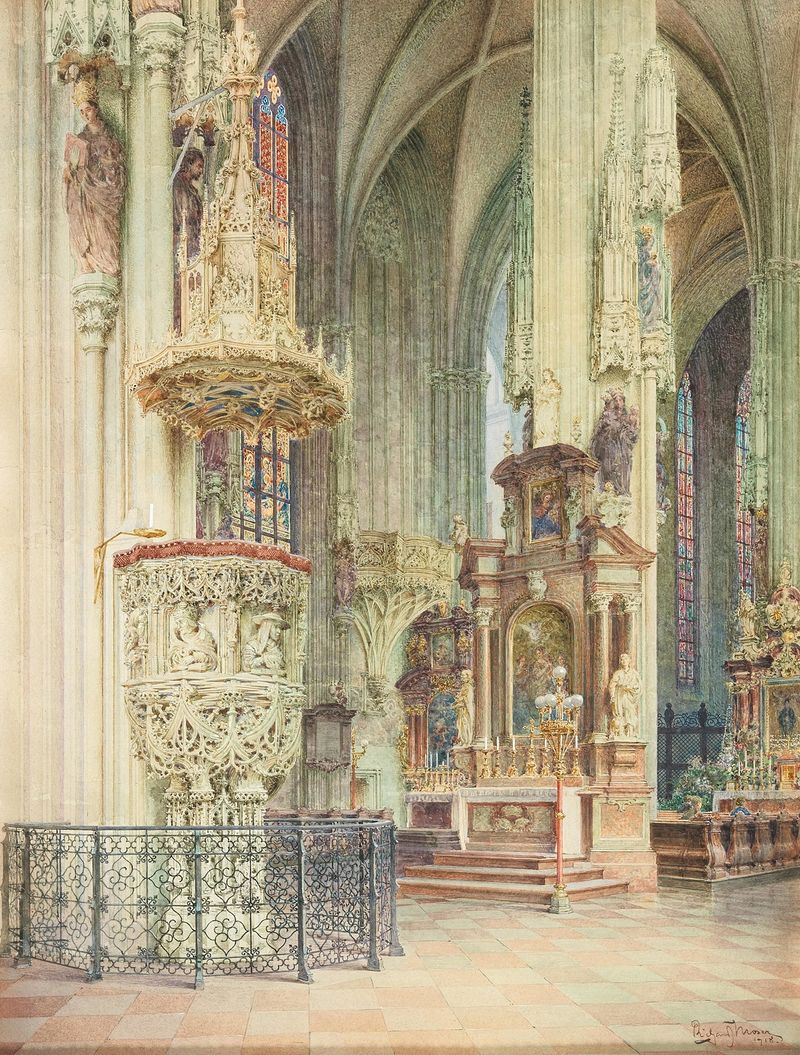
Inneres des Stephansdoms mit Pilgramkanzel
Richard Moser





