
Grabkapelle v Inninchene — History & Facts
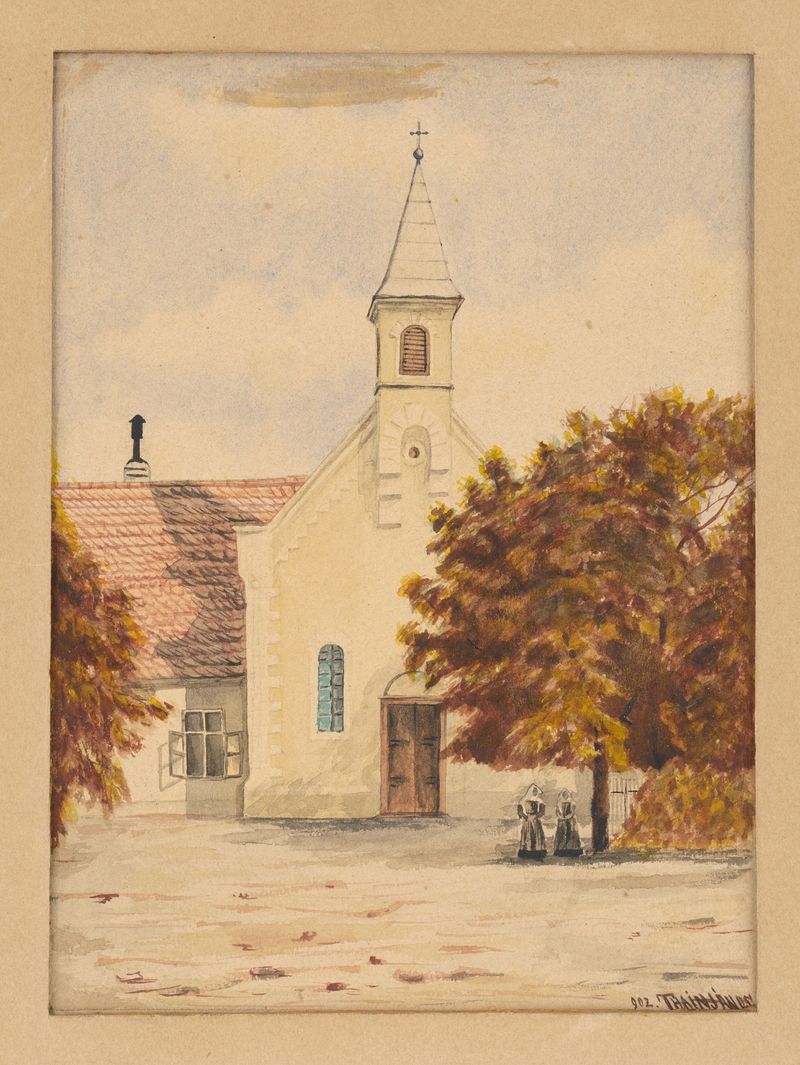
What if silence could speak through light? In Grabkapelle v Inninchene, Ján Thain captures a moment that transcends sound, allowing the viewer to experience ecstasy through a quiet, radiant stillness. Look to the center of the canvas, where an ethereal glow emanates from the chapel’s facade. The interplay of light and shadow creates a sense of reverence, inviting you to explore the intricate details of the architecture. Notice how the cool blues and warm yellows dance together, emphasizing the sacredness of this space.
The composition draws the eye upward, mimicking the spiritual ascent towards the divine, while the soft contours of the surrounding landscape cradle the structure, grounding it in both beauty and solemnity. Yet, amid this serenity lies a profound contrast. The chapel, a symbol of human devotion, stands resilient against the backdrop of an uncertain world, echoing the tensions of 1941—a year marked by turmoil in Europe. The harmony of light and shadow encapsulates the delicate balance between hope and despair, inviting contemplation of faith in the face of adversity.
Additionally, the absence of figures creates an intimate dialogue with the viewer, encouraging them to project their own feelings of longing and connection onto the scene. Created during a tumultuous time, Thain painted Grabkapelle v Inninchene amidst the backdrop of World War II. In his native Czechoslovakia, he encountered the challenges of living in a politically charged environment, yet he turned to art as an anchor, seeking solace in the beauty around him. This work reflects not only a personal vision but also the collective yearning for peace and transcendence during a turbulent era in history.
More Artworks by Ján Thain
Browse all →
More Architecture Art
Browse all →
The statue of Liberty
Frédéric Auguste Bartholdi

View of Houses in Delft, Known as ‘The Little Street’
Johannes Vermeer

View of Houses in Delft, Known as ‘The Little Street’
Johannes Vermeer

The Cathedral in Rouen. The portal, Grey Weather
Claude Monet

The yellow house
Vincent van Gogh

The Church in Auvers-sur-Oise, View from the Chevet
Vincent van Gogh