
Grace Dalrymple Elliott — History & Facts
What first seizes the eye in Grace Dalrymple Elliott by Thomas Gainsborough is the subject’s unflinching gaze—direct, unhurried, and edged with a knowing smile. Her powdered hair, rising in a soft cloud, frames a face lit gently from the left, the light catching on her cheekbones and the delicate arch of her brow. The extravagant bow and turquoise brooch at her chest are not mere decoration but a declaration, drawing the viewer’s attention to her poise and status.
Gainsborough’s brushwork is lively and loose in the lace and fabric, yet precise in the modeling of her features, suggesting both immediacy and control. The oval framing, painted rather than carved, focuses all attention on the sitter, as if she alone occupies the world within the canvas. Painted in 1782, this portrait belongs to a world of shifting fortunes and social display, where portraiture was both a mark of prominence and a tool for shaping one’s public identity. In late eighteenth-century Britain, artists like Gainsborough were in high demand among the fashionable elite, who sought to immortalize themselves at the height of their beauty and influence.
The painting now resides in the collection documented by the Frick, a reminder of how such images once shaped reputations and still invite speculation. History has kept few traces of the specific journey of this canvas, but its presence today allows us to step into the charged atmosphere of its era—where every detail, from the tilt of a head to the shimmer of silk, was a statement. Look again, and see how much can be said with a glance and a ribbon.
More Artworks by Thomas Gainsborough
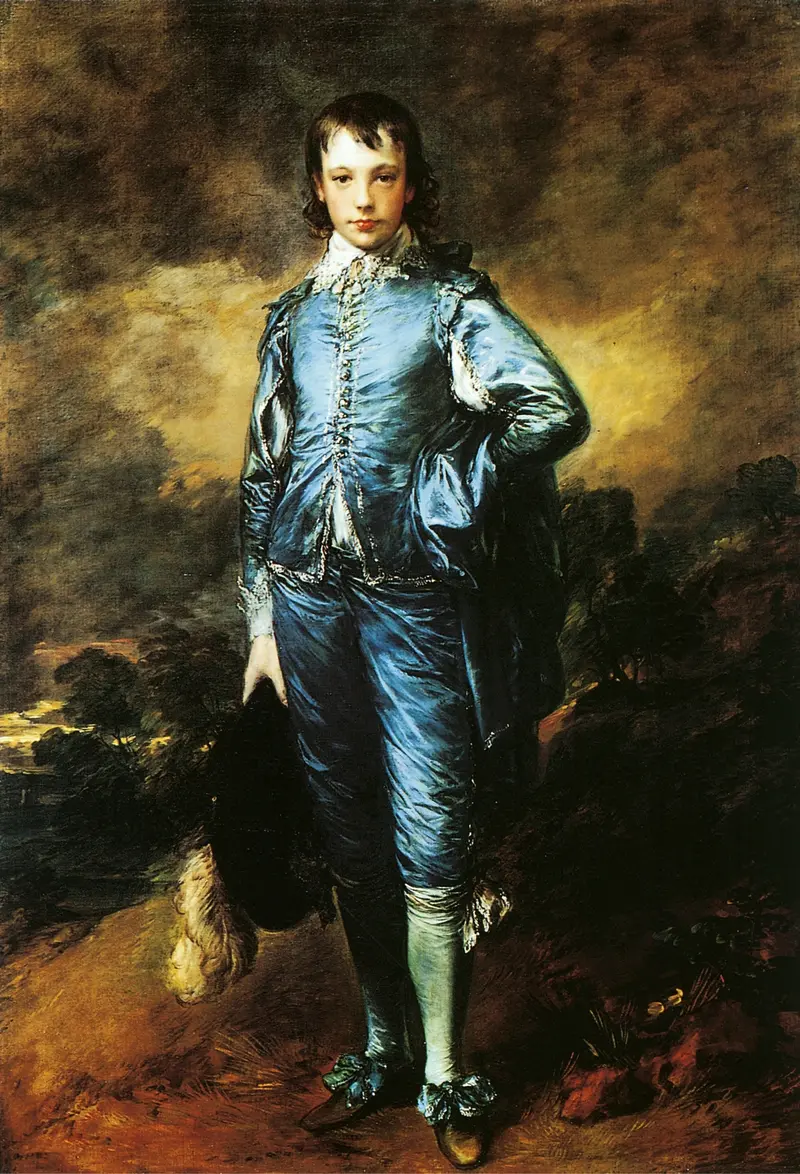
The Blue Boy
Thomas Gainsborough
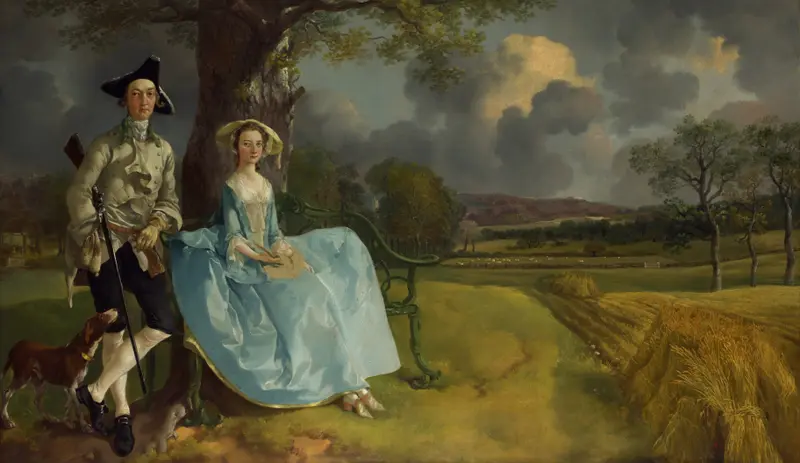
Mr and Mrs Andrews
Thomas Gainsborough

Wooded Landscape with Figures
Thomas Gainsborough

Sir Benjamin Thompson, later Count Rumford (1753-1814)
Thomas Gainsborough
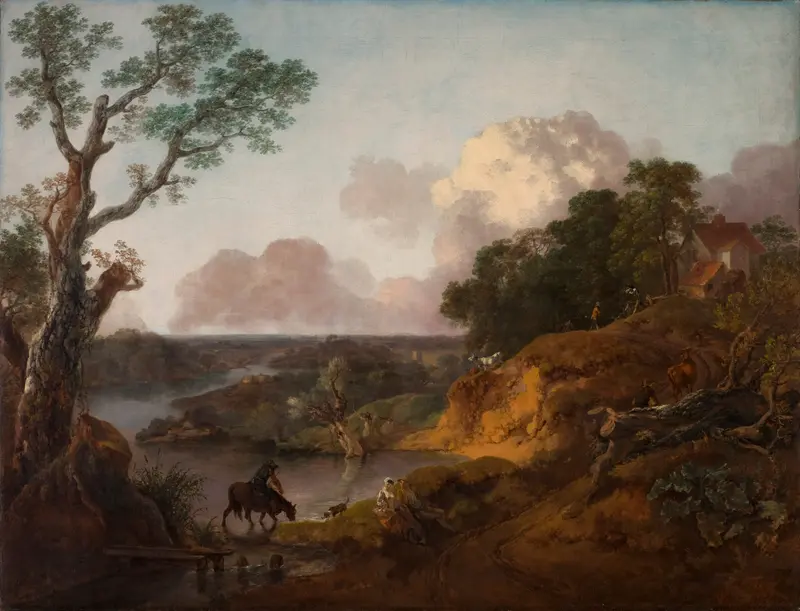
View in Suffolk
Thomas Gainsborough
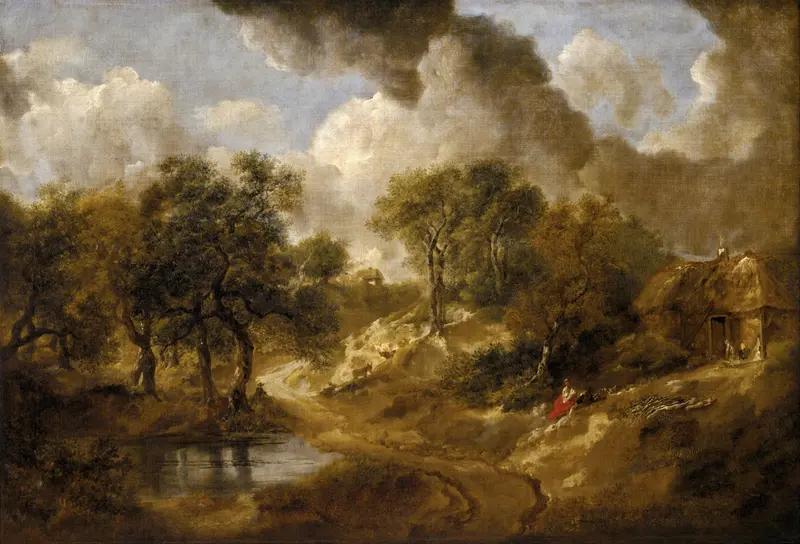
Landscape in Suffolk
Thomas Gainsborough
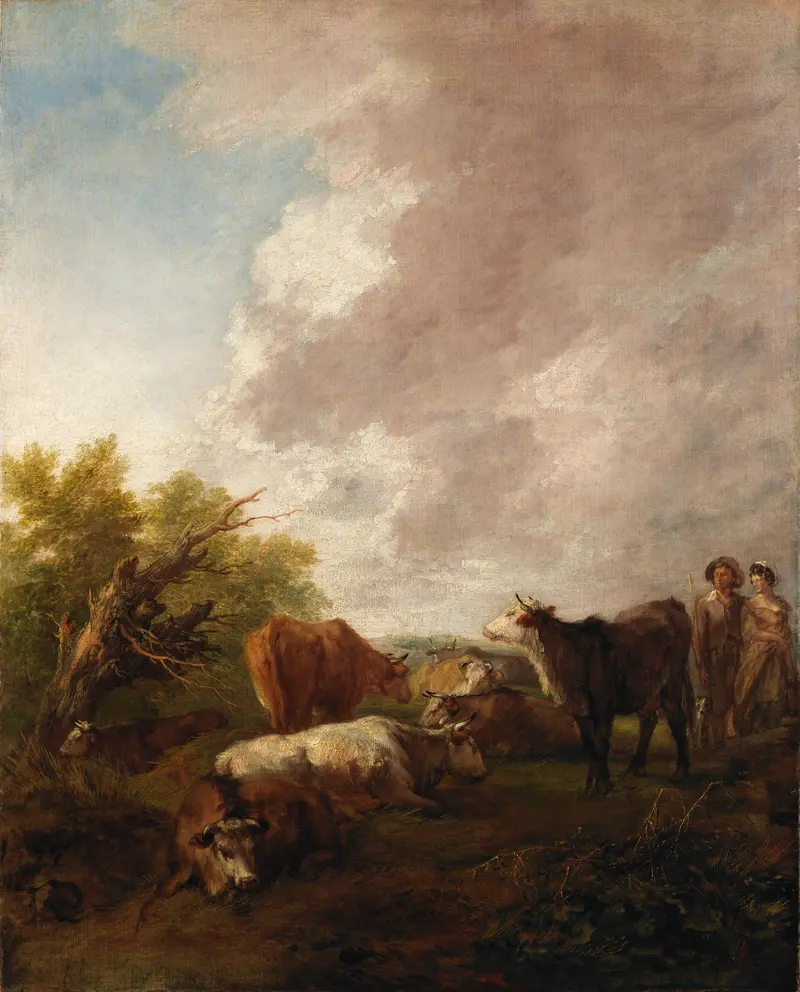
Landscape with Cattle
Thomas Gainsborough
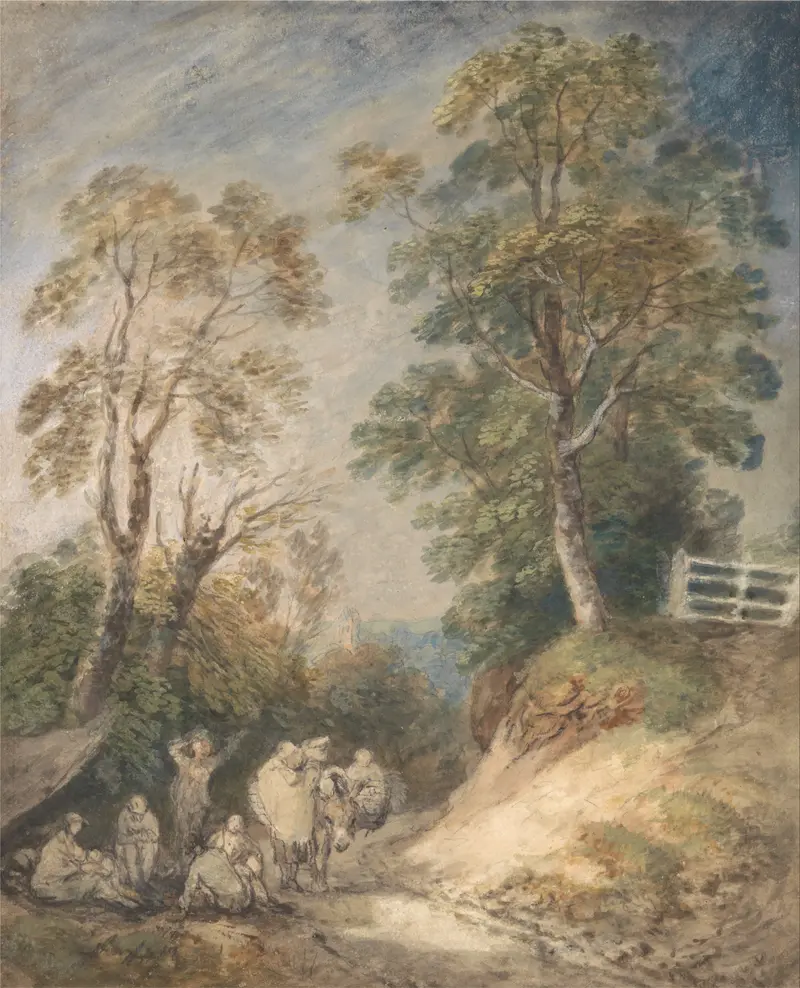
Country Lane with Gypsies Resting
Thomas Gainsborough
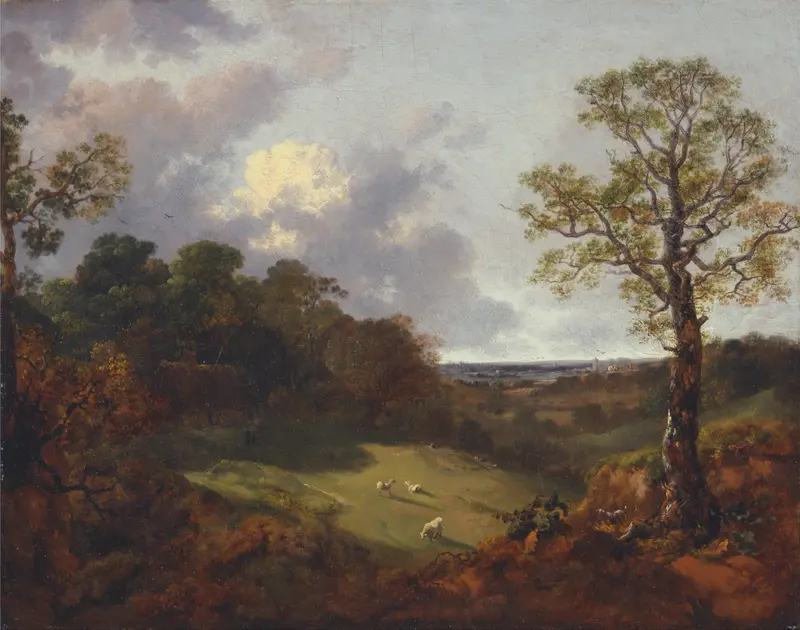
Wooded Landscape with a Cottage and Shepherd
Thomas Gainsborough
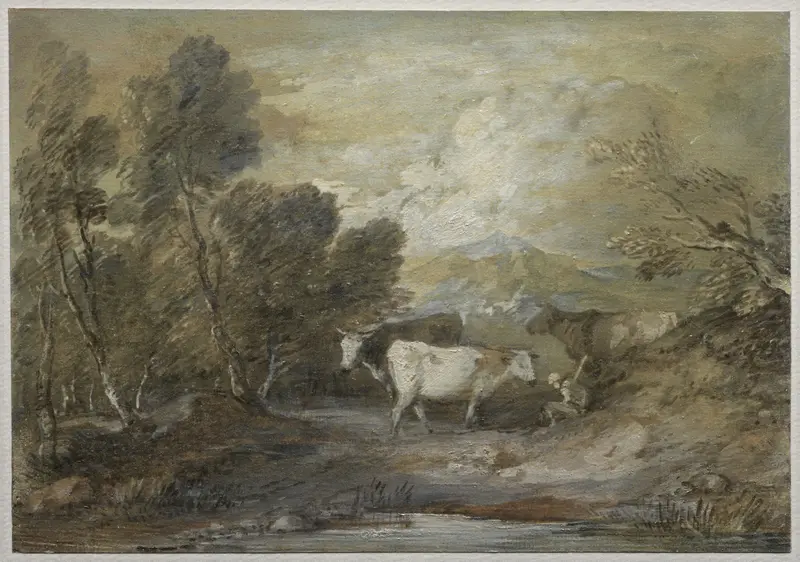
A Herdsman with Three Cows by an Upland Pool
Thomas Gainsborough





