
Grainstacks in Île-de-France — History & Facts
The first thing that draws the eye in Grainstacks in Île-de-France is the sheer presence of the two haystacks themselves—monumental, almost architectural, yet softened by the lyrical brushwork and the haze of late light. The stacks anchor the scene, their warm, russet tones set against a sweep of green and the cool, restless sky. The painter, Armand Guillaumin, invites us to linger not on the labor of harvest, but on the quiet aftermath: the land at rest, the air shimmering with the last colors of day.
The sky, streaked with lilac, yellow, and blue, seems to pulse with movement, drawing the viewer upward and outward, while the curved path and the solitary, twisting tree on the left pull us gently back to earth. Painted around 1894, this work belongs to the world of late nineteenth-century France, when the countryside outside Paris became a laboratory for new ways of seeing. Artists like Guillaumin—a contemporary of Monet and Pissarro—were fascinated by the changing effects of light and the bold possibilities of color. Unlike the grand historical canvases favored by the Academy, landscapes such as this were often painted for a growing middle class eager to bring the pleasures of nature indoors.
Today, this painting resides in the Museum Barberini in Potsdam, a testament to a moment when fields and skies became worthy subjects for art, and when even the humblest grainstack could become a monument to the fleeting beauty of a single evening. Look again at the sky, and notice how it refuses to settle into one color—always shifting, always alive.
More Artworks by Armand Guillaumin

La Seine À Charenton
Armand Guillaumin
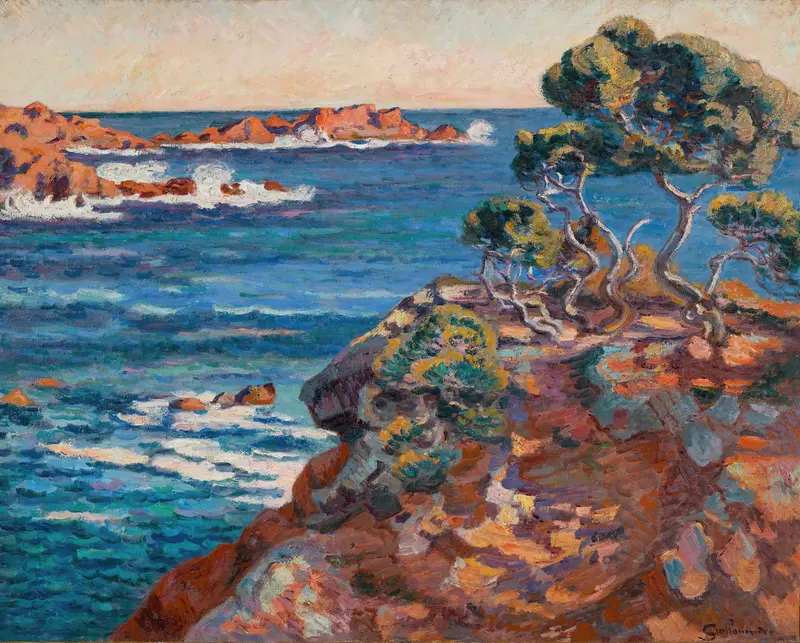
Bord De Mer À Agay
Armand Guillaumin
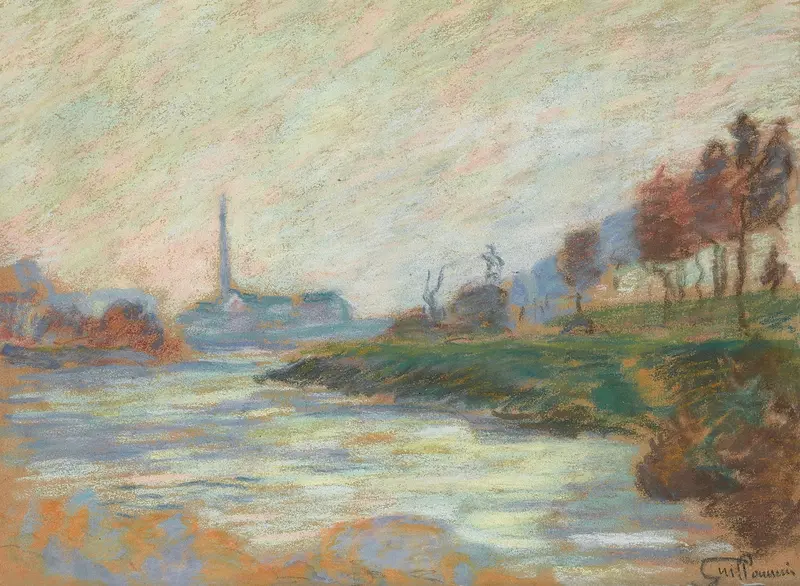
Confluent De La Marne Et De La Seine, Île De La France
Armand Guillaumin
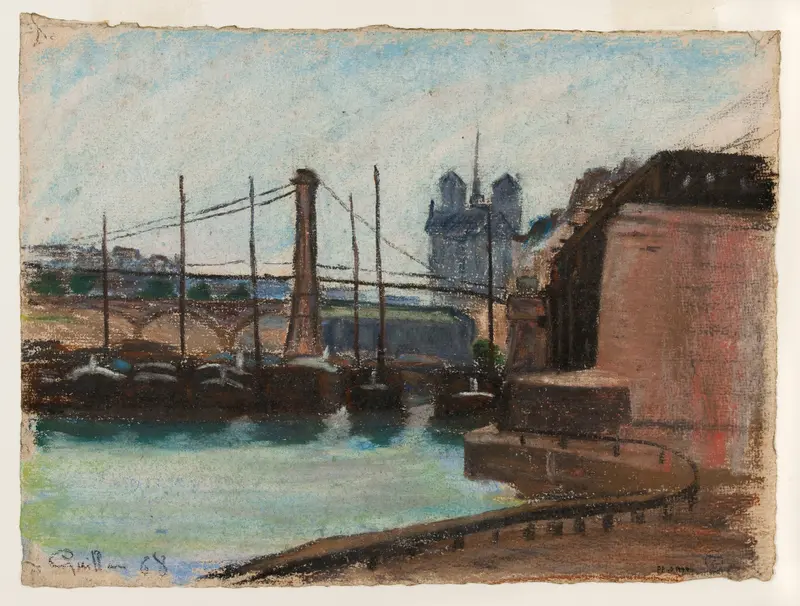
Le Pont d’Austerlitz
Armand Guillaumin
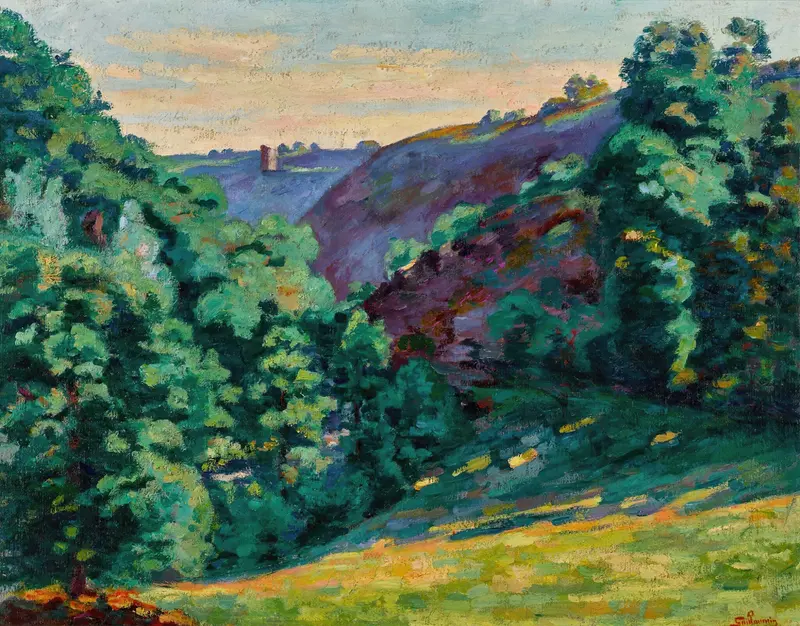
Le Ravin de la folie, vue de Chateau Crozant
Armand Guillaumin
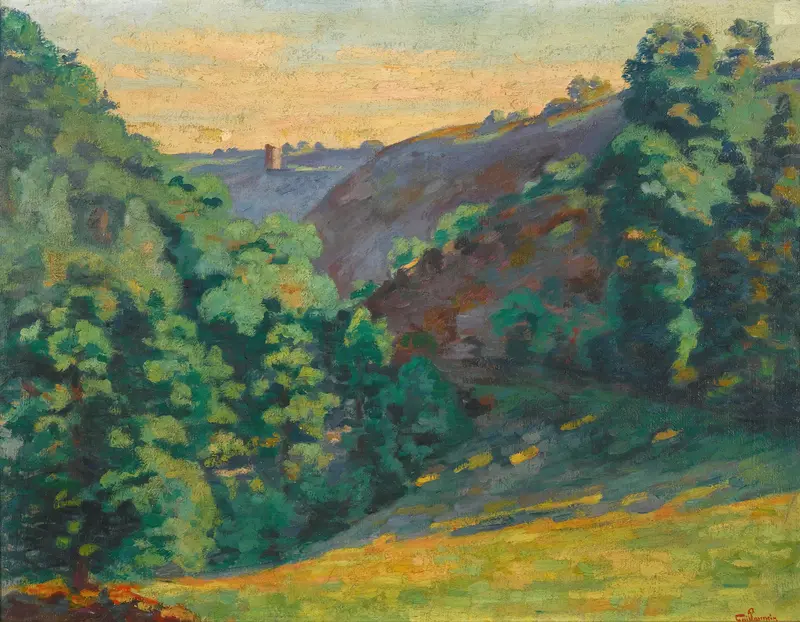
Crozant, Le Ravin De La Sedelle À La Folie
Armand Guillaumin
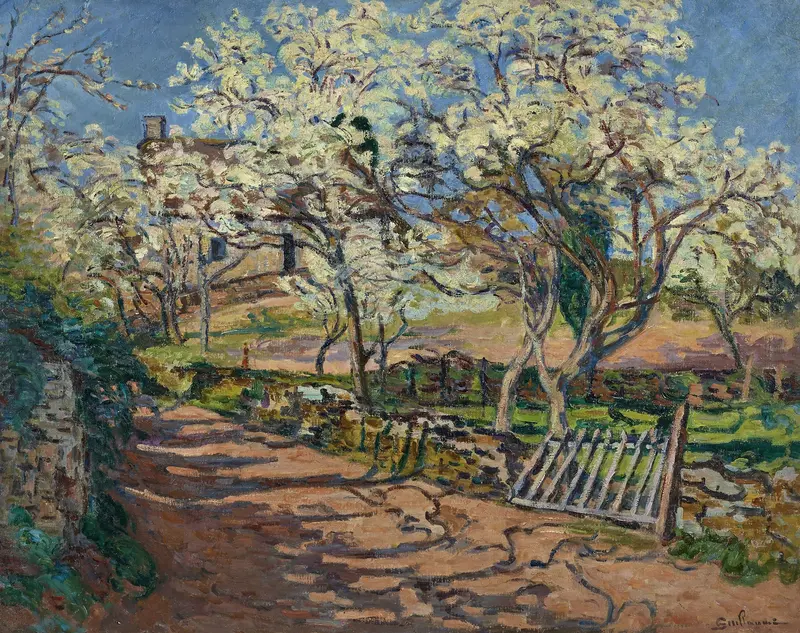
Paysage de Printemps
Armand Guillaumin
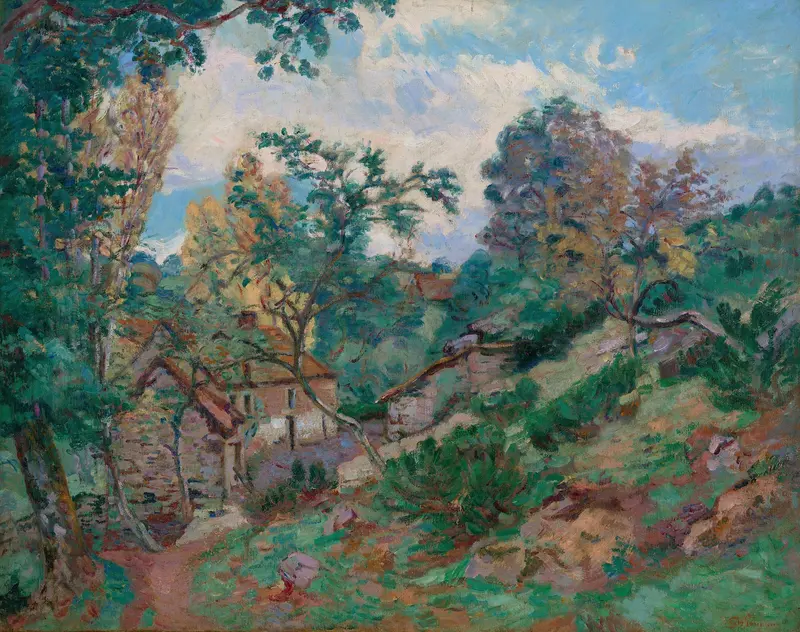
Paysage
Armand Guillaumin
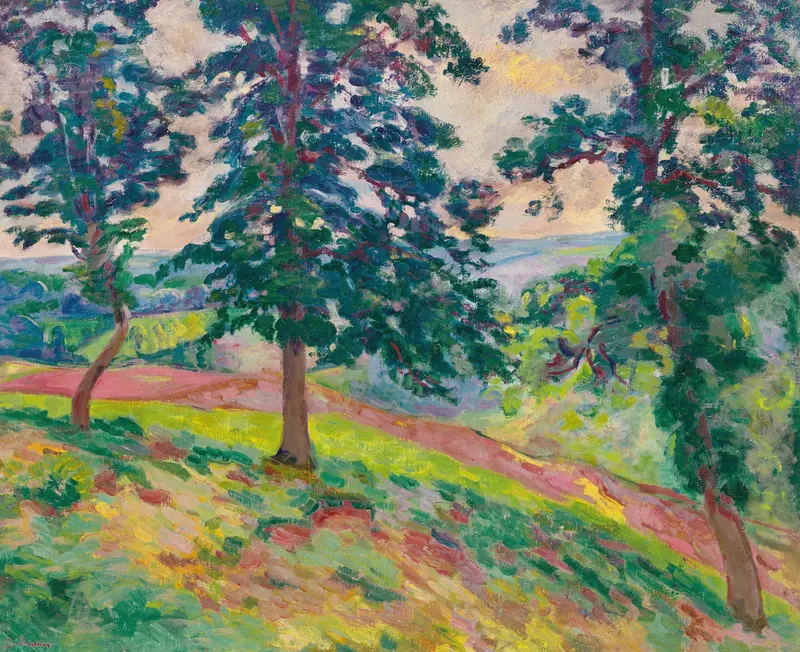
La vallée de la creuse
Armand Guillaumin
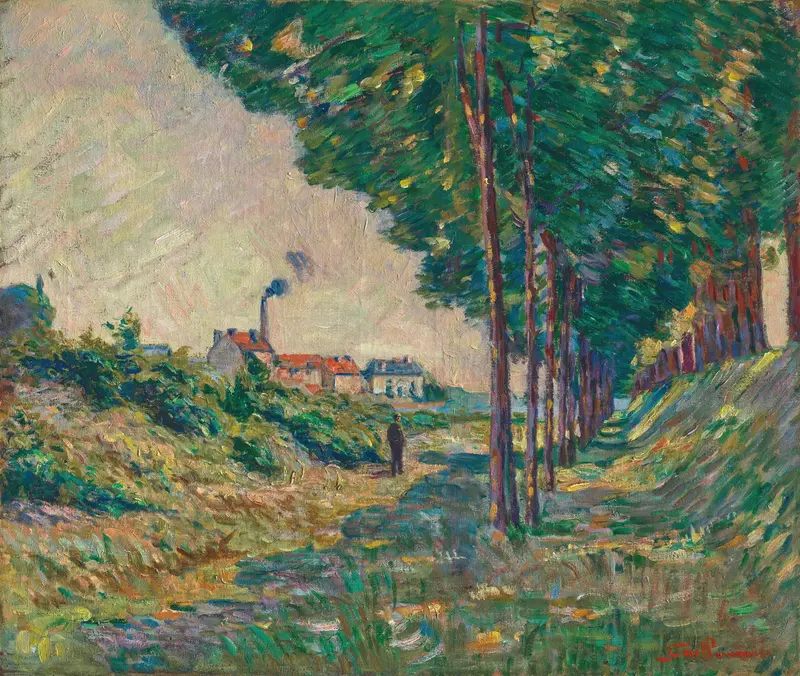
Le chemin de halage à Charenton, Ile de France
Armand Guillaumin
More Landscape Art

The Starry Night
Vincent van Gogh

View of Delft
Johannes Vermeer

Water Lilies
Claude Monet

The Grand Canal, Venice, looking north-west from the Ca' Corner to the Ca' Contarini degli Scrigni, with the campanile of Santa Maria della Carità
Canaletto

Windsor Castle
Canaletto

The Grand Canal looking North-East from the Palazzo Dolfin-Manin to the Rialto Bridge
Canaletto