
Grassy Riverbank — History & Facts
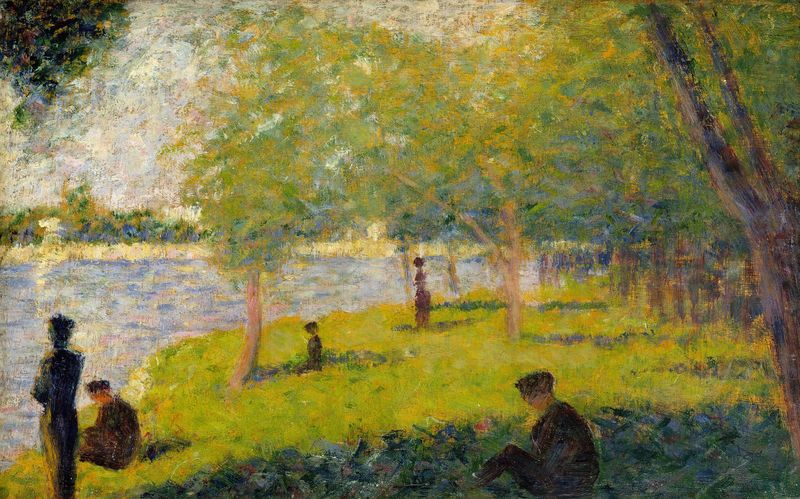
In the lush expanse of an idyllic riverbank, serenity dances delicately with the shadows of despair. Each blade of grass seems to whisper secrets of faith, inviting the viewer to contemplate the duality of existence. Look to the foreground where the vibrant greens of the grass meld seamlessly with the tranquil blues of the water. Notice how the pointillist technique creates a shimmering texture, inviting the eye to linger over the rich colors, which pulse with life.
The composition is anchored by the juxtaposition of stillness in the water and the vibrant activity of figures engaged in leisure nearby, their movements suggesting a deeper undercurrent of emotion beneath the surface. Within the details lies a profound contrast: the lushness of nature speaks to renewal and hope, yet the distant figures hint at melancholy and isolation. These elements intertwine to explore themes of faith—both in nature's beauty and in human connection. The gentle ripples of the river serve as a metaphor for life's transient moments, where joy is often fleeting, and the sunlight breaking through the trees offers a glimpse of hope amid the shadows. Seurat painted this piece between 1881 and 1882, during a period when he was exploring the nuances of color and light through his innovative technique.
Working in Paris, he was influenced by the emerging Impressionist movement, yet sought to elevate it with a methodical approach that balanced structure with spontaneity. At this time, art was grappling with modernity, and Seurat’s contemplative scenes reflected a search for meaning amid the chaos of urban life.
More Artworks by Georges Seurat
Browse all →
A Sunday on La Grande Jatte — 1884
Georges Seurat
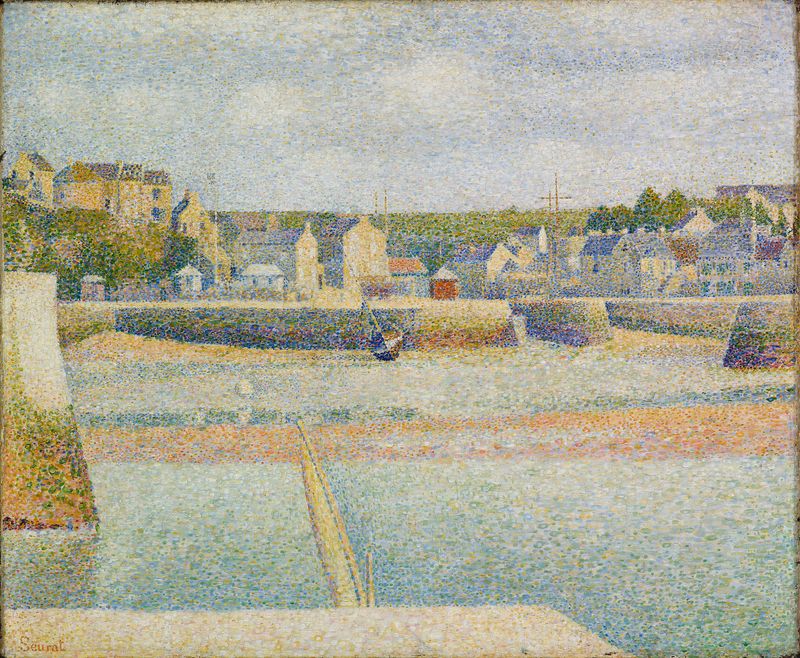
Port-en-Bessin, The Outer Harbor (Low Tide)
Georges Seurat
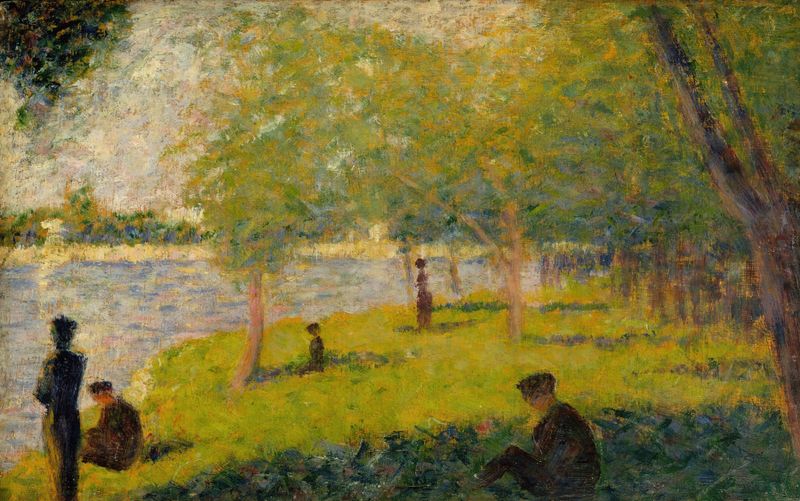
Study for ‘A Sunday on La Grande Jatte’
Georges Seurat

Oil Sketch for "A Sunday on La Grande Jatte — 1884"
Georges Seurat
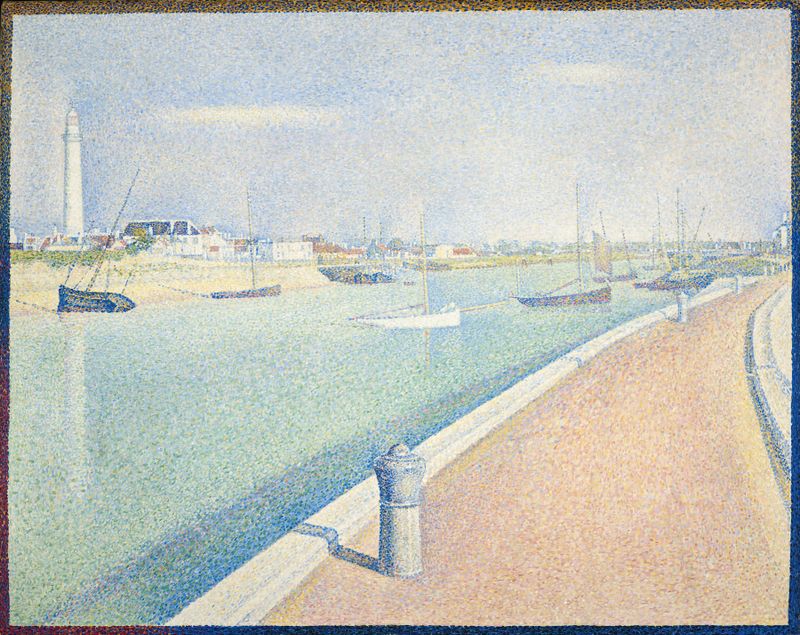
The Channel of Gravelines, Petit Fort Philippe
Georges Seurat

Étude pour ‘La Grande Jatte’ (Study for ‘La Grande Jatte’)
Georges Seurat
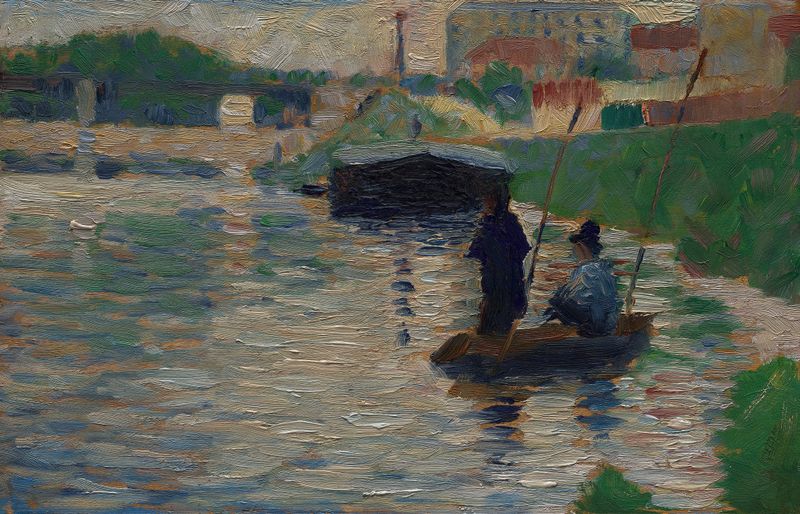
View of the Seine
Georges Seurat

Seascape at Port-en-Bessin,Normandy
Georges Seurat

The Channel at Gravelines, Evening
Georges Seurat
Study for A Sunday on La Grande Jatte
Georges Seurat





