
Graveyard in Ischl — History & Facts
What if beauty was never meant to be finished? In Graveyard in Ischl, color emerges as both a veil and a revelation, beckoning us to contemplate the permanence of nature against the transience of life. Look to the left, where vibrant greens awaken the grave markers, standing resolute yet tender against the backdrop of a soft, twilight sky. The palette is alive; warm earth tones cradle the cooler, fading blues, creating a harmonious dialogue between life and death. Notice the delicate brushstrokes that breathe life into the trees, their leafy branches arching protectively over the resting souls, as if to whisper secrets of those who once thrived beneath their boughs. The painting wrestles with the paradox of beauty in decay.
The sunlight dapples the gravestones, creating an interplay of light that suggests both reverence and acceptance. Observe how the vibrant surroundings contrast with the somber stillness of the gravestones, evoking a profound sense of peace amidst sorrow. The viewer is invited to reflect on mortality but also on the enduring legacy of love and memory, encapsulated in the serene acceptance of nature. Rudolf von Alt created this piece in 1838 while living in Vienna, a period when Romanticism flourished and artists sought to explore the emotional depths of human experience through landscapes and scenes.
The work reflects both his personal reflections on mortality and the cultural climate of a time when the natural world was revered as a source of inspiration and philosophical contemplation.
More Artworks by Rudolf von Alt
Browse all →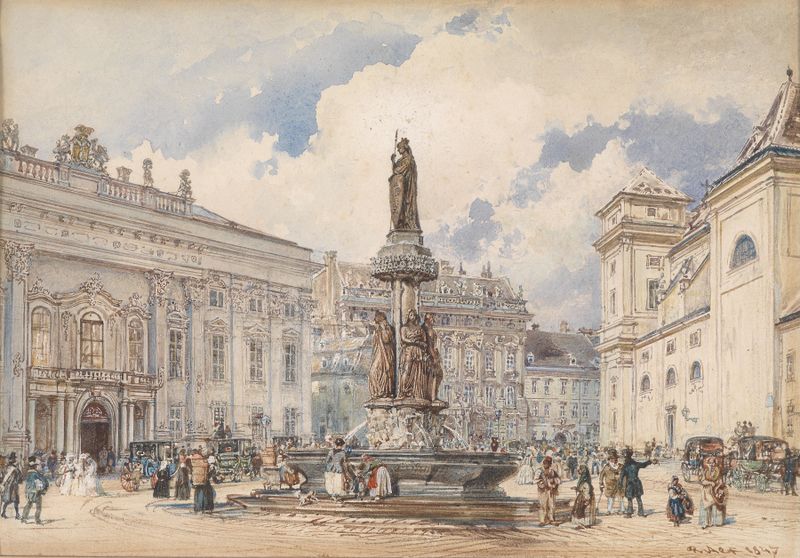
Freyung mit Austriabrunnen
Rudolf von Alt

The Interior of the Cathedral of Saint Stephen at Vienna
Rudolf von Alt
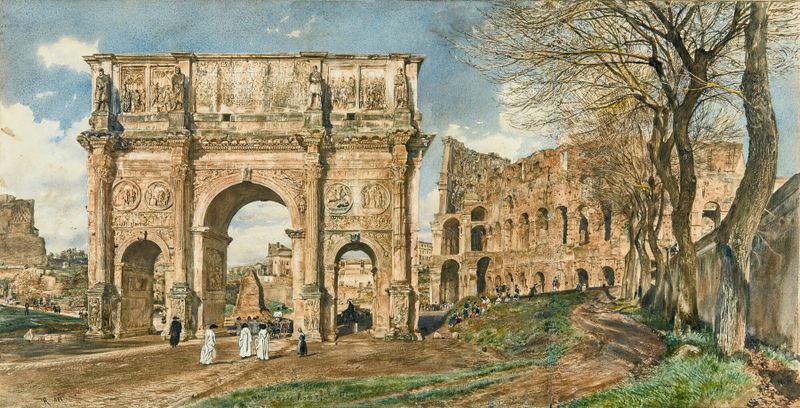
The Arch Of Constantine And The Colosseum, Rome
Rudolf von Alt

The Fleischmarkt in Vienna with the Greek-Orthodox Church of the Holy Trinity
Rudolf von Alt

Der Stephansdom in Wien
Rudolf von Alt
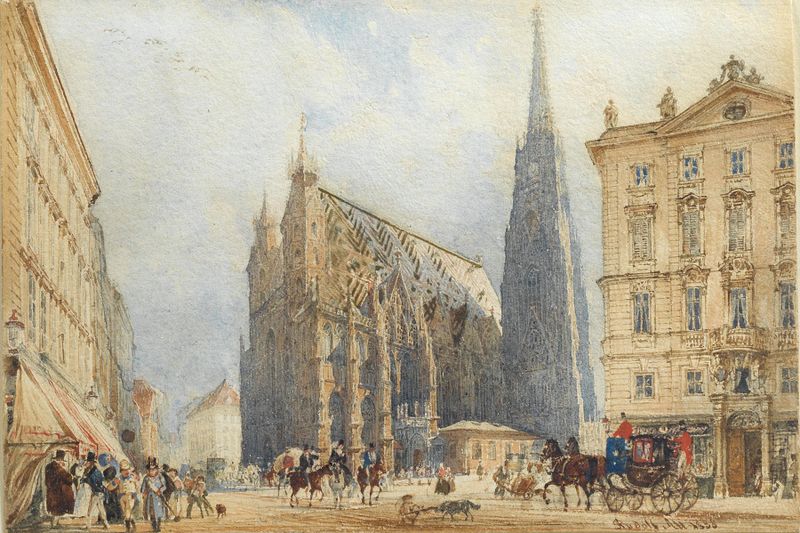
Stephansplatz
Rudolf von Alt
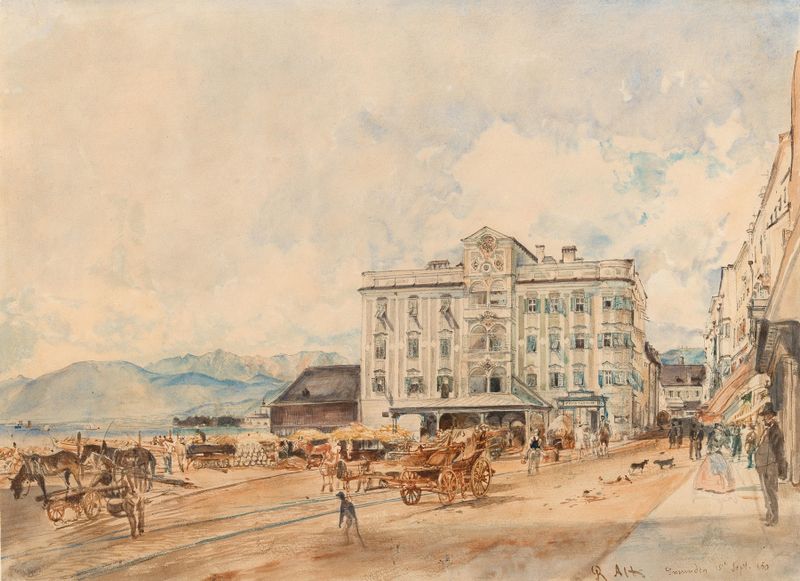
The Town Hall in Gmunden
Rudolf von Alt

View from Sant’Onofrio on Rome
Rudolf von Alt
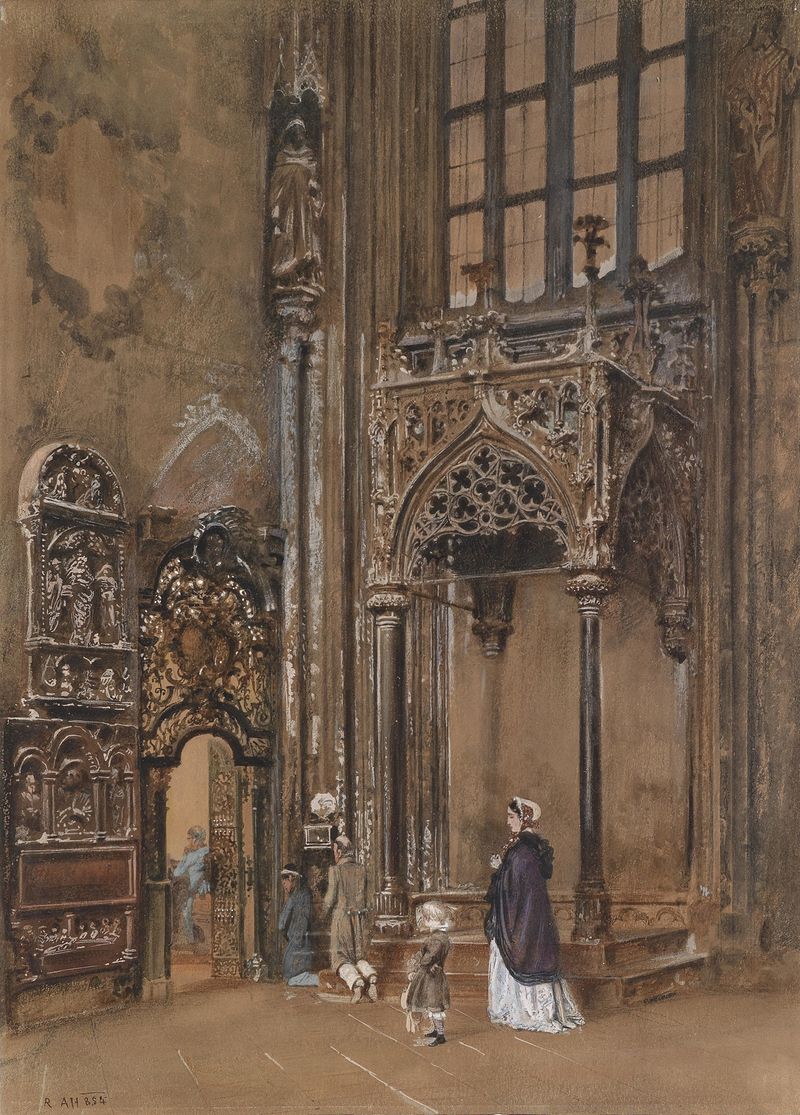
Kircheninneres
Rudolf von Alt
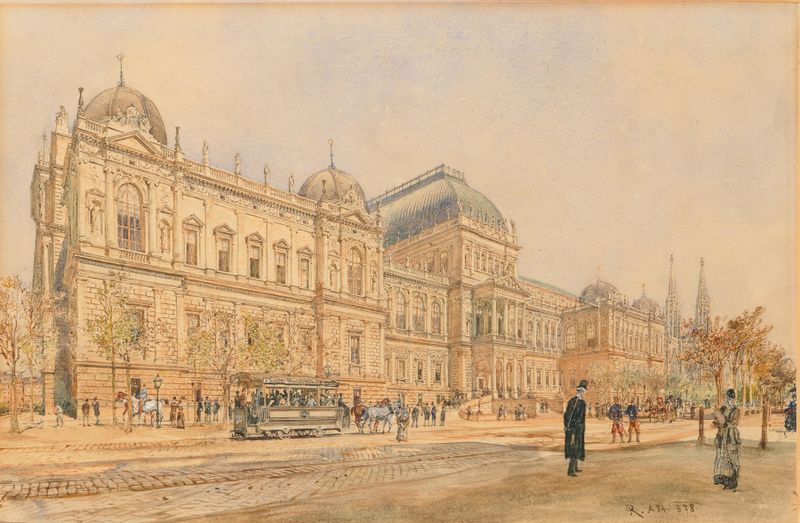
The University of Vienna on the Ringstrasse, with Horse-Drawn Tram and Figures, a view of the building still under construction in 1878 (erected by Heinrich von Ferstel 1873-1884)
Rudolf von Alt





