
Grey and Silver – Chelsea Wharf — History & Facts
In the quietude of a cityscape, the infinite layers of grey and silver echo the madness of the modern age. Look to the left of the canvas, where the shimmering reflections of the water blend seamlessly with the cool tones of the sky. Notice how the soft, muted palette envelops the scene, blurring the lines between architecture and nature, creating an almost dreamlike quality. The delicate brushwork captures both the tranquility of the setting and the underlying tension of industrial progress, inviting the viewer to ponder the relationship between humanity and the evolving landscape. Beneath the serene exterior, a dichotomy emerges; the bustling wharf stands in stark contrast to the stillness of the water.
Each figure depicted seems absorbed in their own thoughts, embodying a collective solitude amidst the chaos of daily life. As the viewer's gaze wanders, the interplay of shadows and light hints at fleeting moments of connection and disconnection, illuminating a world teetering on the brink—caught between inspiration and madness. In the mid-1860s, Whistler painted this work in London, a time marked by rapid industrialization and societal change. The artist was exploring the nuances of tonal harmony and composition, distancing himself from the representational norms of his contemporaries.
This period saw him developing his signature style, seeking to convey emotion through subtle colors and forms rather than explicit subjects, reflecting both his personal experiences and the zeitgeist of modernity.
More Artworks by James Abbott McNeill Whistler
Browse all →
Nocturne in Blue and Silver
James Abbott McNeill Whistler
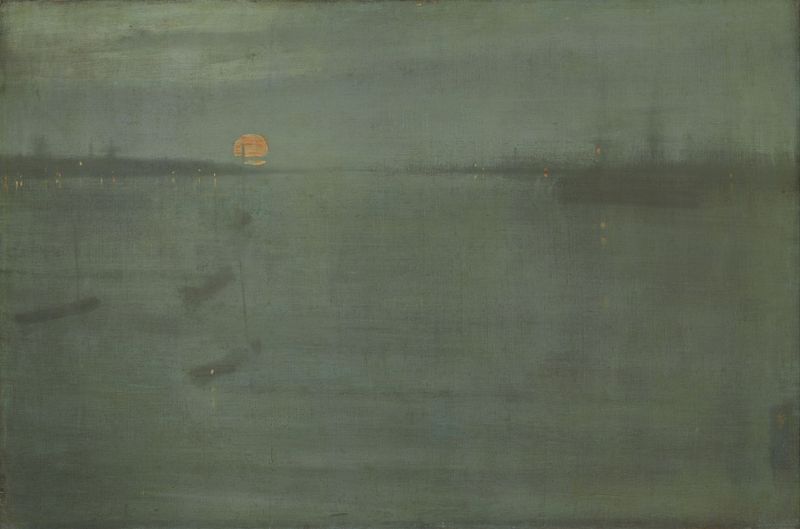
Nocturne: Blue and Gold–Southampton Water
James Abbott McNeill Whistler
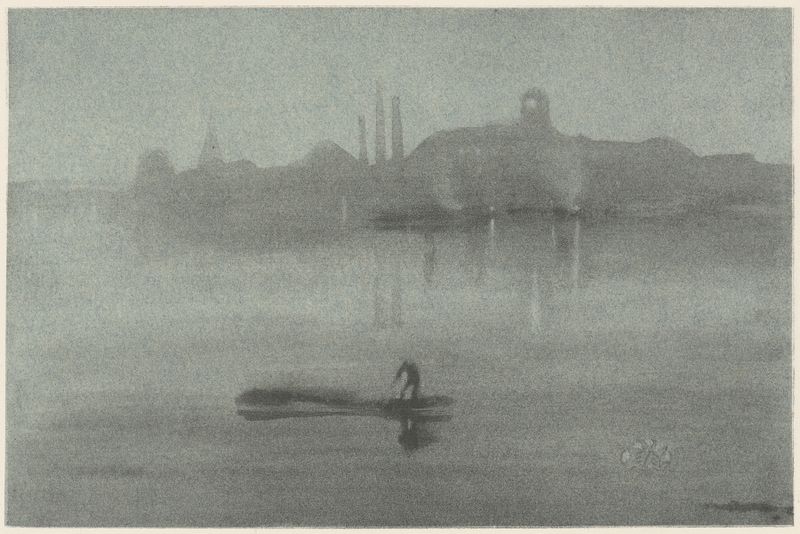
Nocturne
James Abbott McNeill Whistler
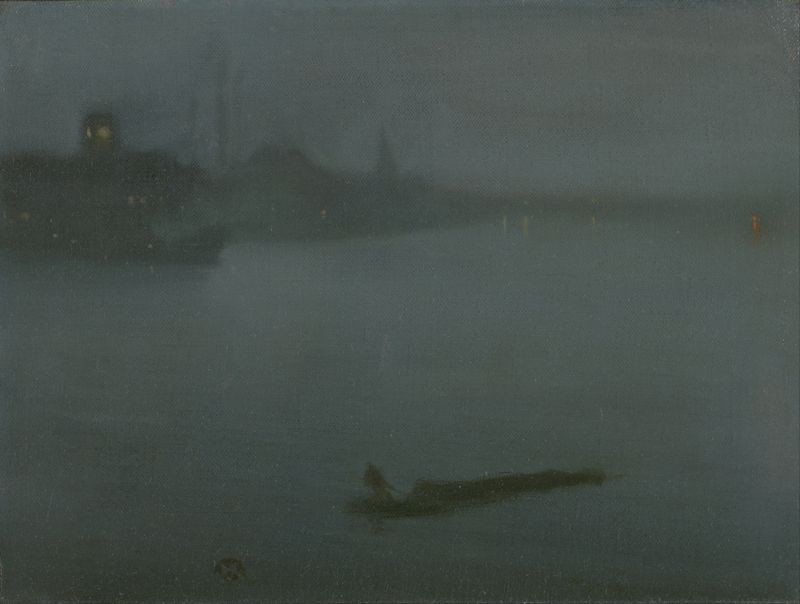
Nocturne in Blue and Silver
James Abbott McNeill Whistler
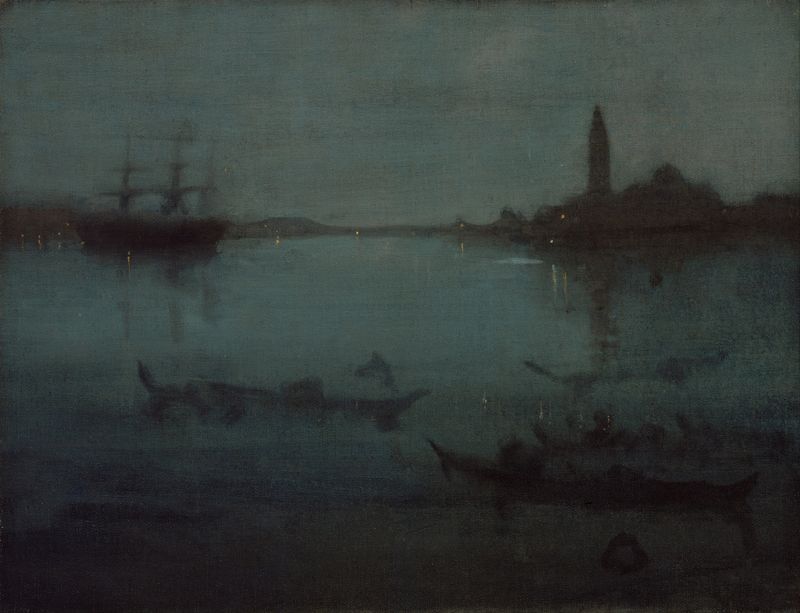
Nocturne in Blue and Silver- The Lagoon, Venice
James Abbott McNeill Whistler
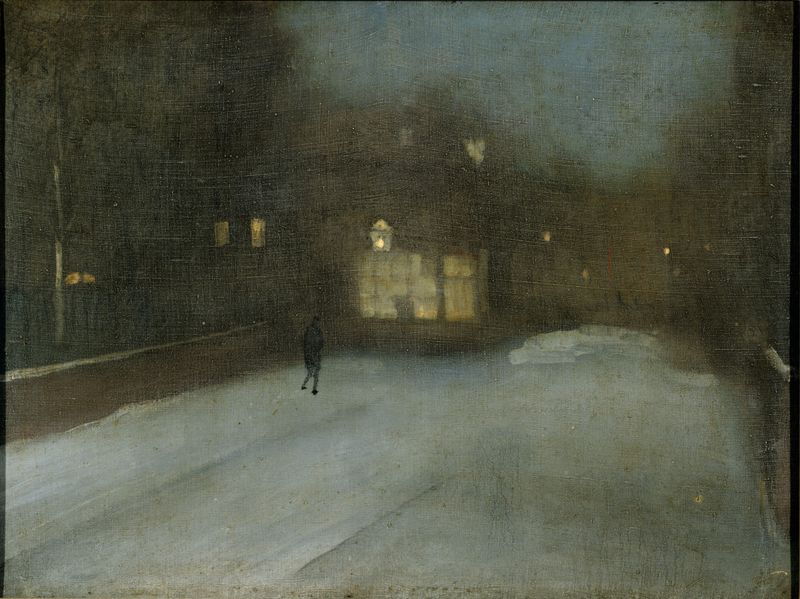
Nocturne in Grey and Gold: Chelsea Snow
James Abbott McNeill Whistler
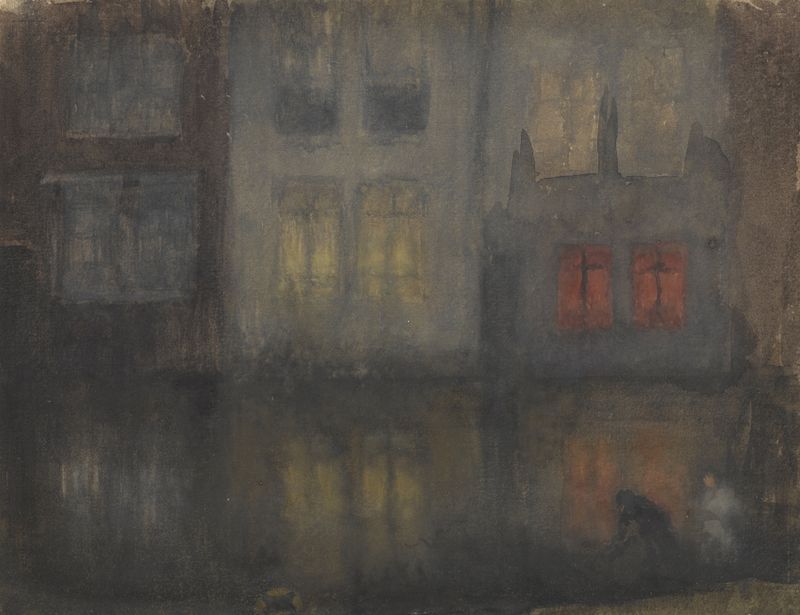
Nocturne: Black and Red—Back Canal, Holland
James Abbott McNeill Whistler
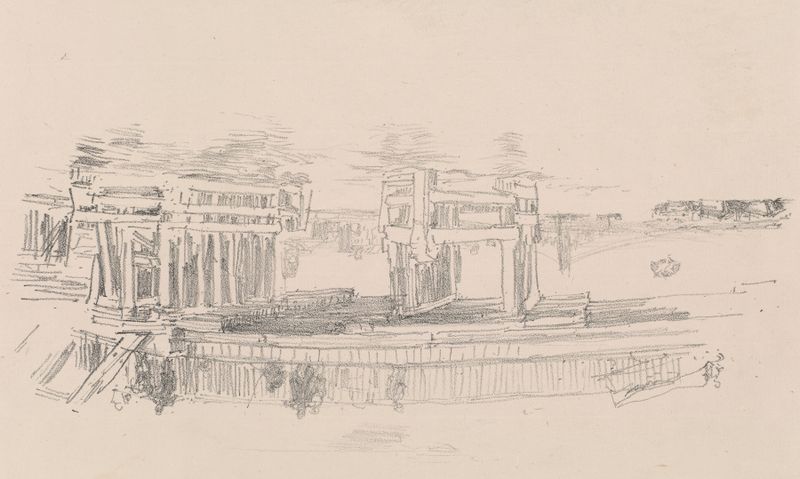
Old Battersea Bridge
James Abbott McNeill Whistler

Nocturne: Blue and Silver–Battersea Reach
James Abbott McNeill Whistler
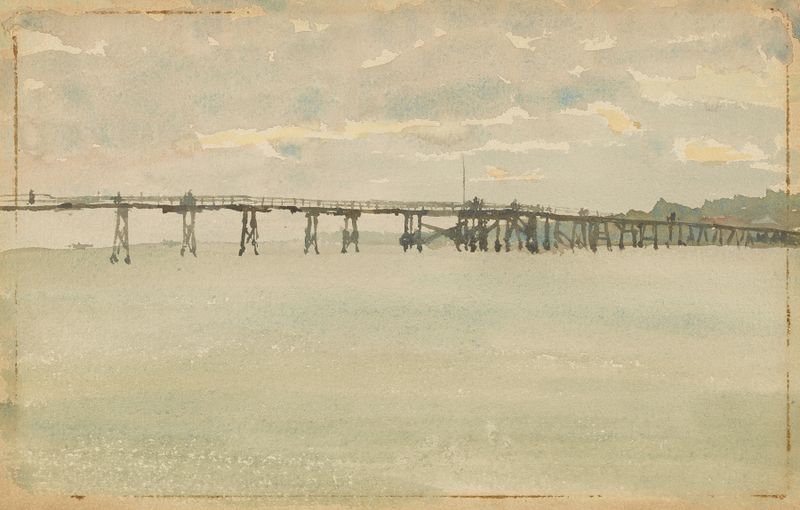
Grey and Silver–Pier, Southend
James Abbott McNeill Whistler





