
Guan Yu, Chinese God of War — History & Facts
When Katsushika Hokusai, the celebrated Japanese printmaker, turned his gaze to the legendary Chinese general Guan Yu in 1824, he bridged two cultures that had long admired the same hero. Guan Yu, a real military commander from the late Han dynasty, had by Hokusai’s time become a god of war in Chinese popular religion, venerated for his loyalty and martial prowess. Hokusai’s depiction is one of the few known Japanese treatments of this Chinese subject by an artist of his stature, reflecting the period’s fascination with foreign legends and the cross-pollination of East Asian art.
The work stands out as a testament to Hokusai’s lifelong curiosity and willingness to draw from beyond his own tradition. Guan Yu is captured at a moment of poised vigilance, his imposing figure dominating the composition. His long, flowing beard and green robe are instantly recognizable, while the massive guandao blade he cradles signals his readiness for battle. Hokusai’s brushwork renders Guan Yu’s stern gaze and upright posture, emphasizing the general’s unwavering sense of justice—a quality that made him a symbol of loyalty in both folklore and religious worship.
The use of strong, dynamic lines recalls Hokusai’s Thirty-Six Views of Mount Fuji, but here the energy is focused on a single human subject rather than a landscape. Unlike the more ornate, narrative-driven Chinese paintings of Guan Yu, Hokusai’s version distills the legend to an iconic portrait, inviting viewers to contemplate the man behind the myth. The precise circumstances of this artwork’s creation remain unclear; no surviving records indicate a specific patron or commission. It is likely that Hokusai produced it as part of his ongoing exploration of heroic figures and foreign themes, a pursuit that marked his later career.
The medium is not definitively known—some scholars suggest it may have been a hanging scroll or a woodblock print, given Hokusai’s versatility. Today, the work is held in a private collection, seldom exhibited, and its attribution is generally accepted, though a few specialists have questioned whether it is entirely by Hokusai’s hand. Regardless, Guan Yu, Chinese God of War stands as a rare and fascinating intersection of Japanese artistry and Chinese legend in the early nineteenth century.
More Artworks by Katsushika Hokusai

The Great Wave off Kanagawa
Katsushika Hokusai
Fine Wind, Clear Morning (Red Fuji)
Katsushika Hokusai
South Wind, Clear Dawn
Katsushika Hokusai
Rainstorm Beneath the Summit
Katsushika Hokusai
Clear Weather with a Southerly Wind
Katsushika Hokusai
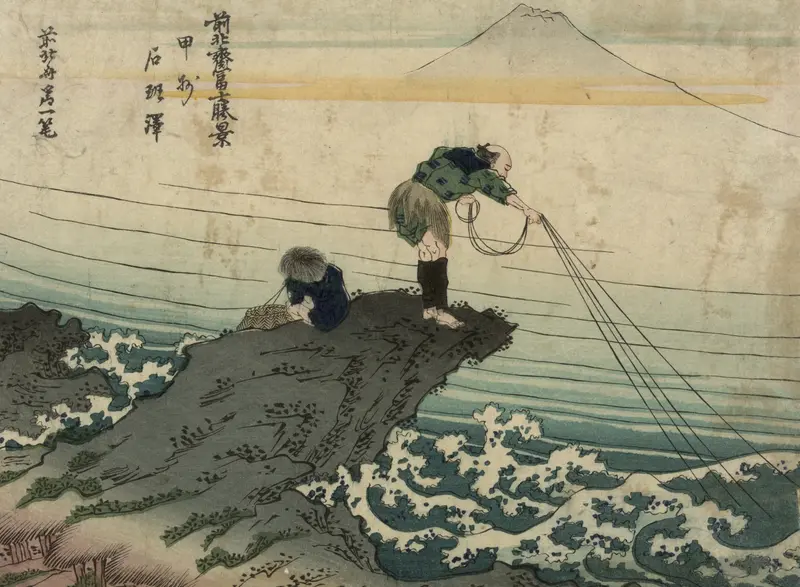
Kōshū kajikazawa
Katsushika Hokusai
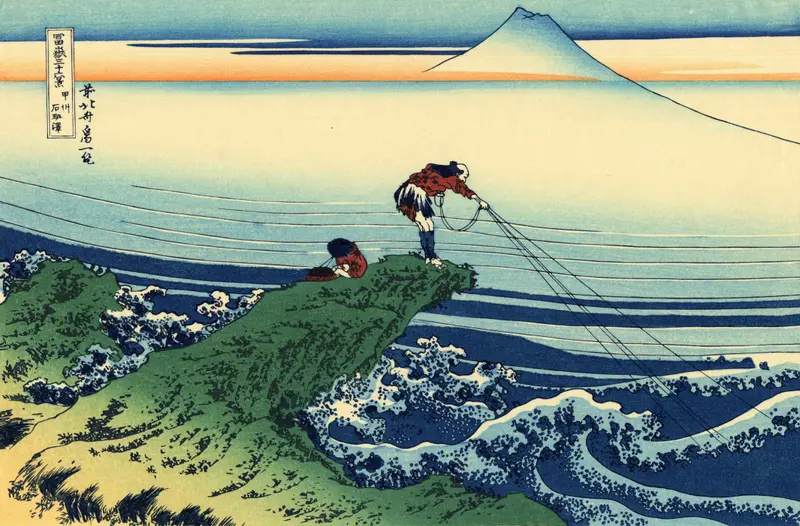
Kōshū kajikazawa 2
Katsushika Hokusai
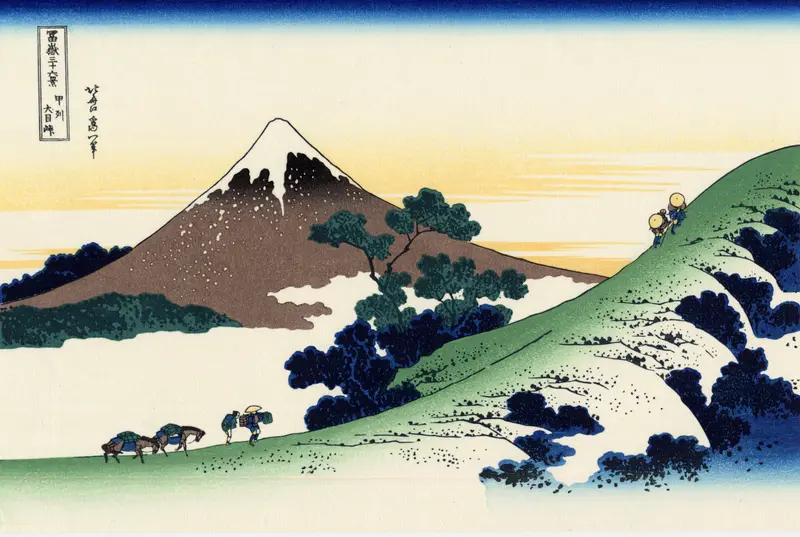
Inume Pass in Kai Province (Kôshû inume-tôge)
Katsushika Hokusai

Yoro Falls in Mino Province (Mino no Yoro no taki), from the series "A Tour of Waterfalls in Various Provinces (Shokoku taki meguri)"
Katsushika Hokusai
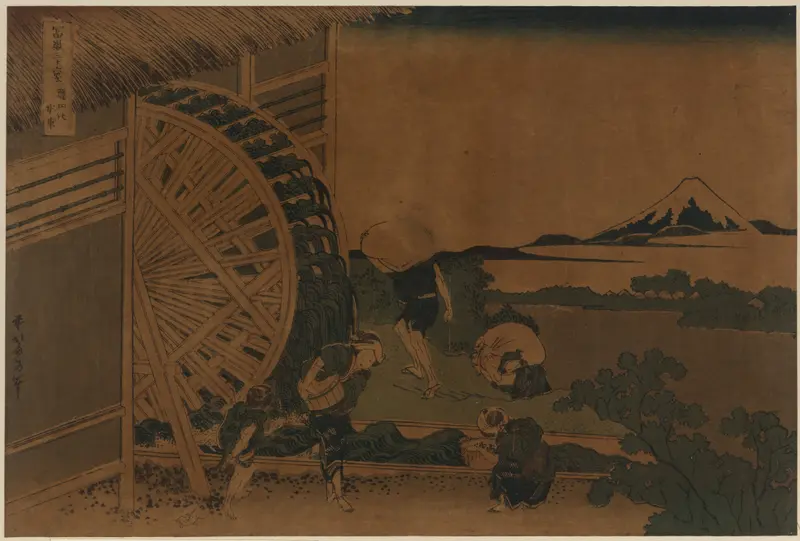
Onden no suisha
Katsushika Hokusai





