Guava with Mole Cricket and Bumblebee — History & Facts
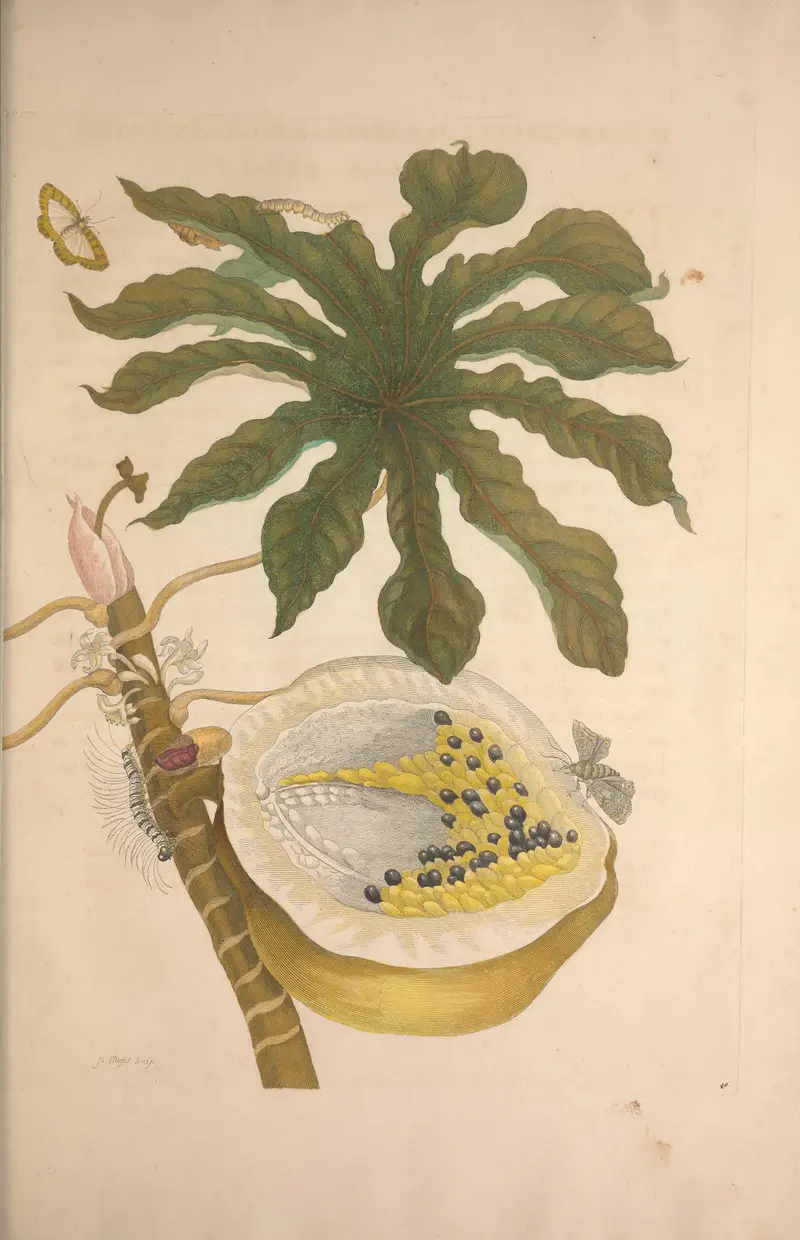
What first catches the eye is the careful choreography of life stages, as if time itself has been pressed between the pages. The guava branch hosts not just fruit but a living drama: a mole cricket in flight, its pale wings unfurled with mechanical precision; a glossy black beetle clinging to the fruit’s curve; a bumblebee hovering below, its yellow stripes vivid against the muted greens; and a caterpillar poised for its own transformation. Every segment, every hair, is rendered with a clarity that invites the viewer to linger, to follow the arc of metamorphosis from one form to the next.
The artist’s gaze is both scientific and tender, guiding us from the sturdy leaf to the delicate bloom, then back to the insects—each a marvel of pattern and anatomy. This image belongs to the world of early eighteenth-century natural history, when explorers and artists like Maria Sibylla Merian traveled far from Europe to document the flora and fauna of new continents. Published in 1705 as part of Metamorphosis insectorum surinamensium, this work stands at the intersection of art and science, intended not for idle admiration but for study and wonder. Such illustrations were commissioned by scholars, collectors, and the curious elite, eager to possess a piece of the exotic Americas.
In Merian’s hands, the guava is not just a specimen but a stage, and the insects are actors in a cycle that fascinated her contemporaries as much as it does us now. Look again, and see how every vein, every shadow, is a record of both observation and awe.
More Artworks by Maria Sibylla Merian
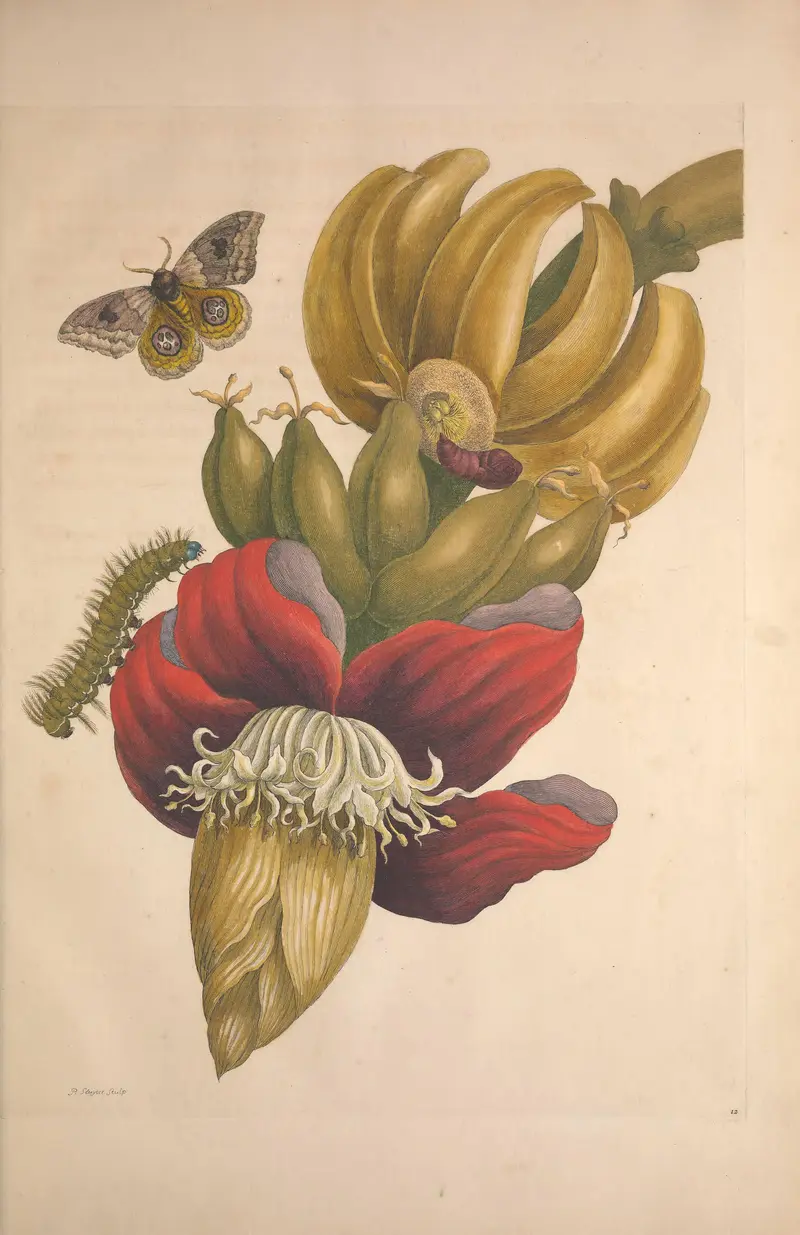
Banana with Bullseye Moth and Caterpillar
Maria Sibylla Merian
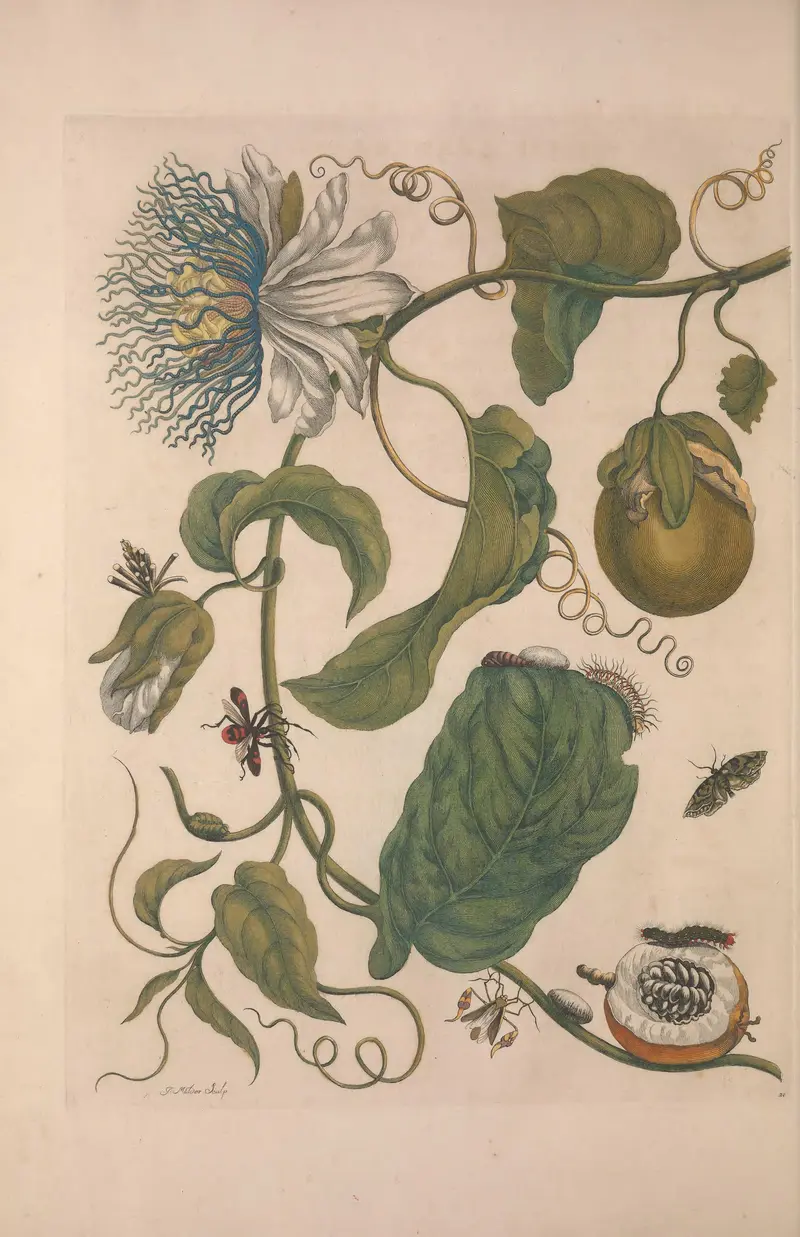
Passionflower with Caterpillars and Insects
Maria Sibylla Merian
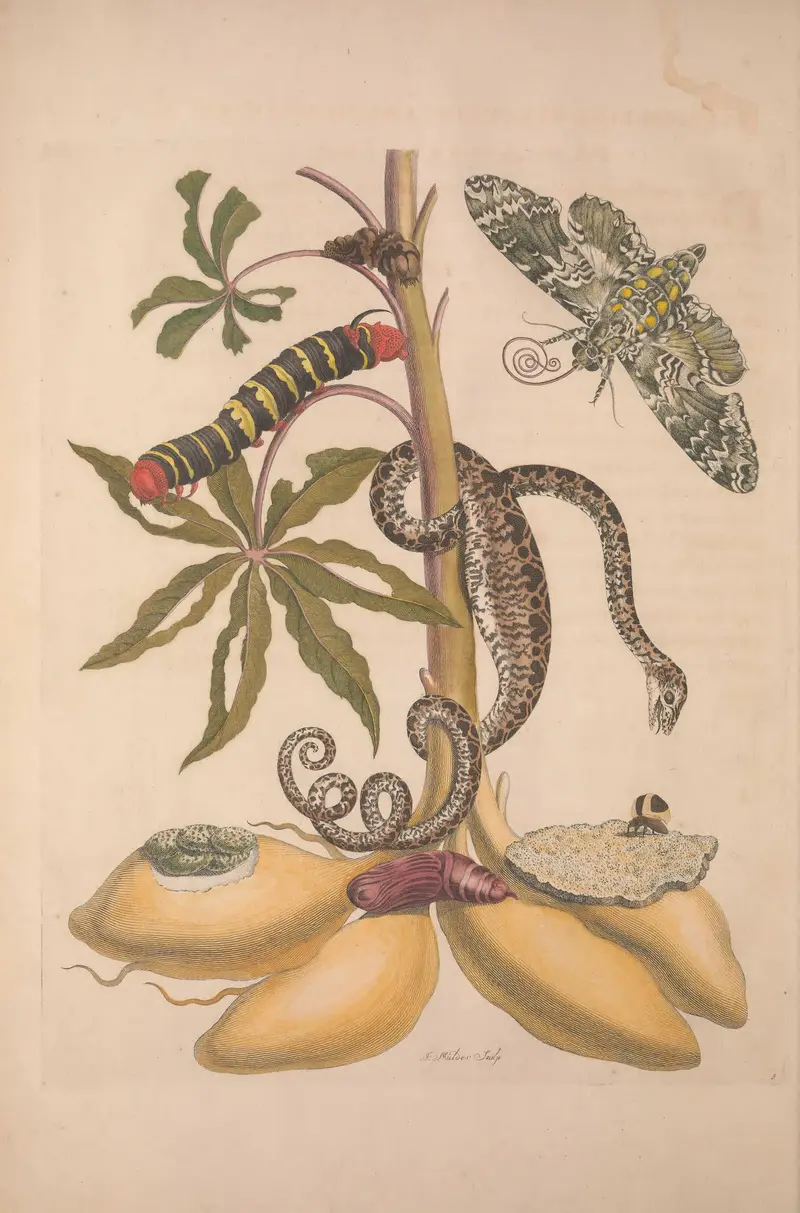
Cassava Root with Tree Boa and Sphinx Moth
Maria Sibylla Merian
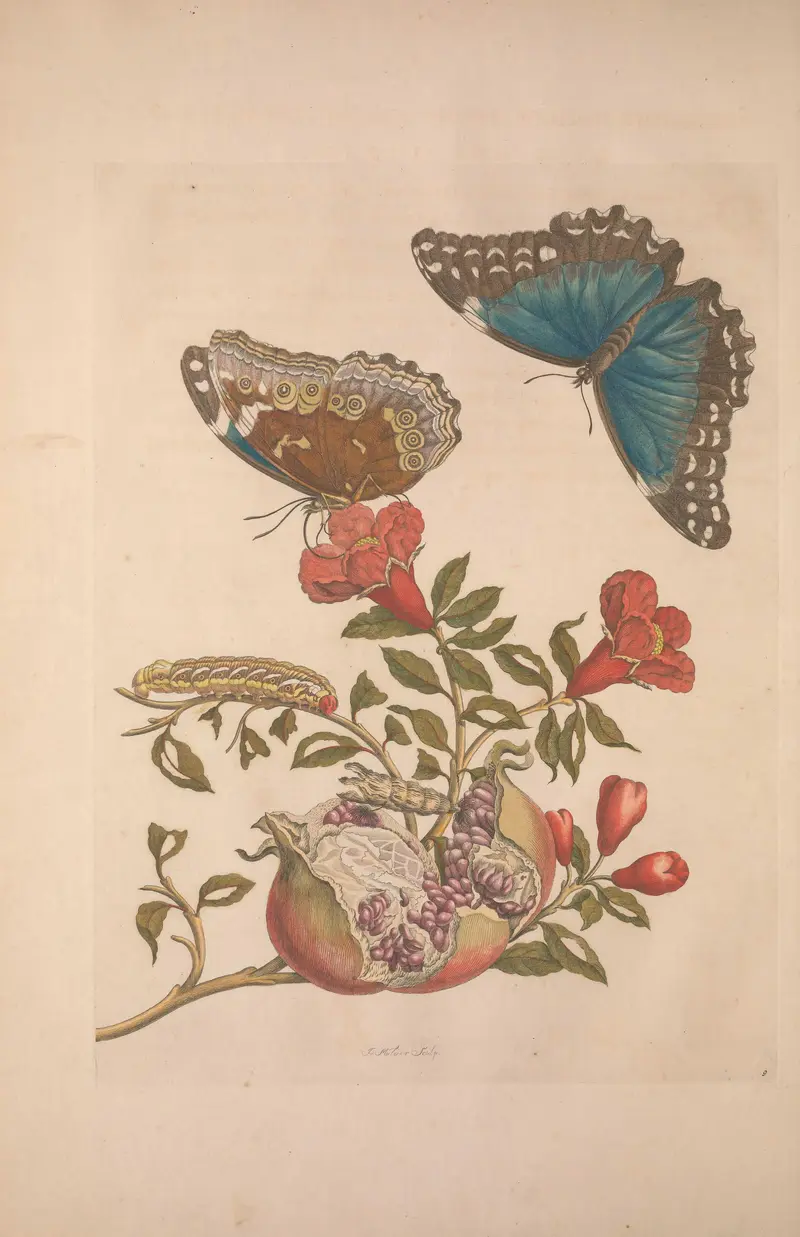
Pomegranate with Caterpillar, Pupa and Blue Butterfly
Maria Sibylla Merian
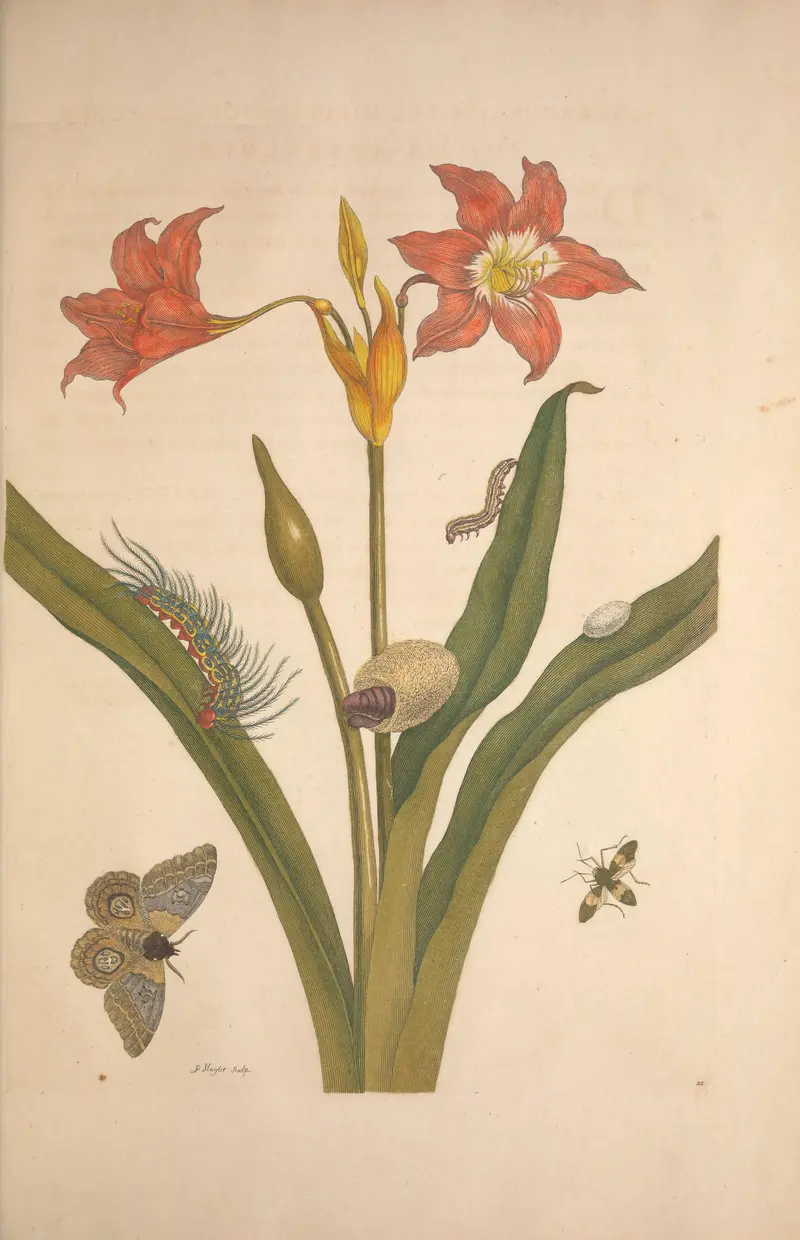
Red Amaryllis Lily with Moth and Caterpillars
Maria Sibylla Merian
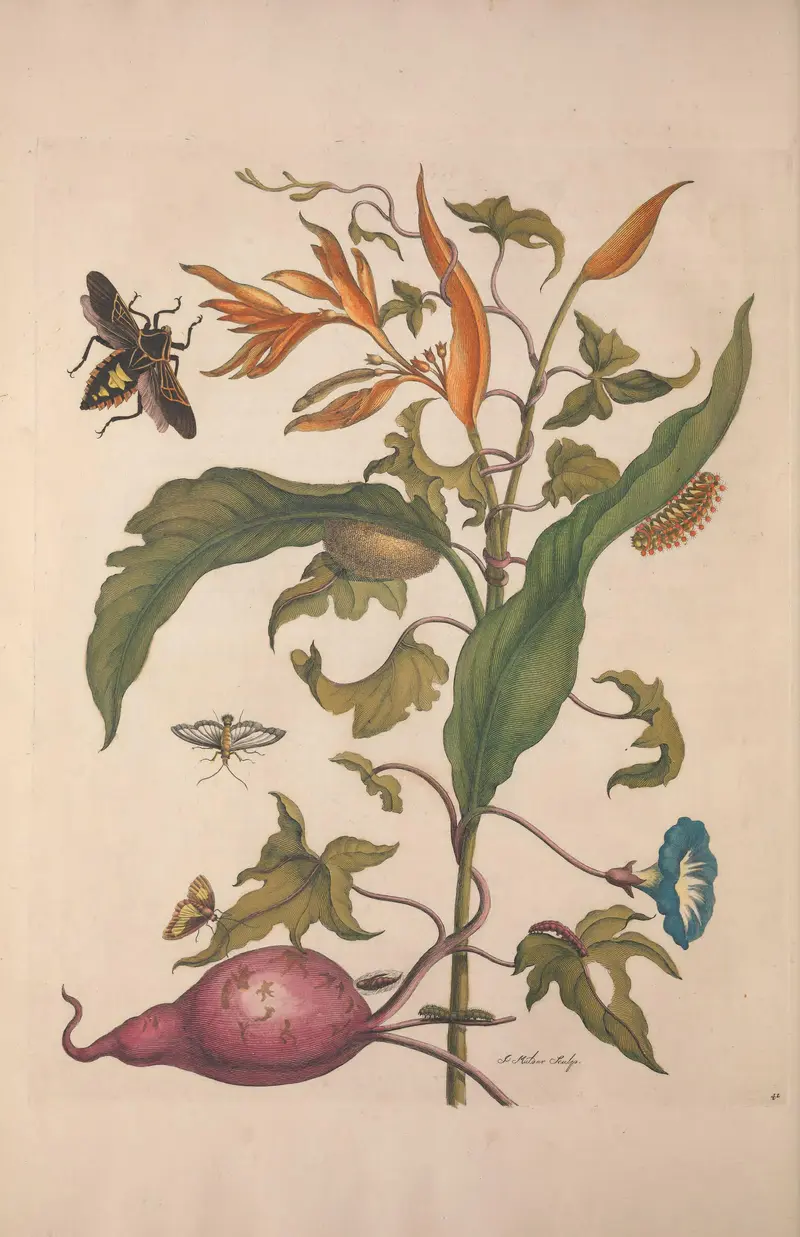
Sweet Potato with Beetle and Butterfly
Maria Sibylla Merian
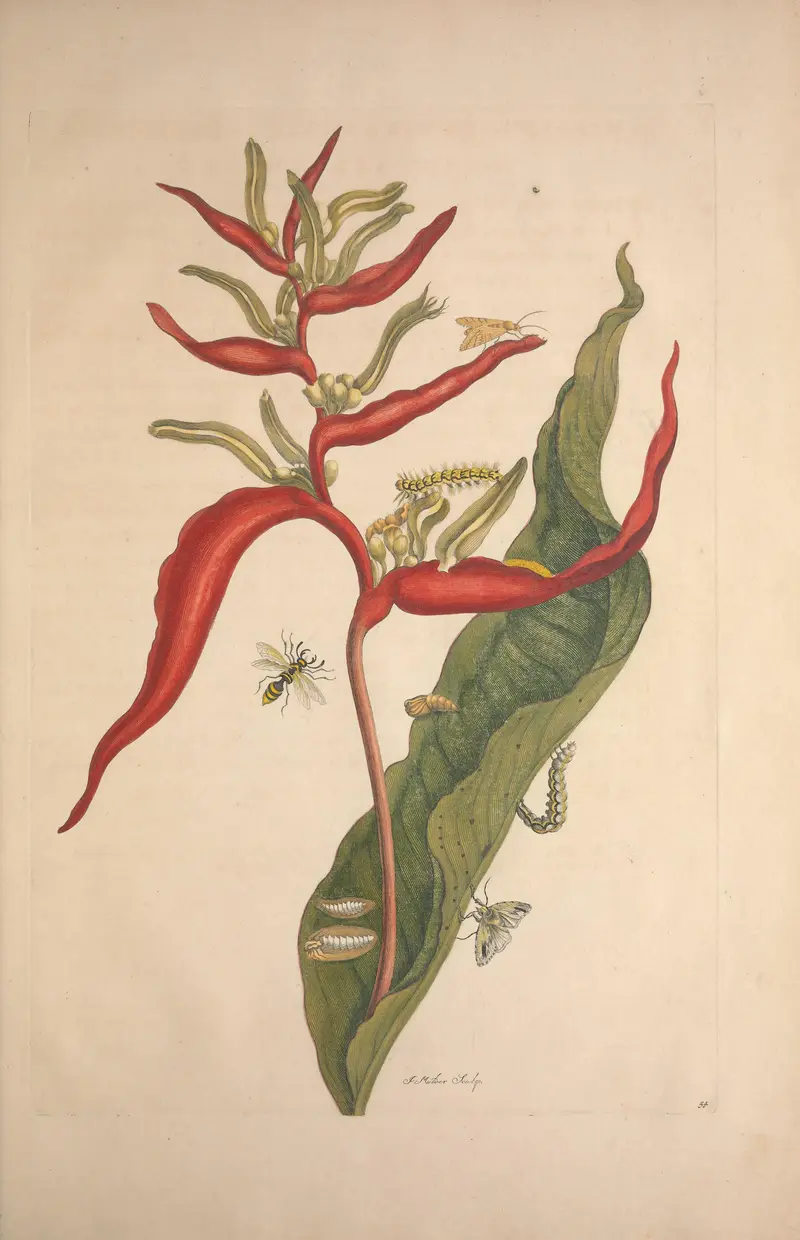
Heliconia with Moth
Maria Sibylla Merian
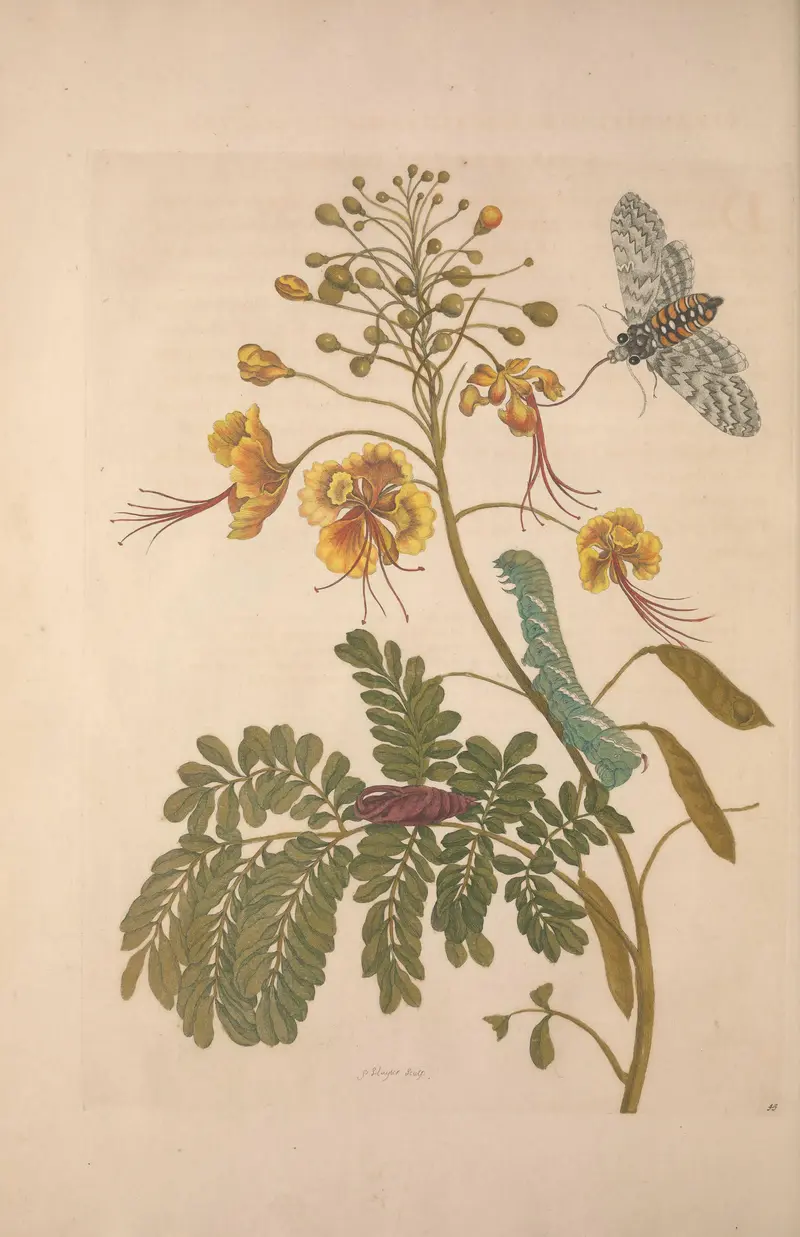
Mimosa with Moth and Caterpillar
Maria Sibylla Merian

Grapevine with Caterpillar and Moth
Maria Sibylla Merian
Papaya with Moth and Caterpillar
Maria Sibylla Merian