
Guildhall — History & Facts
Could beauty survive in a century of chaos? This question resonates deeply within the confines of the canvas, a testament to the enduring spirit of art amidst uncertainty. Focus first on the vibrant hues that envelop the central structure, a guildhall, depicted with meticulous detail. The warm tones of ochre and gold illuminate its imposing façade, drawing the eye to the grand entrance. Notice the play of shadow and light across the surrounding cobblestones, suggesting the passage of time while hinting at the lives that unfold within these walls.
Each brushstroke serves as a reminder of the community that breathes life into this architectural gem, establishing a dialogue between the past and present. Beneath the surface lies a rich tapestry of emotional tension. The building stands resolute amidst the backdrop of a tumultuous era, embodying the duality of destiny—one of permanence amid fleeting chaos. The tranquil ambiance is juxtaposed with the knowledge of societal unrest; the guildhall is both a sanctuary and a symbol of the struggles faced by its inhabitants.
The careful arrangement of figures, positioned in the periphery, suggests a collective narrative that intertwines the personal with the communal. In 1800, the artist crafted this piece during a time of significant change in both England and the art world. Samuel Ireland was immersed in the neoclassical movement, which sought to revive the beauty and order of antiquity while grappling with the tumult of the French Revolution. This painting reflects his aspiration to capture the essence of community and resilience, showcasing a world where beauty endures despite the shadows of uncertainty.
More Artworks by Samuel Ireland
Browse all →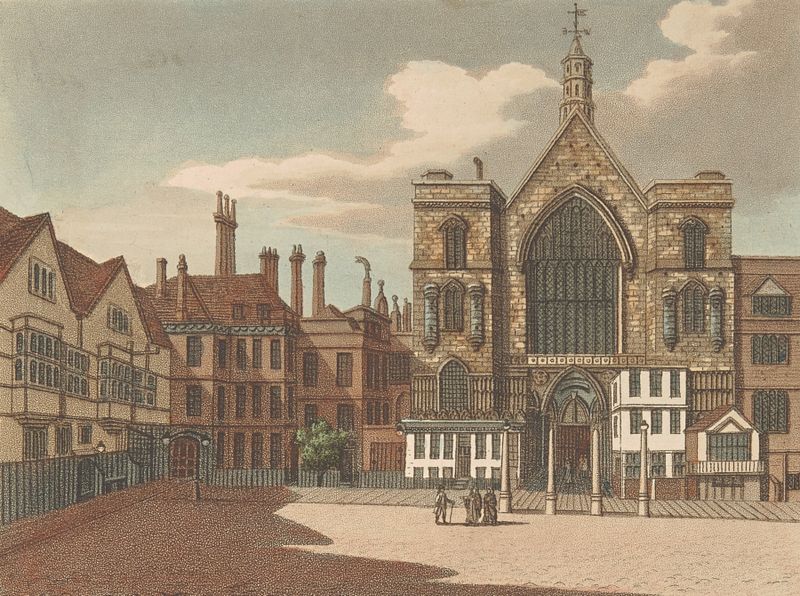
Westminster Hall
Samuel Ireland

Southwest View of Middle Temple
Samuel Ireland
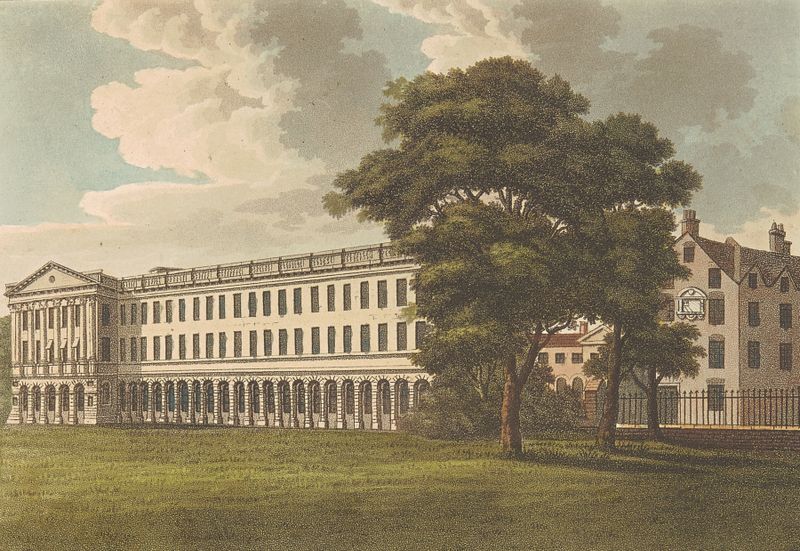
Stone Buildings, Lincoln’s Inn
Samuel Ireland
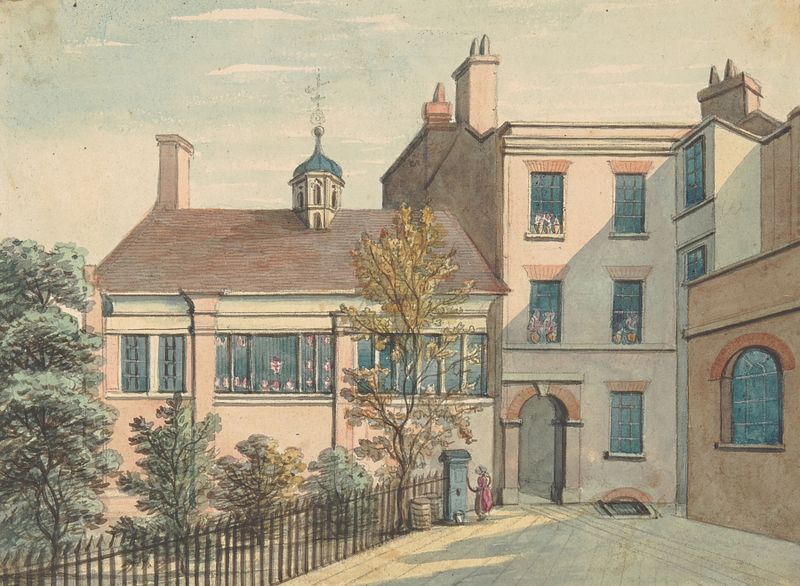
Barnard’s Inn
Samuel Ireland

Lincoln’s Inn Hall and Chapel
Samuel Ireland

Lion’s Inn
Samuel Ireland
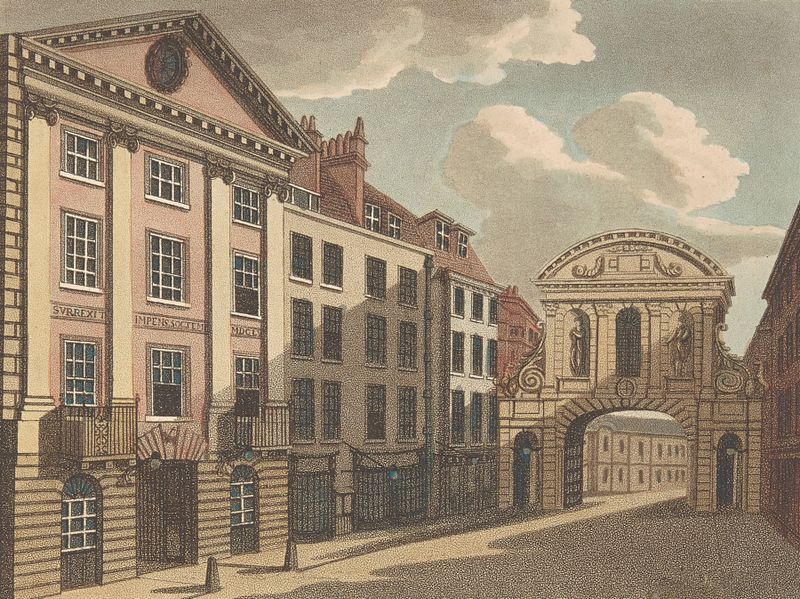
Middle Temple Gate
Samuel Ireland
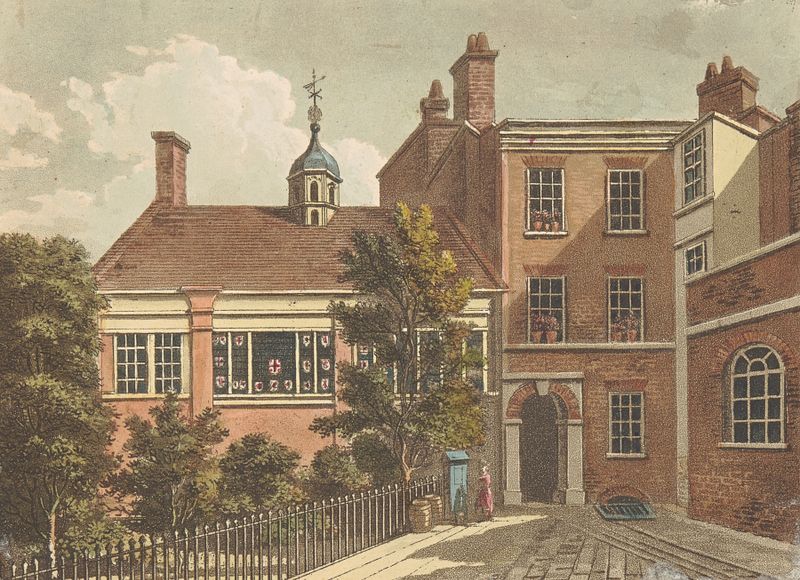
Barnard’s Inn
Samuel Ireland

Westminster Hall
Samuel Ireland
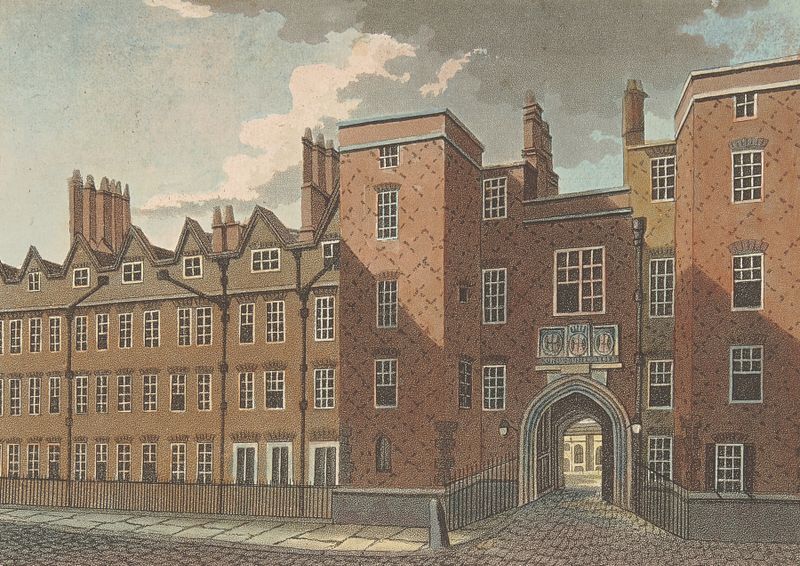
Lincoln’s Inn Gate
Samuel Ireland
More Architecture Art
Browse all →
The statue of Liberty
Frédéric Auguste Bartholdi

View of Houses in Delft, Known as ‘The Little Street’
Johannes Vermeer

View of Houses in Delft, Known as ‘The Little Street’
Johannes Vermeer

The Cathedral in Rouen. The portal, Grey Weather
Claude Monet

The yellow house
Vincent van Gogh

The Church in Auvers-sur-Oise, View from the Chevet
Vincent van Gogh