
Gut Staberhof III — History & Facts
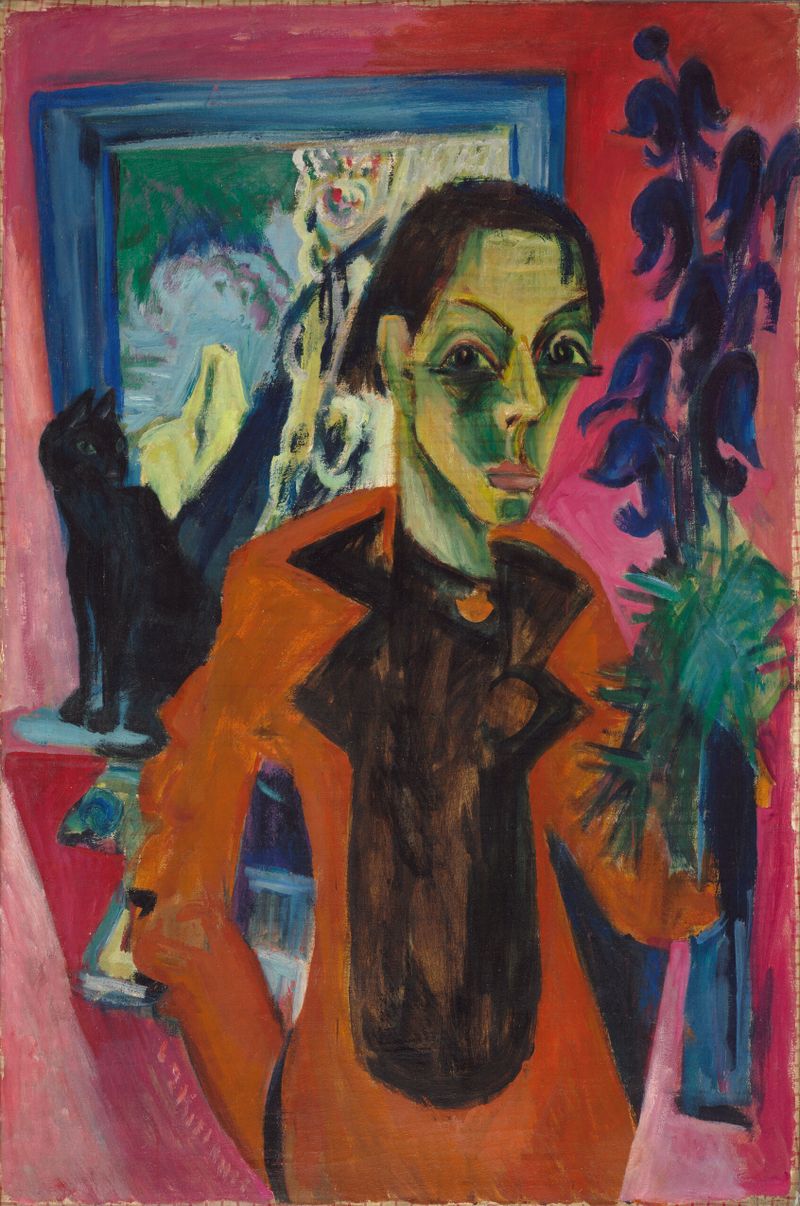
This intricate dance between fragility and strength captivates the viewer, inviting contemplation on the delicate balance of human experience. Look to the left at the vibrant interplay of colors that create a sense of movement and life. The bold strokes and contrasting shades speak of both chaos and harmony, while the golden accents add a layer of gilded sorrow to the composition. Notice how the figures seem to emerge from the background, their forms both solid and ephemeral, encapsulating the tension between permanence and transience. Delve deeper into the interaction of the figures; their postures reveal an unspoken dialogue of vulnerability and resilience.
The tension in their expressions suggests a poignant story, perhaps reflecting the struggles inherent in the pursuit of beauty amidst turmoil. The juxtaposition of soft curves and jagged lines mirrors the frailty of existence, evoking a profound sense of empathy towards the human condition. In 1913, Kirchner painted this piece while residing in Germany, at a time when expressionism was reshaping the art world. His own life was marked by personal struggles, including his battle with mental health, which deeply influenced his creativity.
The early 20th century was a period of both artistic innovation and societal upheaval, and this work encapsulates the era's complexities, revealing the powerful emotions that drive and haunt the human spirit.
More Artworks by Ernst Ludwig Kirchner
Browse all →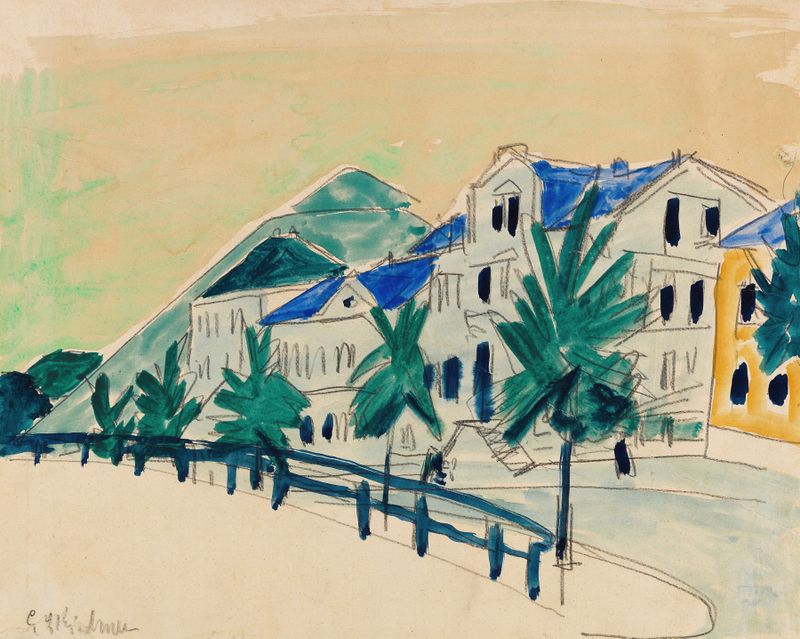
Häuser mit Allee
Ernst Ludwig Kirchner

Fehmarnlandschaft
Ernst Ludwig Kirchner

Sertigtal im Winter
Ernst Ludwig Kirchner
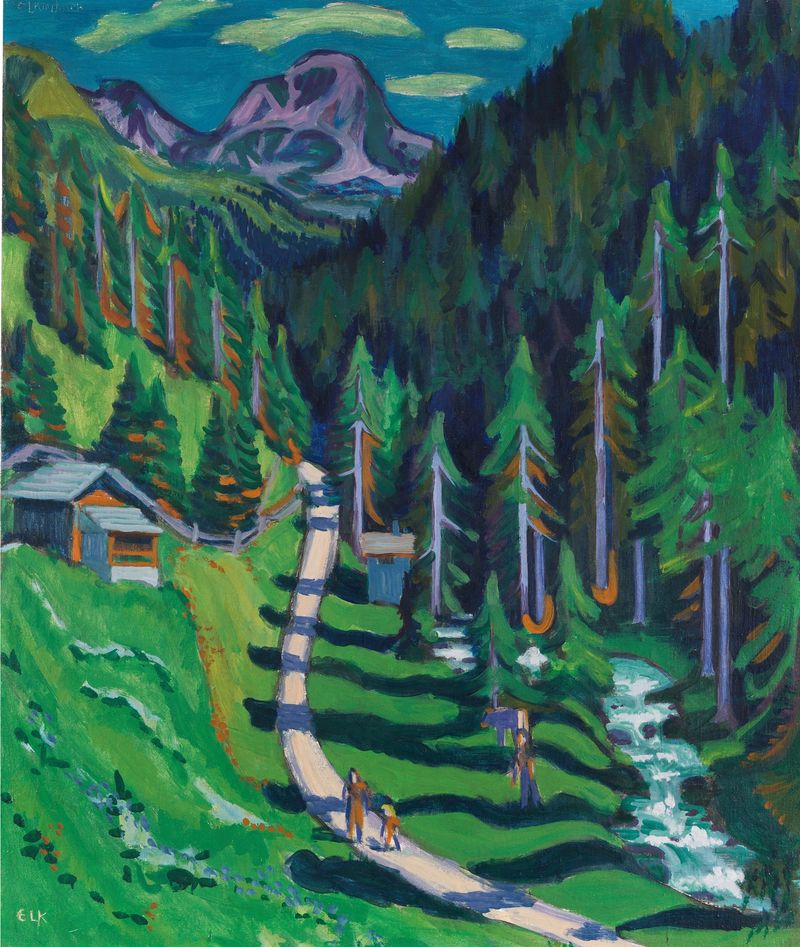
Sertigweg
Ernst Ludwig Kirchner
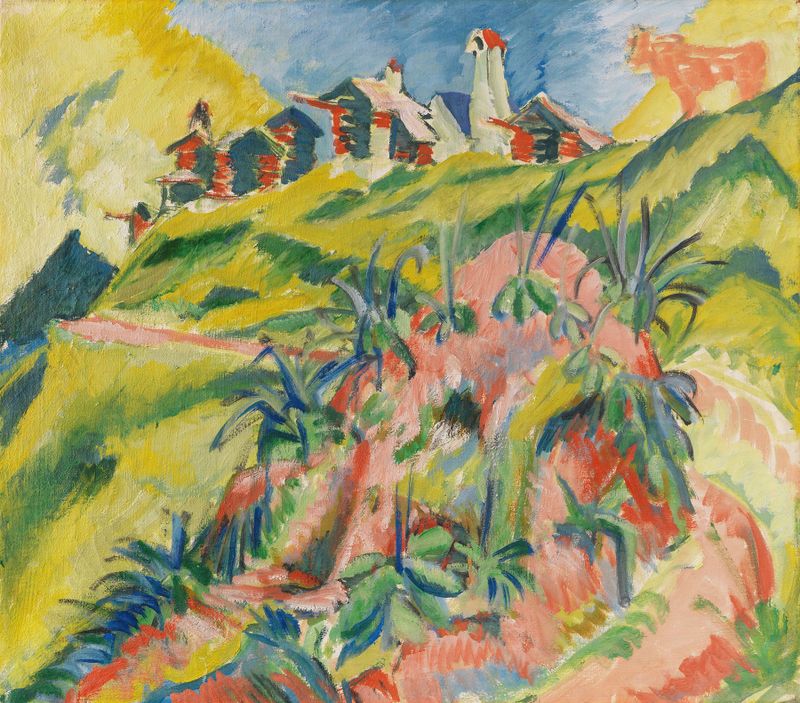
Bergdorf mit rosa Kuh
Ernst Ludwig Kirchner
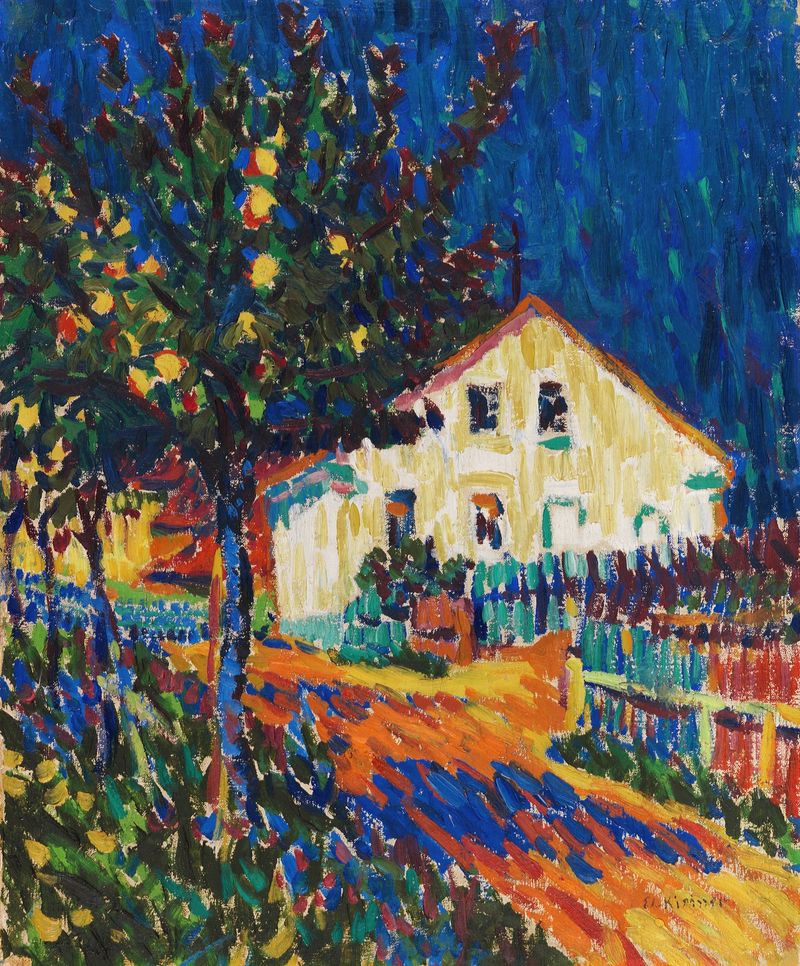
Dorfstraße mit Apfelbäumen
Ernst Ludwig Kirchner

Unter Bäumen am See
Ernst Ludwig Kirchner
Self-Portrait with Cat
Ernst Ludwig Kirchner

Fehmarnküste mit Leuchtturm
Ernst Ludwig Kirchner

Sertigweg im Sommer
Ernst Ludwig Kirchner





