Gypsy Caves,Granada — History & Facts
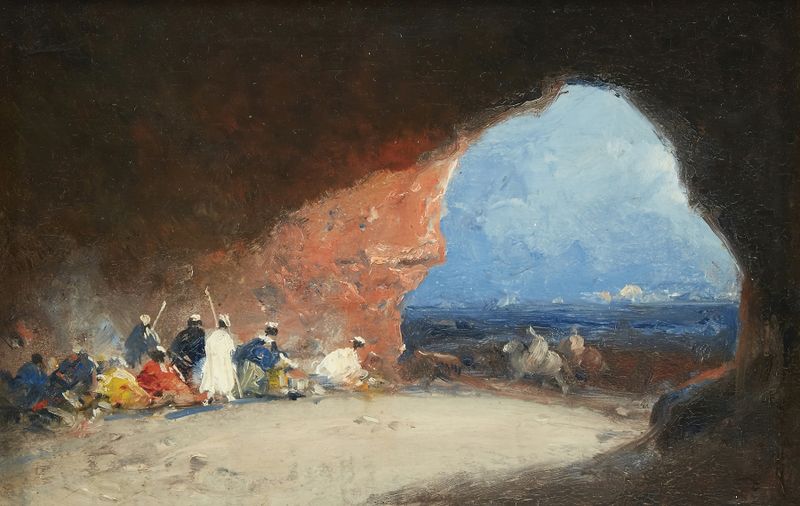
Can beauty exist without sorrow? In Gypsy Caves, Granada, this question lingers in the air, a haunting melody that resonates deep within the viewer's soul. Look closely at the left, where the warm, earthy tones of the caves invite you into their protective embrace. The interplay of light and shadow dances across the textured surfaces, revealing the rugged beauty of the rock formations. As your gaze drifts, notice the figures cloaked in vibrant fabrics, their expressions a mix of joy and melancholy, as if caught in the delicate balance of life’s chaos. The contrast between the lively colors of the garments and the muted backdrop evokes a profound sense of longing.
Each brushstroke tells a story of tradition and struggle, emblematic of a culture steeped in history, yet overshadowed by the tumultuous currents of change. The tension in the composition lies in the way these figures inhabit their space — vibrant yet ephemeral, joyous yet tethered to a deeper sorrow. Created around 1871, this work emerged during a period of artistic exploration for its creator, who was deeply influenced by the vibrant culture of Spain and the Romani people. While Fortuny was in Granada, he absorbed the rich tapestry of life around him, infusing this piece with both a sense of immediacy and a reflection on the complexities of identity and existence in a world marked by chaos and beauty intertwined.