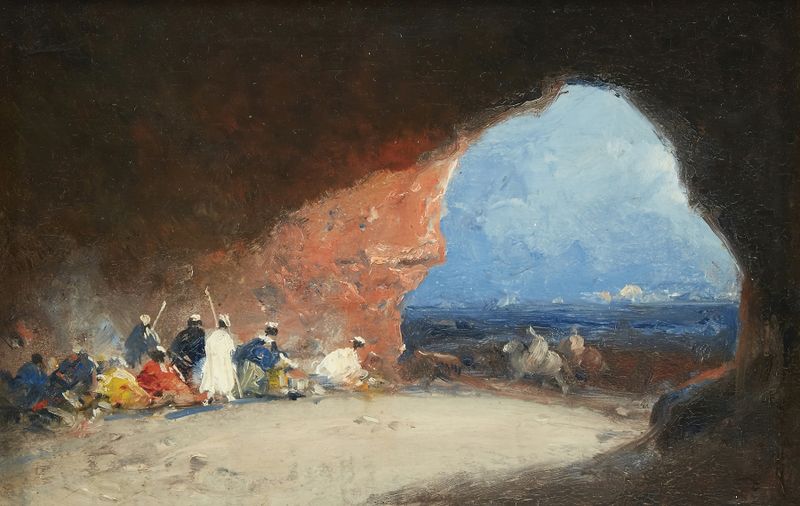
A Street in Tangiers — History & Facts
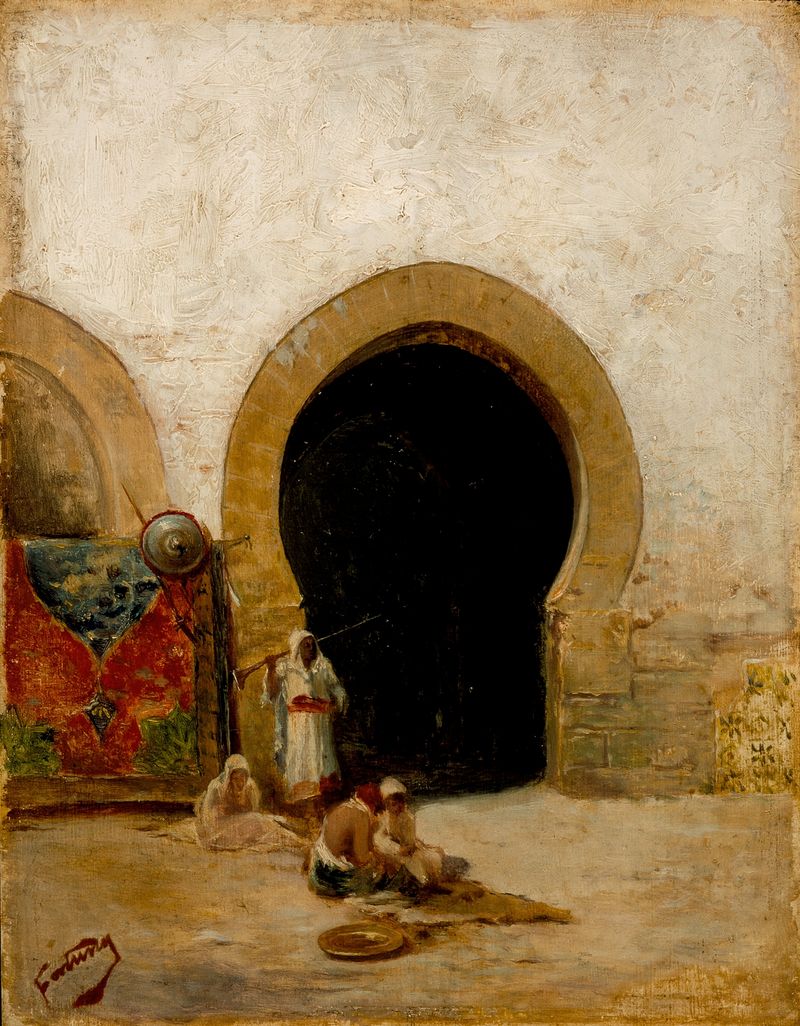
In the stillness of a sunlit street, a profound emptiness lingers beneath the vibrant hues, begging the viewer to delve deeper into its quiet complexities. Look to the left at the vibrant terracotta walls, textured with the passage of time, capturing the warmth of the sun. Notice how the light dances across the cobblestones, casting elongated shadows that suggest both life and absence in equal measure. The composition draws the eye down the narrow alleyway, creating a sense of depth while evoking a longing for connection amidst the solitude. In the juxtaposition of light and shadow, a tension emerges between beauty and desolation.
The vibrant colors, rich in detail, convey a sense of allure, yet the emptiness of the street speaks to a deeper loneliness. Each brushstroke tells a story, hinting at the lives that once thrived within this space, now reduced to a fleeting whisper. During the early 1860s, while living in Paris, the artist captured A Street in Tangiers amidst a period of burgeoning interest in North African culture and landscape. This era saw a blending of European and exotic influences, as Fortuny sought inspiration from his travels.
His work reflects not only a personal exploration of beauty but also a broader artistic dialogue with the world beyond his familiar surroundings.