
Hardwar, India — History & Facts
In the hands of the artist, the tumult of existence can be transformed into a serene landscape, but what lies within the tumult remains vital and unresolved. Focus first on the vibrant, swirling hues that dominate the canvas. The deep blues and rich greens invite your gaze, while splashes of ochre and white dance across the surface, hinting at both life and struggle. Look closely at the foreground, where chaotic brushstrokes intertwine with more deliberate forms, suggesting an underlying tension between nature's beauty and violence.
The textured application of paint evokes the raw energy of the scene, immersing the viewer in the moment and leaving them caught between tranquility and turmoil. As you delve deeper, notice how the contrasting colors reflect the emotional weight of the environment. There is a fragility in the delicate interplay of light and shadow, illuminating the chaos while also hinting at resilience. The scene captures not just the landscape but the narrative of life within it — the echoes of conflict and the whispers of harmony.
Each element, from the frenzied brushwork to the stillness of certain areas, tells a story of coexistence, where even violence holds the potential for beauty. In 1875, while Edward Lear was painting this piece, he found himself deeply engaged in the exploration of the landscapes of India. He was known for his travel sketches and watercolors, yet during this period, he was wrestling with personal struggles, as well as the broader complexities of cultural encounters in a rapidly transforming world. His work often bridged the gap between observation and emotional interpretation, reflecting his unique perspective on the tumultuous beauty of nature and humanity.
More Artworks by Edward Lear
Browse all →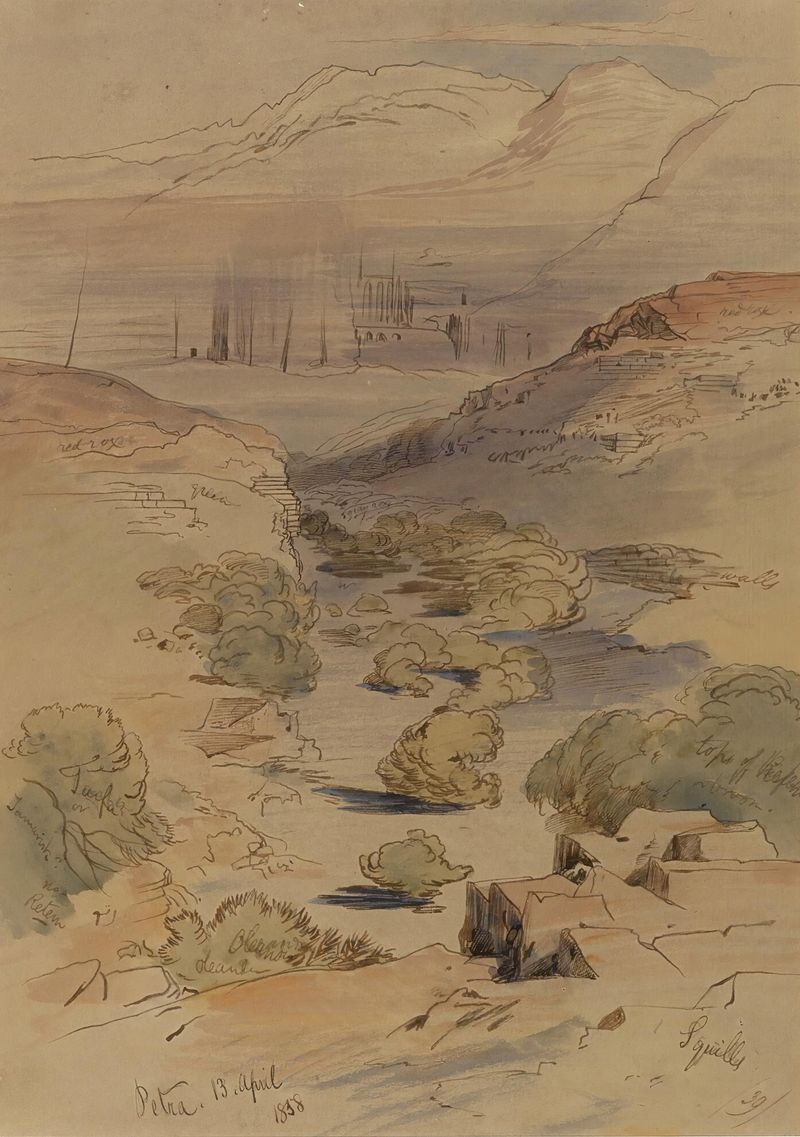
Petra
Edward Lear
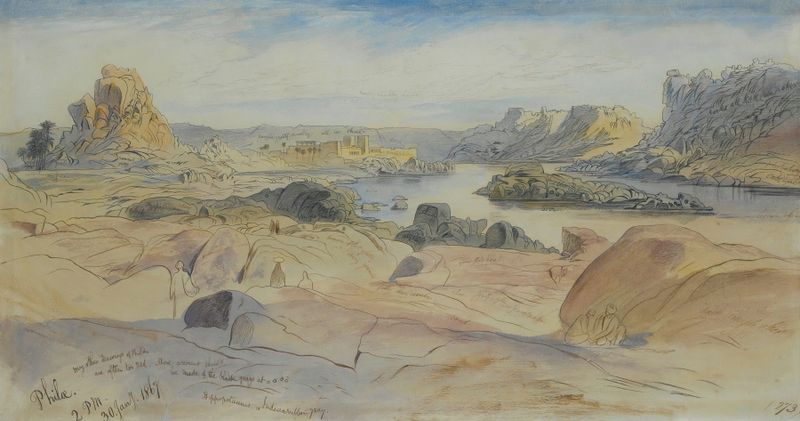
Philae, Egypt
Edward Lear
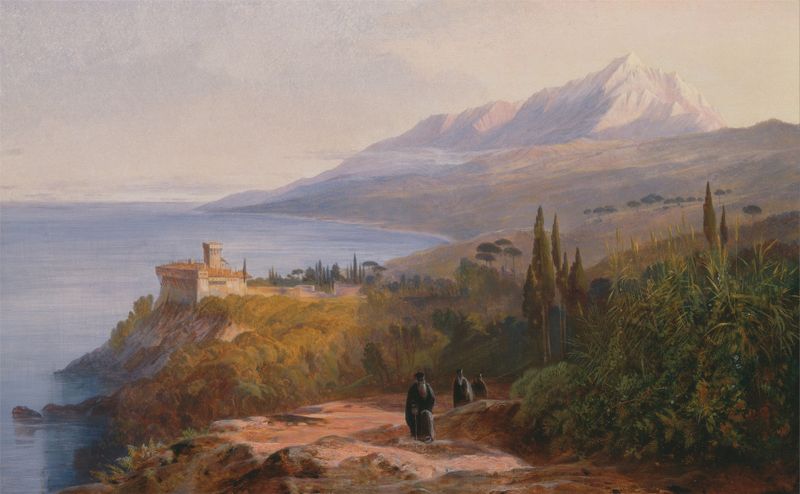
Mount Athos and the Monastery of Stavronikétes
Edward Lear
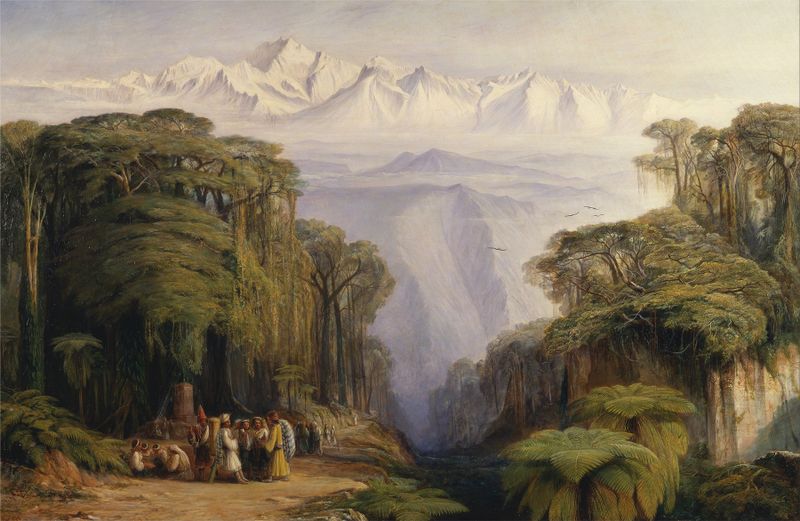
Kangchenjunga from Darjeeling
Edward Lear
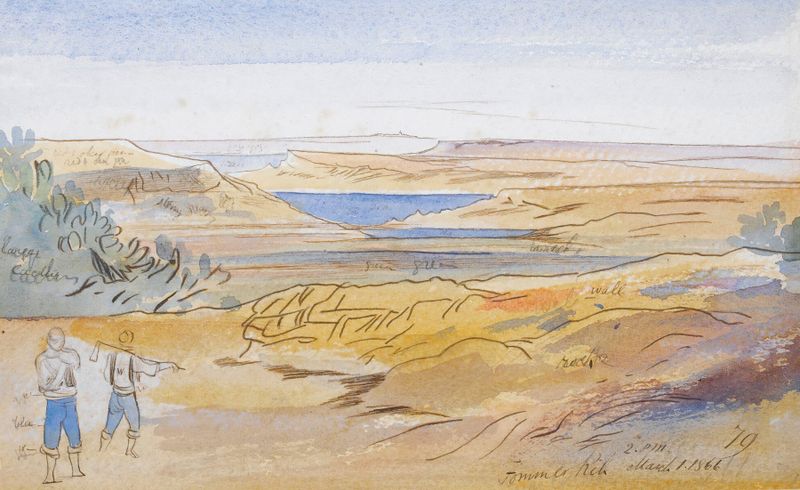
Fomm Ir-Rih, Malta
Edward Lear
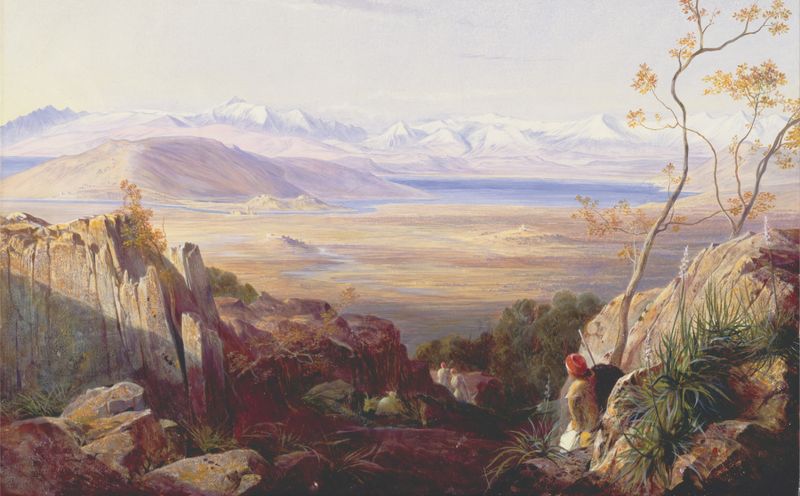
Butrinto, Albania
Edward Lear
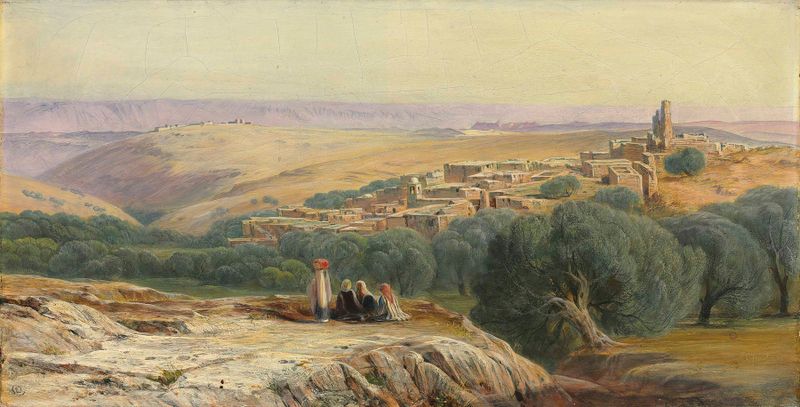
The Plains of Bethany
Edward Lear

Karnak, 9-30 pm, 22 January 1867
Edward Lear
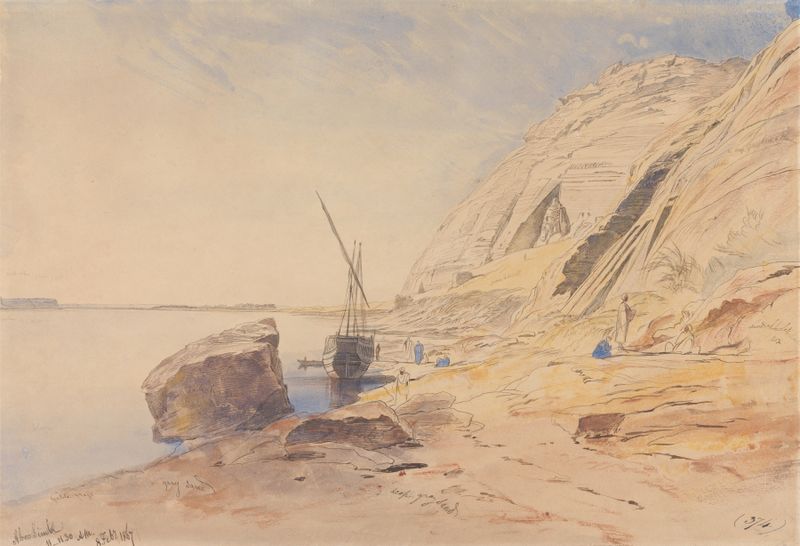
Abu Simbel, 11-11;30 am, 8 February 1867 (374)
Edward Lear

A View Of Mount Athos And The Pantokrator Monastery, Greece
Edward Lear





