
Haystacks — History & Facts
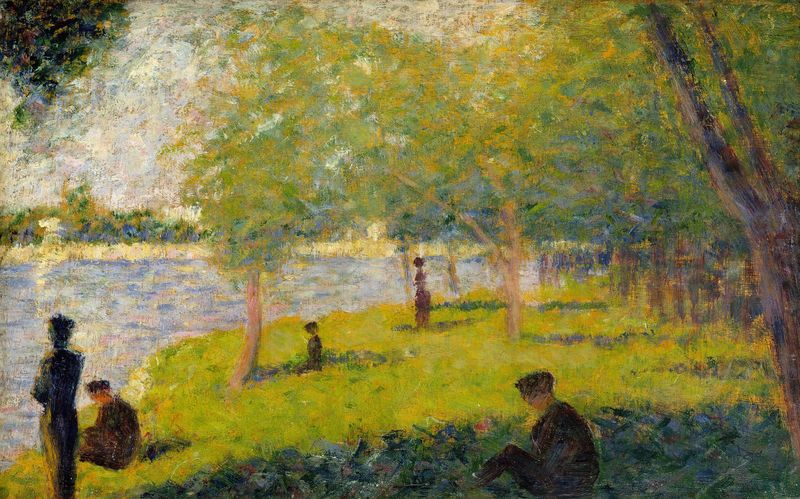
Can beauty exist without sorrow? In Haystacks, the interplay of light and color invites us into an ethereal world where tranquility dances with the lingering shadows of loss. Look towards the center of the canvas, where the vibrant golden haystacks rise against a backdrop of deepening blues and greens. The artist employs pointillism, using countless tiny dots of pigment that blend optically in the viewer's eye, creating a shimmering illusion of depth and texture. Notice how the sun's rays caress the hay, illuminating its forms while casting soft, elongated shadows that stretch towards the viewer, a visual representation of time's passage. The painting embodies a duality; the bucolic scene may initially evoke serenity, yet the meticulous technique reveals an underlying tension.
The vibrant hues suggest life and warmth, but their fragmented application speaks to the ephemeral nature of beauty. As the colors harmonize, they also remind us of the distance between reality and illusion, hinting at the transience of both the landscape and our own experiences within it. Created around 1882, Haystacks emerged during a pivotal time for Georges Seurat, as he refined his groundbreaking pointillist technique. At this juncture, he was grappling with the complexities of modern life and art's ability to convey emotion.
The late 19th century was a moment of artistic revolution, and Seurat's work stands as a testament to the evolving dialogue between realism and impressionism, reflecting not only his personal journey but also the broader artistic currents of his time.
More Artworks by Georges Seurat
Browse all →
A Sunday on La Grande Jatte — 1884
Georges Seurat
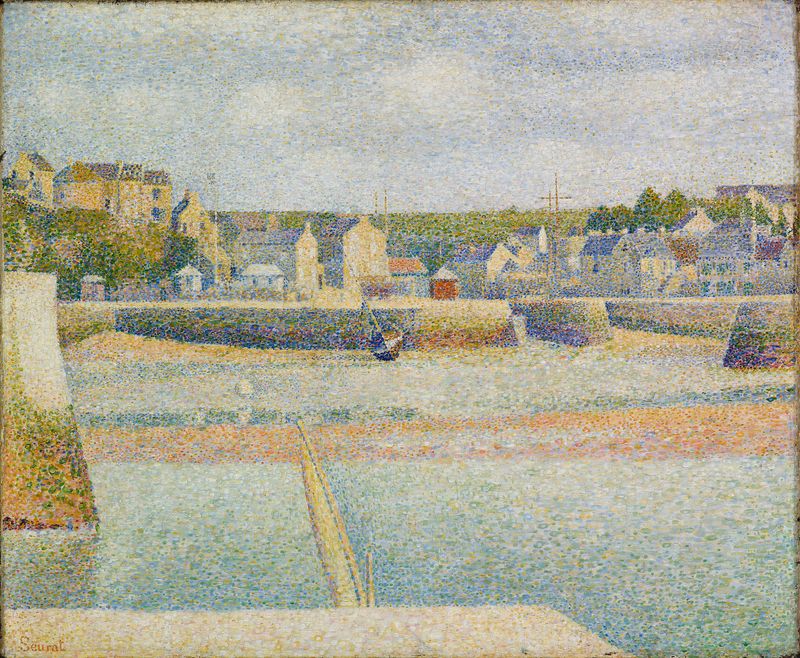
Port-en-Bessin, The Outer Harbor (Low Tide)
Georges Seurat
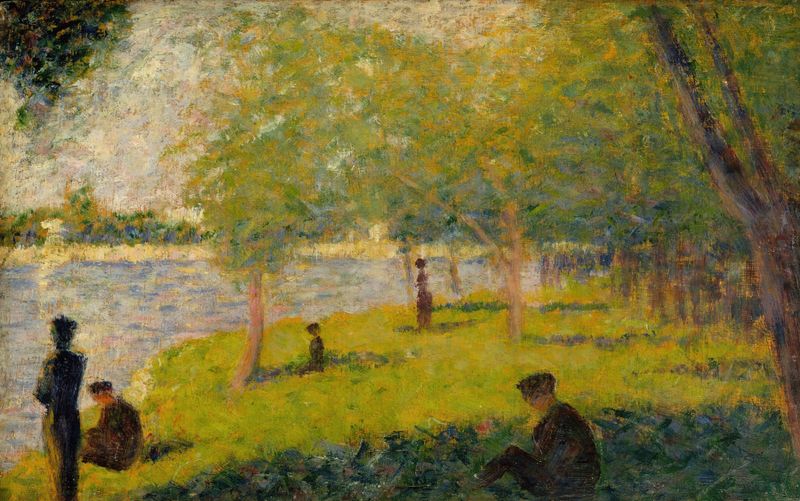
Study for ‘A Sunday on La Grande Jatte’
Georges Seurat

Oil Sketch for "A Sunday on La Grande Jatte — 1884"
Georges Seurat
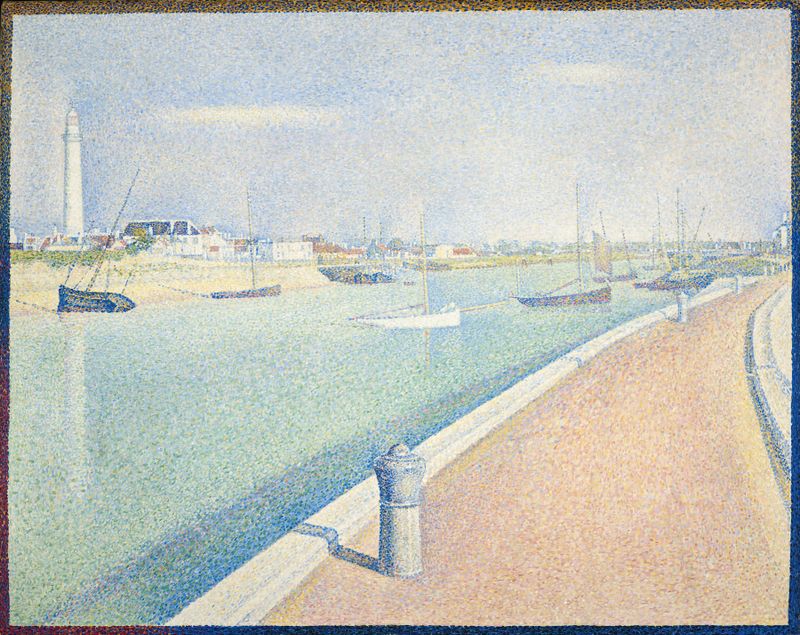
The Channel of Gravelines, Petit Fort Philippe
Georges Seurat

Étude pour ‘La Grande Jatte’ (Study for ‘La Grande Jatte’)
Georges Seurat
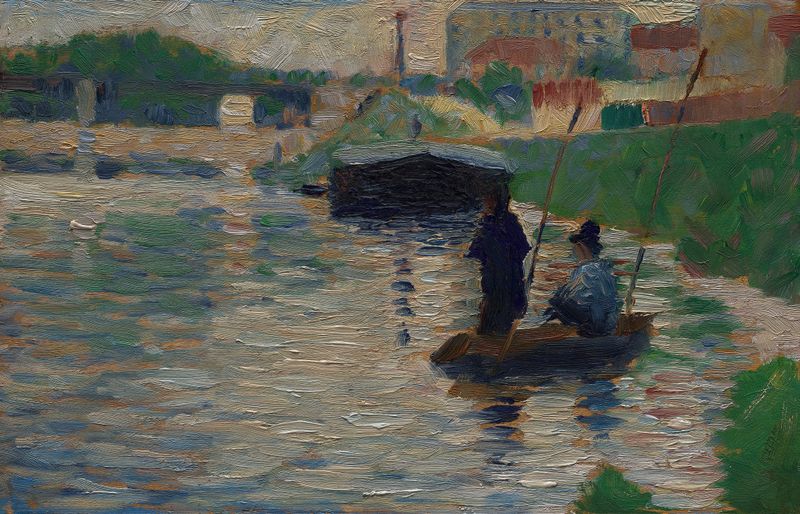
View of the Seine
Georges Seurat

Seascape at Port-en-Bessin,Normandy
Georges Seurat

The Channel at Gravelines, Evening
Georges Seurat
Study for A Sunday on La Grande Jatte
Georges Seurat





