
Haystacks — History & Facts
Could a single brushstroke hold eternity? In Haystacks, the interplay of light and color captures the fleeting beauty of nature's cycles, inviting reflection on decay and renewal. Look to the left at the golden strokes that mimic the sun's caress upon the haystacks, illuminating their textured surfaces. The soft, muted hues blend harmoniously, drawing our gaze toward the horizon where the earth meets the sky, an ethereal dance of blues and yellows. Notice how the brushwork shifts from bold to delicate, evoking the gentle rustle of wind through the fields, while subtle variations in color suggest the passage of time—and, inevitably, the onset of decay. In this piece lies a poignant contrast: the vibrant life of the harvest against the inevitability of its decline.
The solidity of the haystacks, robust and proud, hints at abundance, yet the brushstroke's softness whispers of transience. Each layer of paint tells a story not only of growth but also of the slow return to earth, a reminder that every bounty bears the weight of its own end. Arthur Wesley Dow painted Haystacks in 1899 during a period marked by the American Arts and Crafts movement, advocating for the beauty of craftsmanship and nature. Living in Massachusetts, Dow sought to capture the simplicity and complexity of rural life, echoing the sentiments of a time when artists began to embrace a more organic approach to their work, moving away from strict academic traditions.
More Artworks by Arthur Wesley Dow
Browse all →
In Ipswich Marshes (Sagamore Hill, Ipswich)
Arthur Wesley Dow

Desert Scene with Mountains
Arthur Wesley Dow

Boats at Rest
Arthur Wesley Dow

Brittany Field with Figure
Arthur Wesley Dow

A Maine Headland
Arthur Wesley Dow
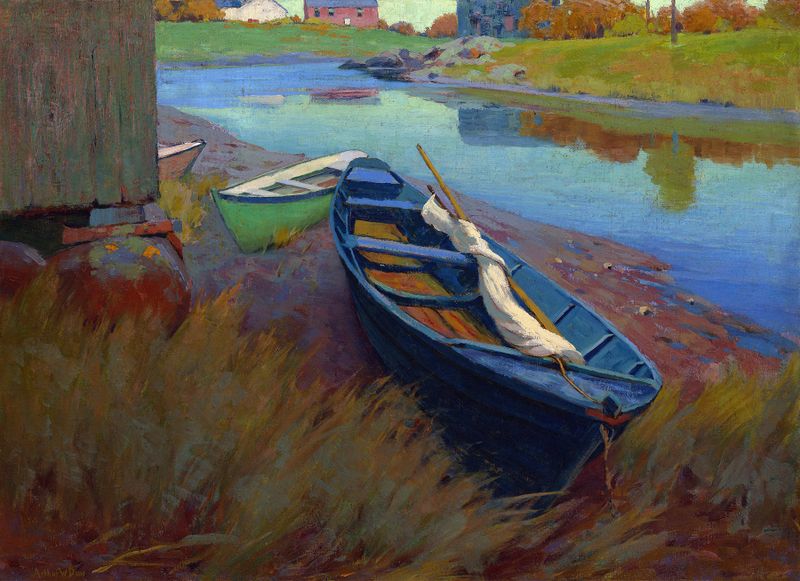
Boats at Rest
Arthur Wesley Dow

The Hill Field
Arthur Wesley Dow

Brittany Farm
Arthur Wesley Dow
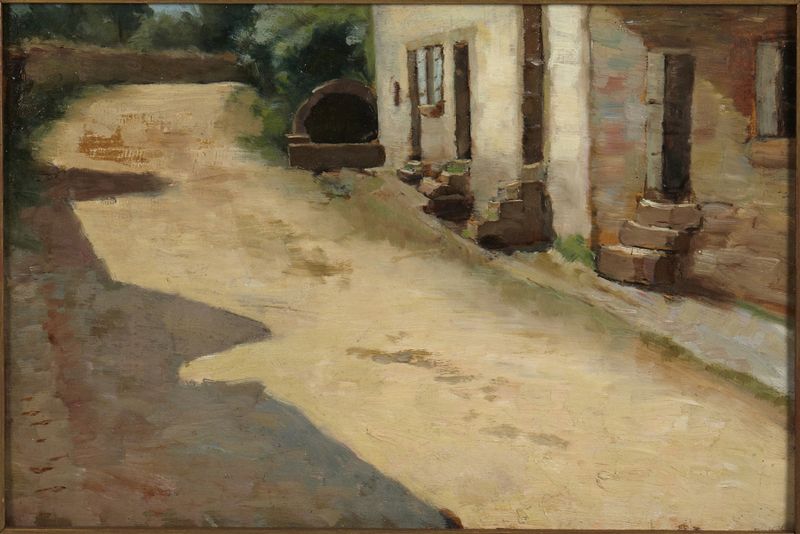
Rue Abbes Tanguy, Pont Aven
Arthur Wesley Dow
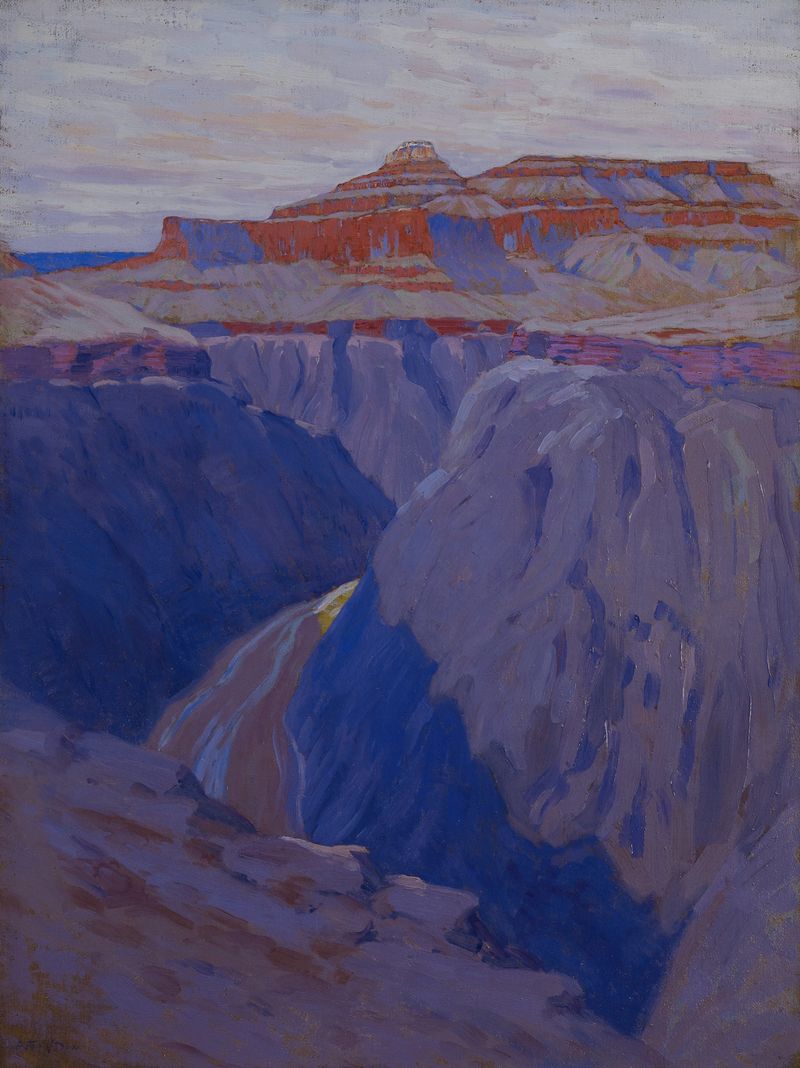
The Destroyer
Arthur Wesley Dow





