
The Destroyer — History & Facts
Where does light end, and longing begin? In the delicate interplay of colors and forms, transformation whispers through the canvas, inviting us to contemplate the ephemeral nature of existence. Focus on the soft, luminous strokes that cascade across the upper section, where vibrant hues blend into one another like a breath of fresh air. The gentle curves and flowing lines draw your eye toward the central figure, embodying both destruction and regeneration. Notice the contrasting dark shadows that cradle the edges, accentuating the fragile balance between creation and obliteration.
The harmonious yet tumultuous palette serves as a visual metaphor for the chaos that often accompanies change. Hidden within the layers of this artwork lies an emotional tension: the juxtaposition of vulnerability and strength. The figure, while powerful in its presence, appears to be caught in a moment of introspection, reflecting the deeper struggles that accompany transformation. The tumultuous background serves as a reminder of the chaos that often precedes growth, while the light-infused areas signify hope and renewal, capturing the cyclical nature of life itself. During the years 1911 to 1913, Arthur Wesley Dow created this piece amid a burgeoning interest in American art and a shift towards more expressive forms.
Dow, known for his innovative approach to design and composition, was deeply influenced by Asian aesthetics and the Arts and Crafts movement. His focus on harmony and the emotional resonance of color reflects a period of personal exploration as well as broader changes in the artistic landscape of the early 20th century.
More Artworks by Arthur Wesley Dow
Browse all →
In Ipswich Marshes (Sagamore Hill, Ipswich)
Arthur Wesley Dow

Desert Scene with Mountains
Arthur Wesley Dow

Boats at Rest
Arthur Wesley Dow
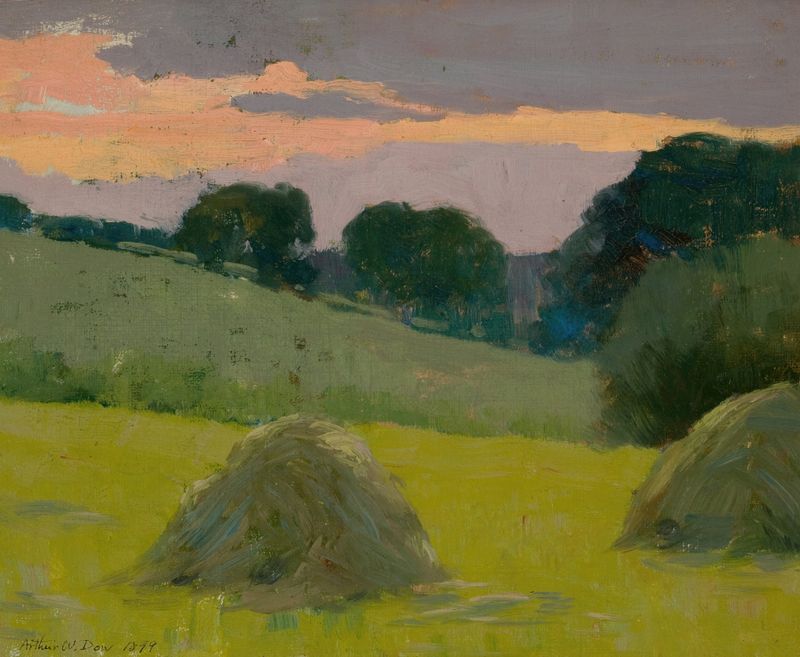
Haystacks
Arthur Wesley Dow

Brittany Field with Figure
Arthur Wesley Dow

A Maine Headland
Arthur Wesley Dow
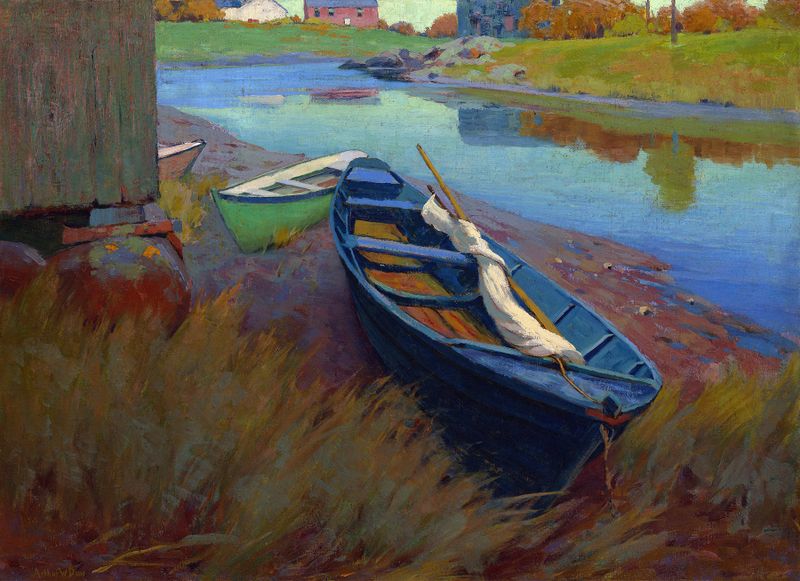
Boats at Rest
Arthur Wesley Dow

The Hill Field
Arthur Wesley Dow

Brittany Farm
Arthur Wesley Dow
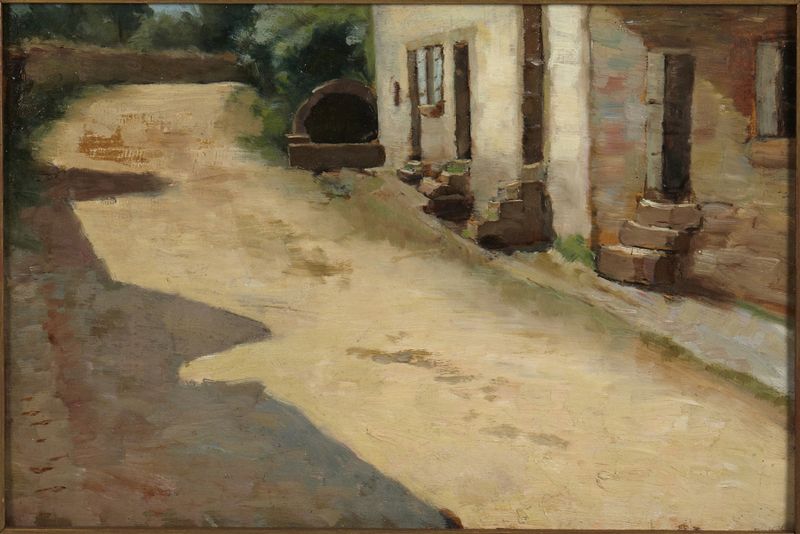
Rue Abbes Tanguy, Pont Aven
Arthur Wesley Dow





