
Haystacks in Brittany — History & Facts
Where does light end, and longing begin? Haystacks in Brittany invites us to explore the delicate interplay between chaos and tranquility in nature's fleeting moments. Focus on the vibrant splashes of amber and gold that serve as the painting's heartbeat, drawing your gaze immediately to the haystacks bathed in the warm glow of an evening sun. The brushwork is expressive yet deliberate, allowing the texture of the hay to emerge through layered strokes. Notice how the soft hues of the fields seem to dance around the radiant sky, which transitions from deep blue to fiery orange, igniting a sense of fleeting beauty and impermanence. Upon closer inspection, the chaotic arrangement of the haystacks contrasts with the serene landscape, hinting at the complexity of rural life.
The gentle curve of the horizon suggests a hidden narrative, perhaps the toil of farmers at day’s end. This tension between nature’s order and the disorder of existence reflects Gauguin's deep connection to his environment, revealing a yearning for simplicity amid life's turmoil. In the summer of 1890, Gauguin painted this masterpiece in Brittany, where he sought refuge from the bustling art world of Paris. It was a time of personal transformation; he was grappling with the constraints of conventional art and exploring bold color palettes and emotional resonance.
This period marked his commitment to capturing the essence of life, revealing the beauty and chaos intertwined in the landscapes he loved.
More Artworks by Paul Gauguin
Browse all →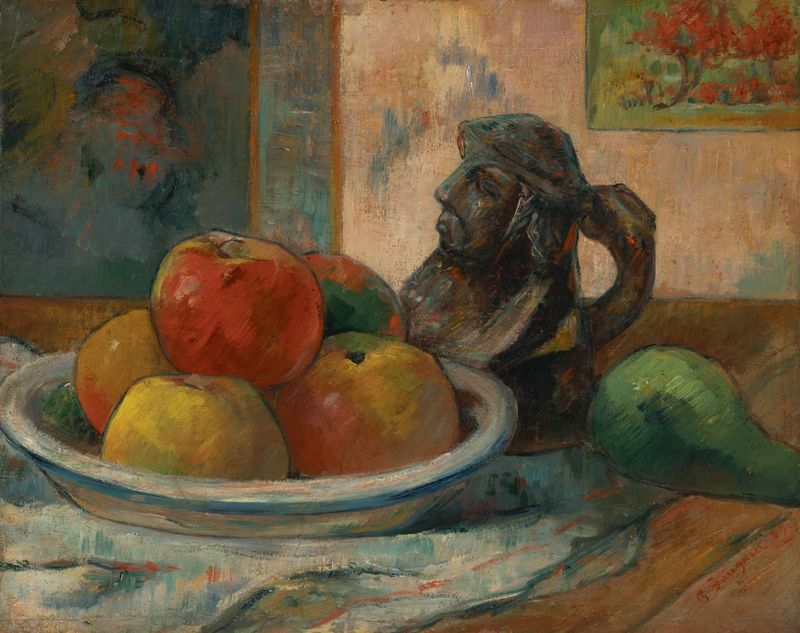
Still Life with Apples, a Pear, and a Ceramic Portrait Jug
Paul Gauguin
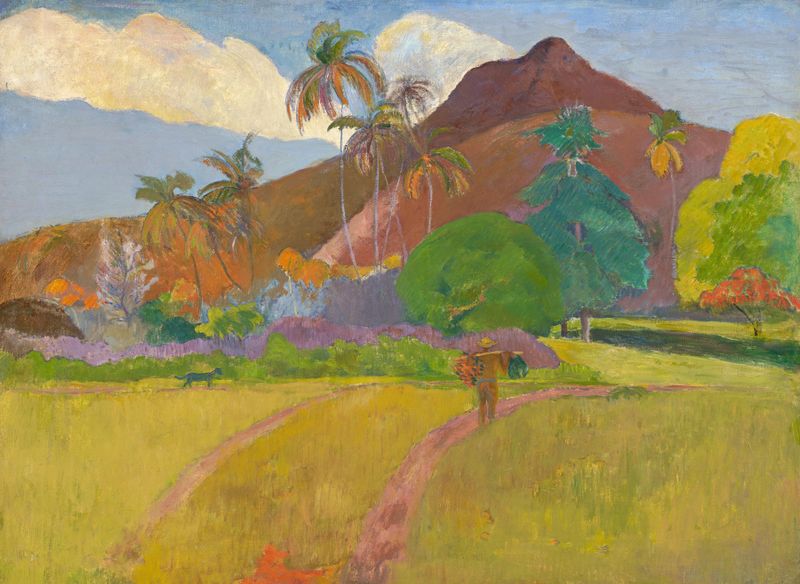
Tahitian Landscape
Paul Gauguin

Landscape near Pont-Aven
Paul Gauguin

No te aha oe riri (Why Are You Angry?)
Paul Gauguin
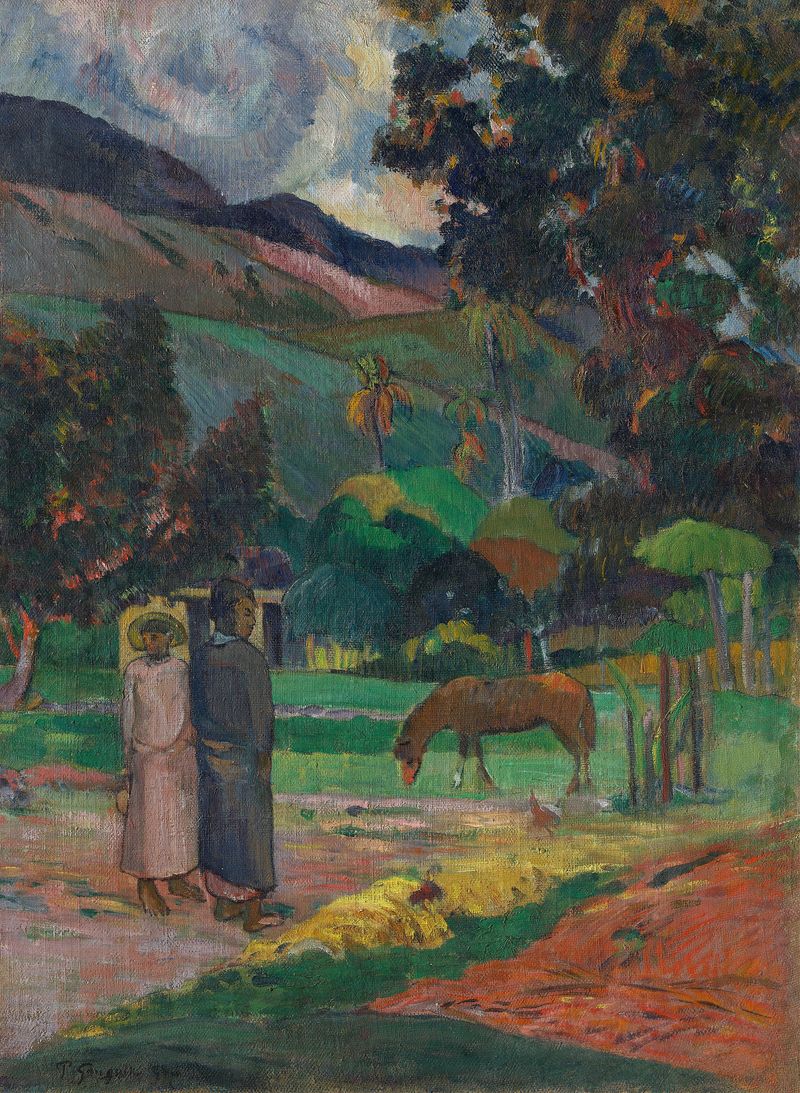
Tahitian Landscape
Paul Gauguin
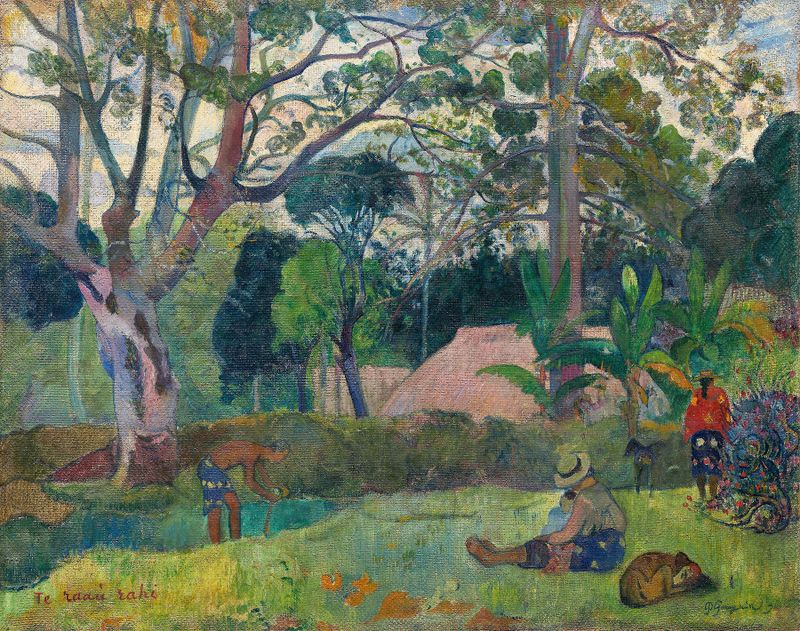
Te raau rahi (The Big Tree)
Paul Gauguin

Landscape at Le Pouldu
Paul Gauguin

Landscape of Brittany
Paul Gauguin

Poèmes Barbares
Paul Gauguin
Mahana no atua (Day of the God)
Paul Gauguin





